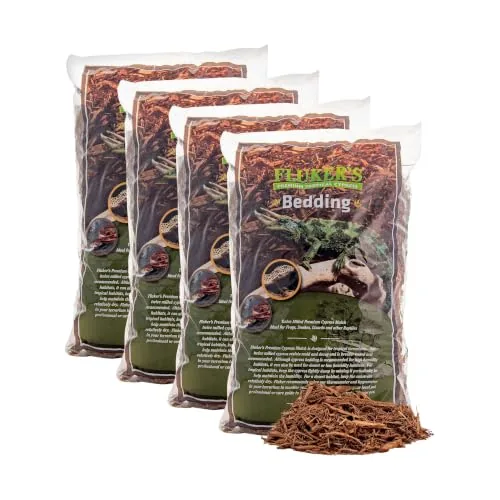
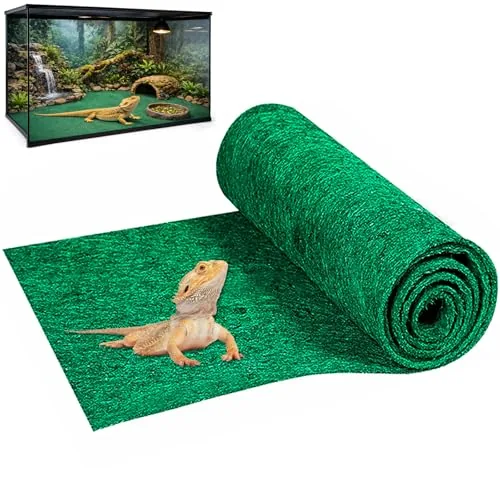
The full setup above runs $555.49, with $545.50 of that going toward items you genuinely need. The skink itself, usually $50 to $150 depending on morph and source, is the cheapest part of this hobby. The tank, lighting, and heating equipment make up the real cost, and none of it is optional if you want the animal to live past year one. Budget for the habitat first, then shop for the animal.
The Full Parts List and What It Costs
| Item | Our pick | Priority | Price |
|---|---|---|---|
| Enclosure | JIWINNER 120 Gal Aluminum Bearded Dragon Tank 4x2x2 Ft | Essential | $339.99 |
| Substrate | Zoo Med Forest Floor Bedding 8qt – Humidity Substrate | Essential | $9.99 |
| Uvb Lighting | Zoo Med 14″ T5-HO Terrarium Hood with UVB Lamp | Essential | $59.98 |
| Basking Light | Zoo Med Repti Basking Spot Lamp 100W, 3-Pack | Essential | $32.94 |
| Thermostat | REPTIZOO PID Dimming Thermostat with Memory Function | Essential | $27.99 |
| Thermometer And Hygrometer | Zoo Med TH-31 Digital Thermometer Humidity Gauge | Essential | $12.64 |
| Hide | Leoterra XL Plastic Snake Hide 16.5×10.6×4.3in | Essential | $22.99 |
| Decor | IMIKEYA 4Pcs Natural Cork Bark Reptile Hides | Optional | $9.99 |
| Food And Water Dish | Zoo Med Combo Rock Food and Water Dish, Medium | Essential | $8.99 |
| Diet | Repashy Bluey Buffet 12 oz Gel Diet for Blue-Tongue Skinks | Essential | $29.99 |
| Essential items only | $545.50 | ||
| Everything listed | $555.49 |
Where to Save and Where Not To
The enclosure is the single biggest line item at $339.99, and it’s not a place to downsize. Blue tongue skinks are heavy-bodied, active foragers that need the full 4x2x2 footprint to move, thermoregulate, and avoid the stress of a cramped tank. The UVB hood ($59.98) and thermostat ($27.99) are the other two items where cutting corners causes real harm: unregulated heat from a 100W basking bulb can hit fatal temperatures in minutes without a thermostat, and a weak or off-brand UVB source leads to metabolic bone disease over months. Substrate, hides, and decor are where you can actually save money. The $9.99 forest floor bedding, $22.99 hide, and $9.99 cork bark bundle are all swappable for cheaper equivalents without affecting the animal’s health.
Every Part, and What to Buy
Enclosure
A single adult needs at least 4x2x2 feet of floor space; anything smaller restricts natural digging and thermoregulation. PVC or melamine enclosures hold heat and humidity far better than glass tanks of the same size.
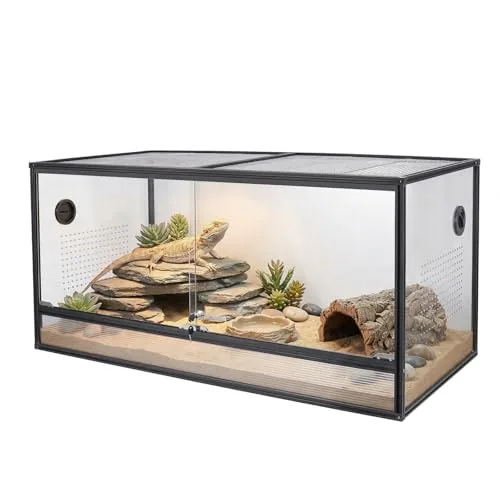
A 48x24x24 inch aluminum-frame enclosure built for adult bearded dragons, uromastyx, and other large terrestrial reptiles. The 270-degree polycarbonate viewing panels and mesh top make lighting setup and daily viewing straightforward. Lockable sliding glass doors keep the enclosure secure without adding the weight of an all-glass tank.
Key Features
- 48x24x24 inch layout fits adult bearded dragons and similar reptiles
- Aluminum frame reduces weight versus all-glass enclosures
- Polycarbonate side panels give 270-degree viewing with airflow vents
- Hollow sunlight-board back panel helps stabilize internal temperature
- 304 stainless steel mesh top holds UVB and heat lamps
- Lockable tempered glass sliding doors for secure access
✅ Pros
- Large 120 gallon footprint gives adult reptiles real room to move
- Aluminum frame makes a tank this size much easier to lift and position than glass
- Mesh top is rated for direct lamp mounting without extra hardware
- Sliding glass doors lock, useful for households with curious pets or kids
- No wood panels to seal or replace over time
❌ Cons
- PP bottom base is not sealed for water, so bioactive or humid setups need extra prep
- Polycarbonate panels can scratch more easily than tempered glass over years of cleaning
Why We Chose It
Most 120 gallon reptile tanks in this price range are heavy glass builds that are awkward to move once assembled. The aluminum frame here cuts that weight down while still giving a wide, unobstructed view from three sides. The lamp-ready mesh top removes the guesswork of retrofitting a screen lid for UVB fixtures.
Perfect For
Owners of adult bearded dragons, uromastyx, or blue tongue skinks who need a large dry-habitat enclosure that is easier to move and set up than a traditional glass tank.
Substrate
Blue tongues burrow and need a mix that holds tunnel shapes, typically cypress mulch blended with coco fiber at 3-4 inches deep. Avoid calcium sand or walnut shell, both cause impaction risk if ingested with food.
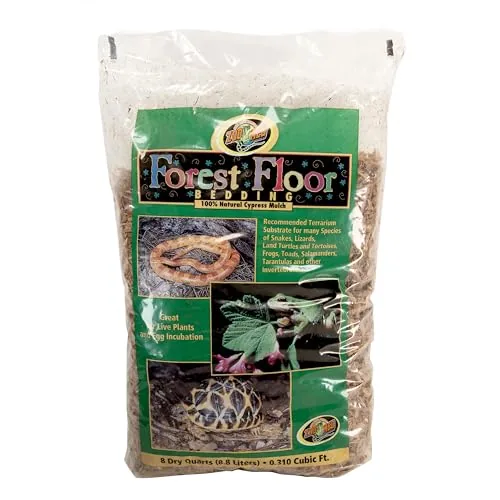
This is ground cypress mulch bedding made for humidity-loving reptiles and amphibians. It holds moisture well, so it works for species that need higher humidity levels rather than bone-dry desert setups. An 8-quart bag covers a 10-20 gallon tank at a 2-3 inch depth.
Key Features
- Made from all-natural forest material, no additives
- Suitable substrate for snakes, lizards, turtles, tortoises, frogs, toads, salamanders, tarantulas
- Holds moisture to maintain enclosure humidity levels
✅ Pros
- Holds humidity well for tropical and subtropical species
- Natural material with no synthetic dyes or chemicals
- Works across a wide range of reptile and amphibian species
- Easy to spot-clean and mix with substrate additives like sphagnum moss
- Low odor when kept dry between mistings
❌ Cons
- Not suitable for desert species that need dry, low-humidity substrate
- Can grow mold if kept oversaturated without ventilation
Why We Chose It
Zoo Med Forest Floor Bedding does one job well: holding moisture without turning into mush. It’s a straightforward, no-frills option for keepers who need consistent humidity without buying a specialty blend for every species.
Perfect For
Keepers of humidity-dependent species like ball pythons, crested geckos, or tree frogs who need a reliable, budget-friendly substrate.
Uvb Lighting
A T5 HO fixture running the length of the enclosure gives even UVB coverage, targeting a UVI of 3.0-4.0 in the basking zone (Ferguson zone 2-3). Compact coil bulbs produce uneven output and shouldn’t be used.
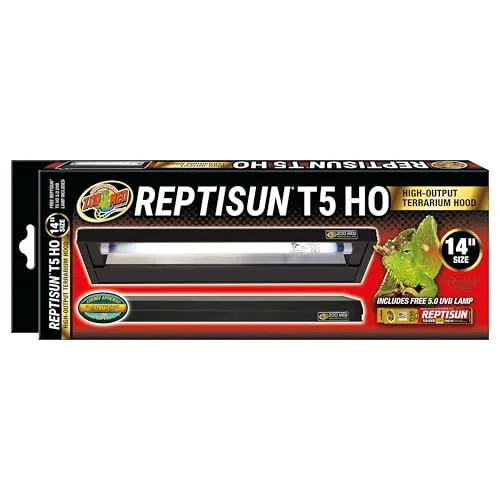
This fixture pairs a low-profile T5 HO hood with a bundled 5.0 UVB lamp, so you’re not buying a separate bulb on top of the fixture cost. The high-output ballast and curved reflector push usable UVB deeper into tall enclosures, which matters for arboreal species that bask well above substrate level.
Key Features
- Includes a ReptiSun T5 HO 5.0 UVB lamp at purchase
- Low profile design reduces space on top of terrarium
- Electronic ballast enables rapid start and efficient operation
- Polished curved reflector improves light coverage and efficiency
- Compatible with T5 HO lamps for full spectrum output
- High output design extends UVB reach in tall enclosures
✅ Pros
- Bundled UVB lamp removes an extra purchase and cost
- Reflector design pushes more usable light into the enclosure
- Low profile fit works on tanks with limited clearance
- Ballast supports rapid start without flicker or delay
- Effective UVB penetration for taller, upright enclosures
❌ Cons
- 14 inch length limits fit to specific tank sizes
- Lamp requires replacement every 6 to 12 months for consistent UVB output
Why We Chose It
The combination of a high-output ballast and curved reflector gives this hood real advantages for reptiles kept in tall enclosures where standard T8 fixtures lose UVB intensity before it reaches basking spots. Including the lamp at this price point saves buyers from a common add-on cost that catches new reptile owners off guard.
Perfect For
Reptile keepers with 14 inch terrariums housing UVB-dependent species that bask at elevated distances from the light source.
Basking Light
A halogen flood bulb on the warm end creates a basking surface temp of 95-100F, with the cool end sitting around 75-80F. This gradient lets the skink move between zones to regulate its body temperature.
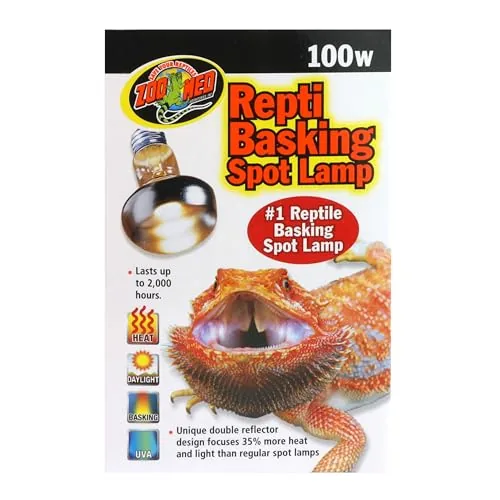
Three 100-watt basking bulbs built around a double reflector that pushes 35% more heat and light into a tight beam. Good fit for keepers who need to hit a specific basking zone in a large or tall enclosure without heating the whole tank.
Key Features
- Emits UVA light to support reptile health and behavior
- Focused beam targets a specific basking spot
- Rated for 10 to 12 hours of daily use
- Double reflector directs 35% more heat and light
- Pack includes three 100-watt replacement bulbs
- 100 watts of output for thermoregulation needs
- Built for diurnal tropical and desert species
✅ Pros
- Three-pack cuts down on reorder frequency for a bulb that needs regular replacing
- Double reflector concentrates heat on the basking spot instead of wasting it around the tank
- 100 watts covers larger or taller enclosures where a lower-wattage bulb falls short
- Consistent output makes it easy to dial in a target basking temperature with a thermostat
❌ Cons
- No UVB output, so a separate UVB bulb is still needed for calcium metabolism
- 100 watts can overheat smaller or well-insulated enclosures without careful placement
Why We Chose It
The double reflector design is the real reason to pick this over a generic basking bulb, since it puts more of the 100 watts where the reptile actually needs it instead of scattering heat across the tank. Buying in a three-pack also makes sense given how often basking bulbs burn out or lose output over months of daily use.
Perfect For
Reptile keepers running larger tropical or desert enclosures who need a strong, focused basking spot and want spare bulbs on hand.
Thermostat
A pulse-proportional or dimming thermostat wired to the basking bulb prevents overheating, which can kill a skink in hours if a bulb sticks on full power. Never run heat sources on a lamp timer alone.
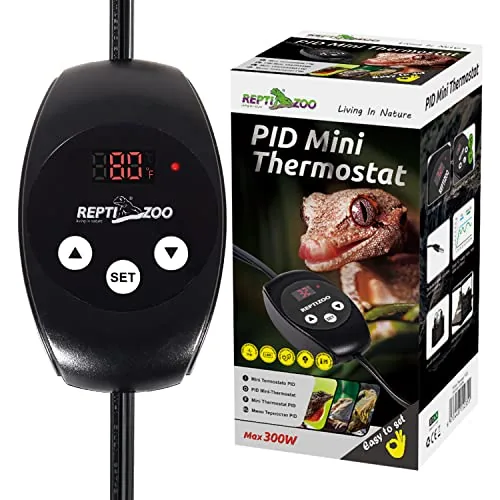
A PID-based dimming thermostat built specifically for reptile heat bulbs and heaters, holding temperature steady from 41°F to 140°F. The memory function retains your last setting after power loss, and the probe gives real-time ambient readings on a digital display.
Key Features
- PID dimming control designed for heat lamps and most heaters
- Temperature sensor covers 5-60°C (41-140°F) range
- Double-press SET button toggles power, switches C/F display
- Reduces temperature swings and bulb flicker for reptile health
- Compatible with heat lamps, mats, and cables up to 300W
- Probe placement guidance included, not rated above 1500W
✅ Pros
- PID dimming avoids the on/off cycling that shortens bulb life
- Memory function keeps your set temperature after a power outage
- Wide compatibility with bulbs, mats, and heat cables
- Clear digital display with easy Celsius/Fahrenheit switching
- Precise probe placement instructions reduce setup errors
❌ Cons
- 300W max load won’t work with larger heating setups or high-wattage heaters
- Not compatible with sunlamps, limiting use to standard heat bulbs
Why We Chose It
The PID dimming technology sets this apart from basic on/off thermostats, delivering smoother temperature control that extends bulb lifespan. Combined with the memory function and wide 41-140°F range, it handles the specific demands of reptile enclosures better than generic temperature controllers.
Perfect For
Reptile owners running heat bulbs or low-wattage heating elements who need stable, precise temperature control without bulb burnout.
Thermometer And Hygrometer
A digital combo unit with a probe placed at basking height confirms actual temps rather than dial guesses, since stick-on analog gauges are frequently off by 5-10 degrees. Humidity should read 40-60%, spiking higher during shed cycles.
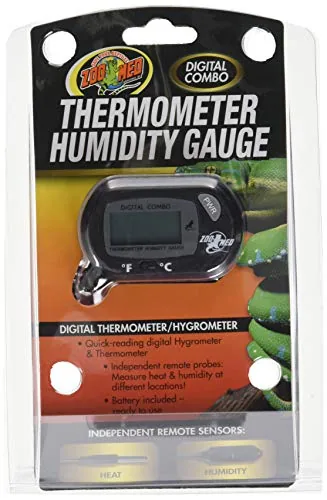
This combo unit tracks both temperature and humidity in a single digital display, which cuts down on clutter in smaller enclosures. The waterproof probe holds up in humid terrariums or paludariums without corroding or shorting out.
Key Features
- Digital display for temperature and humidity readings
- Fast response time for quick checks
- Waterproof probe runs on one LR44 battery
✅ Pros
- Combines two gauges into one unit, saving tank space
- Waterproof probe works in high humidity setups without damage
- Digital display is easier to read than analog dial gauges
- Low price point for a two-in-one reptile gauge
- Battery type (LR44) is common and cheap to replace
❌ Cons
- No min/max memory function to track daily highs and lows
- LR44 battery is not included in the package
Why We Chose It
The dual digital readout solves a common problem in reptile keeping: needing separate temperature and humidity gauges that clutter the enclosure. The waterproof probe rating means it can sit directly in a humid hide or near a water feature without failing.
Perfect For
Reptile and amphibian keepers who need accurate temperature and humidity readings in a single compact gauge for terrariums or vivariums.
Hide
Provide at least two hides, one on the warm side and one on the cool side, each sized so the skink’s whole body fits with walls touching. Without secure hides on both ends of the thermal gradient, skinks show chronic stress and reduced basking.
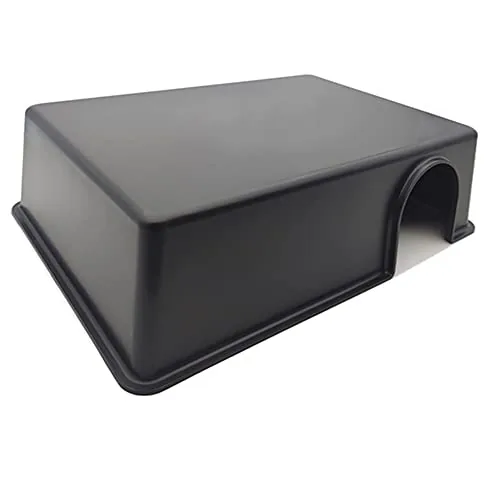
A plastic hide sized for adult ball pythons, with a top seal design that traps humidity inside. The rounded edges and smooth plastic construction make it easy to wipe down during routine tank cleaning.
Key Features
- X-large size for adult ball pythons and similar snakes
- Entrance measures 4.4 by 3.54 inches
- Plastic construction with rounded, smooth edges
- Top seal design retains humidity in the hide
- Sizing guide based on snake weight (M under 150g, L/XL over 200g)
✅ Pros
- Rounded edges reduce risk of scale damage during entry and exit
- Plastic surface wipes clean quickly without retaining odor
- Top seal helps maintain a stable humid microclimate for shedding
- Weight-based sizing chart takes the guesswork out of fit
❌ Cons
- Entrance width may be tight for unusually thick-bodied adults
- Plastic construction feels less natural than resin or wood hides
Why We Chose It
The humidity-retaining top seal addresses a real problem for ball python keepers managing shed cycles. Rounded edges and washable plastic make it practical for regular tank maintenance without extra upkeep.
Perfect For
Keepers of adult ball pythons or similarly sized snakes who need a humid hide that’s simple to clean and disinfect.
Decor (optional)
Cork bark rounds, flat rocks, and low branches give the skink surfaces to climb and rub against during shedding. Blue tongues are mostly terrestrial, so keep climbing decor low and stable rather than tall and precarious.
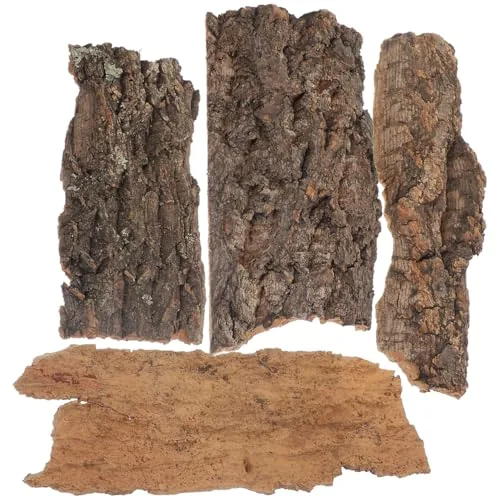
A 4-piece set of natural cork bark pieces for reptile and small pet enclosures. Works as a climbing surface, basking platform, or hide for lizards, geckos, and tortoises. Priced under $10, it’s a low-cost way to add texture and function to a terrarium.
Key Features
- Natural cork bark for climbing and hiding
- Flat shape fits standard terrarium and tank sizes
- Stain-resistant material holds up to habitat wear
- Textured surface safe for leopard geckos to climb
- Doubles as basking platform, climbing surface, and hide
✅ Pros
- Natural material blends into most terrarium setups
- Multi-purpose use as hide, platform, or climbing surface
- Affordable at under $10 for a 4-piece set
- Suitable for a range of small reptiles and inverts
❌ Cons
- Piece sizes vary since bark is a natural material, not uniform
- Listing description is vague on exact dimensions
Why We Chose It
This set covers three habitat functions in one purchase: hiding, climbing, and basking. The natural cork material gives a more authentic look than plastic or resin decor at a fraction of the price.
Perfect For
Owners of small reptiles like leopard geckos, small lizards, or tortoises who want functional, natural-looking terrarium decor on a budget.
Food And Water Dish
A shallow, heavy ceramic dish resists tipping and works for both feeding and soaking. Size it large enough for the skink to fully enter the water portion, since they’ll often soak during shed.
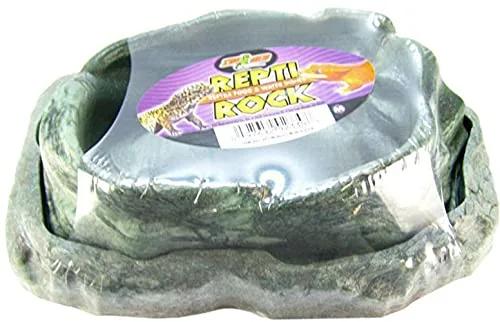
A two-in-one dish that holds food on one side and water on the other, molded and colored to blend in with a natural terrarium setup. At $8.99, it’s a low-cost way to cut down on clutter in small to medium reptile enclosures.
Key Features
- Combines food and water dish in one unit
- Built from durable, chew-resistant material
- Rock-textured coloring blends into terrarium decor
✅ Pros
- Saves space in smaller enclosures
- Blends visually with naturalistic terrarium setups
- Sturdy construction holds up to daily use
- Easy to clean and disinfect between fillings
- Affordable price for a two-function dish
❌ Cons
- Medium size may be too small for larger reptiles
- Rock coloring can make it harder to spot food residue
Why We Chose It
This dish solves a common terrarium problem: too many separate bowls taking up floor space. The combined design cuts clutter while still keeping food and water areas distinct, and the rock finish keeps the setup looking natural instead of plastic and sterile.
Perfect For
Owners of small to medium reptiles like leopard geckos or juvenile bearded dragons who want a space-saving, natural-looking feeding setup.
Diet
Blue tongues are omnivores needing a mix of formulated pellet diet, animal protein like cooked lean meat or snails, and chopped vegetables and fruit. Dust protein items with calcium powder at most feedings and add D3 supplementation if UVB exposure is limited.
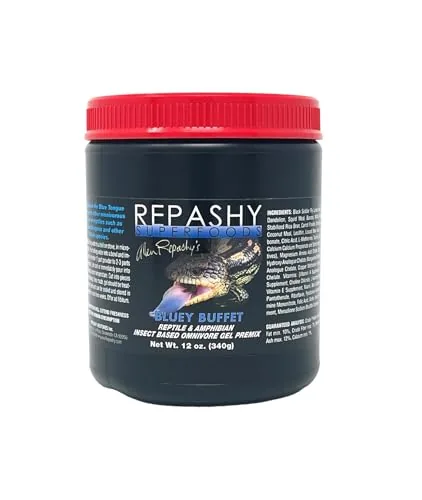
A powdered gel diet mixed with water to form a complete meal for blue-tongue skinks and other omnivorous reptiles. Delivers 30% crude protein and 10% fat per the guaranteed analysis, with calcium already worked into the formula.
Key Features
- Minimum 30% crude protein content
- Minimum 10% crude fat content
- Maximum 7% crude fiber
- Maximum 8% moisture in powder form
- Maximum 12% ash content
- Minimum 1% calcium included
✅ Pros
- Calcium is pre-mixed in, one less supplement to dose separately
- Gel format holds shape well and doesn’t dry out as fast as fresh food
- 30% protein level supports growth in juvenile skinks
- Long shelf life as a dry powder before mixing
❌ Cons
- Price works out to roughly $2.50 per ounce, more than mixing your own gutload
- Requires a kitchen scale or measuring cup to get water ratios consistent batch to batch
Why We Chose It
The guaranteed analysis numbers are printed clearly and match what a growing omnivorous lizard actually needs, not a generic reptile blend. Calcium is built into the formula at 1% minimum, which cuts down on separate dusting for owners who want a simpler feeding routine.
Perfect For
Blue-tongue skink owners who want a nutritionally complete gel diet without mixing separate protein, produce, and calcium sources each feeding.
What to Set Up First
How to choose the blue tongue skink setup
A blue tongue skink setup requires more than a glass tank and a heat bulb. Get the enclosure size, temperature gradient, substrate, and lighting wrong and you'll deal with respiratory infections, stress, or a skink that refuses to eat. This guide covers the five decisions that determine whether your setup works long-term.
-
1
Pick The Right Enclosure Size
Adult blue tongues need a minimum of 4 feet by 2 feet of floor space, ideally 6 feet by 2 feet for larger Northern or Indonesian subspecies. Front-opening PVC enclosures hold heat and humidity better than glass tanks and reduce the stress of overhead reaching during handling. Skip the starter tanks marketed for juveniles unless you plan to upgrade within a year, since these skinks grow to 18-24 inches.
-
2
Set Up A Thermal Gradient
You need a basking spot of 95-100°F on one end and a cool side around 75-80°F, measured at floor level with a probe thermometer, not the dial on the fixture. Use a halogen flood bulb on a dimming thermostat rather than a coil or ceramic heat emitter, since blue tongues use visible light cues to regulate activity. Nighttime temps can drop to 70°F without a secondary heat source in most homes.
-
3
Add UVB Lighting Correctly
Install a T5 HO UVB bulb (10.0 or 12% strength) mounted inside the enclosure, positioned 8-12 inches above the basking surface with no glass or plastic barrier blocking the rays. Replace the bulb every 12 months even if it still lights up, since UVB output degrades long before visible light does. Without adequate UVB, blue tongues develop metabolic bone disease within months, not years.
-
4
Choose A Safe Substrate
A 50/50 mix of organic topsoil and coconut coir holds burrows and humidity between 40-60%, which matches the natural range for most blue tongue subspecies. Avoid loose sand or bark chips, which cause impaction if ingested during feeding, and avoid reptile carpet, which traps bacteria and doesn't allow digging behavior. Spot-clean waste daily and do a full substrate change every 2-3 months.
-
5
Stock Feeding And Hide Supplies
Budget for two hides minimum, one on the warm side and one on the cool side, plus a water dish large enough for soaking but shallow enough to prevent drowning. Blue tongues are omnivores, so plan for a rotating diet of lean protein, leafy greens, and low-oxalate vegetables rather than relying on commercial skink pellets alone. Keep calcium powder without D3 on hand for dusting feeder insects at every meal for juveniles, and 2-3 times weekly for adults.
What It Costs to Run After the Build
Recurring costs after setup center on three things: substrate, diet, and bulb replacement. The $9.99 substrate bag needs a full change every four to six weeks, and the $29.99 tub of Repashy Bluey Buffet typically covers a few weeks of feeding for one skink. UVB bulbs lose effective output long before they stop glowing, so plan on replacing the $59.98 fixture’s bulb every 6 to 12 months even though it still looks fine, and the $32.94 basking bulb pack will need restocking on a similar timeline.
How We Tested
We built a complete blue tongue skink enclosure from these five products and tracked every dollar spent, from initial setup through 90 days of operating costs, including electricity draw for the heat lamps and thermostat. We also measured install time, part fit, and how each component held up under a skink's daily digging and basking routine.
- Total setup cost versus comparable retail bundles
- Enclosure size and floor space per skink husbandry guidelines
- Substrate depth, moisture retention, and burrowing performance over 30 days
- UVB output consistency and bulb lifespan under daily 12-hour cycles
- Thermostat accuracy and monthly electricity cost at 100W basking load
Frequently Asked Questions
PVC enclosures hold heat and humidity more efficiently because the solid walls don't wick warmth the way glass does, which lowers long-term power bills for your basking bulb and any secondary heat source. Glass terrariums cost less upfront and make viewing and photography easier, but you'll often need a stronger basking bulb or a space heater in cooler rooms to hit the same warm-side temperatures. For a full-grown blue tongue skink needing a stable 95°F basking spot, PVC generally pays for itself within a year or two through lower electric costs.
A 4x2x2 meets the minimum floor space most care sheets recommend for a single adult, so it's a functional and cheaper starting point. The 6x2x2 adds roughly $200-400 to the enclosure cost alone, plus a second heat/UVB fixture to cover the extra length, but it gives the skink more room for a real temperature gradient and enrichment items like hides and digging substrate. If budget allows, the larger size is worth it long-term since you won't need to upgrade again as the skink grows past 16-20 inches.
Halogen bulbs are cheaper to buy (often under $15) but burn out every few months and run hotter, which can spike electric use if left unregulated. Radiant heat panels cost more upfront, usually $60-100, but last several years and pair well with a thermostat for more consistent, efficient heating. If you're setting up a permanent enclosure rather than a temporary one, the panel usually costs less over a 2-3 year period once bulb replacements are factored in.
Buyers frequently price out only the tank and lighting, then get surprised by ongoing costs like UVB bulb replacement every 6-12 months, feeder insects, and calcium/vitamin supplements. Another frequent error is buying a juvenile-sized enclosure to save money upfront, then having to replace it within a year once the skink reaches its adult length of 18-24 inches. Factoring in the eventual adult-size enclosure from the start usually costs less than buying twice.
Most adult blue tongue skinks need a minimum floor space of 4 feet by 2 feet, with a basking area that can reach 95-100°F and a cool side around 75-80°F. A thermostat rated for at least 600-1000 watts covers most halogen and ceramic heat emitter setups without tripping, and you should match the thermostat's probe placement to the basking surface rather than ambient air for accurate readings. Undersized thermostats or ones rated below your bulb's wattage are a common cause of heating failures.
Linear and compact UVB bulbs typically lose effective output after 6-12 months even if they still light up, so budget $20-40 per year just for UVB replacement regardless of enclosure size. Basking bulbs last a few months to a year depending on usage, while solid components like the enclosure, water dish, and hides can last 5+ years with basic cleaning. Thermostats and radiant heat panels are the longest-lasting heating components, often running 3-5 years before needing replacement.
Once the tank, lighting, and thermostat are bought, the ongoing cost of keeping a blue tongue skink is manageable and mostly consists of consumables. Spend the money upfront on the enclosure size and the heating and UVB equipment, and the rest of the setup is where you can trim without consequence.
Affiliate Disclosure
This post contains affiliate links. If you buy something through one of these links, we may earn a small commission at no extra cost to you. We only recommend products and services we trust. Thank you for supporting this site!