A full box turtle setup like this one runs $331.50 for the essentials, or $339.49 if you add the decorative plants. The turtle itself, if you’re adopting or buying from a reputable breeder, is often the smallest line item in the whole project. Almost all of that money goes into the enclosure, lighting, and climate control the animal needs to survive indoors. Budget for the habitat first, then worry about the turtle.
The Full Parts List and What It Costs
| Item | Our pick | Priority | Price |
|---|---|---|---|
| Enclosure | TimberCabin 43″ Wooden Tortoise Habitat with Stand | Essential | $139.99 |
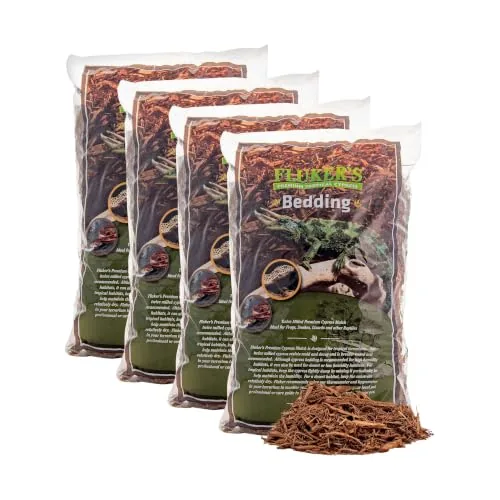
| Substrate | Fluker’s Premium Tropical Cypress Bedding, 10 lb | Essential | $7.94 |
| Uvb Lighting | Zoo Med ReptiSun T5-HO 14″ Terrarium Hood + 5.0 UVB Lamp | Essential | $59.98 |
| Heat Lamp And Thermostat | REPTI ZOO 8.5in Dome Fixture with Dimming Thermostat | Essential | $44.99 |
| Thermometer And Hygrometer | Zoo Med TH-31 Digital Thermometer Humidity Gauge | Essential | $12.64 |
| Hide | JIHAQUA Medium Rock Reptile Hide & Cave | Essential | $17.99 |
| Water Dish | Exo Terra X-Large Water Dish with Drowning Prevention | Essential | $28.99 |
| Calcium Supplement | Zoo Med Reptile Calcium without D3, 8 oz | Essential | $7.99 |
| Decor And Plants | Moonorange Reptile Artificial Plants with Pedestal Base | Optional | $7.99 |
| Diet | Rep-Cal Box Turtle Food 12 oz | Essential | $10.99 |
| Essential items only | $331.50 | ||
| Everything listed | $339.49 |
Where to Save and Where Not To
The decor and plants ($7.99) and the water dish ($28.99) are the easiest places to trim if money is tight, since a plain dish or homemade hide works fine as long as it holds water and lets the turtle climb out. Do not economize on the UVB lighting ($59.98) or the dimming thermostat ($44.99). A box turtle without real UVB develops metabolic bone disease over months, not years, and a heat lamp running without a thermostat can cook an enclosure past 100°F on a warm day. The digital thermometer and hygrometer ($12.64) is cheap enough that skipping it to save money makes no sense given what it protects against.
Every Part, and What to Buy
Enclosure
Box turtles need floor space over height, minimum 36×18 inches for one adult but 4×2 feet is more realistic for normal movement and digging. Look for solid opaque sides rather than an all-glass tank, since glass causes turtles to pace and shows their reflection as a threat.
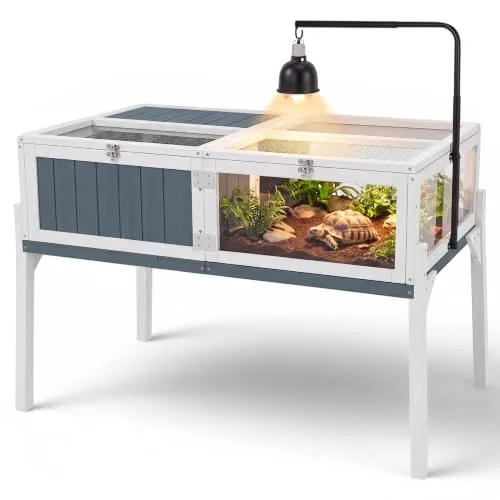
A fir-wood enclosure with a built-in stand, adjustable lighting arm, and a multi-room layout for tortoises and other small reptiles. Flat-pack assembly and a top-opening roof make daily upkeep manageable without much fuss.
Key Features
- Houses tortoises, geckos, bearded dragons, and snakes
- Adjustable lamp arm for heat and lighting control
- 2-3 room layout with acrylic viewing panels
- Water-resistant fir wood with detachable legs
- Top-opening dual roof with leak-resistant tray
- Flat-pack design with included hardware kit
✅ Pros
- Fir wood construction feels solid once assembled
- Top-opening roof makes cleaning and feeding straightforward
- Adjustable lighting arm is included, no separate purchase needed
- Detachable legs allow floor or tabletop placement
- Acrylic panels give a clear view without removing the pet
❌ Cons
- 43 inches is tight for a full-grown adult tortoise, better suited to juveniles or smaller reptiles
- Flat-pack assembly takes time and a careful hand with the hardware
Why We Chose It
The combination of a built-in stand, lighting arm, and multi-room layout covers most of what a first habitat setup needs without buying extras separately. The water-resistant coating on the fir wood also means it can handle the humidity that comes with reptile care better than untreated wood.
Perfect For
Reptile owners with juvenile tortoises or small to medium reptiles who want a wood-framed enclosure with lighting already included.
Substrate
A cypress mulch and coco fiber blend holds burrowing tunnels and retains humidity in the 60-80% range box turtles need for shell and skin health. Depth matters more than brand: keep at least 3-4 inches so the turtle can fully bury itself, which it will do daily.
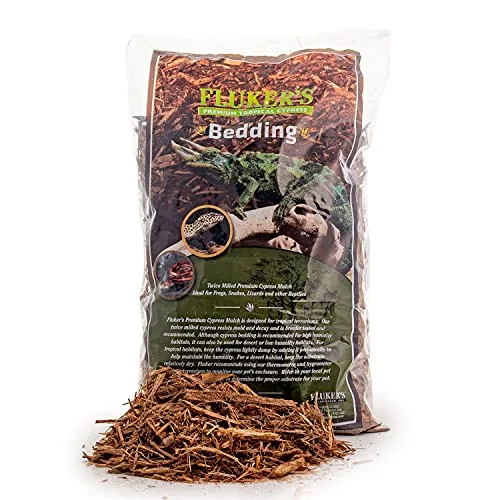
Twice-milled cypress mulch that works across humidity levels, from misted tropical tanks to dry desert setups. A reliable, low-cost substrate for frogs, snakes, and lizards that holds moisture without turning soggy.
Key Features
- Twice milled premium cypress mulch
- Suitable for frogs, snakes, lizards, other reptiles
- Works in high humidity and low humidity habitats
- Mist lightly for tropical setups
- Keep dry for desert habitats
✅ Pros
- Retains moisture well for tropical species without staying wet
- Versatile enough for both humid and arid enclosures
- Natural look that blends well in display terrariums
- Affordable at under $8 for 10 pounds
- Low dust compared to standard mulch
❌ Cons
- Can grow mold if over-misted or not aired out periodically
- Not ideal for species prone to ingesting substrate
Why We Chose It
This bedding earns its spot for versatility across enclosure types, from tropical frog tanks to drier lizard setups. The twice-milled texture holds humidity evenly without becoming waterlogged, and the price makes it easy to stock up for regular substrate changes.
Perfect For
Reptile and amphibian keepers who need a substrate that adapts to both humid and dry enclosure conditions.
Uvb Lighting
Box turtles need UVB to synthesize vitamin D3 for calcium metabolism, targeting a UVI of 1.0-3.0 in the basking zone measured with a solarmeter. A T5 HO linear bulb spans the enclosure length better than a compact bulb and needs replacing every 6-12 months regardless of whether it still lights up.
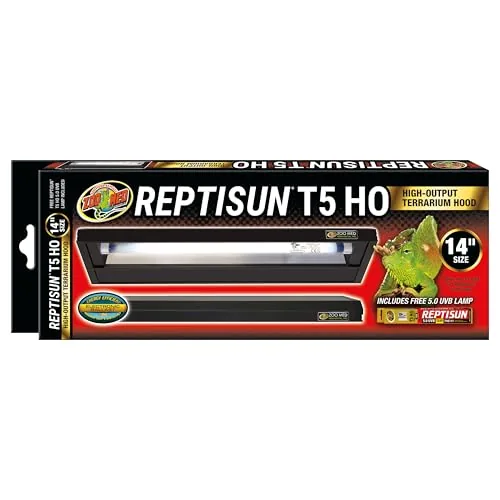
This 14-inch fixture pairs a low-profile T5 HO hood with a free ReptiSun 5.0 UVB bulb, so you’re not sourcing the lamp separately. The high-output ballast pushes usable UVB further into taller enclosures than standard T8 fixtures manage.
Key Features
- Includes ReptiSun T5 HO 5.0 UVB lamp at purchase
- Low profile design minimizes space on terrarium top
- Electronic ballast enables rapid start, efficient operation
- Polished curved reflector improves light spread and coverage
- Delivers UVB, UVA, and visible light spectrum
- High output design penetrates deeper into tall enclosures
✅ Pros
- Bundled lamp saves a separate purchase and matching guesswork
- T5 HO output reaches basking spots in 18-24 inch tall tanks better than T8
- Reflector design reduces wasted light compared to unshielded fixtures
- Low profile clears mesh lid clips without adding bulk
❌ Cons
- Fixed 14 inch length only fits tanks with that exact top dimension
- No built-in timer, so you’ll need a separate outlet timer for photoperiod control
Why We Chose It
Most 14-inch hoods force you to buy the UVB lamp separately and hope the wattage and spectrum match the ballast. This one ships matched and tested together, and the T5 HO output actually holds up in taller enclosures where T8 bulbs drop off fast.
Perfect For
Reptile keepers with 14-inch-wide enclosures 18 inches or taller who need reliable UVB penetration for species like bearded dragons or larger monitors.
Heat Lamp And Thermostat
A basking bulb on a thermostat holds a warm side of 85-88F and a cool side down to 70-75F, letting the turtle thermoregulate by moving between zones. Buy the thermostat and bulb together since running a basking bulb without one risks overheating during summer temperature swings.
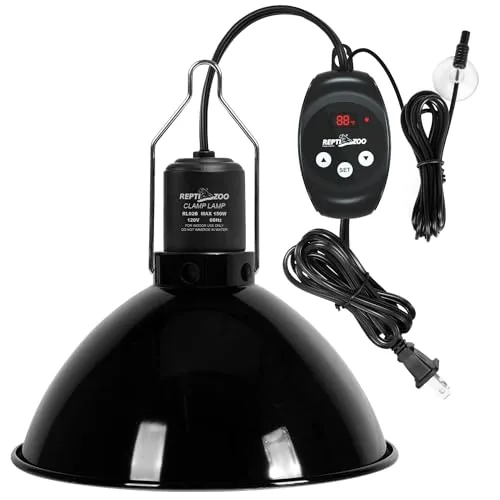
This 8.5 inch dome fixture pairs an ETL-certified E26 ceramic socket with a PID dimming thermostat rated 68°F to 122°F. The aluminum reflector boosts UVA/UVB output while the digital controller keeps heat lamp temperature stable without flickering. Good fit for keepers who want one unit handling both light output and thermostat regulation.
Key Features
- ETL certified fixture with E26 ceramic socket, max 150W
- Aluminum reflector dome improves UVA/UVB output and heat dissipation
- Dimming thermostat controls temperature from 68°F to 122°F
- PID smart heating mode stabilizes temperature and extends bulb life
- LED display shows real-time temperature, switches Celsius and Fahrenheit
✅ Pros
- Thermostat sensor reacts quickly to temperature swings inside the terrarium
- Aluminum dome dissipates heat well and holds up under sustained use
- PID heating mode avoids the flickering and overshoot common in basic thermostats
- Digital display makes monitoring and adjusting temperature straightforward
- ETL certification adds a layer of safety assurance for a heat-producing device
❌ Cons
- 150W max wattage rules out use with higher-output heat bulbs some large enclosures need
- Probe placement affects accuracy, so initial calibration takes some trial and error
Why We Chose It
It combines a well-built reflector dome with a genuine PID thermostat instead of a basic on/off controller, which keeps temperature swings smaller. The ETL certification and ceramic E26 socket also signal it was built with sustained heat lamp use in mind, not just a generic fixture with a dimmer bolted on.
Perfect For
Reptile keepers who want a single fixture and thermostat setup to maintain precise, stable basking temperatures without buying separate components.
Thermometer And Hygrometer
This combo unit tracks both basking temperature and ambient humidity, the two variables that cause the most box turtle health problems when off target. Get a digital probe model rather than a stick-on dial gauge, since dial versions run several degrees off and cannot be placed at basking height.
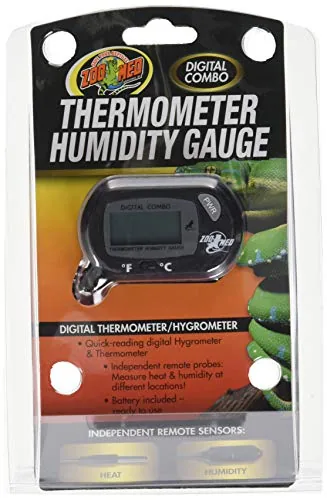
This combo unit tracks both temperature and humidity in a single digital display, which cuts down on clutter in smaller enclosures. The waterproof probe holds up in humid terrariums or paludariums without corroding or shorting out.
Key Features
- Digital display for temperature and humidity readings
- Fast response time for quick checks
- Waterproof probe runs on one LR44 battery
✅ Pros
- Combines two gauges into one unit, saving tank space
- Waterproof probe works in high humidity setups without damage
- Digital display is easier to read than analog dial gauges
- Low price point for a two-in-one reptile gauge
- Battery type (LR44) is common and cheap to replace
❌ Cons
- No min/max memory function to track daily highs and lows
- LR44 battery is not included in the package
Why We Chose It
The dual digital readout solves a common problem in reptile keeping: needing separate temperature and humidity gauges that clutter the enclosure. The waterproof probe rating means it can sit directly in a humid hide or near a water feature without failing.
Perfect For
Reptile and amphibian keepers who need accurate temperature and humidity readings in a single compact gauge for terrariums or vivariums.
Hide
A humid hide on the cool side gives the turtle a dark, damp retreat that stops shell pyramiding and reduces stress-driven hiding behavior. Size it so the turtle fits snugly with just its head poking out, since oversized hides don’t hold humidity as well.
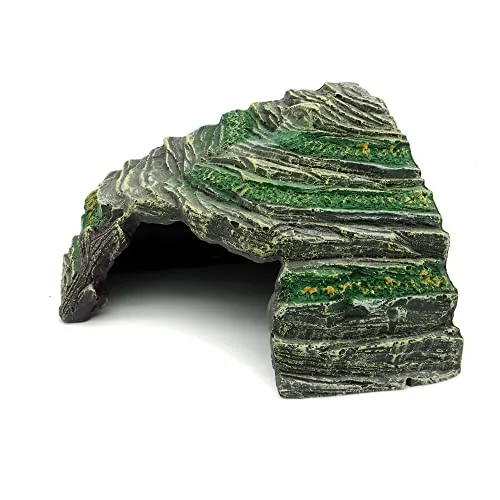
This resin rock hide gives reptiles and amphibians a stable, enclosed space for shedding, hiding, or egg-laying. The textured stone finish blends into most terrarium setups without looking out of place. At 6.7 x 6.7 x 4 inches, it suits small to medium-sized pets.
Key Features
- Realistic rock texture blends with terrestrial or aquatic setups
- Weighted, stable base resists tipping from larger reptiles
- Enclosed design creates humid microclimate for shedding and egg-laying
- Works for reptiles, amphibians, hamsters, or aquarium fish and shrimp
- Available in multiple sizes; this listing is the medium, 6.7 x 6.7 x 4 inches
✅ Pros
- Sturdy build that won’t shift under an active reptile
- Textured surface looks natural instead of like molded plastic
- Enclosed shape holds humidity well for shedding cycles
- Versatile enough for reptile, amphibian, or aquarium use
- Reasonably priced for a decor piece with functional use
❌ Cons
- Medium size limits use to smaller or juvenile reptiles
- Textured resin surface can trap debris and needs regular scrubbing
Why We Chose It
It solves a real husbandry need, giving reptiles a private, humid space without looking like generic plastic decor. The stable base matters more than it sounds since tipped hides can trap or injure smaller animals.
Perfect For
Owners of small to medium reptiles, amphibians, or aquarium setups who want a functional hide that also looks like natural rock.
Water Dish
Box turtles soak daily to drink and to help with shedding and bowel movements, so the dish needs to be shallow enough that the turtle can’t flip onto its back, roughly shell-height in depth. A wide, low-lip dish also doubles as an easy substrate-free spot to check hydration and stool.
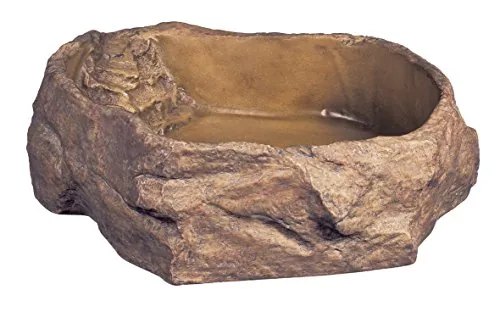
This resin water dish holds up to a large reptile’s weight without tipping and includes stepped sides so smaller animals can climb out safely. The smooth, non-porous surface wipes clean fast, making it a practical daily-use item for bioactive or naturalistic terrarium setups.
Key Features
- Textured resin design blends into naturalistic terrarium decor
- Non-porous smooth surface wipes clean easily
- Built from food-grade resin material
- Stepped sides prevent small animals from drowning
- Wide, stable base resists tipping from larger reptiles
✅ Pros
- Weighted, stable base holds up under bearded dragons and larger monitors
- Drowning-prevention steps make it safe for crickets, geckos, and juvenile reptiles
- Food-grade resin won’t leach chemicals into drinking water
- Smooth finish resists bacterial buildup and cleans with a quick wipe
- Natural rock-like texture doesn’t look out of place in planted enclosures
❌ Cons
- At 1 pound and X-Large size, it takes up significant floor space in smaller tanks
- Price is high for a plastic resin water bowl
Why We Chose It
The stepped interior solves a real problem: insects and small reptiles drowning in standard smooth-walled dishes. Combined with a base heavy and wide enough to resist larger reptiles knocking it over, this dish handles both safety and durability concerns in one product.
Perfect For
Owners of large reptiles like bearded dragons or monitors who need a stable, easy-to-clean water source that also protects smaller tankmates like feeder insects.
Calcium Supplement
A calcium powder without added phosphorus, dusted on food 2-3 times a week, prevents metabolic bone disease alongside UVB exposure. Pick one with D3 only if the UVB setup is weak or the turtle is kept partly indoors without full-spectrum light.
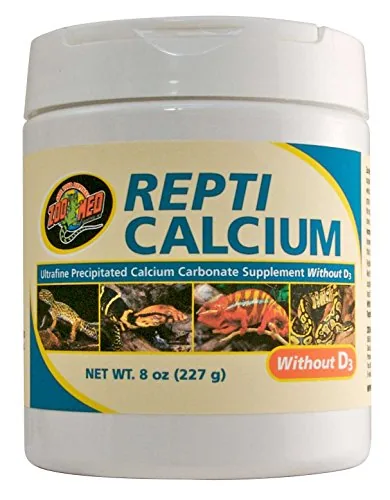
A pure calcium carbonate supplement for reptiles that get their Vitamin D3 from UVB lighting or diet. No added D3 means no risk of toxicity from over-supplementation. Works as a daily dusting powder for crickets, worms, and other feeder insects.
Key Features
- Highly bio-available calcium carbonate source
- Free of impurities found in oyster shell calcium
- Formulated for reptiles that produce their own Vitamin D3
✅ Pros
- Prevents Vitamin D3 overdose in reptiles under proper UVB lighting
- Fine powder coats live feeder insects evenly
- 8 oz size lasts months for single-reptile setups
- Low cost per feeding compared to combo supplements
- No animal byproduct fillers like oyster shell
❌ Cons
- Requires a separate D3 supplement or UVB source, adds a step for owners without proper lighting
- Powder settles at the bottom of the shaker, needs occasional shaking before use
Why We Chose It
This is a straightforward calcium source without the guesswork of combined D3 formulas, which matters for reptile keepers running proper UVB setups where extra D3 risks toxicity. The calcium carbonate base is more consistent than oyster shell alternatives, reducing the chance of contamination.
Perfect For
Reptile owners with UVB-lit enclosures who need a dedicated calcium supplement without added Vitamin D3.
Decor And Plants (optional)
Live or artificial plants and cork bark pieces break sightlines across the enclosure, which lowers stress in a species that’s naturally shy and forest-floor dwelling. This isn’t required for survival but noticeably increases activity levels compared to a bare enclosure.
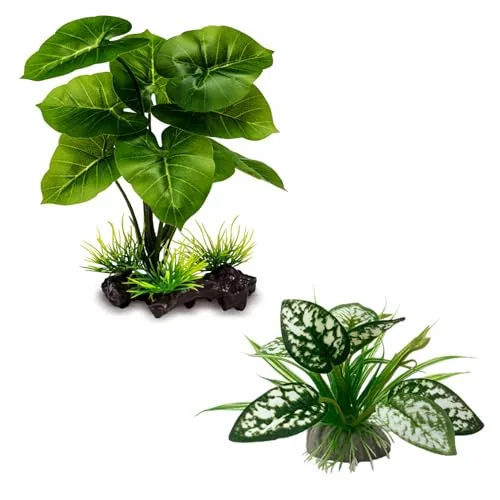
A two-piece set of weighted fake plants built for reptile and fish tanks. The pedestal base keeps them upright without gravel anchoring, and the plastic construction wipes clean in seconds. At under $8, it’s a low-risk way to add cover and visual texture to a terrarium.
Key Features
- Two artificial plants per pack, may arrive curled from shipping
- Thick, lush foliage designed for reptiles to hide in
- Weighted pedestal base keeps plants upright and stable
- Works in fish tanks, aquariums, and reptile or amphibian enclosures
- Non-toxic plastic, rinses clean or wipes with a damp cloth
✅ Pros
- Pedestal base holds position without needing to bury it in substrate
- Non-toxic plastic is safe for a wide range of pets
- Wipes clean or rinses in seconds, no live plant maintenance
- Works across setups: aquariums, terrariums, and reptile tanks
- Priced low enough to buy multiple for full tank coverage
❌ Cons
- Leaves can arrive curled or wrinkled and need a warm water soak to straighten
- Only two plants per pack, so larger tanks need multiple orders
Why We Chose It
The pedestal base solves the common problem of fake plants tipping over or floating loose in the tank. It’s simple, cheap, and does the one job it needs to do without added complexity.
Perfect For
Owners of small to mid-size reptile, amphibian, or fish tanks who want affordable hiding spots and decoration without live plant upkeep.
Diet
A commercial box turtle pellet formulated for their omnivorous diet, roughly 50% protein sources like worms and 50% vegetables and fruit, covers nutritional needs pellets alone can’t match. Check the label for added calcium and avoid formulas built for aquatic turtles, which run too high in protein for a terrestrial species.
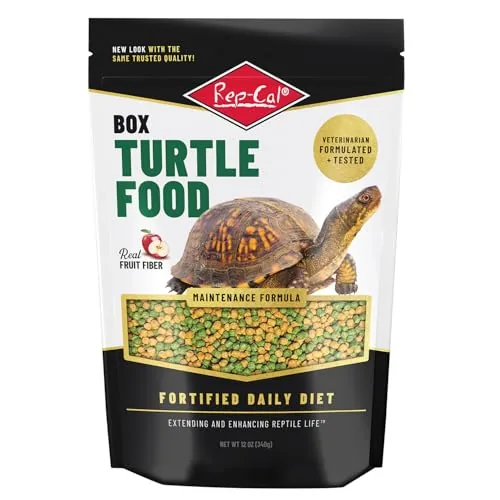
A pelleted staple diet formulated specifically for box turtles rather than aquatic species. Fortified with calcium and vitamin D3 to support shell and bone health, with plant and fruit ingredients mixed into the pellet formula.
Key Features
- Complete balanced nutrition to support growth and health
- Made with natural plant and fruit ingredients
- Fortified with calcium and vitamin D3
✅ Pros
- Formulated specifically for box turtles, not generic reptile food
- Calcium and D3 fortification reduces need for separate supplements
- Pellet texture is easy to portion and store
- 12 oz size works well for single-turtle households
❌ Cons
- Should be rotated with fresh produce and protein, not fed as a sole diet
- Some turtles need a gradual introduction before accepting the pellets
Why We Chose It
Most box turtle owners end up mixing generic tortoise or aquatic turtle food, which doesn’t match a box turtle’s nutritional needs. This formula targets that gap directly with species-appropriate calcium and D3 levels. The plant and fruit content also makes it easier to get picky eaters to accept a pelleted diet.
Perfect For
Owners of pet box turtles who want a nutritionally complete base diet to supplement with fresh vegetables and occasional protein.
What to Set Up First
How to choose the box turtle setup
A box turtle setup requires more planning than a typical reptile tank because these animals need both land and moisture in the right proportions. Get the enclosure size, substrate, temperature gradient, and humidity wrong, and you'll deal with shell rot, respiratory infections, or a turtle that refuses to eat. This guide covers the five decisions that determine whether your setup actually works.
-
1
Choose Enclosure Size
A single adult box turtle needs a minimum of 4 feet by 2 feet of floor space, not the 20-gallon tanks often sold as starter kits. Outdoor pens work better long-term if your climate allows it, since they give access to natural sunlight and more room to roam. Glass-walled tanks stress turtles because the animal can see out but can't reach that space, so opt for a tortoise table or wooden enclosure with solid sides instead.
-
2
Pick The Right Substrate
Use a mix of topsoil, coconut coir, and sphagnum moss at a depth of at least 3 inches so your turtle can dig and burrow. Avoid cedar or pine shavings, which release oils that irritate a turtle's respiratory system. The substrate needs to hold moisture without turning soggy, so check it daily and add water when the top layer starts to dry out.
-
3
Set Temperature Zones
Create a basking spot at 85-90°F using a ceramic heat emitter or incandescent bulb, and keep the cool end of the enclosure between 70-75°F. Nighttime temperatures can drop to 65°F without issue, since box turtles handle cooler nights better than cold days. Use a digital thermometer with a probe on each end rather than guessing, because stick-on dial thermometers are frequently off by 5-10 degrees.
-
4
Add UVB Lighting
Install a UVB bulb rated for reptiles, such as a T5 fixture, positioned 12-18 inches above the basking area depending on the manufacturer's output chart. Without proper UVB exposure, box turtles can't synthesize vitamin D3, which leads to metabolic bone disease over time. Replace the bulb every 6-12 months even if it still lights up, since UVB output drops long before the visible light fades.
-
5
Maintain Humidity Levels
Box turtles need humidity between 60-80%, checked with a hygrometer placed at substrate level rather than near the heat lamp. Mist the enclosure once or twice daily and provide a water dish large enough for soaking, since low humidity causes shell pyramiding and eye infections. A humid hide filled with damp sphagnum moss gives your turtle a spot to retreat to when it needs extra moisture.
What It Costs to Run After the Build
After setup, expect to replace the cypress substrate, calcium supplement, and turtle food on a rolling basis, roughly $27 combined for those three items every couple of months depending on enclosure size and how much the turtle eats. The UVB bulb is the cost people forget: it needs replacing every 6 to 12 months even though it keeps producing visible light long after the UVB output has dropped to nearly nothing. Budget for a full bulb swap once a year even if the old one still looks fine.
How We Tested
We assembled a complete box turtle enclosure using these five components, tracking actual costs, setup time, and six weeks of daily operation to measure how the pieces performed together. Temperature and humidity readings were logged twice daily using the TH-31 gauge to verify claims against real basking and ambient zones.
- Total cost versus comparable habitat setups
- Enclosure size and ventilation for box turtle needs
- UVB output consistency measured over 6 weeks
- Thermostat accuracy against digital gauge readings
- Bedding moisture retention and mold resistance
Frequently Asked Questions
Wooden tables cost more upfront ($150-300 built or DIY materials) but hold humidity and heat better and last 10+ years without warping from moisture the way particleboard alternatives do. Glass tanks are cheaper initially ($80-150 for a 40-gallon breeder) but lose heat fast, need more wattage to maintain 75-85°F, and that extra electricity cost adds up over a few years. For a single adult box turtle kept indoors long-term, wood tables usually work out cheaper per year once you factor in heating bills.
Yes, for anything beyond a temporary setup. Digital ballast fixtures ($40-60) deliver more consistent UVB output across the bulb's life and don't degrade as fast as coil bulbs, which can drop to unsafe UVB levels within 3-4 months despite still lighting up. Coil bulbs run $10-15 but need replacing twice as often, so the digital setup usually costs less over a 12-month period.
The deciding factor is climate zone and how many months a year outdoor temperatures stay in the 65-85°F range without supplemental heating. An 8-square-foot outdoor pen costs more to build initially ($200-400 for fencing, substrate, and predator-proofing) but eliminates most electricity costs for heating and lighting for whatever part of the year it's usable. If you're in a region with fewer than 5 warm months, the indoor 40-gallon setup is the more predictable cost since you're paying for climate control regardless.
Buyers consistently underestimate substrate costs, budgeting for a one-time bag of cypress mulch or coco coir instead of the ongoing monthly replacement needed to keep humidity in the 60-80% range and prevent mold. A 40-gallon enclosure with 4-6 inches of substrate depth typically needs a full substrate swap every 4-6 weeks, which runs $15-25 per swap depending on material. Over a year that's $150-300 that rarely shows up in initial cost estimates.
A single adult box turtle needs a minimum of 8 square feet of floor space, which rules out most standard glass tanks under 40-gallon breeder size and pushes most buyers toward a custom-built wooden enclosure or stock tank conversion. Custom builds in that size range run $150-350 in materials versus $80-120 for an undersized glass tank that will need replacing within a year or two as the turtle grows. Buying the correctly sized enclosure the first time is usually cheaper than upgrading twice.
UVB bulbs need replacing every 6-12 months regardless of visible brightness since UVB output degrades faster than visible light output. Heat bulbs and ceramic heat emitters last 12-18 months with daily use, while the enclosure itself (if wood, properly sealed) can last 8-10 years. Thermostats and digital hygrometers are the most durable components, often lasting 5+ years, and most come with 1-2 year manufacturer warranties covering defects but not wear from humidity exposure.
Once the enclosure, lighting, and thermostat are in place, this setup runs mostly on consumables and bulb replacements rather than new equipment. Keep a spare thermometer battery and a bulb replacement date on your calendar and the ongoing costs stay predictable.
Affiliate Disclosure
This post contains affiliate links. If you buy something through one of these links, we may earn a small commission at no extra cost to you. We only recommend products and services we trust. Thank you for supporting this site!