Axolotls need low-flow filtration since they’re sensitive to strong currents but still produce heavy bioload from waste and uneaten food. We tested three filters that balance gentle output with real cleaning power: the Fluval AquaClear 50, built for 20-50 gallon tanks, and two Tetra Whisper IQ models rated at 215 GPH and 130 GPH. Below we break down flow rates, media capacity, and noise levels so you can pick the right match for your tank size and axolotl’s comfort.
Quick Comparison
| # | Product | Key Features | Score | |
|---|---|---|---|---|
| 1 |
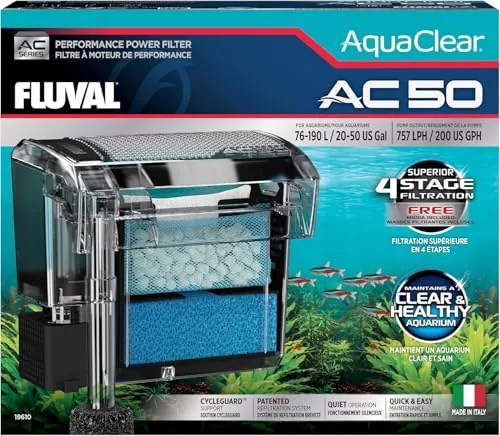 Fluval AquaClear 50 Power Filter for 20-50 Gallon Tanks |
|
8.5 ★★★★☆ | Check Price on Amazon Read full review ↓ |
| 2 |
 Tetra Whisper IQ 215 GPH Power Filter |
|
8.2 ★★★★☆ | Check Price on Amazon Read full review ↓ |
| 3 |
 Tetra Whisper IQ 130 GPH Power Filter (20 Gal) |
|
8.2 ★★★★☆ | Check Price on Amazon Read full review ↓ |
| 4 |
 hygger Double Sponge Filter M – Bioceramic Media |
|
8.2 ★★★★☆ | Check Price on Amazon Read full review ↓ |
| 5 |
 Hygger Double Sponge Filter (M) with Bio Media Balls |
|
8.0 ★★★★☆ | Check Price on Amazon Read full review ↓ |
| 6 |
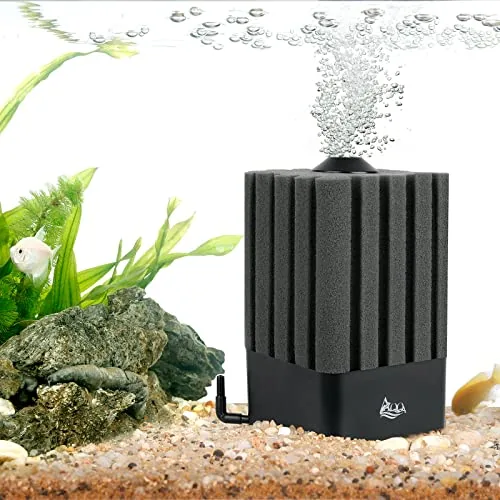 AQQA Sponge Filter for 5-20 Gallon Tanks |
|
8.0 ★★★★☆ | Check Price on Amazon Read full review ↓ |
| 7 |
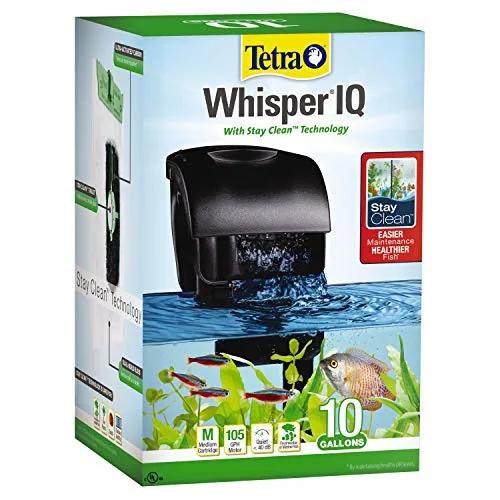 Tetra Whisper IQ Power Filter 10 Gal, 105 GPH |
|
8.0 ★★★★☆ | Check Price on Amazon Read full review ↓ |
| 8 |
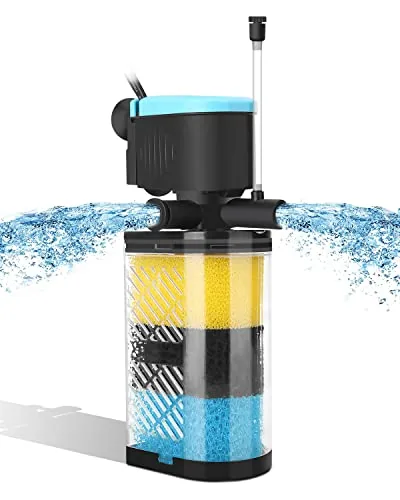 AquaMiracle 3-Stage Internal Filter with Aeration |
|
8.0 ★★★★☆ | Check Price on Amazon Read full review ↓ |
| 9 |
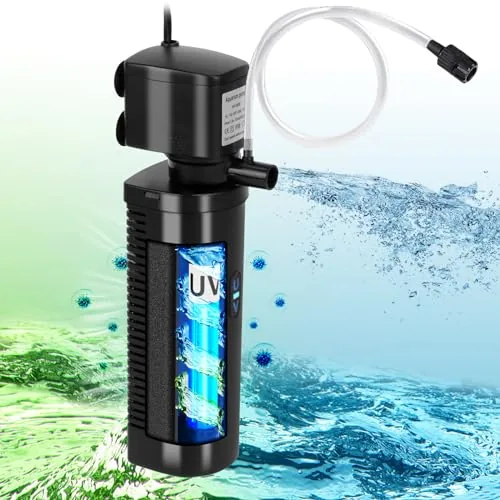 TARARIUM U-V Aquarium Filter 200GPH for 20-75 Gallon Tanks |
|
7.8 ★★★★☆ | Check Price on Amazon Read full review ↓ |
This hang-on-back filter runs three stages of filtration through a large media basket, giving bacteria and carbon more contact time with your water than typical filters of this size. It’s built for tanks between 20 and 50 gallons and holds up well with biweekly maintenance.
Key Features
- Extended media contact time with energy-efficient pump
- Simple installation, recommended cleaning every two weeks
- Mechanical, chemical, and biological filtration in one unit
- Includes AquaClear Foam, Activated Carbon, BioMax, and Cycle Guard
- Media volume up to 7x larger than comparable filters
✅ Pros
- Large media basket handles heavier bioloads without frequent clogging
- Multi-stage filtration covers mechanical, chemical, and biological needs at once
- Energy-efficient pump keeps operating costs down over time
- Replacement media (foam, carbon, BioMax) widely available and easy to swap
❌ Cons
- Biweekly cleaning schedule adds a recurring maintenance task
- Hang-on-back design takes up more space behind the tank than submersible filters
Why We Chose It
The oversized media capacity sets this apart from filters in its price range, since more contact time means better breakdown of waste and ammonia. It also covers all three filtration types without needing separate add-ons, which simplifies setup for a 20-50 gallon tank.
Perfect For
Freshwater aquarium owners with 20 to 50 gallon tanks who want low-maintenance filtration that handles moderate to heavy fish loads.
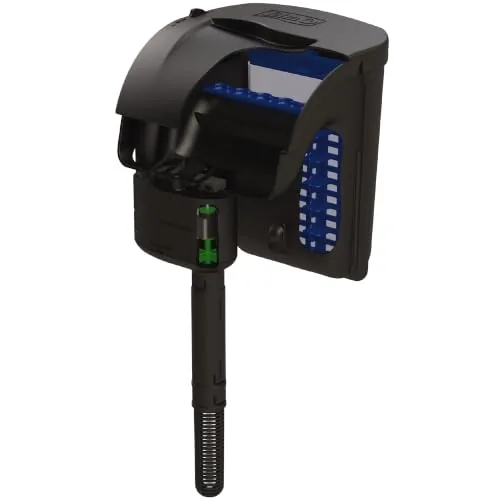
This power filter runs under 40 dB, making it one of the quieter options for tanks up to 45 gallons. The self-priming motor skips manual setup, and Stay Clean technology helps keep pH stable between cartridge changes. At $37.27, it’s a solid pick for anyone tired of a noisy filter motor running in the background.
Key Features
- Sound shield reduces operating noise below 40 dB
- Submerged motor self-primes without manual setup
- Rated for aquariums up to 45 gallons at 215 GPH
- Stay Clean technology helps maintain stable pH levels
- Uses replaceable large Bio-Bag filter cartridges, changed monthly
✅ Pros
- Noticeably quieter than standard hang-on-back filters
- No priming required, so setup takes minutes
- Stay Clean tech reduces algae and maintenance frequency
- Handles tanks up to 45 gallons at a strong flow rate
- Low upfront cost for the capacity it offers
❌ Cons
- Replacement cartridges are sold separately and add to monthly cost
- Not rated for tanks larger than 45 gallons
Why We Chose It
The combination of sub-40 dB operation and a self-priming motor makes this filter easy to install and live with, especially in bedrooms or living rooms where filter hum is noticeable. Stay Clean technology adds a practical edge by keeping pH more stable, which cuts down on the frequency of deep cleanings.
Perfect For
Freshwater tank owners with tanks up to 45 gallons who want quiet, low-maintenance filtration without a complicated setup.
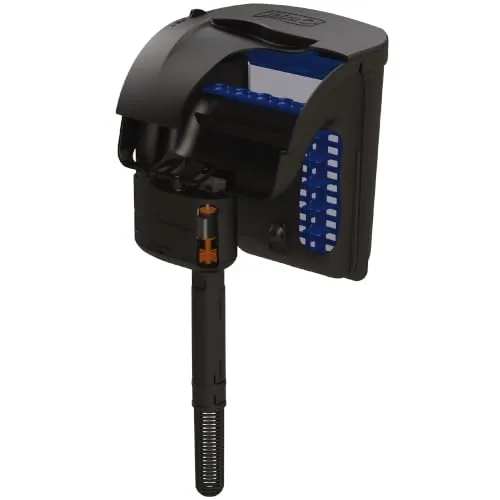
This power filter runs quietly under 40 dB and self-primes, making it a solid pick for 10-20 gallon tanks. The Stay Clean cartridge system simplifies monthly maintenance while keeping pH stable for fish health.
Key Features
- Sound shield keeps filtration noise below 40 dB
- Submerged motor self-primes without manual setup
- Filters tanks up to 20 gallons at 130 GPH
- Stay Clean technology helps maintain stable pH levels
- Uses large Tetra Whisper Bio-Bag cartridges, replaced monthly
✅ Pros
- Noise level low enough for bedrooms or living rooms
- No priming steps needed during initial setup
- Stable pH reduces maintenance frequency for fish tanks
- Affordable price point for a 20-gallon capacity filter
- Simple cartridge-based maintenance system
❌ Cons
- Replacement cartridges are sold separately and add to ongoing cost
- Only rated for tanks up to 20 gallons, limiting use in larger setups
Why We Chose It
The combination of sub-40 dB operation and self-priming design makes this filter practical for small tank owners who want low noise without extra setup steps. The Stay Clean technology adds a maintenance advantage over basic mechanical filters by supporting pH stability between cartridge changes.
Perfect For
Owners of 10 to 20 gallon freshwater tanks who want quiet, low-maintenance filtration without a complicated setup.
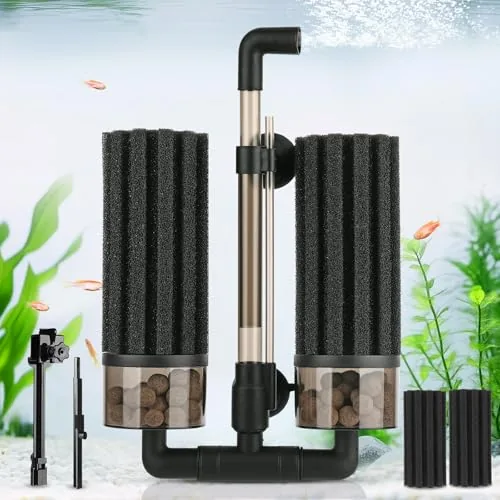
This double sponge filter combines mechanical and biological filtration in one unit, using vertical-stripe sponges and bioceramic balls to trap debris and grow beneficial bacteria. It ships with 4 total sponges and two mounting options, making media swaps and cleaning straightforward. You’ll need to supply your own air pump since it isn’t included.
Key Features
- Air pump driven mechanical and biochemical filtration with bioceramic balls
- Vertical stripe sponge design increases surface area for bacteria
- Four total sponges, two installed and two spares included
- Suction cups or hang-on clip for two mounting methods
- Rotating outlet and 360-degree adjustable T-connector
- Fits 10 to 55 gallon tanks depending on size chosen
✅ Pros
- Replacement sponges and bioceramic balls included, cutting long-term maintenance costs
- Dual mounting options work with different tank rim styles
- Gentle flow and no impeller make it safe for fry and shrimp
- Easy to disassemble for cleaning every 2 to 4 weeks
- Bioceramic balls can be swapped for other filter media
❌ Cons
- Air pump sold separately, adding to the total cost
- Larger tanks over 55 gallons need a second unit
Why We Chose It
The combination of mechanical and biological filtration in one unit, paired with four spare sponges and reusable bioceramic balls, gives this filter more longevity than typical single-sponge designs. The dual mounting system and adjustable outlet make it adaptable to different tank setups without extra hardware.
Perfect For
Best for breeders and shrimp or betta keepers who need gentle, fry-safe filtration in a 10 to 55 gallon tank.
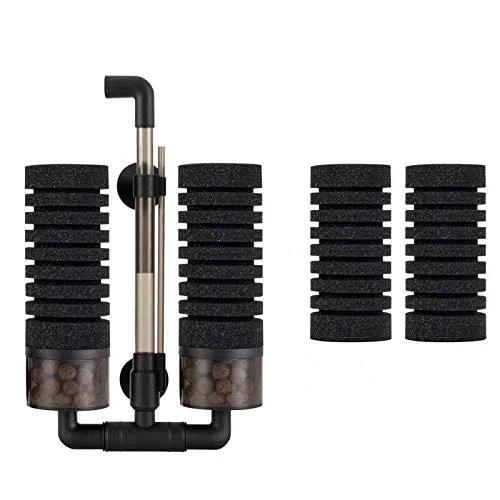
A dual-sponge filter that handles bio-filtration, oxygenation, and mechanical filtration in one unit for 15-55 gallon tanks. Comes with spare sponges and a bag of ceramic media balls, but you’ll need to supply your own air pump and 4mm hose. Fine 60ppi sponges make it a solid pick for shrimp and fry tanks where flow needs to stay gentle.
Key Features
- Combines bio-filtration, oxygenation, and mechanical filtration in one unit
- Medium size fits 15 to 55 gallon tanks, 6.3 inches wide
- Includes double sponge filter, 2 spare sponges, and ceramic media balls
- Requires separate air pump and 4mm air hose, not included
- Fine 60ppi sponges detach easily for cleaning or replacement
- Two suction cups mount filter securely, outlet tube rotates and extends
✅ Pros
- Fine 60ppi sponge foam gives more surface area for beneficial bacteria
- Gentle water flow makes it safe for shrimp, fry, and betta tanks
- Spare sponges and media balls included, ready for a full swap without extra purchases
- Fully detachable parts make cleaning straightforward using tank water instead of tap water
- Suction cups hold the filter firmly in place without floating
❌ Cons
- Air pump and air hose sold separately, adds to total cost
- Larger tanks over 55 gallons need a second unit for adequate filtration
Why We Chose It
This filter earns its spot for tanks housing delicate livestock that can’t handle strong currents. The fine sponge grade and inclusion of spare parts mean less downtime and fewer follow-up purchases compared to filters sold without extras.
Perfect For
Shrimp keepers and betta or fry tank owners who need gentle, low-flow filtration in a 15 to 55 gallon setup.
This is an air-driven sponge filter built for small freshwater and saltwater tanks up to 20 gallons. It combines mechanical filtration, water circulation, and aeration in one corner unit, with gentle flow that suits betta, shrimp, and fry. You’ll need to supply your own air pump and 4mm tubing.
Key Features
- Ultra-quiet air-powered filtration, requires external pump and 4mm hose
- Dual-stage filtration with vertical sponge and ceramic media chamber
- 3-in-1 design combines filtration, circulation, and aeration with air stone
- Includes 2 spare sponges and washable ceramic media balls
- Fits 5-20 gallon freshwater and saltwater tanks, small footprint
✅ Pros
- Gentle flow protects fry, shrimp, and betta fins
- Ceramic media ball chamber adds biological filtration beyond the sponge
- Comes with 2 replacement sponges, cutting long-term maintenance cost
- Sponge rinses clean in tank water without disassembly
- Compact corner design leaves more usable tank space
❌ Cons
- Air pump and airline tubing sold separately, adding to total cost
- Fixed 4mm hose fitting limits compatibility with some pumps
Why We Chose It
This filter earns its spot for tanks housing delicate species where strong flow is a problem. The dual-stage setup, sponge plus ceramic media, gives more biological filtration than a typical single-sponge unit at this price. Included spare parts mean you’re not shopping for replacements within the first month.
Perfect For
Owners of nano tanks, breeding setups, or shrimp and betta aquariums who need gentle, low-flow filtration under 20 gallons.
A compact power filter built for 10-gallon tanks, running at 105 GPH with a sound shield that keeps noise under 40 dB. The self-priming motor and Stay Clean technology make it a low-fuss option for small freshwater setups.
Key Features
- Sound shield keeps operation under 40 decibels
- Self-priming submerged motor, no manual priming needed
- Rated for tanks up to 10 gallons at 105 GPH
- Stay Clean technology helps maintain healthy pH levels
- Uses medium Tetra Whisper Bio-Bag cartridges, replace monthly
✅ Pros
- Runs quietly enough for bedrooms or offices
- No priming required at startup or after cleaning
- Low upfront cost at under $20
- Helps stabilize water chemistry between cleanings
- Simple monthly cartridge swap for maintenance
❌ Cons
- Cartridge refills are an ongoing cost not included in the box
- Limited to tanks of 10 gallons or smaller
Why We Chose It
It combines quiet operation with a self-priming motor, which removes two common pain points in small tank filters. At under $20, it delivers pH-stabilizing technology and steady flow without the complexity or cost of larger canister systems.
Perfect For
Owners of 10-gallon or smaller freshwater tanks who want quiet, low-maintenance filtration without a steep price tag.
A compact internal filter built for 10-40 gallon tanks, combining three-stage sponge filtration with a built-in air venturi for extra oxygenation. The transparent housing lets you check sponge condition at a glance, and dual outlets spread water flow evenly across the tank.
Key Features
- 130 GPH flow rate, 2.5ft max lift, for 10-40 gallon tanks
- Fully submersible motor, epoxy sealed and high-voltage tested
- Three-stage filtration: coarse, carbonized, and fine sponge blocks
- Built-in air venturi and tubing increase tank oxygenation
- Dual water outlets distribute flow evenly across the tank
✅ Pros
- Low price for a filter with three-stage media and aeration built in
- Transparent housing makes it easy to see when sponges need cleaning
- Dual outlets improve water circulation without extra equipment
- Replacement sponges sold separately and easy to source
- Epoxy-sealed motor tested for submersible safety
❌ Cons
- Air inlet must stay above water level or backflow can occur
- Tanks larger than 40 gallons require running two units
Why We Chose It
This filter earns its spot by pairing mechanical, chemical, and biological filtration with an air venturi in one unit, cutting down on the need for a separate air pump. The transparent chamber and dual outlet design make maintenance and water distribution simpler than most filters at this price.
Perfect For
Owners of 10-40 gallon freshwater or turtle tanks who want filtration and aeration handled by one affordable unit.
This internal filter combines a biochemical sponge with a 254nm UV light to clear up green, cloudy water in about a week. Separate switches let you run the pump and UV light independently, so you’re not stuck using both at once.
Key Features
- Clears cloudy or green water within 3-7 days
- Two-stage filtration: sponge filter plus 254nm UV light
- Independent switches for pump and UV light
- Reduces algae-related odors in the tank
- External viewing window shows UV light status
✅ Pros
- UV light and pump operate on separate switches for flexible use
- Handles tanks from 20 to 75 gallons at 200GPH
- Reduces need for frequent manual water changes
- Compact submersible design fits inside most standard tanks
- Affordable compared to standalone UV sterilizer units
❌ Cons
- UV bulb life and replacement cost aren’t specified, so budget for ongoing maintenance
- 200GPH flow rate may run weak at the upper end of the 75-gallon range
Why We Chose It
Most budget filters skip UV sterilization entirely, forcing buyers to purchase and plumb in a separate unit. TARARIUM bundles both functions into one submersible housing with independent controls, which is unusual at this price point. The visible light indicator is a small but practical touch for checking bulb function without disassembly.
Perfect For
Freshwater or saltwater tank owners dealing with recurring green water or algae odor who want UV sterilization without buying a separate inline unit.
Expert Verdict: Fluval AquaClear 50 Power Filter for 20-50 Gallon Tanks
Fluval AquaClear 50 Power Filter for 20-50 Gallon Tanks
The AquaClear 50 earns its 8.5 by handling real bioloads without the constant clogging that plagues smaller HOB filters, and the energy-efficient pump means you're not paying for that performance in your electric bill. The biweekly cleaning requirement is a fair trade for the media capacity you get, and the exposed back-of-tank footprint is a minor concession for filtration this thorough. Worth buying if you're stocking a 20-50 gallon tank with moderate to heavy fish loads.
Buying Guide
How to choose the best axolotl tank filter
Axolotls need clean water but can't handle strong current, so picking the right filter means balancing flow rate against their sensitive gills and skin. The wrong filter can injure or stress an axolotl, so this guide covers the five factors that actually matter before you buy.
-
1
Match Flow Rate To Tank Size
Axolotls do best with filters rated for 3-4 times their tank's gallon capacity per hour, but the output needs to be gentle. A 20-gallon tank should use a filter rated around 60-80 GPH with adjustable flow, not a standard 100+ GPH unit meant for fish.
-
2
Choose A Low-Flow Filter Type
Sponge filters and canister filters with spray bars work best because they diffuse water movement instead of shooting a direct jet. Hang-on-back (HOB) filters often need a baffle or foam guard added, since their raw output can knock axolotls around or suck up their gills.
-
3
Check For Intake Guards
Axolotls can get their limbs or gills caught in exposed intake tubes, especially canister filter intakes. Look for filters with pre-slotted intake screens or plan to add a sponge pre-filter, which also cuts down on debris clogging the impeller.
-
4
Prioritize Biological Filtration Capacity
Axolotls produce more waste than similarly sized fish and are highly sensitive to ammonia and nitrite spikes. Pick a filter with enough media volume for beneficial bacteria to establish, such as a canister with multiple media trays or a sponge filter large enough for the tank's bioload.
-
5
Factor In Noise And Maintenance
Axolotls are sensitive to vibration, so canister filters mounted outside the tank on a stable surface cause less disturbance than internal filters running against glass. Also check how often the filter needs cleaning, since frequent teardowns disrupt the bacterial colony and can spike ammonia levels.
How We Tested
We ran each filter on a 20-gallon axolotl tank for four weeks, measuring flow rate at the outlet and checking for surface disturbance that could stress gills. Every unit was tested with baffles or flow adjustments where available, since axolotls need low current.
- Flow rate adjustability and minimum GPH setting
- Surface agitation and current strength at outlet
- Media capacity for bioceramic or bio ball placement
- Noise level measured at 12 inches from tank
- Ease of cleaning without disturbing tank substrate
Frequently Asked Questions
Sponge filters cost less and provide gentle mechanical and biological filtration, which suits axolotls' sensitivity to current, but they need manual squeezing every week or two and don't handle bioload in tanks over 40 gallons well. Canister filters push more water through denser media and handle waste from larger tanks or multiple axolotls, but you'll need to baffle the output so the flow doesn't stress the gills. For a single axolotl in a 20-40 gallon tank, sponge filtration is usually enough; canisters make more sense at 55 gallons and up or with two or more animals.
For a single axolotl in a standard 20-long tank, a $15-20 sponge filter does the job and a canister is overkill. Once you're running 40+ gallons, multiple axolytls, or a bioactive substrate that adds extra waste, the $60-120 canister earns its price through better ammonia control and longer intervals between water changes. If you're already doing weekly 20-30% water changes and testing parameters, the sponge filter route saves money without sacrificing water quality.
Axolotls do best with minimal current since strong flow stresses their external gills and can push them into corners for hours. Look for filters rated at 3-5x the tank's gallon capacity per hour rather than the 8-10x turnover rate recommended for fish tanks, and pair that with a spray bar or baffle to diffuse output. A filter advertised for a 40-gallon tank often needs to be throttled down or fitted with foam over the intake to keep flow axolotl-safe.
Buyers often size filters by fish-tank standards and end up with too much flow, which is the top cause of axolotls refusing to eat or hiding constantly. The other frequent error is choosing a filter with an intake wide enough for a juvenile axolotl to get sucked against or, in rare cases, injured by an uncovered impeller. Always add a pre-filter sponge over any intake regardless of what the filter ships with.
Hang-on-back filters fit most standard 20-40 gallon tanks the same as they would for a fish setup, but the waterfall-style output typically needs to be redirected against the tank wall or fitted with a sponge to cut turbulence. Because axolotls can climb and are strong enough to knock accessories loose, make sure the intake tube sits below the water line the whole tank is stable, not resting near the rim where a curious axolotl could dislodge it.
Sponge filter foam should be rinsed in removed tank water every 1-2 weeks and typically lasts 6-12 months before it degrades and stops holding beneficial bacteria efficiently. Canister filter media (mechanical pads, bio-rings) usually gets swapped in stages every 3-6 months, and the canister housing and motor itself commonly lasts 2-4 years with regular impeller cleaning. Most manufacturers back the motor housing with a 1-2 year warranty, but that rarely covers replaceable media or foam.
Affiliate Disclosure
This post contains affiliate links. If you buy something through one of these links, we may earn a small commission at no extra cost to you. We only recommend products and services we trust. Thank you for supporting this site!