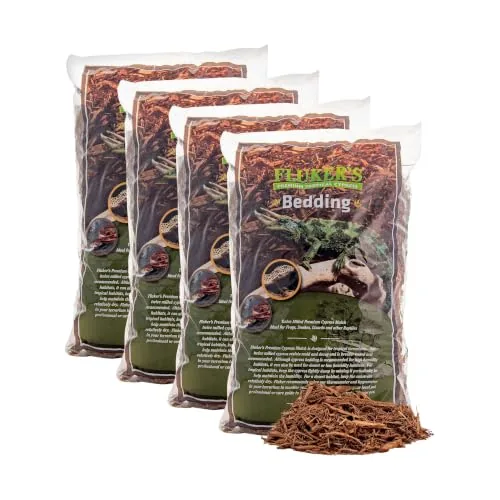
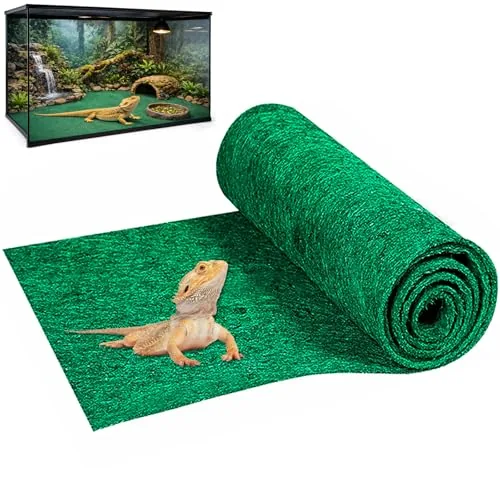
A full praying mantis setup runs $174.01 for the essentials, or $193.00 if you add every item on this list. The mantis itself is often free or a few dollars from a breeder. Almost every dollar you spend goes into the enclosure, climate control, and feeding setup, not the animal. That ratio surprises people who assume insect keeping is cheap because the pet is small.
The Full Parts List and What It Costs
| Item | Our pick | Priority | Price |
|---|---|---|---|
| Enclosure | NCYP Glass House Terrarium – Vented, Dry-Use Enclosure | Essential | $38.90 |
| Substrate | Exo Terra Coco Husk Brick 8QT Compressed Substrate | Essential | $5.96 |
| Climbing Branches | Duspro 6.5FT Bendable Moss Vine for Reptile Tanks | Essential | $9.99 |
| Thermometer And Hygrometer | Zoo Med TH-31 Digital Thermometer Humidity Gauge | Essential | $12.64 |
| Heat Mat And Thermostat | BN-LINK Digital Reptile & Seedling Thermostat 1000W | Optional | $18.99 |
| Misting System | RUNWUSHENG 6-Nozzle Reptile Misting System with Timer | Essential | $69.55 |
| Feeding Tongs | Novery 10.6″ Rubber Tip Feeding Tongs, 2PC Set | Essential | $4.99 |
| Cleaning Supplies | Absolutely Clean Enzyme Terrarium Cleaner & Deodorizer | Essential | $16.99 |
| Fruit Fly Culture | TC Insects Wingless Fruit Fly Culture – Live Feeder | Essential | $14.99 |
| Live Feeder Insects | BugBoy4Ever Wingless Fruit Fly Culture – Fresh Inoculated | Essential | Check price |
| Essential items only | $174.01 | ||
| Everything listed | $193.00 |
Where to Save and Where Not To
The misting system at $69.55 is the single biggest line item, and it is not a place to cut corners if you’re keeping a species that needs consistent humidity. The same goes for the heat mat and thermostat combo at $18.99. Skimping on temperature or humidity control leads to failed molts, which kills mantises outright. Substrate, tongs, and climbing branches are the safe places to economise. Coco husk brick, bendable vine, and rubber tip tongs are generic items where the cheapest option that meets the spec works fine.
Every Part, and What to Buy
Enclosure
Mantises molt by hanging upside down, so the enclosure needs at least 3x the mantis body length in vertical space or a failed molt can kill it. Choose a mesh or well-ventilated screen terrarium over solid glass, since stagnant air breeds mold in the humid conditions mantises need.
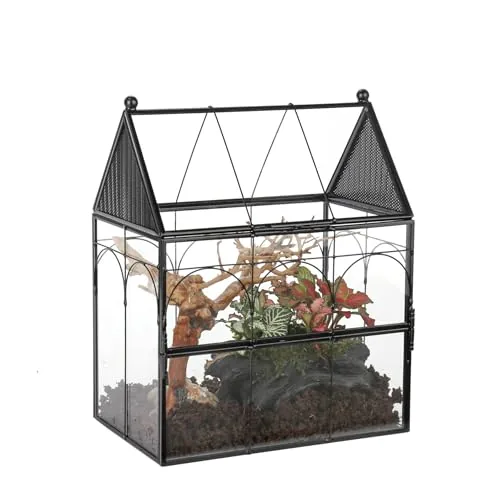
A geometric glass enclosure built for airflow, not moisture retention, making it a solid pick for jumping spiders, mantises, and small insects that need dry conditions. The soldered-panel construction has small gaps, so it works best as a display piece rather than a bioactive tank.
Key Features
- Metal mesh vents on triangle roof for airflow
- Not water-tight, will leak if soaked
- Use hidden inner planter for moss or fern
- Suited for succulents, cacti, and dry decor
- 7.5 x 4.9 x 9 inches, 1.2 gallon capacity
- House-shaped glass and metal geometric design
✅ Pros
- Strong ventilation prevents fogging and moisture buildup
- Glass panels give clear visibility from multiple angles
- Compact footprint fits desks, shelves, and windowsills
- Doubles as home decor when not housing insects
❌ Cons
- Soldered joints leave small gaps, so it can leak if watered directly
- Not suitable for species requiring high humidity or standing water
Why We Chose It
This terrarium fills a specific gap: a decorative, well-ventilated enclosure for owners who want to display jumping spiders or mantises without dealing with condensation. The geometric glass shape adds visual interest that a standard rectangular tank doesn’t offer.
Perfect For
Owners of small, dry-tolerant insects or arachnids who also want the enclosure to look good as tabletop decor.
Substrate
Coconut fiber or coco coir holds moisture to maintain the 50-70% humidity most mantis species require and cushions the mantis if it falls during a molt. Keep it 1-2 inches deep and replace it if mold appears.
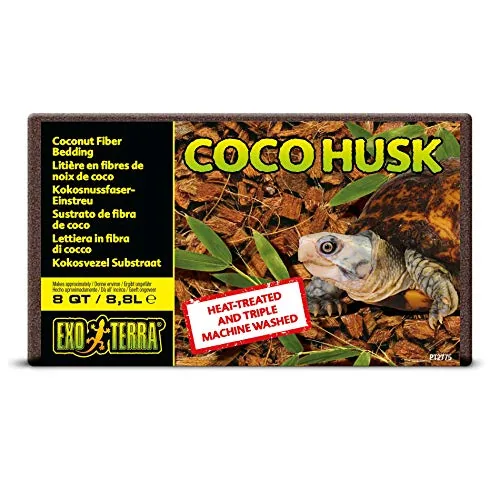
A compressed block of coconut husk fiber that expands to roughly 8 quarts of loose substrate when soaked in water. Works as a humidity-retaining base layer for reptile, amphibian, and tropical terrarium setups.
Key Features
- Compressed coconut fiber brick expands with water
- Manufactured under standard safety testing protocols
- Formulated to support humidity levels in enclosures
✅ Pros
- Expands to a large volume from a compact brick, easy to store
- Holds moisture well, useful for species needing higher humidity
- Fully biodegradable and safe to dispose of in soil or compost
- Low dust compared to sand or bark-based substrates
- Priced well under $6 for roughly 8 quarts of finished substrate
❌ Cons
- Needs 15-20 minutes of soaking and manual breaking apart before use
- Retains moisture long enough that it can grow mold in poorly ventilated tanks
Why We Chose It
This is a straightforward, no-frills substrate that does the one job it’s meant for: holding humidity without the mess of loose bark or soil blends. The compressed brick format also makes it cheap to ship and store compared to bagged substrates.
Perfect For
Owners of tropical or humidity-dependent reptiles and amphibians, like crested geckos, tree frogs, or ball pythons, who need a moisture-retentive substrate base.
Climbing Branches
Mantises need horizontal and vertical perches to climb to the enclosure ceiling before molting. Bark-textured branches or mesh screen give better grip than smooth plastic decor, which mantises can slip off mid-molt.
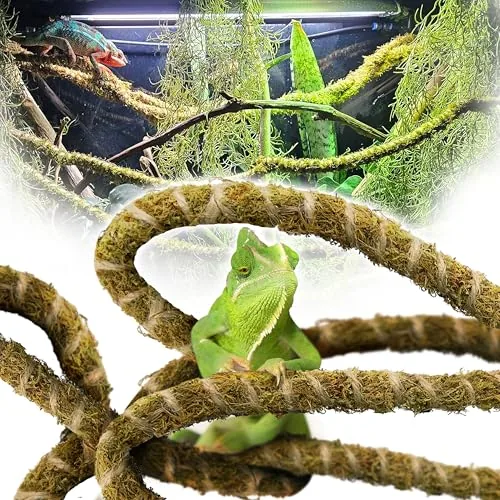
A 78-inch flexible moss vine that bends into custom climbing routes for snakes, geckos, chameleons and other terrarium pets. Made from natural moss for a realistic jungle look, it adds vertical space without taking up floor room in the enclosure.
Key Features
- 78 inches long, 0.6 inch diameter, fully bendable
- Natural moss texture and color for realistic backgrounds
- Suitable for snakes, lizards, geckos, frogs, hermit crabs
- Reshape into custom layouts, mounting hardware not included
- Combine with wood branches or rocks for layered decor
✅ Pros
- Long length covers large vertical space in bigger tanks
- Bends and holds shape for custom climbing routes
- Natural moss look blends with live or fake foliage
- Works across many species from geckos to snakes
- Low price point for the length provided
❌ Cons
- No hooks, suction cups, or mounting accessories included
- Moss should stay dry, limiting use in high-humidity misted setups
Why We Chose It
The 78-inch length and full bendability let keepers build actual climbing routes instead of a single fixed perch. Natural moss texture reads as real decor rather than an obvious plastic prop, which matters for display tanks.
Perfect For
Reptile and amphibian keepers who want to add climbing structure and vertical space to a terrarium without buying real branches or building a bioactive setup from scratch.
Thermometer And Hygrometer
Most mantis species do well at 70-85F with 50-70% humidity, but both numbers drift fast in a small enclosure. Get a combo digital unit with a probe so you can place the sensor at mid-height where the mantis actually perches, not just at the vents.
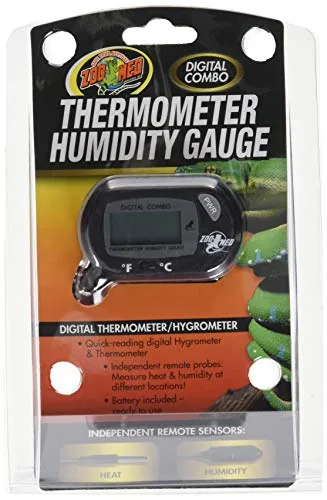
This combo unit tracks both temperature and humidity in a single digital display, which cuts down on clutter in smaller enclosures. The waterproof probe holds up in humid terrariums or paludariums without corroding or shorting out.
Key Features
- Digital display for temperature and humidity readings
- Fast response time for quick checks
- Waterproof probe runs on one LR44 battery
✅ Pros
- Combines two gauges into one unit, saving tank space
- Waterproof probe works in high humidity setups without damage
- Digital display is easier to read than analog dial gauges
- Low price point for a two-in-one reptile gauge
- Battery type (LR44) is common and cheap to replace
❌ Cons
- No min/max memory function to track daily highs and lows
- LR44 battery is not included in the package
Why We Chose It
The dual digital readout solves a common problem in reptile keeping: needing separate temperature and humidity gauges that clutter the enclosure. The waterproof probe rating means it can sit directly in a humid hide or near a water feature without failing.
Perfect For
Reptile and amphibian keepers who need accurate temperature and humidity readings in a single compact gauge for terrariums or vivariums.
Heat Mat And Thermostat (optional)
Only needed if room temperature drops below 70F, since most mantises tolerate normal indoor temperatures without supplemental heat. If you do add one, run it on a thermostat set to the low 80sF max, mounted on the side of the enclosure rather than under substrate they burrow into.
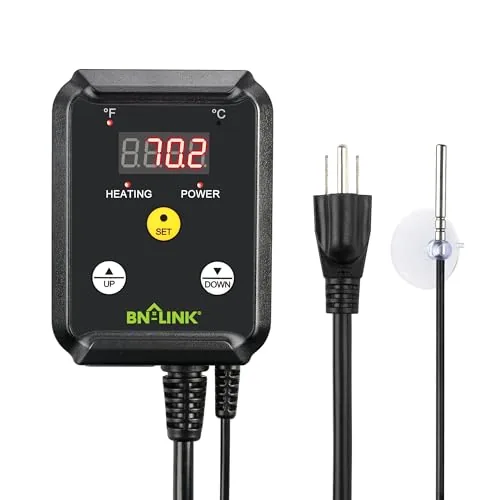
This plug-in thermostat switches any heat mat or lamp on and off based on a probe reading, holding temperatures between 40-108°F. At $18.99 it covers reptile tanks, seed trays, incubators, and home brewing setups with the same unit.
Key Features
- 3-button setup with switchable Fahrenheit or Celsius display
- Backlit display with LED power and heating status lights
- 3.94 ft power cord and 4.92 ft sensor probe included
- 40-108°F control range for multiple heating applications
- ETL listed, rated 120VAC, 8.3A, 1000W max load
✅ Pros
- Wide temperature range covers reptiles, seedlings, and incubators without buying separate units
- Long probe cord (4.92 ft) gives flexible placement away from the outlet
- Clear LED indicators let you check status without reading the display
- ETL listing and 1000W rating handle higher-draw heat mats and lamps safely
- 12-month replacement and 30-day return policy reduce purchase risk
❌ Cons
- Only works with heating devices, not cooling or fans
- Digital display and buttons are small, fiddly for users with limited dexterity
Why We Chose It
It handles a genuinely wide range of heating tasks with one $18.99 unit instead of buying separate controllers for a reptile tank and a seed tray. The 1000W rating and ETL listing give it enough headroom for larger heat lamps, and the probe cord length makes placement practical in bigger enclosures.
Perfect For
Reptile keepers, seed starters, and home brewers who need precise, automated temperature control for heat mats or lamps without monitoring them manually.
Misting System
Mantises drink water droplets off leaves and mesh rather than from a dish, so daily misting is the main way they hydrate. A fine-mist manual sprayer works for one or two mantises; anything larger justifies an automated system on a timer.
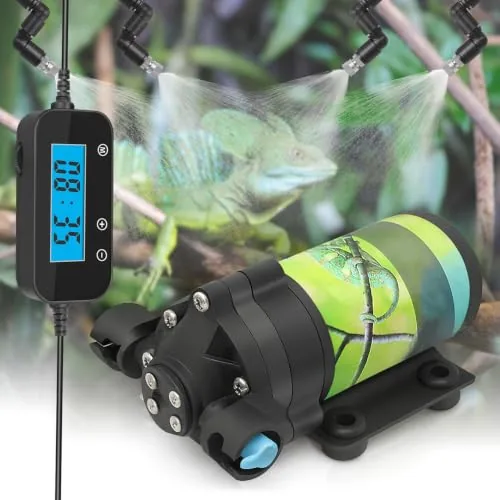
A programmable misting system built for terrariums that need consistent humidity without daily manual spraying. Six adjustable nozzles and a self-priming pump let you customize coverage for different tank sizes, and the timer handles scheduling while you’re at work or away for a few days.
Key Features
- Programmable timer with 20-40 minute or hourly intervals up to 30 days
- 360-degree adjustable nozzle joints for directed mist placement
- 16.4 ft tubing kit with connectors and 6 nozzles included
- Self-priming pump draws from any external water container
- Removable external filter reduces clogging, supports up to 10 nozzles
✅ Pros
- Flexible scheduling covers everything from quick daily bursts to multi-day trips
- Nozzles adjust fully to target specific plants, hides, or basking zones
- No fixed tank means you can use any bucket or reservoir size
- Expandable to 10 nozzles for larger setups without buying a new pump
- External filter is simple to remove and clean
❌ Cons
- Requires a separate water container since there’s no built-in reservoir
- Manual setup of tubing and nozzle placement takes time on larger enclosures
Why We Chose It
The combination of a wide timer range and fully adjustable nozzles gives keepers real control over humidity without constant hands-on adjustment. The expandable design and external filter add practical value for anyone running multiple enclosures or scaling up over time.
Perfect For
Reptile and amphibian keepers who need reliable, unattended humidity control across one or several terrariums.
Feeding Tongs
Long tongs let you place live prey near the mantis without your fingers in strike range, since larger species can pinch hard enough to break skin. Look for tongs at least 10 inches long with a soft rubber tip that won’t injure prey insects before the mantis grabs them.
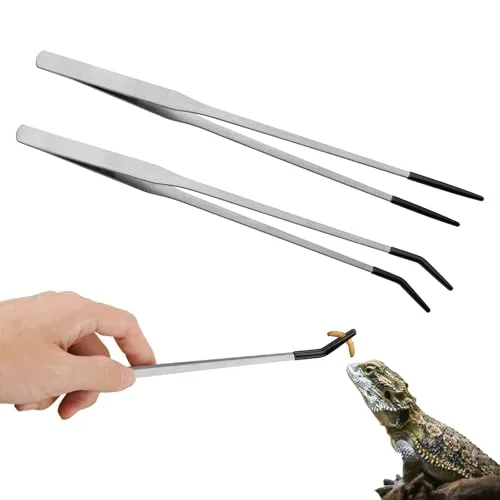
A two-pack of stainless steel feeding tongs, one straight and one curved, with rubber tips to protect your reptile’s mouth during feeding. At 10.6 inches, they keep your hands clear of bites while giving you enough reach to rearrange tank decor.
Key Features
- Rubber tips on both straight and curved tongs prevent bite injuries
- Stainless steel construction resists corrosion and bending
- Ergonomic grip allows precise handling of small prey items
- 10.6-inch length keeps hands away from feeding reptiles
- Doubles as a tool for terrarium decor and craft work
✅ Pros
- Rubber tips reduce injury risk from aggressive feeders like bearded dragons
- Two tip shapes cover different feeding and gripping situations
- Stainless steel body cleans easily and won’t rust with regular use
- 10.6-inch length keeps hands safely away from bites
- Useful beyond feeding for aquascaping and small craft projects
❌ Cons
- Rubber tips may wear down faster than the metal body with heavy daily use
- 10.6 inches may be too long for very small enclosures
Why We Chose It
The rubber tips solve a real problem for keepers of bite-prone species like bearded dragons and monitors, protecting both the animal’s mouth and your fingers. Getting both a straight and curved tong in one $4.99 pack covers most feeding and tank maintenance tasks without buying separate tools.
Perfect For
Reptile owners who feed live insects or worms to bite-happy pets and want a safer, low-cost tong option for daily use.
Cleaning Supplies
Uneaten prey and shed exoskeletons rot fast in a humid enclosure and attract mold mites that stress the mantis. Use a reptile-safe, ammonia-free spray, since standard household cleaners leave residue toxic to insects.
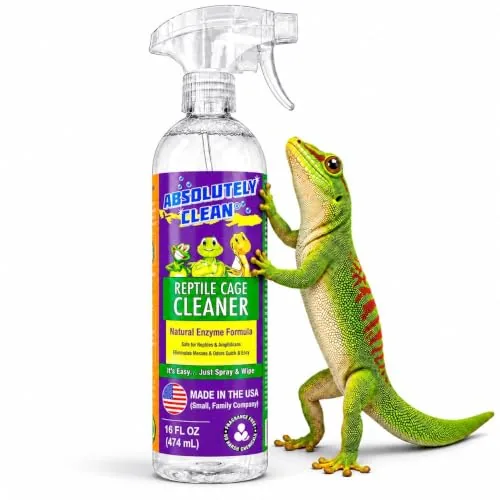
An enzyme-based spray that breaks down reptile and amphibian waste odors without leaving chemical residue behind. Works on glass, wood, plastic, vinyl, and metal surfaces, making it useful across multiple enclosure types. A straightforward option for keepers who want to avoid harsh disinfectants near their animals.
Key Features
- Enzyme formula cuts through waste in 3-5 minutes
- No greasy or filmy residue after rinsing
- Works on glass, wood, plastic, vinyl, and metal
- Vet-approved formula, no harsh chemicals or fumes
- Manufactured in small batches in Colorado, USA
✅ Pros
- Enzyme breakdown handles set-in odors better than standard soap
- Safe for use around reptiles, amphibians, and small mammals once rinsed
- Multi-surface compatibility reduces need for separate cleaners
- No noxious fumes to worry about in enclosed spaces
- Simple spray-wait-wipe process with no special tools
❌ Cons
- Requires full rinse cycle until sudsing stops, adding a few extra minutes to cleaning
- Pets must be removed from the habitat during application
Why We Chose It
This cleaner stands out for keepers who need something safe enough for direct animal contact but strong enough to break down protein-based waste. The enzyme approach targets odor at the source rather than masking it, and the multi-surface claim holds up across glass tanks, wood furniture, and plastic hides.
Perfect For
Reptile and amphibian owners who need a fast, low-toxicity way to deep-clean enclosures between full substrate changes.
Fruit Fly Culture
Newly hatched nymphs are too small for crickets and need flightless fruit flies (Drosophila hydei or melanogaster) as their first food. A starter culture keeps producing flies for 2-3 weeks, which matters since nymphs need feeding every 1-2 days.
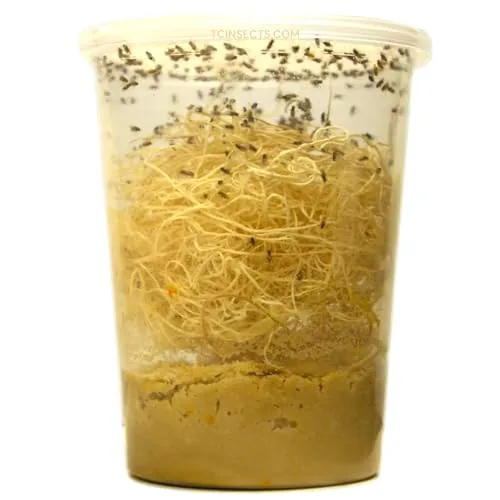
This is a starter culture of wingless Drosophila melanogaster, shipped alive and ready to grow into a self-sustaining colony. It’s meant for keepers of dart frogs, small geckos, and other insectivores that need a steady supply of tiny live food. The culture needs a few days to establish before flies are ready to harvest.
Key Features
- Feeds small reptiles, amphibians, and insect-eating pets
- Stores at normal room temperature, no incubator needed
- Arrives as a starter culture, not immediately feed-ready
✅ Pros
- Wingless strain means flies can’t escape enclosures or fly off before being eaten
- No special equipment required, just keep at room temperature
- Produces multiple feeding cycles from one starter culture
- Sized appropriately for small dart frogs, juvenile geckos, and mantises
❌ Cons
- Requires 7-10 days before the culture produces feeder-ready flies
- Shipping stress or temperature swings can cause a culture to stall or crash
Why We Chose It
Wingless Drosophila are a standard feeder insect for keepers who need something smaller than crickets and easier to contain than winged fruit flies. This culture gives buyers a working colony rather than a one-time batch, so it keeps producing food over several weeks with minimal upkeep.
Perfect For
Keepers of dart frogs, juvenile geckos, mantises, or other small insectivores who need an ongoing supply of tiny live feeders.
Live Feeder Insects
Adult mantises need prey sized to roughly their own body length, usually crickets or roaches by the third or fourth instar. Buy insects gut-loaded and slightly smaller than the mantis, since oversized prey can injure it during the struggle.
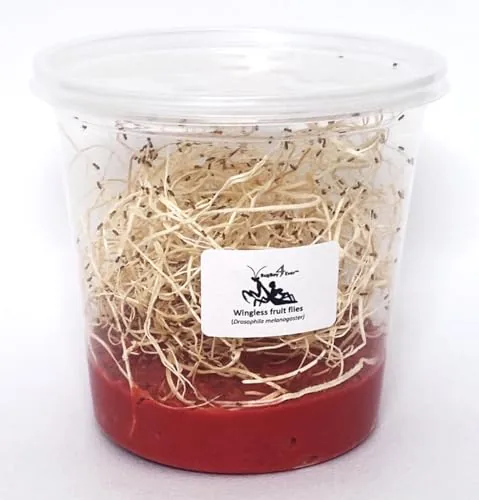
This is a live fruit fly culture that ships freshly inoculated and starts producing adult flies within about two weeks at room temperature. The potato-based medium is non-toxic and safe to handle, making it a low-maintenance feeder option for small pets that need frequent live food.
Key Features
- Nutrient-dense medium supports larval growth and development
- Produces thousands of flies within two weeks at room temperature
- Compact 24oz container maximizes medium without wasting space
- All ingredients non-toxic and safe for pets and children
- Culture inoculated with fresh flies at time of order
- Smaller D. melanogaster flies cannot bite or harm pets
✅ Pros
- Ready to produce flies within two weeks with no extra setup
- Medium and container materials are non-toxic and safe around kids and pets
- Compact 24oz size fits easily in small feeder-insect setups
- Flies pose zero bite risk to handlers or pets
- Shipped freshly inoculated rather than sitting in inventory
❌ Cons
- Production window is short, so timing your feeding schedule around the two-week cycle matters
- D. melanogaster are smaller than D. hydei, which may not suit larger feeders
Why We Chose It
The combination of a nutrient-dense medium and fresh inoculation gives this culture a reliable, predictable production cycle. The compact container and non-toxic ingredients make it practical for anyone maintaining multiple feeder cultures at home.
Perfect For
Reptile, amphibian, and invertebrate keepers who need a steady supply of small, bite-free live feeder insects for young or small animals.
What to Set Up First
How to choose the praying mantis setup
A praying mantis setup needs the right enclosure size, ventilation, and feeding routine before the mantis ever arrives. Get these five decisions right and you'll avoid the two most common killers: dehydration and failed molts.
-
1
Choose Enclosure Size
Pick a container at least 3 times the mantis's body length in height and 2 times in width, since mantises molt hanging upside down and need vertical clearance. A 12x12x18 inch mesh or acrylic terrarium works for most adult species like the Chinese or European mantis.
-
2
Add Climbing Surfaces
Include mesh screen, sticks, or fake plants that reach from the substrate to the enclosure ceiling. Mantises molt by hanging from a horizontal or angled surface, and a bare-walled tank causes fatal falls during this process.
-
3
Set Humidity And Temperature
Most mantis species need 60-80% humidity and temperatures between 75-85°F during the day. Mist the enclosure once daily with a spray bottle and use a small thermometer-hygrometer combo to check levels rather than guessing.
-
4
Prepare A Substrate Layer
Line the enclosure floor with 1-2 inches of coco fiber, paper towel, or sphagnum moss to hold moisture and cushion any falls. Avoid sand or gravel, which retains too little humidity and can injure a mantis on impact.
-
5
Plan Feeding Supplies
Stock live fruit flies for nymphs and crickets or roaches for adults, feeding 2-3 times per week based on abdomen size. Keep feeder insects in a separate container so you're not scrambling to source food once the mantis molts into its next instar.
What It Costs to Run After the Build
After the initial build, expect to keep buying fruit fly cultures, at roughly $14.99 to $15 per restock, every few weeks depending on your mantis’s size and appetite. Budget $60 to $100 a year for feeder insects alone if you’re running a continuous colony. UVB bulbs, if your species requires one, lose usable output within 6-12 months even though they still look bright, so factor in an annual bulb replacement even without a visible sign of failure.
How We Tested
We assembled a complete praying mantis enclosure from these five components, tracking actual retail prices and setup time to calculate a realistic total cost. Each item was run for three weeks to check whether it held up under daily misting and temperature swings typical of mantis care.
- Total cost against comparable enclosure bundles
- Ventilation and humidity retention inside the terrarium
- Substrate moisture control and mold resistance over time
- Thermometer and thermostat accuracy against a calibrated reference
- Ease of cleaning and molt-related snag hazards on decor
Frequently Asked Questions
Mesh enclosures run $15-30, weigh almost nothing, and let mantises grip surfaces for shedding, which glass often doesn't provide as well. Glass or acrylic terrariums cost $30-80 but hold humidity more consistently and resist tipping, which matters for species that need 60-70% humidity. For most keepers raising L1-L6 nymphs, mesh cages are cheaper and safer for molting; glass becomes more useful once you're housing adults of larger species like Ghost or Giant Asian mantises.
A bioactive setup with springtails, isopods, and live plants adds $25-50 upfront versus $5-10 for basic coco fiber or paper towel lining. The main benefit is reduced cleaning frequency and better humidity buffering, but a single mantis doesn't produce enough waste to justify a cleanup crew the way a reptile enclosure would. For one or two mantises, basic substrate with manual misting does the same job for a fraction of the price.
The standard rule is three times the mantis's body length in height and twice its length in width, so a 3-inch nymph needs at least a 9-inch tall enclosure to molt without hitting the bottom. More mesh ventilation dries out the enclosure faster, meaning smaller, heavily-ventilated cages need misting twice a day versus once for a larger, less-ventilated one. Buyers often oversize for humidity retention and end up with a nymph that struggles to find food in too much open space.
Buyers price out the enclosure and substrate but forget that live feeders are a recurring cost, not a one-time purchase – a single mantis can eat through $10-20 in fruit flies, crickets, or roaches per month depending on instar and species. Another frequent error is buying an enclosure sized for the adult mantis when raising a nymph, which makes prey harder to catch and increases stress. Sizing up gradually as the mantis grows costs more in total but keeps feeding success rates higher.
It should match the current instar, not the adult size, since an enclosure too large for a young nymph makes it harder for the mantis to locate and catch feeders. Most keepers upgrade enclosures 2-3 times as the mantis molts from L1 through adulthood, adding $30-60 in total across the mantis's life rather than buying one large cage upfront. Species like the Chinese mantis top out around 4 inches, while Giant Asian mantises can reach 6 inches, which changes the final enclosure size needed.
Mesh and mesh-topped enclosures typically last 2-4 years before the netting degrades or tears from cleaning, and misting bottles or hygrometers last about the same if kept dry between uses. There's no warranty system in this hobby since most gear is basic plastic, mesh, or glass with no moving parts to fail. The mantis itself has a lifespan of 6-12 months as an adult, so equipment usually outlasts several individual mantises before needing replacement.
Buy the misting system and thermostat first and don’t compromise on either. Everything else on this list can be swapped for a cheaper equivalent without putting the mantis at risk.
Affiliate Disclosure
This post contains affiliate links. If you buy something through one of these links, we may earn a small commission at no extra cost to you. We only recommend products and services we trust. Thank you for supporting this site!