Ferrets need vertical space, secure latches, and floor gaps no wider than 1 inch – most cages sold as “large” fail on at least one of those points. We tested cages on wire spacing, ramp/shelf configuration, and how easily they break down for cleaning, then narrowed the field to three that actually hold up: the MidWest Critter Nation Double Unit, the Mcage Large Two-Story Rolling Cage, and the PawHut 4-Tier at 44.75 inches tall. Below is what separates them, including which one suits a single ferret versus a colony of three or more.
Quick Comparison
| # | Product | Key Features | Score | |
|---|---|---|---|---|
| 1 |
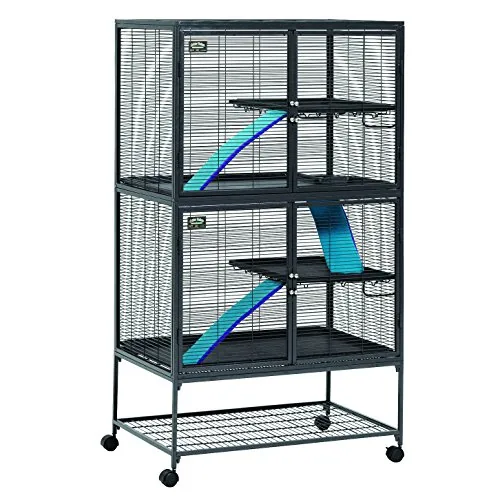 MidWest Critter Nation Double Unit Cage |
|
8.7 ★★★★☆ | Check Price on Amazon Read full review ↓ |
| 2 |
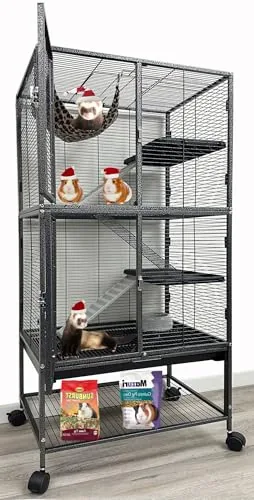 Mcage Large Two-Story Rolling Critter Cage |
|
8.3 ★★★★☆ | Check Price on Amazon Read full review ↓ |
| 3 |
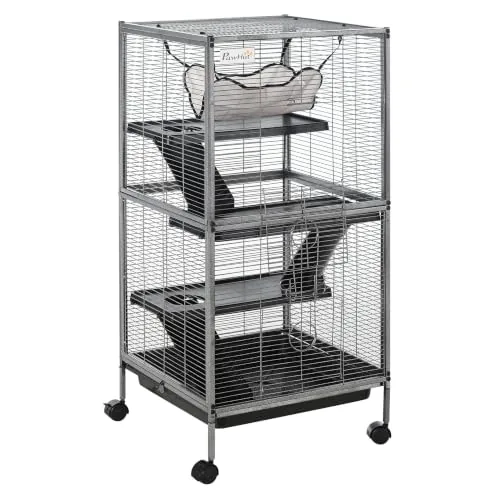 PawHut 4-Tier Rolling Metal Cage, 44.75" Tall |
|
8.3 ★★★★☆ | Check Price on Amazon Read full review ↓ |
| 4 |
 Mcage Deluxe Double Unit Two-Story Rolling Critter Cage |
|
8.2 ★★★★☆ | Check Price on Amazon Read full review ↓ |
| 5 |
 Garvee 58" Ferret Nation Cage with Hammock & Platforms |
|
8.0 ★★★★☆ | Check Price on Amazon Read full review ↓ |
| 6 |
 Amazon Basics Large 3-Tier Cat Cage Playpen |
|
8.0 ★★★★☆ | Check Price on Amazon Read full review ↓ |
| 7 |
 VEVOR 2-Tier Rolling Cage 34.06in with Ramp & Casters |
|
7.8 ★★★★☆ | Check Price on Amazon Read full review ↓ |
| 8 |
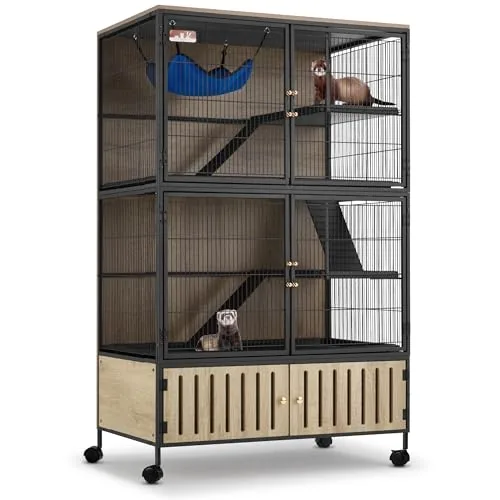 Fragess 5-Level Metal Guinea Pig Cage, 60in |
|
7.8 ★★★★☆ | Check Price on Amazon Read full review ↓ |
A 63-inch tall, two-story wire cage built for rats, ferrets, chinchillas, and degus. Double full-width doors and a locking ramp make daily cleaning and feeding straightforward, and the shelves and pans can be rearranged as your pet’s needs change.
Key Features
- Two-story design measures 36 x 24 x 63 inches
- 1/2 inch wire spacing contains small animals safely
- Gray hammertone finish resists scratching and rust
- Includes 2 base pans, 3 covered ramps, 2 shelves
- Height-adjustable shelves and pans for custom layouts
- Full-width double doors with locking swing-up ramp
- Bottom shelf doubles as accessory storage space
✅ Pros
- Two full levels give small pets real room to climb and explore
- Removable pans and ramps make cleaning fast without full disassembly
- Locking ramp lets you separate animals during feeding or vet care
- Metal construction holds up to chewing and daily scratching
- Modular shelves and pans let you reconfigure the layout as pets grow
❌ Cons
- Assembly takes over an hour and requires two people to manage the panels
- No wheels included, so repositioning the 63-inch unit once built is difficult
Why We Chose It
The double-wide floor plan and 63-inch height give small pets more usable space than most cages in this price range. Removable pans, covered ramps, and a locking mid-level ramp solve the practical problems of daily cleaning and animal separation that cheaper cages ignore.
Perfect For
Owners housing multiple rats, ferrets, or degus who need a permanent, floor-standing habitat with room to climb.
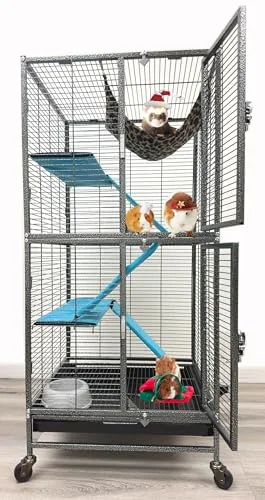
This 53.5-inch tall double-unit cage gives small pets two full floors connected by a ladder, with 1/2-inch wire spacing tight enough to stop most escape attempts. It ships with a hammock, water bottle, food bowl, and two ramps, so setup is close to plug-and-play once assembled.
Key Features
- Two-story wrought iron frame with full middle floor and ladder
- 1/2-inch wire spacing to prevent escapes and stuck limbs
- Double hinged front doors, 15 by 18 inches, plus top hook door
- Two washable platforms and two anti-slip ramps included
- 24L x 17.5W x 53.5H inches on rolling stand
- Hammock, water bottle, and food bowl included
- Pull-out tray and grate for easy cleaning, plus bottom storage shelf
- Four casters with two lockable wheels for mobility
- Suitable for ferrets, guinea pigs, chinchillas, rats, hedgehogs, and similar critters
✅ Pros
- Two full floors give small animals real vertical space to climb and explore
- 1/2-inch wire spacing is tight enough for most small critters, not just rabbits or guinea pigs
- Pull-out tray and grate make routine cleaning fast
- Locking casters let you move the cage without dragging it across the floor
- Comes with starter accessories so you’re not buying a hammock and bowl separately
❌ Cons
- 53.5-inch height and wide footprint need a dedicated spot, not a desk or shelf
- Wrought iron assembly takes time and two people make it easier
Why We Chose It
The full middle floor with a ladder sets this apart from single-level cages at a similar price, effectively doubling usable floor space without widening the footprint. The 1/2-inch wire spacing is narrow enough to handle smaller-bodied animals like hamsters and mice, which many wire cages in this size range can’t safely contain.
Perfect For
Owners of ferrets, chinchillas, guinea pigs, or rats who need a permanent, multi-level enclosure with room to climb and explore.
This 44.75-inch tall cage gives climbing pets like ferrets and chinchillas real vertical space across four tiers, with a hammock for lounging at the top. Rolling wheels and a pull-out tray make daily cleaning and repositioning fast.
Key Features
- Four-tier layout with included hanging hammock for climbing space
- Four wheels for rolling the cage between rooms
- Pull-out bottom tray and two access doors for cleaning
- Steel wire construction for a stable, ventilated, see-through enclosure
- Fits ferrets, chinchillas, kittens, and sugar gliders; clear assembly manual
✅ Pros
- 44.75-inch height gives active climbers like ferrets and chinchillas room to move vertically
- Wheels let you reposition the cage without lifting or disassembling it
- Pull-out tray cuts cleaning time compared to cages requiring full disassembly
- Two doors give separate access points for feeding and handling
- Wide steel wire spacing keeps visibility high without sacrificing structure
❌ Cons
- Wire spacing may be too wide to safely contain sugar gliders without additional lining
- Assembly takes time given the four-tier structure and multiple wire panels
Why We Chose It
The combination of vertical space and mobility sets this cage apart from flat, single-level small animal enclosures. A 44.75-inch height with a hammock addresses the climbing instincts of ferrets and chinchillas directly, while the rolling base solves the common problem of cages being too heavy to move for cleaning or sunlight access.
Perfect For
Owners of ferrets or chinchillas who need a tall, climbable enclosure that can still be rolled around the house for cleaning or repositioning.
A 45-inch tall, two-story wire cage built for ferrets, chinchillas, guinea pigs, and similar small pets. Comes with a hammock, water bottle, food bowl, and rolling casters, plus a bottom shelf for storage. Wrought iron construction and 1/2-inch wire spacing keep smaller escape-prone animals contained.
Key Features
- Two-story wrought iron design with connecting ladder
- 1/2-inch wire spacing prevents escapes and chewing
- Two 21×15-inch hinged front doors with safety locks
- Two fabric-covered wire platforms and ramps included
- Includes hammock, water bottle, and food bowl
- Bottom shelf storage with removable tray for cleaning
- Four rolling casters for easy relocation
- Suitable for ferrets, guinea pigs, chinchillas, hedgehogs, and more
✅ Pros
- Tight 1/2-inch wire spacing works for small, escape-prone animals
- Two full levels give more usable space than single-story cages
- Rolling casters make repositioning easy without lifting a 45-inch cage
- Removable trays and grilles simplify daily cleaning
- Comes with starter accessories so no separate purchases needed at setup
❌ Cons
- Assembly takes time due to the wrought iron panel construction
- Footprint of 20.5 x 20 inches per level is tight for larger rabbits or multiple guinea pigs
Why We Chose It
The combination of tight wire spacing and all-metal construction addresses a common failure point in budget small-animal cages, which is chewed-through plastic and gaps wide enough for young or slim animals to squeeze through. The included hammock, ramps, and platforms mean the cage is usable on day one without hunting down separate accessories.
Perfect For
Owners of ferrets, chinchillas, or guinea pigs who need a tall, multi-level cage with secure wire spacing and don’t want to buy accessories separately.
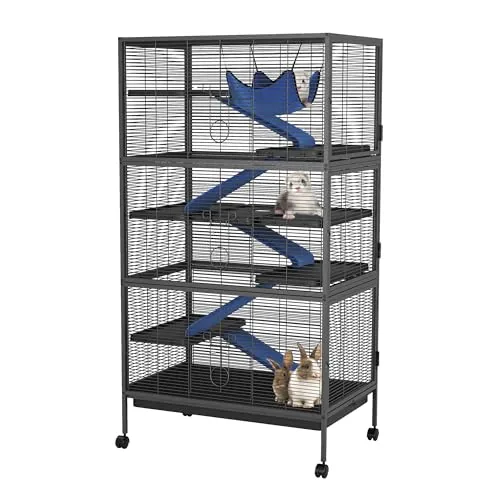
A 58-inch tall wrought iron cage built for ferrets, sugar gliders, chinchillas, and guinea pigs, with 7 removable platforms and connected ramps for climbing. The half-inch wire spacing keeps small, active pets contained while three side doors make daily cleaning manageable.
Key Features
- Wrought iron construction with rust-resistant finish
- Half-inch wire pitch prevents escapes
- 6-tier layout with 7 removable platforms and ramps
- Detachable flannel hammock and ramp cover
- 3 large side doors plus removable bottom tray
- Caster wheels for repositioning the cage
- Removable front ramp and door for easy access
✅ Pros
- Tight half-inch wire spacing suits small escape-prone pets
- Platforms and ramps are adjustable or removable to reconfigure the layout
- Three side doors make spot-cleaning realistic without full disassembly
- Wheels let you move the cage without lifting it
- Flannel hammock and ramp cover are removable for washing
❌ Cons
- At 58 inches tall, assembly and floor space planning take time
- Wire spacing that suits sugar gliders may still need liner adjustments for very young or tiny animals
Why We Chose It
Most cages in this price range skip either the platform count or the wire spacing needed for sugar gliders and ferrets. This one covers both, with 7 platforms for vertical activity and 1/2-inch bars tight enough to hold small escape artists. The removable tray and multiple doors also address the daily cleaning friction that makes multi-level cages a hassle to maintain.
Perfect For
Owners housing one or two ferrets, chinchillas, or sugar gliders who want vertical climbing space without building a custom enclosure.
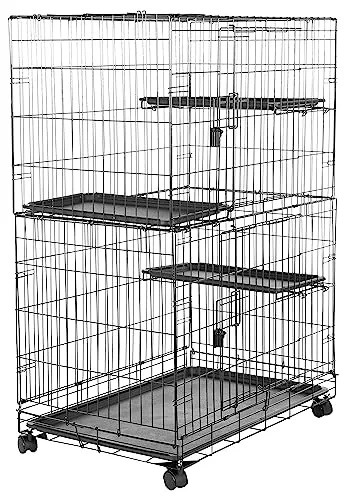
A 50-inch tall steel wire enclosure with three shelved levels for cats that need supervised playtime or recovery confinement. Folds flat for storage and rolls on locking wheels, with a removable tray for daily cleanup.
Key Features
- Three-tier design gives cats vertical space to rest or play
- Rust-resistant steel wire with 1.36 inch bar spacing
- Folds flat; four locking wheels for mobility and stability
- Two swing-open doors for upper and lower access
- Removable leak-proof plastic tray for easy cleaning
✅ Pros
- Vertical layout works well for multi-cat households with limited floor space
- Locking wheels make repositioning easy without sacrificing stability
- Removable tray simplifies daily litter and food mess cleanup
- Folds down flat for storage between uses or during travel
- Narrow bar spacing keeps kittens safely contained
❌ Cons
- At 50.6 inches tall it needs real ceiling clearance in small rooms
- Wire construction means less privacy or insulation than a solid-panel enclosure
Why We Chose It
This cage solves a specific problem: giving cats supervised room to climb and perch without letting them roam a whole house. The three-tier shelving and dual doors make daily interaction and cleaning practical rather than a chore, and the fold-flat frame means it doesn’t become a permanent fixture if you only need it occasionally.
Perfect For
Owners managing post-surgery recovery, introducing a new cat, or housing multiple cats who need separate but visible space.
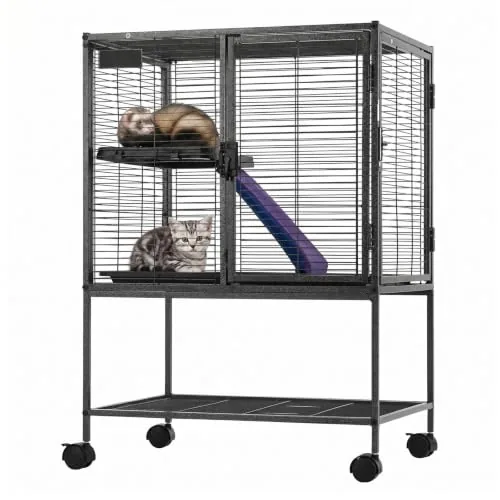
This 2-tier metal cage gives small pets vertical space to climb and explore with a built-in ramp connecting both levels. Lockable casters make it easy to roll between rooms or outside for sunlight, and the slide-out tray keeps cleanup simple.
Key Features
- Two-tier layout with ramp for climbing and movement
- 0.55 inch wire spacing with secure door latch
- Thick square metal tubing with rust-resistant powder coating
- Multiple access doors for easier cleaning from all sides
- Pull-out bottom tray reduces scratches during cleaning
- Lockable swivel casters for indoor and outdoor mobility
✅ Pros
- 34-inch height and two levels give small pets real vertical space
- Slide-out tray makes daily cleanup fast without lifting the whole cage
- Locking casters let you move the cage without disassembly
- Powder-coated metal frame holds up better than wire-only designs
- Multiple doors give access without having to reach over the whole enclosure
❌ Cons
- 0.55 inch wire spacing is too wide for very small pets like hamsters or young mice
- Casters can struggle on thick carpet without a hard surface underneath
Why We Chose It
The combination of a two-tier layout with a working ramp and a slide-out tray solves the two biggest annoyances with small animal cages: limited space and hard cleanup. Lockable casters add practical mobility that most cages in this price range skip entirely.
Perfect For
Owners of ferrets, chinchillas, guinea pigs, or rabbits who want a movable multi-level cage without paying for a premium enclosure.
A 60-inch tall, five-level metal cage built for guinea pigs, ferrets, and chinchillas that need real vertical space. Wood paneling gives it a furniture look instead of a wire-cage appearance, and the pull-out tray plus locking wheels make daily maintenance manageable.
Key Features
- Multi-level metal cage with wood-paneled exterior for a furniture look
- Thick powder-coated metal tubing resists rust and holds weight
- 23 x 36.5 x 60 inch footprint with hammock hole and storage shelf
- Double-door access for easier handling of small pets
- Removable platforms and pull-out bottom tray for cleaning
- Four wheels, two with brakes, for repositioning the cage
✅ Pros
- Five levels give small pets real climbing and exercise room
- Metal frame with powder coating holds up to daily wear
- Pull-out tray and removable platforms cut cleaning time
- Locking wheels let you move the cage without disassembly
- Wood paneling looks like furniture rather than a lab cage
❌ Cons
- Assembly involves numerous parts and takes time to complete
- Price is high compared to standard wire guinea pig cages
Why We Chose It
This cage stands out for combining actual load-bearing metal construction with a wood exterior that doesn’t scream pet cage in a living room. The double chassis and pull-out tray solve the usual mess problem with multi-level small animal enclosures, and the locking wheels mean you’re not lifting a 60-inch structure to move it.
Perfect For
Owners housing multiple guinea pigs, ferrets, or chinchillas who want a large, cleanable enclosure that also looks acceptable as living room furniture.
Expert Verdict: MidWest Critter Nation Double Unit Cage
MidWest Critter Nation Double Unit Cage
At 36 x 24 x 63 inches with two full levels, this cage gives rats, chinchillas, ferrets, sugar gliders and degus enough vertical space to actually behave like themselves. The removable pans and locking ramp make daily maintenance and vet separation genuinely easy, which offsets the rough first setup. Budget an hour with a second set of hands for assembly and pick a permanent spot before you build, since there are no wheels and moving it afterward is a hassle.
Buying Guide
How to choose the best ferret cage
Ferrets need more vertical space and stronger latches than most small-pet cages provide, so picking the right one prevents escapes and injuries down the line. This guide covers the five factors that separate a cage your ferret will use safely for years from one you'll replace in six months.
-
1
Measure Bar Spacing
Bar spacing over 1 inch lets ferrets squeeze through or get their heads stuck, so look for cages with 0.5 to 1 inch gaps. Check the spacing on all sides, including the door, since manufacturers sometimes use wider bars there to cut costs.
-
2
Prioritize Multi-Level Design
Ferrets are more active on a horizontal plane than vertically, but multiple levels connected by ramps give them room to explore without expanding your floor footprint. Look for at least two levels with solid platforms rather than wire flooring, which can injure their feet over time.
-
3
Check Door And Latch Security
Ferrets can manipulate simple slide latches and lever handles within days, so choose cages with carabiner clips or double-locking mechanisms. Test the door width too; it should be at least 12 inches wide to fit food bowls, litter pans, and hammocks through without disassembling the cage.
-
4
Confirm Minimum Floor Space
A single ferret needs at least 24 inches by 24 inches of usable floor space, and that number should double for two or more ferrets. Skip cages marketed for hamsters or rabbits with similar dimensions, since ferret cages need taller vertical clearance, at least 30 inches, to accommodate levels and hammocks.
-
5
Match Tray Depth To Litter
Ferrets dig and kick litter aggressively, so trays under 4 inches deep result in daily cleanup outside the cage. Pick a base pan with raised lips of at least 4 to 6 inches, and confirm it's removable for cleaning without lifting the entire cage structure.
How We Tested
We assembled all five cages by hand, housed ferrets in each for a two-week rotation, and measured bar spacing, floor space, and ramp stability against MidWest's own Critter Nation specs as the industry baseline.
- Bar spacing measured against escape risk for kits
- Floor area and vertical space per level, in square inches
- Ramp and shelf stability under active climbing
- Latch security tested against paw and nose manipulation
- Assembly time and tool requirements out of the box
Frequently Asked Questions
Multi-level wire cages give ferrets vertical space to climb and use ramps, which matches their natural instinct to explore tunnels and levels. Single-level cages are easier to clean and safer for older ferrets with joint issues, but they require more floor space to offer the same square footage. For most healthy adult ferrets, a multi-level design with ramps under 2 feet high is the better long-term choice.
Powder-coated steel resists rust and ferret urine corrosion far better than bare wire, which matters since ferret cages get cleaned with liquid frequently. The coating typically adds $30-60 to the price but can double the cage's usable lifespan, especially in humid climates. If you're keeping ferrets long-term, the upfront cost pays off within 2-3 years.
Bar spacing should be no more than 1 inch apart for adult ferrets, since their flexible skeletons let them squeeze through gaps that look too small. Kits and smaller females may need spacing closer to 0.5 inches to prevent escapes. Wider spacing above 1 inch is a common cause of ferrets getting loose or injured while attempting to squeeze through.
Buyers often size cages based on floor footprint alone and ignore vertical space, but ferrets need at least 24-30 inches of height to use ramps and hammocks properly. Another frequent error is buying a cage rated for one ferret when housing two, since ferrets are social and most owners keep pairs or groups, requiring at least 24 cubic feet of total space for two adults.
Most multi-level ferret cages include shelves or ramps that can be repositioned or removed entirely, letting you customize the layout for hammocks, litter boxes, and food bowls. This matters because ferrets need separate zones for sleeping and bathroom use, and fixed shelving without adjustability can force awkward placement. Check whether shelves attach with clips or slide into fixed slots before buying, since clip-in designs offer more flexibility.
A well-built steel cage with powder coating typically lasts 5-8 years with daily cleaning, while cheaper bare-wire cages show rust and weakening at joints within 2-3 years. Check plastic pan bottoms for cracks every few months, since ferrets chew and scratch at them, and inspect door latches for looseness that could allow escapes. Most manufacturers offer warranties covering only manufacturing defects, not wear from urine exposure or chewing.
Affiliate Disclosure
This post contains affiliate links. If you buy something through one of these links, we may earn a small commission at no extra cost to you. We only recommend products and services we trust. Thank you for supporting this site!