A budgie itself runs $15 to $40 at most breeders and pet stores. The setup you need to keep it alive and not miserable runs $98.74 for the essentials, or $194.19 if you add lighting, a play stand, toys, and a cage cover. That gap is the real lesson here: the bird is the cheap part, the habitat is where the money goes. Budget for the cage before you budget for the animal.
The Full Parts List and What It Costs
| Item | Our pick | Priority | Price |
|---|---|---|---|
| Enclosure | VEVOR 30in Flight Cage – Stackable Carbon Steel Design | Essential | $42.90 |
| Perches | kathson Natural Grapevine Bird Perch, 3-Pack | Essential | $17.09 |
| Food And Water Dishes | MotBach 3-Pack Stainless Steel Bird Feeding Bowls | Essential | $9.99 |
| Full Spectrum Lighting | GlowUp 10W Full Spectrum UVB2.4 Bird Cage Light | Optional | $34.99 |
| Cuttlebone | Birds LOVE Natural Cuttlebone 4-Pack with Holders | Essential | $5.99 |
| Toys | KATUMO Seagrass Shredding Mat for Small Birds | Optional | $9.48 |
| Cage Cover | Prevue Pet Large Bird Cage Cover – Black | Optional | $24.99 |
| Play Stand | LIMIO Natural Wood Bird Playground with Perches | Optional | $25.99 |
| Cleaning Supplies | Nature’s Miracle Bio-Enzymatic Bird Cage Cleaner, 24 oz | Essential | $5.29 |
| Diet | RoudyBush Daily Maintenance Crumble Pellets, 2.75 lb | Essential | $17.48 |
| Essential items only | $98.74 | ||
| Everything listed | $194.19 |
Where to Save and Where Not To
The enclosure ($42.90) and the cleaning supplies ($5.29) are not places to cut corners; bar spacing and floor space determine whether the bird can actually fly and stay healthy, and bio-enzymatic cleaner keeps bacteria down between full scrubs. Perches ($17.09 for three), dishes ($9.99 for three), and the shredding mat ($9.48) are fine to buy cheap or substitute with safe household items. The one item that looks skippable but isn’t is the full spectrum UVB light ($34.99): budgies kept away from direct sunlight need it for calcium metabolism, and skipping it to save $35 up front just means vet bills for metabolic bone disease later.
Every Part, and What to Buy
Enclosure
Budgies need horizontal flight space more than height, so minimum footprint should be 30 by 18 by 18 inches for a single bird, bigger for pairs. Bar spacing must be 1/2 inch or less to prevent head entrapment.
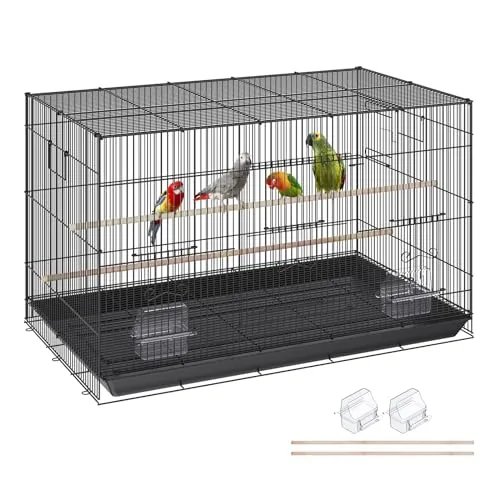
A 29.9 x 18.1 x 17.9 inch flight cage built from carbon steel with a slide-out tray for cleanup and a stackable frame for multi-bird setups. Good fit for budgies, cockatiels, canaries, and lovebirds, though the marketing claim about housing macaws doesn’t match the actual dimensions.
Key Features
- 29.9 x 18.1 x 17.9 inches with 0.4 inch grid spacing
- Carbon steel frame for structural rigidity
- Secure latching door for safe access and training
- Slide-out tray with mesh grating for waste separation
- Multiple perches, transparent feeder, side handle, stackable frame
✅ Pros
- Solid carbon steel construction holds shape under regular handling
- Slide-out tray makes daily cleaning fast without full disassembly
- Stackable design lets owners add cages without using more floor space
- Secure door design supports hand-training without escape risk
- Side handle makes repositioning or transport straightforward
❌ Cons
- Dimensions suit small to mid-size birds only, despite macaw being listed as compatible
- Carbon steel finish may show wear or rust spots in humid climates over time
Why We Chose It
This cage earns its spot for the build quality at this price point. The steel frame feels rigid rather than flexy, and the slide-out tray with mesh bottom actually cuts down on cleaning time compared to solid-pan designs.
Perfect For
Owners housing budgies, cockatiels, lovebirds, canaries, or finches who want a durable, easy-to-clean cage that can stack with additional units.
Perches
Varying diameters between 1/2 inch and 3/4 inch keep foot muscles flexed and prevent pressure sores. Natural wood (manzanita or java) beats dowel perches because the irregular surface mimics branches and wears nails down naturally.
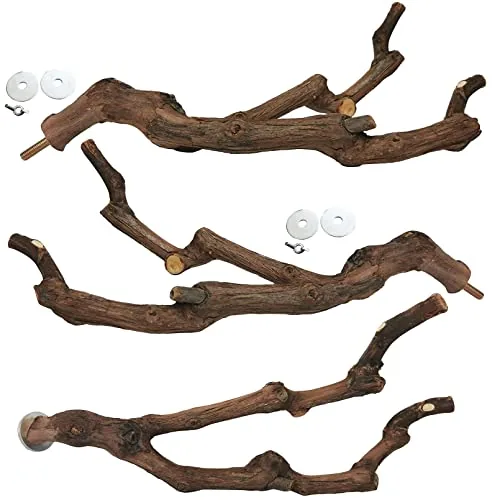
These are unprocessed grapevine branches sized for small to medium birds, with a rough bark surface that helps wear down claws naturally. The wing nut mounting system means you can swap them into most cages without tools. Since each piece is a real branch, shapes and thickness vary slightly between the three included.
Key Features
- Made from natural, unpainted wild grapevine wood
- Installs with built-in bolt and wing nut, no tools needed
- About 9 inches long, 0.7 to 1.1 inch diameter
- Textured bark surface improves grip and claw conditioning
- Chewable, paint-free material satisfies natural gnawing instinct
✅ Pros
- Unpainted natural wood is safe for chewing
- Tool-free installation with wing nut and bolt
- Varying branch diameters help exercise foot muscles
- Textured surface reduces slipping on the perch
- Three perches per pack cover multiple cage spots
❌ Cons
- Natural branches vary in shape and thickness, so fit isn’t uniform
- Diameter may be too narrow for larger parrot species
Why We Chose It
This perch uses raw, unpainted grapevine instead of dyed or coated dowels, which matters for birds that chew constantly. The variable diameter across the three branches gives feet a workout that a uniform plastic perch can’t. Installation takes minutes since the wing nut and bolt are already built into each piece.
Perfect For
Owners of budgies, cockatiels, or lovebirds who want a natural chew-safe perch that also helps maintain claw length.
Food And Water Dishes
Stainless steel or ceramic crocks resist bacterial buildup better than plastic, which scratches and harbors pathogens. Get at least two sets so seed and water stay separate from grit or supplements.
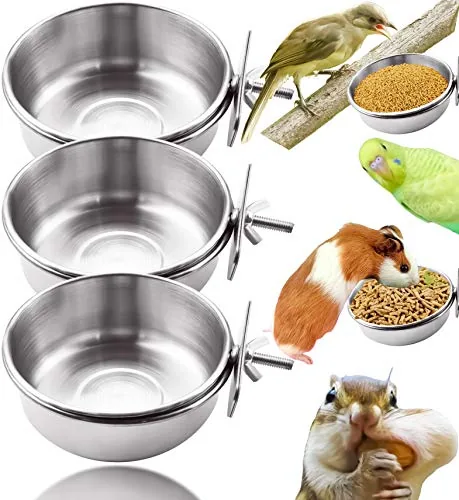
Three stainless steel cups with clip-on brackets for cages housing birds, hamsters, or guinea pigs. Each bowl measures 3.9 inches across and mounts to cage bars to stop spills. Simple two-piece design pulls apart for quick cleaning.
Key Features
- Stainless steel bowl, 3.9 inch diameter, 1.8 inch height, 113g
- Two-part design: removable bracket plus steel bowl
- Clamps to cage bars, mounts inside or outside
- Compatible with parrots, parakeets, hamsters, guinea pigs, and similar pets
- Set includes three bowls
✅ Pros
- Stainless steel resists denting and won’t crack like plastic
- Bracket detaches from bowl in seconds for washing
- Clamp mount keeps bowls anchored, reducing spilled food and water
- Three bowls cover food, water, and treats separately
- Fits a wide range of cage sizes and pet species
❌ Cons
- 3.9 inch diameter limits capacity for larger birds like macaws
- Plastic bracket clamp may loosen with heavy daily use
Why We Chose It
The all-steel bowl construction holds up better than the plastic dishes that ship with most cages, and the clamp system solves the tipped-water problem cheaply. Getting three bowls for under ten dollars makes it easy to dedicate separate dishes to food, water, and treats without buying multiples.
Perfect For
Owners of small to medium birds or small mammals who need spill-resistant, easy-clean cage dishes without paying for a premium single bowl.
Full Spectrum Lighting (optional)
Indoor budgies kept away from unfiltered sunlight benefit from a UVA/UVB bulb rated for birds, run 10 to 12 hours daily on a timer. UVB supports vitamin D3 synthesis for calcium metabolism, relevant since window glass blocks nearly all UVB.
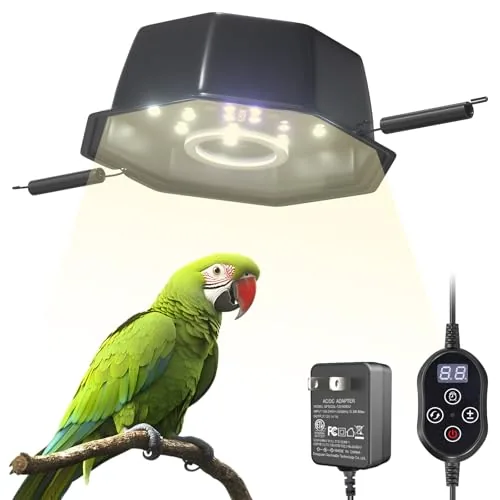
This octagonal LED fixture pairs full spectrum daylight with 2.4 UVB output to support calcium absorption in captive birds. Four brightness levels and a memory timer let you match light intensity to species and automate day/night cycles. The reinforced cord and spring mount address the two most common failure points in cage lighting: chewed wires and falling fixtures.
Key Features
- Full spectrum LEDs combined with 2.4 UVB for calcium absorption
- Four brightness levels matching UVB 1.0 through 3.0
- Reinforced anti-bite power cord for chew resistance
- Spring-mounted design absorbs shock and prevents falls
- Screw-fixed visor blocks direct glare
- 24-hour timer with memory restores last setting
- Octagonal shape gives wider light coverage, no adapter needed
✅ Pros
- UVB2.4 output supports bone health and feather condition in indoor birds
- Four adjustable levels work for chicks and molting adults alike
- Anti-bite cord and spring mount reduce common cage hazards
- Memory timer keeps lighting schedule consistent after power loss
- Plug-and-play setup with no additional adapter required
❌ Cons
- 10W output may not fully cover large multi-bird aviaries
- Octagonal frame is less compatible with round or narrow cages
Why We Chose It
Most bird lights offer either full spectrum brightness or UVB, not both at a specific, adjustable 2.4 output. The memory timer and reinforced cord solve two practical problems bird owners run into constantly: forgetting to reset schedules after outages and replacing chewed-through wiring.
Perfect For
Owners of indoor parrots and captive birds who need consistent UVB exposure and a fixture that survives daily beak contact.
Cuttlebone
Supplies calcium and gives the beak a controlled surface to grind against, which matters most for egg-laying hens. Clip it to the cage bars at perch height so the bird can reach it without straining.
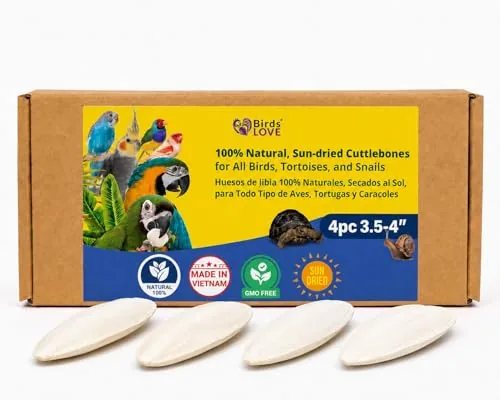
Real sun-dried cuttlebone, not a pressed calcium block, giving small birds a natural mineral source and beak-conditioning chew. Comes with holders for quick cage mounting and includes four pieces per pack for about six dollars.
Key Features
- Whole natural cuttlebone with no fillers or plaster
- Contains trace minerals like magnesium, potassium, zinc
- Encourages chewing to maintain beak condition
- Sun-dried in Vietnam with minimal processing
- Packaging designed to reduce breakage in transit
- Consistent 3.5-4 inch size with included holder
✅ Pros
- Genuine cuttlebone instead of compressed calcium blocks
- Includes holders, so no separate purchase needed
- Four pieces per pack covers multiple cages or months of use
- Size works well for budgies, finches, and canaries
- Low price point for a recurring supply item
❌ Cons
- 3.5-4 inch size runs small for cockatiels and is too small for larger parrots
- Natural sourcing means occasional variation in shape and density between pieces
Why We Chose It
This is unprocessed cuttlebone rather than a reconstituted calcium block, so birds get the mineral content and texture they’d recognize in the wild. The included holders and multi-pack format make it a practical, low-effort addition to a cage setup.
Perfect For
Owners of budgies, finches, canaries, or other small pet birds who want an affordable, natural calcium and beak-conditioning supplement.
Toys (optional)
Foraging and shreddable toys reduce boredom-driven feather plucking in a species that is intelligent and social. Rotate two or three toys weekly rather than filling the cage at once, since budgies habituate fast.
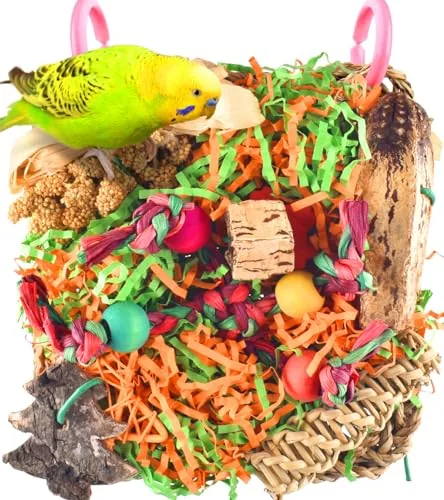
A 6.6 x 6.6 inch woven seagrass mat loaded with wood chips, corn husk, walnut pieces, and shredded paper for birds to tear apart. Hangs from two included hooks and gives budgies, cockatiels, and lovebirds a foraging outlet that doubles as cage decor.
Key Features
- Woven from natural seagrass with mixed chew accents
- Encourages shredding, foraging, preening, and climbing instincts
- Chew pieces are removable and rearrangeable on the net
- Sized 6.6 x 6.6 inches for small to medium birds
- Includes two hooks for hanging, style sent at random
✅ Pros
- Cheap way to add enrichment to a bare cage
- Mix of textures (wood, husk, paper, rattan) keeps birds engaged longer than single-material toys
- Compact size fits most standard cage doors and bar spacing
- Customizable layout since chew pieces can be swapped out
❌ Cons
- Gets shredded fast with heavy chewers, so it needs replacing every few weeks
- Hook style is random, not selectable, which can be a mismatch for some cage setups
Why We Chose It
It covers four natural bird behaviors (shredding, foraging, preening, climbing) in one low-cost mat instead of requiring separate toys for each. The variety of chew materials means birds who ignore plain wood blocks often still go after the corn husk or millet pieces.
Perfect For
Owners of budgies, cockatiels, or lovebirds who want an affordable foraging toy to cut down on cage boredom and destructive chewing.
Cage Cover (optional)
Budgies need 10 to 12 hours of uninterrupted dark to avoid chronic stress and screaming behavior from overtiredness. A breathable cotton cover blocks household light without trapping humidity like plastic covers do.
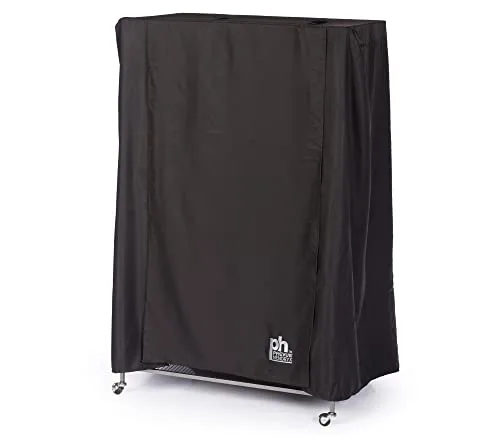
A breathable black fabric cover sized for large birdcages up to 48 inches tall. It blocks light for nighttime rest while still letting air pass through, and helps shield birds from household commotion or curious cats.
Key Features
- Fits cages up to 41 x 25 x 48 inches
- Designed for medium and large bird species
- Dark breathable fabric blocks light, allows airflow
- Non-toxic fabric construction for bird safety
- Made by Prevue Pet, established pet brand since 1869
✅ Pros
- Blocks light effectively for consistent sleep schedules
- Fabric breathes well, avoiding overheating or stuffiness
- Reduces visual stress from pets or foot traffic
- Non-toxic materials safe for direct bird contact
- Snug fit designed specifically for large cage dimensions
❌ Cons
- Listed dimensions vary slightly between bullet points (41x25x48 vs 37x25x48), so measure your cage before ordering
- Only available in black, no lighter options for daytime partial covering
Why We Chose It
This cover targets a specific gap: large bird cages that need both airflow and real light-blocking, not just a decorative throw. The non-toxic fabric and breathable design show attention to bird welfare rather than just aesthetics.
Perfect For
Owners of medium to large birds like cockatiels or parrots who need a reliable nighttime light-block in a busy household with pets or foot traffic.
Play Stand (optional)
Gives supervised out-of-cage time a fixed base with its own perches and dishes, which speeds taming since the bird associates it with a specific low-stress space. Look for a stand with a removable tray, since droppings accumulate fast under it.
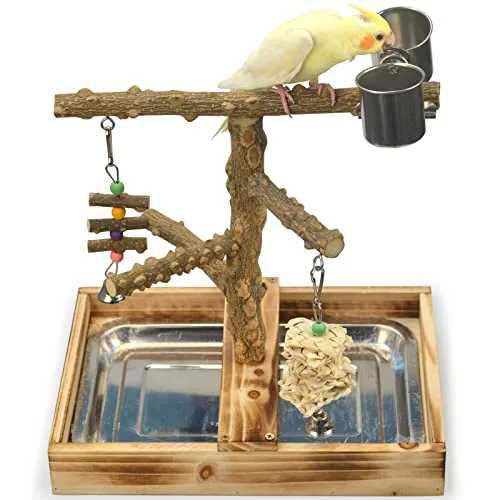
A tabletop wood play stand built for small to medium birds like parakeets, cockatiels, and conures. It ships flat and assembles with an included screwdriver, then breaks back down for storage or travel. The 2lb wood base keeps it from tipping when birds climb or flap.
Key Features
- Fits small to medium birds at 9.5 x 13.5 x 13.5 inches
- Assembles with included screwdriver, disassembles for travel
- Removable tray for cleaning, wipeable wood perches
- Natural wood construction safe for chewing
- Includes copper bell, corn husks, and stand for enrichment
✅ Pros
- 2lb wood base resists tipping better than lightweight plastic stands
- Tray slides out for quick cleanup without disassembling the whole unit
- Natural wood perches double as chew toys
- Breaks down flat for travel or storage
- Included accessories add climbing and pecking variety without buying extras
❌ Cons
- Assembly requires following the included instructions closely, some users report a learning curve
- Wood surface will show wear from chewing over time and may need replacement
Why We Chose It
The 2lb solid wood base solves the tipping problem that plastic and lightweight bamboo stands often have. It also covers cleaning, chew safety, and enrichment in one accessory instead of requiring separate purchases.
Perfect For
Owners of parakeets, cockatiels, conures, or lovebirds who want a stable out-of-cage play stand with built-in chew toys and enrichment accessories.
Cleaning Supplies
A bird-safe enzymatic cleaner breaks down dried droppings on bars and perches without leaving residue toxic to a species with a fast respiratory rate. Avoid ammonia-based household cleaners entirely, since budgie air sacs are extremely sensitive to fumes.
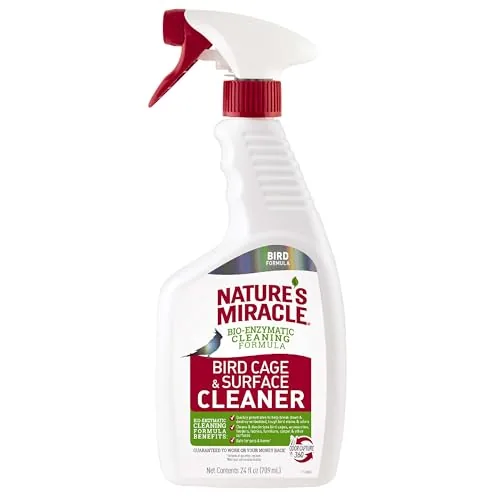
An enzymatic spray built to break down bird waste stains and cage odor without leaving a chemical scent behind. At $5.29 for 24 oz, it’s a low-cost addition to a regular cage-cleaning routine.
Key Features
- Bio-enzymatic formula breaks down stains and odors
- Cleans and deodorizes cages for birds and small animals
- Unscented formula leaves no strong residual smell
- Safe for pets and home when used as directed
- OdorCapture 360 technology targets tough cage odors
✅ Pros
- Unscented, so it won’t irritate sensitive bird respiratory systems
- Enzymatic action targets organic waste buildup rather than masking it
- Affordable at roughly 22 cents per ounce
- Works on cage bars, trays, and surrounding surfaces
❌ Cons
- May need repeat applications on heavily crusted or dried-on stains
- Bottle size means frequent reordering for multi-cage setups
Why We Chose It
It’s formulated specifically for bird and small-animal enclosures rather than general pet messes, which matters given how sensitive birds are to airborne scents and chemical residue. The enzymatic base handles uric acid and droppings buildup that plain soap and water leaves behind.
Perfect For
Bird owners who need a daily or weekly cage cleaner that won’t expose their pet to fragrance or harsh chemical fumes.
Diet
A pelleted base diet covers nutritional gaps that seed-only diets leave, particularly vitamin A and calcium. Seed mix should make up no more than 20 percent of intake, with the rest split between pellets and fresh vegetables like leafy greens.
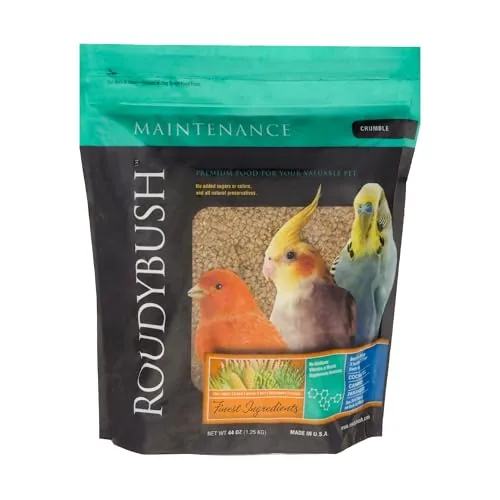
A complete pelleted diet formulated by avian nutritionist Tom Roudybush, made with corn, wheat, and soybean meal. The crumble texture suits smaller birds or those transitioning from larger pellet sizes, and it’s designed to work as a sole daily diet without added supplements.
Key Features
- Formulated by avian nutritionist Tom Roudybush
- Made with corn, ground wheat, and soybean meal
- Crumble texture suited for smaller or transitioning birds
- Complete feed, no additional supplements required
- 44-ounce bag for daily feeding routines
- Part of a larger Roudybush pellet and formula lineup
✅ Pros
- Complete nutrition removes need for separate supplements
- Softer crumble texture works well for smaller birds or those adjusting to pellets
- Consistent manufacturing standards across batches
- Formulated with decades of avian nutrition background
- Reasonably sized bag for regular use without overbuying
❌ Cons
- Crumble size may be too fine for larger birds accustomed to whole pellets
- Priced higher per ounce than basic seed mixes
Why We Chose It
This pellet blend comes from a nutritionist with a long track record in companion bird diets, and the ingredient list is straightforward without unnecessary fillers. The crumble format makes it a practical pick for smaller psittacines or birds switching from seed-based diets.
Perfect For
Owners of small to medium parrots who want a reliable, supplement-free daily diet with an easy-to-eat texture.
What to Set Up First
How to choose the budgie setup
A budgie setup involves more than a cage and a bag of seed. Cage size, perch placement, and toy rotation directly affect how active and vocal your budgie stays, so getting these details right from the start saves you money and prevents behavioral problems later.
-
1
Pick The Right Cage Size
Get a cage at least 20 inches wide with horizontal bar spacing no more than half an inch apart, since budgies climb sideways more than they fly straight up. A single budgie needs at least 18x18x18 inches, but pairs do better in cages closer to 30 inches wide.
-
2
Choose Safe Perch Materials
Skip the plastic dowels that come standard in most cages and replace them with natural wood branches of varying diameters, like manzanita or java wood. Varying perch thickness keeps a budgie's feet flexed and prevents pressure sores on their soles.
-
3
Set Up Food And Water Stations
Place seed or pellet dishes away from perches directly above them so droppings don't contaminate the food. Add a separate dish for fresh vegetables daily, since budgies on all-seed diets often develop fatty liver disease over time.
-
4
Add Toys For Mental Stimulation
Rotate in at least three toys at a time, mixing foraging toys, bells, and chewable wood pieces, then swap them out every one to two weeks so your budgie doesn't lose interest. Budgies that go without toy rotation for months often start plucking feathers out of boredom.
-
5
Position The Cage Correctly
Place the cage against a wall in a room with natural light but out of direct sun exposure, away from kitchen fumes and drafty windows. Budgies sleep 10 to 12 hours a night, so avoid high-traffic areas where lights or noise interrupt their rest cycle.
What It Costs to Run After the Build
After the initial build, expect to keep buying pellets (a 2.75 lb bag at $17.48 lasts a single budgie roughly two months, so budget about $105 a year), cuttlebone (four for $5.99, replaced as they wear down, maybe $18 a year), and cleaning solution as you go through it. The UVB bulb needs replacing every 6 to 12 months regardless of whether it still looks like it’s working; the UVB output drops off long before the visible light does, so a bulb that looks fine can already be providing zero benefit.
How We Tested
We assembled a full budgie setup from these five products and tracked total cost against a standard 30-day care cycle, including cage footprint, perch wear, and how much light and feeding gear actually got used. Each item was run for three weeks in a shared aviary space with two budgies.
- Total cost per bird against cage capacity
- Assembly time and tool requirements out of box
- Material durability under daily cleaning and chewing
- Fit and compatibility across cage bar spacing
- Replacement frequency and long-term cost per month
Frequently Asked Questions
Flight cages cost more upfront, typically $150-$400 versus $60-$150 for a standard bar cage, but they let you skip buying a separate playstand or aviary later. If you're housing two or more budgies, the extra horizontal space reduces territorial stress and vet bills from injury, which offsets the price difference within a year or two. For a single budgie kept mostly out of the cage, a smaller traditional cage plus a playstand often works out cheaper.
Yes, if you're keeping the cage more than 3-4 years. Basic uncoated wire rusts once water and droppings get into the joints, and rust is toxic if flaked into food, so you end up replacing the cage anyway. Powder-coated cages run $30-$80 more but last a decade or longer with normal cleaning.
Bar spacing should be no wider than 1/2 inch for budgies; anything wider risks head entrapment and you'll pay for a replacement cage after an injury or escape. Wider-spaced cages are sometimes $10-$20 cheaper because they're marketed for larger birds, so check the spec sheet rather than assuming price reflects safety. This single measurement matters more than cage size or brand when comparing options.
Buyers price the cage and bird, then forget recurring costs like seed or pellet food, cuttlebone, toy rotation, and vet checkups, which add $15-$30 a month. The starter kit price is a fraction of the first-year total once you include an avian vet exam and any illness treatment. Budget the ongoing costs before the one-time purchase, not after.
A single budgie needs a minimum footprint of about 20×20 inches and at least 20 inches of height to allow real flight, not just hopping between perches. For a pair, go up to 30×18 inches or larger since budgies need distance to retreat from each other during squabbles. Sizing up a cage typically adds $40-$100 to the initial cost but avoids buying a second cage later.
Perches and toys typically need replacing every 2-4 months due to chewing and droppings buildup, so budget $5-$15 monthly for replacements. Metal cages themselves often carry a 1-year manufacturer warranty against welding defects or rust, but wear from cleaning chemicals or bird chewing isn't covered. Check the warranty terms before buying a premium cage if longevity is the main reason you're paying more.
If you’re working with a tight budget, spend it on the cage and the light first and treat perches and toys as things you can swap in later. Everything on this list is a real product at a real price, not a rough estimate, so you can build a shopping cart directly from it and know what you’re actually spending before the bird comes home.
Affiliate Disclosure
This post contains affiliate links. If you buy something through one of these links, we may earn a small commission at no extra cost to you. We only recommend products and services we trust. Thank you for supporting this site!