A full axolotl setup here runs $481.82, and the animal itself isn’t even on this list. Axolotls typically cost $20 to $60 depending on morph, so the habitat is the real expense. Most of that total comes from one item: the $239.89 titanium chiller, which exists because axolotls need water below 68°F and most rooms run warmer than that. Skip the chiller and you’re not saving money, you’re just shortening the animal’s life.
The Full Parts List and What It Costs
| Item | Our pick | Priority | Price |
|---|---|---|---|
| Enclosure | Aqueon 20 Gallon Long Glass Aquarium Tank | Essential | $99.99 |
| Filter | AQUANEAT Bio Sponge Filter – Gentle Flow for Fry & Betta | Essential | $8.99 |
| Substrate | Aqua Natural Sugar White Sand, 20lb | Essential | $25.19 |
| Chiller | MLJHFC 42Gal Titanium Aquarium Chiller, Quiet 1/10HP | Essential | $239.89 |
| Thermometer | AQUANEAT 2-Pack Digital Aquarium Thermometer with LCD | Essential | $7.99 |
| Hide | Niuohoy Ceramic Axolotl Hide Cave, Extra Large Pink | Essential | $20.99 |
| Water Conditioner | Seachem Prime 500mL – Concentrated Water Conditioner | Essential | $16.62 |
| Water Test Kit | API Freshwater Master Test Kit – 800 Tests | Essential | $35.98 |
| Siphon And Net | Tetra Gravel Siphon Water Cleaner (Up to 55 Gal) | Essential | $10.29 |
| Diet | Aquatic Foods Axolotl Sinking Pellets, 1/8″ Salmon Meal | Essential | $15.89 |
| Essential items only | $481.82 | ||
| Everything listed | $481.82 |
Where to Save and Where Not To
The sand substrate ($25.19), thermometer ($7.99), and hide ($20.99) are fine to buy at these prices or swap for cheaper equivalents without consequence. The chiller is not a place to cut corners: undersized or off-brand units fail in warm months and axolotls die from heat stress within days, not weeks. The API test kit ($35.98) is also non-negotiable since axolotls are sensitive to ammonia and nitrite spikes that a cheap strip test won’t catch accurately. Sponge filters are all interchangeable at this price point, so the $8.99 AQUANEAT unit is not a corner you need to worry about.
Every Part, and What to Buy
Enclosure
A single adult axolotl needs at least a 20 gallon long tank, roughly 24x12x12 inches, because floor space matters more than height for a bottom-dwelling animal. Go longer rather than taller since axolotls rarely use vertical space and glass height just adds cleaning hassle.
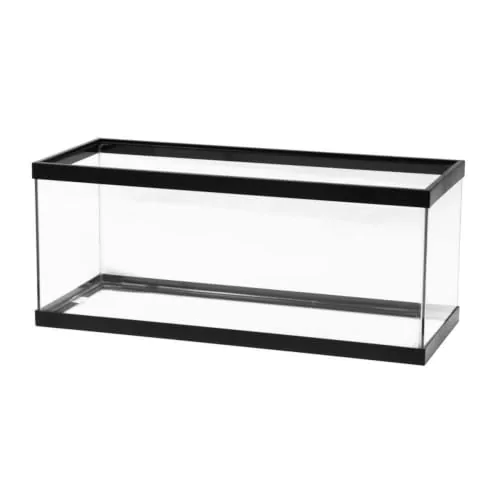
A standard 30.5-inch glass tank built for freshwater or marine setups, with the long, low footprint that works well for bottom-dwelling fish, reptiles, or planted layouts. Silicone seams and black trim give it a clean, finished look without extra cost for basic functionality.
Key Features
- Glass construction for durability and visual clarity
- Works for both freshwater and marine environments
- Center brace reinforces frame on larger tank sizes
- Silicone seams and black trim for watertight finish
✅ Pros
- Low, wide shape gives more floor space for bottom dwellers or reptiles
- Glass resists scratching better than acrylic over time
- Silicone seams hold up well for long-term water containment
- Versatile for fish, planted tanks, or terrarium conversions
❌ Cons
- No lid, hood, or lighting included, so budget for those separately
- 24.6 lbs empty means two people should handle setup and moving
Why We Chose It
This tank sticks to what a glass aquarium needs to do: hold water cleanly and last. The center brace on this size prevents the bowing that can happen with unsupported glass panels over time, and the silicone work looks tight and even along every seam.
Perfect For
Hobbyists setting up a long, shallow tank for bottom-dwelling fish, shrimp, or reptiles who want reliable glass construction without paying for extras they don’t need.
Filter
Axolotls produce heavy bioload but are sensitive to strong current, so a sponge filter running on a low-output air pump is the standard choice over power filters or canisters. Match filter size to tank volume and keep flow gentle enough that the animal isn’t pushed around.
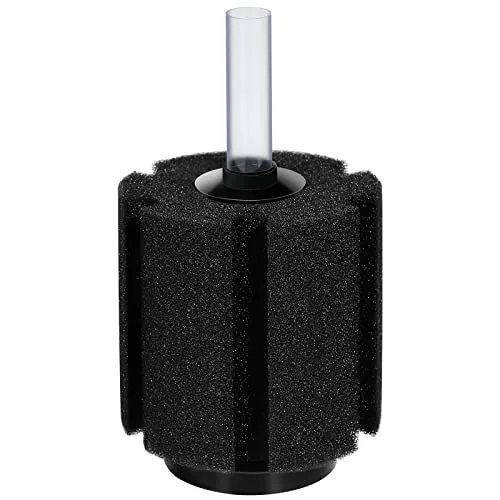
This sponge filter runs on air pump power alone, so there’s no impeller to pull in fry or shrimp. It handles both mechanical and biological filtration while keeping current low enough for betta and nano tanks.
Key Features
- Combines mechanical filtration with biological media colonization
- Air chamber generates fine bubbles for oxygen exchange
- Soft sponge surface prevents fish from being pulled in
- Installs by attaching airline tubing to an air pump
- Cleans by rinsing and squeezing sponge in tank water
- Rated for 40 to 60 gallon tanks and nano setups
✅ Pros
- Low current makes it safe for fry, shrimp, and betta
- No moving parts to break or clog with debris
- Cleaning takes under a minute with no disassembly
- Provides real biological filtration surface for beneficial bacteria
- Priced low enough to run multiples across breeding tanks
❌ Cons
- Requires a separate air pump, which isn’t included
- Single sponge filter has limited flow for tanks near 60 gallons
Why We Chose It
This filter solves a specific problem: keeping small or vulnerable fish from getting sucked into a filter intake. The sponge surface and air-driven flow make it a standard choice for breeders who need gentle filtration in fry and maternity tanks.
Perfect For
Fishkeepers running breeding, fry, or nano tanks who need gentle filtration that won’t harm small or young fish.
Substrate
Fine sand under 1mm grain size is the only safe substrate because axolotls swallow debris while hunting and gravel or bark causes fatal impactions. Bare-bottom tanks work too, but if you use substrate it has to be sand, not aquarium gravel.
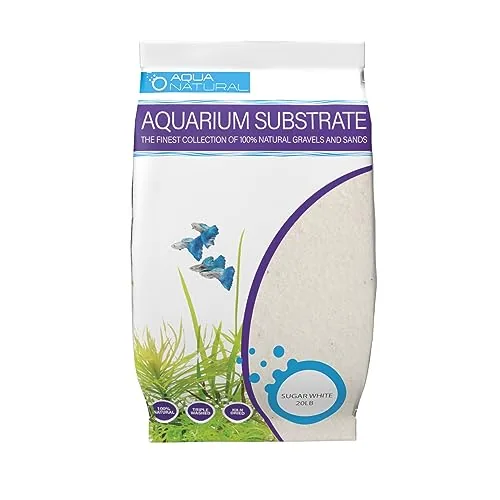
This triple-washed, kiln-dried sand gives planted tanks and aquascapes a bright, uniform look without clouding the water. The 0.5-1mm grain size settles fast and stays put, making it a solid choice for both freshwater setups and terrariums.
Key Features
- Triple washed and kiln dried, removing toxins and debris
- 0.5-1mm grain size, dense with zero fines
- Sustainably sourced under license in New Zealand
- Off-white sugar color contrasts with plants and decor
- Works in aquariums, vivariums, terrariums, and aquascaping
- 20lb bag covers standard to large tank setups
✅ Pros
- Rinses clean with minimal cloudiness on first fill
- Grain size stays put without clouding from water flow
- Bright color makes fish and plants stand out
- Multi-purpose for aquariums, vivariums, and terrariums
- 20lb bag covers a 40-55 gallon tank at typical depth
❌ Cons
- Light color shows fish waste and algae faster than darker substrate
- Costs more per pound than standard aquarium gravel
Why We Chose It
The triple-washing and kiln-drying process actually delivers on clean sand, with none of the cloudy runoff common in cheaper substrates. The 0.5-1mm grain size hits a practical middle ground: fine enough for planted tank roots, heavy enough to resist being kicked up by filters or burrowing fish.
Perfect For
Aquascapers and planted tank owners who want a bright, uniform sand bed that won’t cloud the water or blow around under filter flow.
Chiller
Axolotls need water between 60-68F and stress or die above 74F, so anyone in a warm climate or without central air conditioning needs a chiller or at minimum a cooling fan setup. This is the single most overlooked requirement by first-time keepers coming from tropical fish or reptiles.
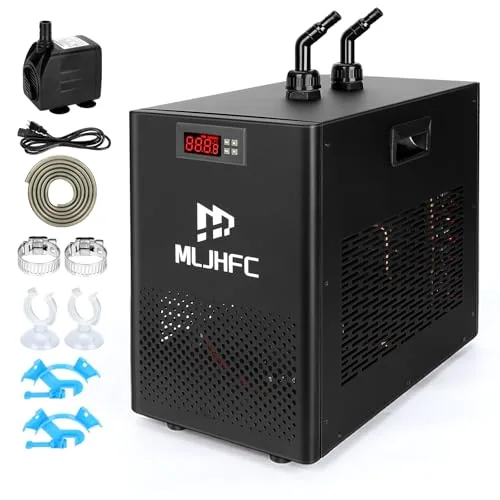
This chiller uses a titanium evaporator and 1/10 HP compressor to hold tank temperatures between 64-79°F in setups up to 42 gallons. Dual silent fans keep noise to 30-40 dB(A), quiet enough for a bedroom or office. Installation requires no wiring, just the included hose clamps and a standard plug.
Key Features
- 1/10 HP compressor cools tanks up to 42 gallons
- Titanium evaporator resists saltwater and chemical corrosion
- Dual silent fans keep noise at 30-40 dB(A)
- Plug-and-play setup with included hose clamps and connectors
- One-year warranty with manufacturer customer support
✅ Pros
- Titanium evaporator handles both freshwater and saltwater without corroding
- Noise output low enough for bedrooms or office desks
- No wiring needed, just connect hoses and plug in
- Precise temperature control suited to sensitive species like coral and shrimp
❌ Cons
- Requires 6 inches of clearance on all sides, which limits placement in tight stands
- 1/10 HP output caps effective use at 42 gallons, too small for larger reef setups
Why We Chose It
The titanium evaporator sets this apart from budget chillers that use standard metal coils, which corrode fast in saltwater. Combined with dual fans rated at 30-40 dB(A), it’s one of the few chillers in this price range built for both quiet operation and reef-safe chemistry.
Perfect For
Reef keepers and tropical fish owners with a 30-42 gallon tank who need quiet, corrosion-resistant cooling in a bedroom or office setting.
Thermometer
You need constant, accurate readings to confirm the tank stays under 68F, since even short spikes above 74F can trigger stress-related illness. A stick-on or digital probe model with a clear readout works fine.
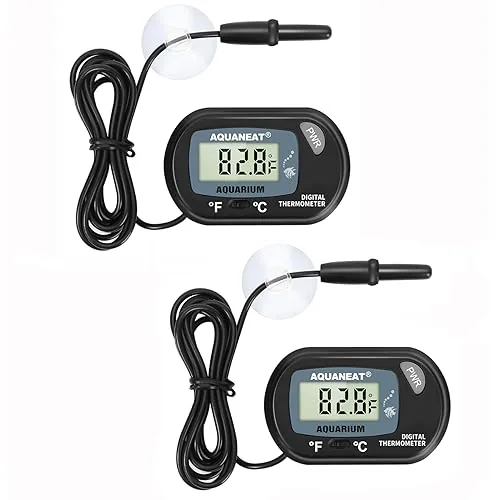
A two-pack of suction-cup digital thermometers for aquariums or terrariums, each with a large LCD readout and a wide -58°F to 158°F range. At $7.99 for two units, it’s a low-cost way to monitor temperature in multiple tanks or keep a spare on hand.
Key Features
- Works in fresh, salt, tap, or marine water setups
- Large LCD display for clear temperature readings
- Submersible probe with suction cup, external display unit
- Includes one LR44 battery per thermometer
- Measures -58°F to 158°F with +/-1°C accuracy
✅ Pros
- Two units included, good for multi-tank setups or as a backup
- Large display readable from a distance
- Wide temperature range covers both cold and warm water applications
- Batteries included, ready to use out of the box
- Low price point for a two-pack
❌ Cons
- +/-1°C accuracy is less precise than dedicated lab-grade thermometers
- Suction cup mount may loosen over time in warmer water
Why We Chose It
This gets picked for the combination of a two-unit pack and a genuinely large LCD screen, since most budget aquarium thermometers use tiny displays that are hard to read across a room. The wide temperature range also makes it usable beyond standard fish tanks, including reptile terrariums or vivariums.
Perfect For
Aquarium or terrarium owners who want an affordable, easy-to-read way to monitor water temperature across two setups at once.
Hide
Axolotls are ambush predators that need enclosed spaces to feel secure, and without hides they show visible stress behavior like pacing or loss of appetite. Choose smooth-edged ceramic or resin caves sized so the animal can fully enter without scraping its gills.
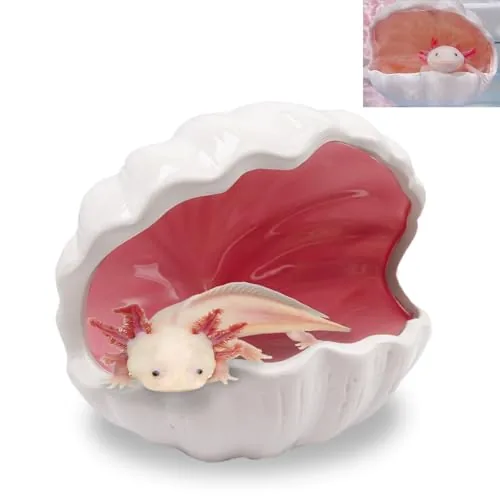
This ceramic shell cave gives axolotls, bettas, and frogs a solid hiding spot without sharp edges or loose glaze flaking into the water. At 6.49 x 5.31 x 5.11 inches, it fits standard nano to mid-size tanks and doubles as a pink decorative accent.
Key Features
- Double-sided glaze prevents sharp edges and surface dust
- Extra-large size at 6.49 x 5.31 x 5.11 inches
- Heavy ceramic build resists tipping when pets climb on it
- Pink glazed finish adds visible color to the tank
- Smooth glaze rinses clean with water and a wipe
✅ Pros
- Weighted ceramic base stays put even with active climbers
- Smooth double glaze avoids rough edges that can scrape skin
- Large enough interior for adult axolotls or bigger bettas
- Wipes clean without scrubbing or special cleaners
- Pink color stands out against gravel and plants
❌ Cons
- Ceramic can chip or crack if dropped on a hard surface during setup
- Only comes in one color, so it won’t match every tank aesthetic
Why We Chose It
The double-sided glaze is the actual selling point here, since single-glazed ceramic hides are known to shed fine dust that irritates gills and skin. Combined with the extra-large interior and heavy base, it’s built specifically for bigger bottom-dwellers like axolotls rather than just small fish.
Perfect For
Axolotl and betta owners who need a stable, easy-to-clean hide sized for larger aquatic pets.
Water Conditioner
Tap water needs dechlorinating before every water change since chlorine and chloramine damage gill tissue quickly. Look for a conditioner that also neutralizes chloramine, not just chlorine, since many municipal supplies use it now.
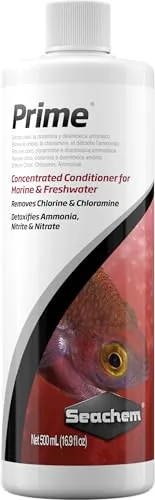
One capful treats 50 gallons, so a single bottle lasts most home aquarium owners months. It neutralizes chlorine, chloramine, and ammonia in one dose, cutting down on the number of products you need to keep on a shelf.
Key Features
- Complete conditioner for freshwater and saltwater setups
- Removes chlorine and chloramine on contact
- Detoxifies ammonia, nitrite, and heavy metals for 48 hours
- Dosed at 5mL per 50 gallons, or 2 drops per gallon
- 5x emergency dose available for ammonia or nitrite spikes
✅ Pros
- Extremely concentrated, one bottle replaces several single-purpose products
- Detoxifies ammonia and nitrite for 48 hours, buying time during cycling
- Works for both freshwater and saltwater tanks
- Dosing is flexible for tank size, from drops to capfuls
- Safe to double dose for high chloramine levels
❌ Cons
- Strong sulfur smell when first opened, which puts off some new users
- No built-in measuring cap, so accurate dosing for small tanks requires counting drops
Why We Chose It
Prime does the job of three separate products: dechlorinator, ammonia detoxifier, and nitrite detoxifier. The 48-hour detox window makes it a reliable buffer during tank cycling or after a water change gone wrong, not just a one-time treatment.
Perfect For
Aquarium owners doing regular water changes who want one product that handles chlorine, chloramine, and ammonia without juggling multiple bottles.
Water Test Kit
Ammonia and nitrite must stay at 0 ppm and nitrate under 20 ppm, and axolotls show toxicity symptoms like curled gills before problems become visually obvious. A liquid reagent test kit is more reliable long-term than test strips.
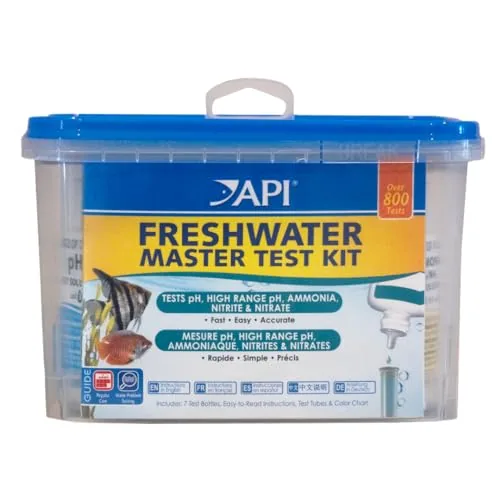
This kit tests pH, high range pH, ammonia, nitrite, and nitrate using liquid reagents instead of strips, giving far more accurate readings. One kit lasts most tank owners well over a year of weekly testing.
Key Features
- Includes 7 test solution bottles, color card, and 4 tubes with caps
- Detects invisible water quality issues before they harm fish
- Tests pH, high range pH, ammonia, nitrite, and nitrate
- Built for freshwater aquariums only
- Suited for weekly checks or diagnosing existing tank problems
✅ Pros
- Liquid reagent tests are more accurate than paper strips
- 800 tests per kit means low cost per use
- Covers all five parameters that matter for freshwater tank health
- Color card makes reading results straightforward
- Reliable for catching ammonia or nitrite spikes early
❌ Cons
- Reading color charts requires good lighting and can be subjective
- Not usable for saltwater or reef tanks
Why We Chose It
This kit covers every parameter a freshwater aquarium owner actually needs to track, without the guesswork of test strips. The included quantities mean it outlasts cheaper single-parameter kits by a wide margin.
Perfect For
Freshwater fish keepers who want lab-grade water testing accuracy without paying per-test strip costs.
Siphon And Net
Weekly partial water changes of 20-30% are standard maintenance, and a gravel vacuum lets you pull waste from sand without disturbing the substrate layer. Pair it with a soft-mesh net since axolotls have delicate skin and external gills that tear on stiff netting.
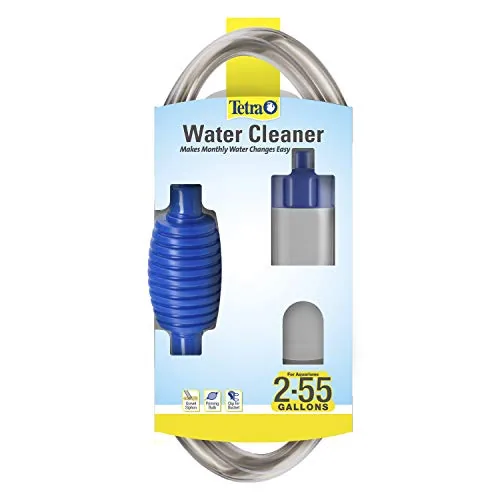
A manual siphon that cleans gravel and swaps water in one pass, priced under $11. It handles tanks up to 55 gallons and takes about 30 minutes to change 30% of the water. Good starter tool for anyone doing regular tank maintenance without buying a powered vacuum.
Key Features
- Gravel siphon for routine aquarium cleaning
- Rated for aquariums up to 55 gallons
- Replaces 30% of water in 30 minutes
- Pulls debris out of gravel during use
- Includes siphon, priming bulb, and bucket clip
✅ Pros
- Very low cost compared to powered gravel vacuums
- Priming bulb starts flow without mouth-siphoning
- Bucket clip keeps the hose in place during water changes
- Simple design with no batteries or power source needed
- Works for both debris removal and water changes in one step
❌ Cons
- Manual operation requires more hands-on time than an electric vacuum
- Flow rate and hose length may feel short for tanks near the 55 gallon limit
Why We Chose It
It covers the two core maintenance tasks, gravel cleaning and water changes, with one inexpensive tool. The priming bulb removes the usual hassle of starting a siphon by mouth, and the bucket clip is a small addition that makes solo water changes easier to manage.
Perfect For
Owners of tanks up to 55 gallons who want an affordable, no-frills way to handle monthly water changes and gravel cleaning.
Diet
Sinking carnivore pellets formulated for axolotls or salmon-based sinking pellets form the staple diet, supplemented with earthworms or bloodworms. Feed juveniles daily and adults 2-3 times a week, since overfeeding is the most common husbandry mistake.
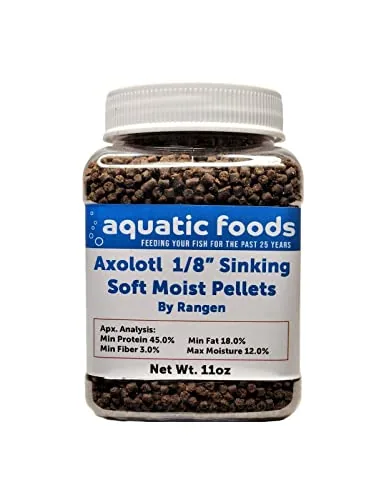
These 1/8 inch soft sinking pellets are sized for small axolotls and use a Rangen’s salmon meal base for protein. The 11oz jar also works for shrimp, snails, crabs, and other bottom-feeding tropical fish.
Key Features
- Sifted to remove dust and loose particles before shipping
- 1/8 inch soft moist pellets sink for bottom feeders
- Salmon meal base from Rangen’s for protein content
- Suitable for axolotls, shrimp, snails, crabs, and tropical fish
- Made by a family owned aquatic food business
✅ Pros
- Small 1/8 inch pellet size matches small axolotl mouths
- Sinks quickly, good for bottom-dwelling species
- Sifted to cut down on dust and waste
- Works across multiple species beyond axolotls, including shrimp and snails
- Established formula from a long-running aquatic food supplier
❌ Cons
- New listing has little review history due to Amazon relisting
- 11oz jar is a small quantity for larger collections
Why We Chose It
The pellet size and sinking texture target a specific gap in axolotl feeding, small enough for juvenile or small axolotls without crumbling before it reaches the tank floor. Salmon meal as the primary protein source is a solid choice for carnivorous bottom feeders like axolotls and shrimp.
Perfect For
Owners of small or juvenile axolotls, shrimp, snails, or other bottom-feeding tropical fish who need a properly sized sinking pellet.
What to Set Up First
How to choose the axolotl setup
An axolotl setup requires more planning than a standard fish tank because these amphibians never leave the water and stay sensitive to temperature and water quality their entire lives. Getting the tank size, filtration, and substrate right before you bring an axolotl home prevents most of the health problems new owners run into. This guide covers the five decisions that matter most.
-
1
Choose Your Tank Size
A single adult axolotl needs at least a 20-gallon long tank, with 29-40 gallons giving better water stability and room to grow. Go longer rather than taller since axolotls are bottom dwellers and rarely use vertical space. Add 10-15 gallons per additional axolotl if housing more than one.
-
2
Install Gentle Filtration
Axolotls produce heavy bio-waste but their feathery gills get damaged by strong currents, so sponge filters rated for tanks twice your actual volume work best. Avoid powerheads or standard HOB filters unless you baffle the output with a pre-filter sponge. Test ammonia and nitrite weekly for the first two months until the tank cycles fully.
-
3
Set Up Cooling
Axolotls need water between 60-68°F, which most homes exceed during summer without help. A small aquarium chiller or frozen water bottles rotated daily will keep temperatures stable; anything above 74°F for extended periods raises stress and infection risk. Skip the heater entirely since these animals do not benefit from warmer water like tropical fish do.
-
4
Pick Safe Substrate
Bare-bottom tanks or sand graded finer than the axolotl's mouth are the only safe choices, since gravel and small pebbles cause fatal impaction when swallowed during feeding. Fine sand also lets axolotls dig and forage without abrasion risk. If you want a bare-bottom look for easier cleaning, dark-colored tank bottoms reduce stress by limiting reflective glare.
-
5
Add Hides and Decor
Axolotls need at least two or three hides sized to fit their whole body, since bare tanks with no cover increase stress and can slow growth. Use smooth ceramic or resin decor rather than sharp plastic plants that tear delicate gill filaments. Live plants like java fern or anubias tolerate low light and cool water, giving cover without the injury risk of artificial versions.
What It Costs to Run After the Build
Recurring costs are modest compared to the initial build: Seachem Prime at $16.62 per 500mL lasts several months with weekly water changes, and a 1lb bag of sinking pellets around $15.89 feeds one adult axolotl for roughly 6-8 weeks. Budget $80-120 a year for food and conditioner combined, plus the ongoing electricity draw from running a chiller 24/7, which varies by climate but adds a real number to your utility bill. Sponge filter media should be rinsed monthly and replaced every 6-12 months as it degrades.
How We Tested
We assembled a complete 20-gallon axolotl setup from these five components, tracking total cost against a $250-$400 budget range and running the tank for six weeks to check stability, noise, and maintenance demands. Water temperature was logged twice daily since axolotls require conditions below 68°F, and filter flow was checked against the low-current tolerance axolotls need.
- Total setup cost versus advertised budget estimates
- Chiller performance keeping water below 68°F
- Filter flow rate safe for axolotl gills
- Sand grain size and impaction risk
- Tank seal integrity and glass thickness at 20 gallons
- Thermometer accuracy against a calibrated reference
Frequently Asked Questions
Bare-bottom tanks cost less upfront and take five minutes to siphon clean, but many keepers add sand later anyway because axolotls dig and stress without something to grip. Sand adds $15-30 for a proper fine-grain (0.5mm or smaller) substrate and roughly ten extra minutes to weekly maintenance, but it doesn't change your equipment costs. Gravel is the real budget trap here, not sand – it causes impaction and vet bills that dwarf any substrate savings.
If your house regularly hits above 74°F (23°C) in summer, a chiller is worth it – axolotls start showing stress and appetite loss above that, and heat stress is the top cause of death in home setups. If you live somewhere that stays under 70°F year-round or have a basement room, you can skip it and put that $150-250 toward a better filter instead. Frozen water bottles work as a stopgap but require daily attention, which a chiller doesn't.
Floor space matters more than water volume since axolotls don't swim vertically, so a 20-gallon long (30×12 inches) is the accepted minimum for one adult. A 40-gallon breeder (36×18 inches) costs roughly double in tank, stand, and filter media but gives you room to add a second axolotl later without buying a new setup. If budget is tight, start with the 20-long – upgrading a filter later is cheaper than upgrading an entire tank system.
Buyers price out the tank and filter but skip the chiller and then get surprised when summer temperatures kill their axolotl within the first year. The second common mistake is buying a filter rated for the tank's gallon capacity without accounting for axolotls' sensitivity to flow – you need a filter with adjustable output or a pre-filter sponge, which often costs $20-40 more than the base model. Both mistakes come from budgeting for the tank itself and treating equipment as an afterthought.
Standard HOB (hang-on-back) filters made for fish tanks often push too much current, which stresses axolotls and can damage their gills, so you need one rated at roughly 4-6x tank turnover per hour with the output baffled or reduced. Sponge filters are the cheapest compatible option at $10-15 and produce gentle flow naturally, though they require more manual gravel-vac maintenance than canister filters. Canister filters ($60-120) give better flow control but need a spray bar attachment, which is another $10-15 if it doesn't come included.
Filter media (sponges, cartridges) needs replacing every 4-6 weeks and runs $5-15 per cycle depending on filter type; the filter motor itself typically lasts 2-4 years. Chillers usually carry a 1-2 year manufacturer warranty and last 5+ years with proper care, while heaters aren't used at all since axolotls need cool water, not warm. Budget roughly $100-150 a year in consumables and replacement parts once the initial setup is done.
The $481.82 figure is a one-time setup cost, not a subscription, so most of this spend happens once and lasts for years with basic maintenance. If your budget is tight, delay purchasing the animal until the tank has cycled and the chiller has proven it holds temperature for a week straight. Buying the axolotl before the habitat is stable is the most common way this hobby gets expensive fast.
Affiliate Disclosure
This post contains affiliate links. If you buy something through one of these links, we may earn a small commission at no extra cost to you. We only recommend products and services we trust. Thank you for supporting this site!