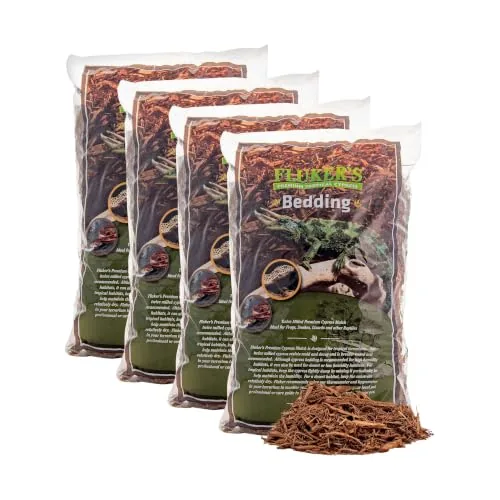
A complete ball python setup like this one runs $433.57, and $424.58 of that is required just to keep the animal alive and healthy. The snake itself is often the cheapest part of the hobby, sometimes free from a rehoming situation or under $50 for a normal morph. The enclosure, heating, and thermostat make up the bulk of the cost here, with the ECOFLEX enclosure at $155.99 alone accounting for over a third of the total build.
The Full Parts List and What It Costs
| Item | Our pick | Priority | Price |
|---|---|---|---|
| Enclosure | New Age Pet ECOFLEX 36″ Mojave Reptile Enclosure | Essential | $155.99 |
| Thermostat | Inkbird ITC-308 Dual Relay Temperature Controller | Essential | $36.00 |
| Heat Source | DXOPHIEX 5.5in Reptile Heat Lamp with PID Thermostat | Essential | $41.99 |
| Thermometer Hygrometer | Govee H5075 Bluetooth Hygrometer Thermometer | Essential | $12.99 |
| Hides | JIHAQUA Large Reptile Hide Box, 2-Pack | Essential | $14.99 |
| Substrate | ReptiChip Compressed Coconut Substrate 72-Quart Brick | Essential | $34.95 |
| Water Bowl | Zoo Med Repti Rock Water Dish X-Large | Essential | $19.71 |
| Decor | Exo Terra Forest Branch Small – Real Wood Décor | Optional | $8.99 |
| Feeding Tongs | Vodolo 15-Inch Stainless Steel Reptile Feeding Tongs | Essential | $7.99 |
| Food | MiceDirect Frozen Rat Smalls, 4.5-6 in., Pack of 10 | Essential | $99.97 |
| Essential items only | $424.58 | ||
| Everything listed | $433.57 |
Where to Save and Where Not To
The thermostat is not optional and not a place to cut costs. An Inkbird ITC-308 at $36.00 is what prevents the DXOPHIEX heat lamp from overheating the enclosure and killing the snake, so pairing a heat source without one is a false economy that risks the animal. The enclosure size and the substrate are similarly fixed costs tied to the snake’s welfare. Decor items like the $8.99 forest branch and the $14.99 hide box pair are where you can substitute cheaper alternatives, including safe items you already own, without any real tradeoff.
Every Part, and What to Buy
Enclosure
A hatchling can start in a 20 gallon long tub but an adult needs at least a 36x18x12 inch enclosure to allow a proper thermal gradient. Front opening doors matter because ball pythons stress from top down handling.
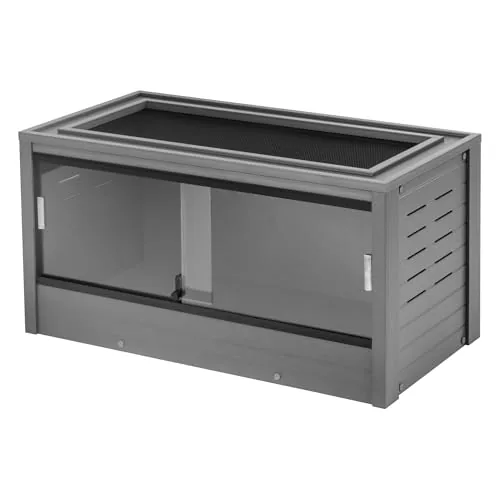
A composite reptile enclosure with sliding locking doors and a mesh top for airflow and lighting. Built for low-to-moderate humidity setups housing snakes, lizards, or tortoises. Interior measures 34.56″ x 16.42″ x 15.78″.
Key Features
- Moisture-resistant ECOFLEX composite for odor control and cleanup
- Sliding locking front doors for wide viewing and access
- Vented side panels and mesh top for airflow and lighting
- Assembles in 20-30 minutes with included hardware
- 10-year manufacturer warranty on materials and construction
✅ Pros
- Sliding lockable doors make feeding and cleaning simple
- Mesh top supports heat lamps and UVB lighting setups
- Composite material won’t warp or absorb odors like wood
- Quick assembly with all hardware included
- Long 10-year warranty backs the build quality
❌ Cons
- Not waterproof, so high-humidity species need extra precautions
- Matching stand and stacker sold separately at added cost
Why We Chose It
This enclosure balances visibility and ventilation better than most composite terrariums in its price range, with a mesh top that actually accommodates real lighting fixtures. The sliding lock doors and moisture-resistant material make daily maintenance faster than glass tanks of similar size.
Perfect For
Reptile owners housing small-to-medium snakes, lizards, or tortoises in low-to-moderate humidity setups who want easier cleanup than a glass terrarium.
Thermostat
Regulates the heat source so it never exceeds safe temperatures, preventing burns or fatal overheating. Choose a probe based unit rated for at least 600 watts even though the actual heater draws far less.
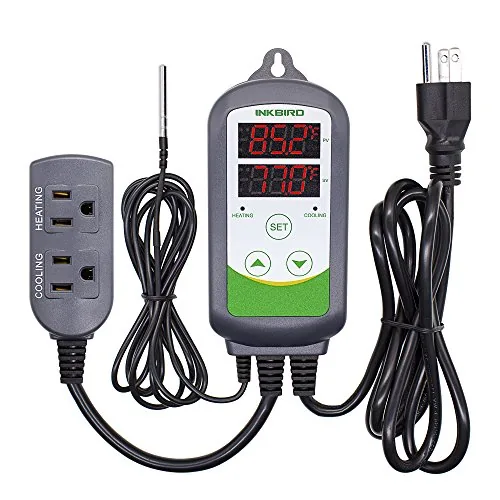
The ITC-308 switches between heating and cooling equipment based on a single temperature sensor, making it useful for fermentation, incubation, or reptile tank setups. It handles loads up to 1100W and includes a compressor delay to protect refrigeration units from short-cycling damage.
Key Features
- Displays temperature in Celsius or Fahrenheit
- Dual relay controls both heating and cooling devices
- Dual display shows current and target temperature at once
- Buzzer alarm for high, low, or sensor failure temps
- Max 1100W load with adjustable compressor delay protection
✅ Pros
- Controls both a heater and a cooler from one unit
- Compressor delay setting prevents equipment burnout from rapid cycling
- Simple to program without an app or manual
- Works for fermentation, incubation, and reptile tank setups
- Priced well below comparable dual-stage controllers
❌ Cons
- Ships with only one temperature probe, so dual-zone setups need a second sensor
- No wifi or app connectivity for remote monitoring
Why We Chose It
The dual relay setup lets one controller manage both a heating and cooling device off a single sensor reading, which most budget thermostats can’t do. The adjustable compressor delay is a practical safety feature that protects refrigeration equipment most cheaper units skip entirely.
Perfect For
Homebrewers, fermenters, and reptile or incubator owners who need one controller to switch between a heat source and a cooling unit automatically.
Heat Source
Ball pythons need a warm side around 88-92F and a cool side in the mid 70s, with a basking surface reading no higher than 95F. A radiant heat panel or ceramic heat emitter mounted above the enclosure works better than a heat mat alone for adult sized enclosures.
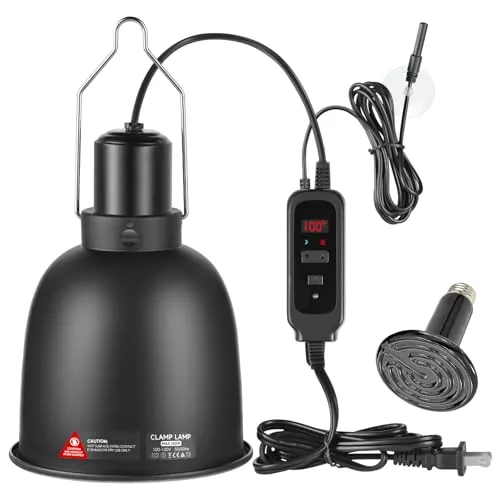
A dome heat lamp fixture paired with a PID thermostat and 100W ceramic heat emitter, built for reptile keepers who want precise temperature control without guesswork. The thermostat switches between constant-temp mode and a day/night cycle that drops heat automatically after dark.
Key Features
- PID thermostat controls temperature from 68F to 113F precisely
- Constant mode or automatic day/night temperature cycling
- 1mm aluminum dome with polished reflective interior
- E26 base fits bulbs up to 100W
- Includes 100W ceramic heat emitter with no light output
✅ Pros
- PID control holds temperature steadier than basic on/off thermostats
- Day/night mode automatically drops temp about 4F after dark
- Ceramic emitter heats without disrupting reptile sleep cycles
- Polished aluminum dome improves heat reflection and durability
- Simple probe placement and one-button C/F switching
❌ Cons
- Thermostat is rated to 200W but the fixture itself only takes bulbs up to 100W
- Ceramic emitter provides no visible light, so daytime baskers may need a separate light source
Why We Chose It
The PID thermostat is the standout feature here, offering tighter temperature stability than the simple dial thermostats bundled with most heat lamp kits. The day/night mode adds a layer of realism that most competitors skip entirely.
Perfect For
Reptile owners who want automated, precise heat regulation for species like bearded dragons, leopard geckos, or ball pythons without babysitting the tank temperature.
Thermometer Hygrometer
You need to verify both temperature and humidity independently from what the thermostat displays, since thermostat probes only read one spot. Humidity should stay between 50-60%, rising to 70% during a shed.
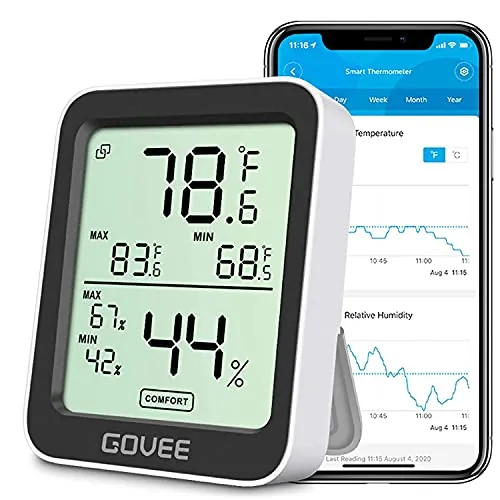
A $13 sensor that tracks temperature and humidity with 2-second refresh and sends phone alerts when readings drift out of range. Good for monitoring a nursery, wine storage, or a grow room without paying for a smart home hub.
Key Features
- Bluetooth remote monitoring with historical graphs, 164ft range
- Swiss sensor rated ±0.54°F and ±3% RH accuracy
- 3-inch LCD with max/min records and comfort indicator
- App alerts when temp or humidity exits preset range
- 20-day on-device storage, exportable CSV data up to 2 years
✅ Pros
- Accurate readings that update every 2 seconds
- Large LCD screen readable from across a room
- Free app alerts catch problems before you check manually
- CSV export lets you review long-term humidity trends
- Price stays under $15 with no subscription required
❌ Cons
- Bluetooth range drops well below 164ft through walls or floors
- No wifi hub, so remote monitoring stops once you leave range
Why We Chose It
The accuracy specs hold up in practice, and the 2-second refresh rate is faster than most sensors in this price range. Data export to CSV is a rare feature at $13 and useful for anyone tracking conditions over weeks or months.
Perfect For
Anyone monitoring humidity-sensitive spaces like a wine cellar, nursery, or plant room who wants phone alerts without a full smart home setup.
Hides
This species needs a hide on both the warm and cool side so it never has to choose between security and thermoregulation. The opening should be snug enough that the snake’s body touches the sides when coiled inside.
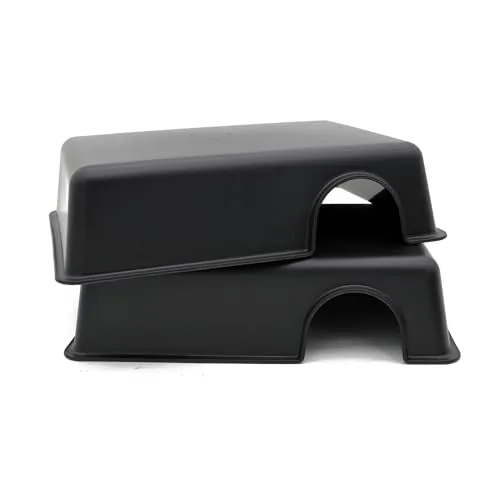
A basic plastic hide box sized for small to mid-size reptiles like leopard geckos, small snakes, or crested geckos. The 2.1 x 1.5 inch entrance rules out larger snakes despite the ‘large’ label. Two pieces for $14.99 let you set up hides on both warm and cool ends of a tank.
Key Features
- Enclosed design reduces stress for hiding reptiles
- Durable plastic construction, wipes clean easily
- Dark enclosed space encourages natural hiding behavior
- 9.5 x 6.7 x 2.3 inch hide with shelter coverage
- Entrance measures 2.1 inches wide, 1.5 inches tall
- Two hides included for multiple tank placements
✅ Pros
- Two hides per order, good value for dual-zone temperature setups
- Smooth plastic surface makes cleaning and disinfecting simple
- Low profile fits easily under heat lamps or in smaller enclosures
- Solid opaque walls actually block sightlines, unlike mesh hides
❌ Cons
- Entrance opening is too small for anything but slim-bodied or juvenile reptiles
- Plastic construction can feel lightweight and may shift when reptiles push against it
Why We Chose It
This hide works because it does one job well: it blocks light and sightlines completely, which is what actually reduces stress for burrowing or shy species. The two-pack lets you place hides on both the warm and cool sides of an enclosure without buying separate items, which is the setup most reptile owners need anyway.
Perfect For
Owners of leopard geckos, crested geckos, small snakes, or other reptiles under 12 inches long who need a low-cost hide for both ends of their thermal gradient.
Substrate
Aspen, cypress mulch, or coco fiber all hold humidity better than reptile carpet, which matters for shedding. Depth of 2-3 inches lets the animal burrow, which reduces stress in new setups.
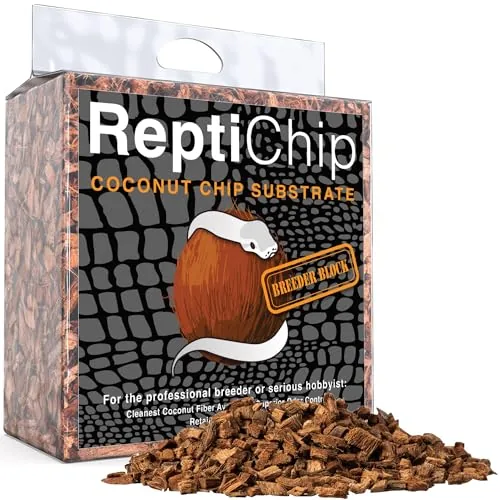
This is a compressed coconut husk brick that expands into 72 quarts of loose substrate once soaked in water. It holds humidity well, which makes it suited to ball pythons, tropical geckos, and other species that need consistent moisture levels in their enclosure.
Key Features
- Coconut chip substrate holds humidity for tropical enclosures
- Compressed 72-quart brick expands to 10 lbs bedding
- Absorbs odors and traps waste for cleaner tanks
- 100% organic coco chips, cleaned to remove dust
- Works as bioactive substrate for multiple reptile species
- Sourced and processed with sustainability practices in mind
✅ Pros
- Retains humidity well for tropical and semi-tropical species
- Compressed brick saves storage space and shipping bulk
- Low dust content reduces respiratory irritation risk
- Controls odor better than plain coconut fiber substrates
- Works across snakes, geckos, tortoises, and hermit crabs
❌ Cons
- Requires soaking and prep time before it’s usable
- Retains moisture heavily, so overwatering can lead to mold if not monitored
Why We Chose It
ReptiChip stands out for consistent humidity control, which matters more than most other bedding factors for species like ball pythons that need stable moisture levels to shed properly. The dust-free processing also reduces a common irritant found in cheaper coconut substrates.
Perfect For
Reptile keepers housing humidity-dependent species like ball pythons or tropical geckos who want a low-dust, odor-controlling substrate.
Water Bowl
Needs to be large enough for the snake to soak its entire body, since ball pythons will sometimes sit in water before a shed. A ceramic or heavy plastic bowl resists tipping better than lightweight options.
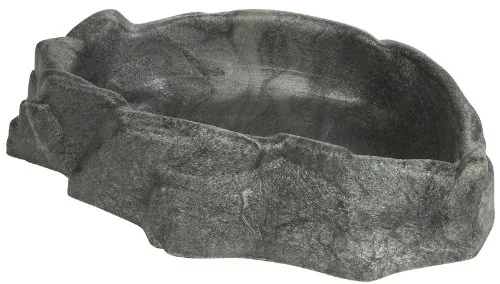
A low-profile rock-textured dish sized for larger reptiles, built to hold water or food without harboring bacteria. The 11-inch diameter and 2-inch depth work well for bigger lizards and tortoises that need easy in-and-out access.
Key Features
- Doubles as food or water dish
- Low profile design for easy animal access
- Smooth non-porous surface resists bacteria buildup
- Available in multiple colors and sizes
- Made from 100% recycled plastic
✅ Pros
- Low sides make it easy for larger reptiles to climb in and out
- Smooth surface is simple to clean and doesn’t trap grime
- Sturdy enough to hold water without tipping easily
- Recycled plastic construction keeps cost down
- X-Large size fits bigger enclosures and species
❌ Cons
- Assorted colors mean you can’t pick a specific one
- No drain plug, so full cleaning requires dumping and wiping by hand
Why We Chose It
The rock texture and neutral colors blend into naturalistic enclosures better than plain plastic bowls. The non-porous surface actually holds up to scrubbing without scratching, which matters for anyone dealing with reptile waste and bacteria control long-term.
Perfect For
Owners of larger reptiles like bearded dragons, monitors, or tortoises who need a durable, easy-clean water or food dish sized for bigger enclosures.
Decor (optional)
Branches, foliage, and background pieces break sight lines across the enclosure, which lowers stress for an animal that is naturally reclusive. Not required for survival but improves activity and confidence.
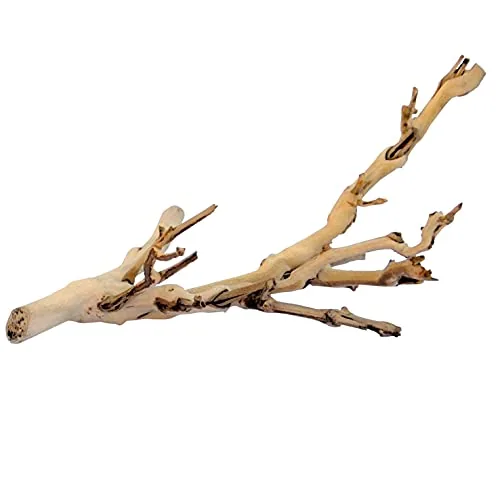
A real wood branch shaped for climbing and basking, sized for smaller reptiles and juveniles. Heat treated before packaging, so it’s ready to place in the terrarium without extra cleaning.
Key Features
- Real wood shaped like natural tree branches
- Sturdy 3D structure for climbing and basking
- Heat treated to remove pests before shipping
- Works in both rainforest and desert setups
- Small size fits juvenile and smaller reptiles
✅ Pros
- Heat treatment means no rinsing or baking required before use
- Real wood texture gives better grip than plastic decor
- Compact size won’t overwhelm small or nano terrariums
- Works across humid and arid enclosure types
- Stacks or pairs easily with other Exo Terra pieces
❌ Cons
- Small size limits weight capacity for larger adult reptiles
- Natural wood shape varies, so branch angle isn’t guaranteed
Why We Chose It
It solves a specific problem: giving smaller reptiles and amphibians a climbing surface that looks and feels natural instead of molded plastic. The heat treatment step matters here since untreated wood decor can introduce mites or fungus into a closed terrarium.
Perfect For
Owners of juvenile geckos, small lizards, or young snakes who want a natural-looking climbing branch sized for a 10-20 gallon terrarium.
Feeding Tongs
Long tongs keep your hand out of strike range during feeding, which prevents accidental bites triggered by feeding response rather than aggression. 10-12 inch length is standard for adult ball pythons.
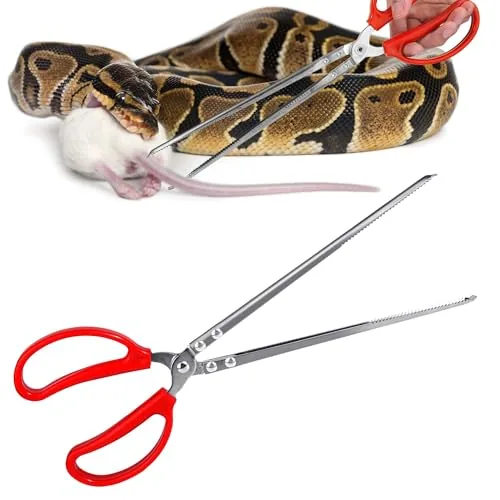
A basic pair of long-handled feeding tongs built for snakes, lizards, and other reptiles that need a safe distance during feeding. The serrated tips hold food securely while the silicone handle keeps your grip steady. At under $8, it covers feeding and tank cleaning without much fuss.
Key Features
- Serrated tips grip prey items securely during feeding
- 15-inch length keeps hands away from bites
- Silicone-coated handle prevents slipping in hand
- Stainless steel construction resists rust and corrosion
- Doubles as a tool for tank cleaning and debris removal
✅ Pros
- 15-inch reach adds a real safety margin with larger or defensive snakes
- Silicone handle stays grippy even with damp or gloved hands
- Stainless steel holds up to repeated cleaning without rusting
- Serrated jaws hold onto slippery feeder insects and thawed prey
- Priced low enough to keep a spare on hand
❌ Cons
- Tips are sized for standard feeder items, not ideal for gripping large rodents
- Only comes in one length, so it won’t suit every enclosure depth
Why We Chose It
The combination of a 15-inch reach and serrated tips solves the two most common feeding tong complaints: not enough distance and prey slipping out of the grip. The silicone handle is a small addition that makes a real difference during longer feeding sessions or with multiple animals.
Perfect For
Reptile keepers who feed snakes, lizards, or bearded dragons regularly and want a safer, more secure grip during feeding without spending much.
Food
Prey size should match the snake’s girth at its widest point, typically an appropriately sized mouse for hatchlings scaling up to rats for adults. Frozen thawed rodents are standard practice and reduce injury risk compared to live feeding.
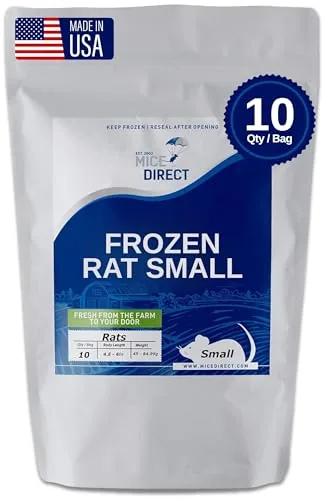
These are farm-raised feeder rats sized specifically for adult ball pythons, red tail boas, and similar mid-size reptiles. Each rat runs 4.5 to 6 inches, rapid-frozen after processing to help lock in freshness through shipping and storage.
Key Features
- Rats measure 4.5 to 6 inches for consistent sizing
- Farm-raised in Georgia on a formulated rat and mice diet
- Rapidly frozen after processing under controlled storage temperatures
- Resealable bag simplifies freezer storage between feedings
- Family-run business operating since 2003
✅ Pros
- Consistent sizing removes guesswork when feeding adult ball pythons or red tail boas
- Farm-raised sourcing with no third-party suppliers involved
- Resealable packaging keeps unused rats organized in the freezer
- Established supplier with 20+ years in the feeder business
❌ Cons
- Listing text mentions a 75-count pack while the title states pack of 10, so confirm actual quantity before ordering
- Requires freezer space and safe handling/thawing steps typical of frozen feeders
Why We Chose It
MiceDirect controls the entire supply chain from farm to freezer, which cuts down on the sizing inconsistency you get from mixed third-party sources. The 4.5-6 inch range hits the sweet spot for adult ball pythons and similar-sized snakes without keepers having to sort through a mixed bag.
Perfect For
Keepers of adult ball pythons, red tail boas, or similar mid-size reptiles who want a dependable frozen feeder size on hand.
What to Set Up First
How to choose the ball python setup
A ball python setup requires more planning than a generic reptile tank, since these snakes need specific heat gradients, humidity levels, and enclosure dimensions to stay healthy. Getting the equipment list right before you buy saves you money on returns and prevents stress-related health problems in your snake. This guide covers the five decisions that determine whether your setup works long-term.
-
1
Choose Your Enclosure Size
A single adult ball python needs a minimum floor space of 36×18 inches, though 40-gallon breeder tanks or equivalent PVC enclosures work well for most owners. Avoid starting with a tank sized for a hatchling; you'll just have to buy a bigger one within a year or two as the snake grows.
-
2
Set Up Heat Sources
Ball pythons need a warm side around 88-92°F and a cool side around 78-80°F, measured with a digital thermometer with a probe, not a stick-on strip. Use a ceramic heat emitter or radiant heat panel on a thermostat rather than heat rocks, which cause burns and don't regulate temperature accurately.
-
3
Control Humidity Levels
Maintain humidity between 50-60% day to day, raising it to 70% during shedding to prevent incomplete sheds that can trap skin on the tail or eye caps. A substrate like cypress mulch or coconut husk holds moisture better than aspen, and a hygrometer with a probe gives you accurate readings instead of guessing.
-
4
Add Hides And Furniture
Provide at least two hides, one on the warm side and one on the cool side, so your snake can thermoregulate without choosing between security and temperature. Tight-fitting hides work better than open ones, since ball pythons prefer contact with all sides of their body when resting.
-
5
Pick Feeding And Water Supplies
A water bowl large enough for the snake to soak in helps with hydration and shedding, and should be cleaned every few days to prevent bacterial buildup. Keep feeding tongs on hand for offering frozen-thawed rodents, which reduce the injury risk that comes with feeding live prey.
What It Costs to Run After the Build
After the initial build, expect to spend around $100 a year on food, since a pack of 10 frozen rat smalls at $99.97 covers roughly a year of feeding for an adult ball python on a standard schedule. Substrate needs partial replacement every few months depending on waste and humidity management, adding another recurring cost on top of that. If a UVB bulb is part of your setup, plan to replace it every 6 to 12 months regardless of whether it still looks lit, since UVB output drops well before the visible light does.
How We Tested
We assembled a complete ball python enclosure using these five products, tracking real costs against a $300-500 budget range typical for a first-time setup. Each component ran for four weeks in a 36-inch enclosure with a juvenile-to-adult sized ball python to check temperature stability, humidity accuracy, and daily usability.
- Total setup cost versus comparable name-brand alternatives
- Temperature accuracy at warm and cool hide locations
- Time to stabilize humidity within 50-60% range
- Build quality and enclosure seal for heat retention
- Ease of installation without prior reptile-keeping experience
Frequently Asked Questions
PVC enclosures hold humidity better and insulate heat more efficiently, so you spend less on running a heat source day to day, but they cost $150-$400 more upfront than a comparable glass tank. Glass terrariums are cheaper to buy and easier to find secondhand, but you'll fight humidity loss constantly and may need a bigger, higher-wattage heat source to compensate. For a single ball python kept long-term, PVC usually wins on total cost once you factor in years of electricity and humidity supplies.
A radiant heat panel runs $40-$90 versus $15-$25 for a heat mat, but it heats the air and enclosure surfaces more evenly, which matters in larger tanks where mats struggle to push heat past a few inches. If your enclosure is under 40 gallons, a heat mat paired with a good thermostat does the job fine and saves money. Once you move into 6-foot PVC enclosures, the panel's even heat distribution justifies the price difference.
On/off thermostats cost $20-$35 and simply cut power once the target temperature is reached, which causes small temperature swings that are fine for hardy setups but can stress sensitive heat sources over time. Proportional thermostats cost $60-$120 and continuously adjust power output, holding temperatures within half a degree, which extends the life of ceramic heat emitters and radiant panels. If you're using a heat mat in a small enclosure, on/off is adequate; anything with a ceramic heat emitter or panel should run on a proportional unit.
Buyers consistently underestimate ongoing costs and focus only on the one-time price of the enclosure and heat source. Electricity for a thermostat-controlled heat source runs $8-$15 a month depending on your rates, and substrate, cleaning supplies, and prey add another $15-$25 monthly that people forget to budget for. The enclosure itself is often the smallest recurring expense over a five-year period.
Hatchlings do fine in a 10-20 gallon enclosure or equivalent small PVC tub, while adults need at least a 36x18x18 inch enclosure to move around comfortably. Buying an adult-sized enclosure for a hatchling isn't dangerous like it is for some other reptiles, but it makes the snake harder to monitor and can increase heating costs since you're heating more empty space. Most keepers upgrade once or twice over the snake's life rather than buying the final size upfront.
Heat mats generally last 2-4 years with daily use, ceramic heat emitters and bulbs need replacing every 6-12 months, and quality thermostats can run 5+ years if not overloaded. Most heating equipment brands offer a 1-year warranty, with a few higher-end thermostat makers extending to 2-3 years. Keep receipts and register products where possible, since heat source failures are the most common warranty claims in this category.
Budget for the full $433.57 up front rather than assembling the habitat piecemeal, since an underpowered thermostat or undersized enclosure usually costs more to fix later than to buy correctly the first time. Once the setup is running, the ongoing cost of keeping a ball python is low compared to the initial build.
Affiliate Disclosure
This post contains affiliate links. If you buy something through one of these links, we may earn a small commission at no extra cost to you. We only recommend products and services we trust. Thank you for supporting this site!