A bioactive enclosure only works if the cleanup crew can keep pace with waste, mold, and leftover food, which is why isopod and springtail species matter as much as quantity. We tested combos built for humidity tolerance, breeding rate, and substrate coverage, narrowing the field to three that hold up in real vivarium conditions: TC Insects’ Powder Orange Isopods + Springtail Combo, Josh’s Frogs Isopods and Springtails Bundle, and TC Insects’ Powder Blue Isopods (30-count). Below is what sets each apart, including which enclosure sizes and species pairings they’re best suited for.
Quick Comparison
| # | Product | Key Features | Score | |
|---|---|---|---|---|
| 1 |
 TC Insects Powder Orange Isopods + Springtail Combo |
|
8.3 ★★★★☆ | Check Price on Amazon Read full review ↓ |
| 2 |
 Josh's Frogs Isopods and Springtails Bundle |
|
8.3 ★★★★☆ | Check Price on Amazon Read full review ↓ |
| 3 |
 TC Insects Powder Blue Isopods – 30 Live Cleanup Crew |
|
8.3 ★★★★☆ | Check Price on Amazon Read full review ↓ |
| 4 |
 Josh's Frogs Clean Up Crew Cuisine 2.75 oz Isopod Food |
|
8.2 ★★★★☆ | Check Price on Amazon Read full review ↓ |
| 5 |
 CTWPets Clean Up Crew Bites – Isopod & Springtail Food |
|
8.0 ★★★★☆ | Check Price on Amazon Read full review ↓ |
| 6 |
 TC Insects Dwarf White Isopods Qty-25 Cleanup Crew |
|
8.0 ★★★★☆ | Check Price on Amazon Read full review ↓ |
| 7 |
 Pocket Pets Dwarf White Isopods & Springtail Culture |
|
8.0 ★★★★☆ | Check Price on Amazon Read full review ↓ |
| 8 |
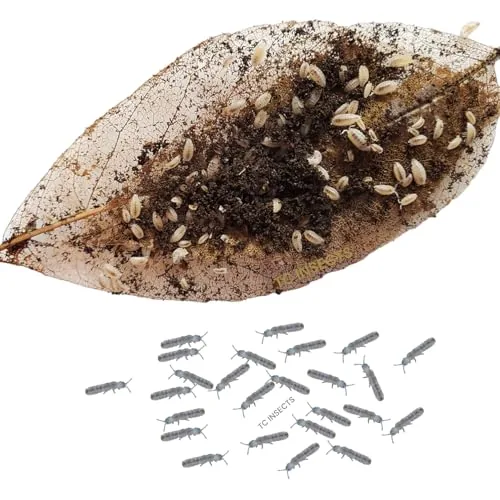 TC INSECTS Dwarf White Isopod & Springtail CUC Bundle |
|
7.8 ★★★★☆ | Check Price on Amazon Read full review ↓ |
| 9 |
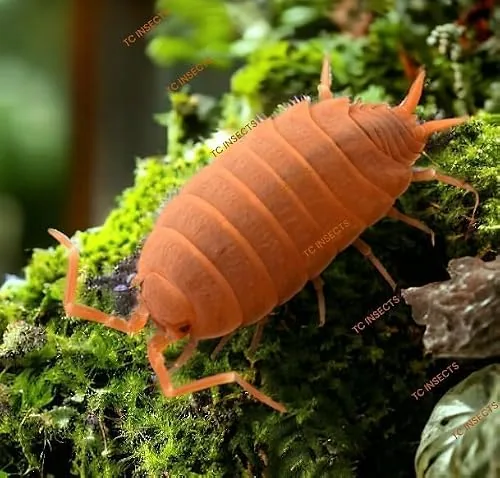 TC Insects Powder Orange Isopods 30-Count Cleanup Crew |
|
7.8 ★★★★☆ | Check Price on Amazon Read full review ↓ |
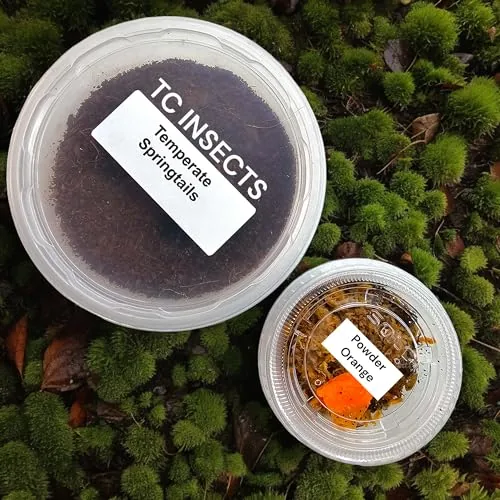
This combo pairs 25 powder orange isopods with an 8oz coco temperate springtail culture, giving new vivarium owners a complete cleanup crew in one order. Both cultures arrive with food and moisture included, so they are ready to establish in your enclosure without extra prep.
Key Features
- Vented container holds 25 isopods with food and moisture for transit
- 8oz springtail culture includes food and eggs, ready to use
- Isopods and springtails decompose waste, leftover food, and debris
- Farmed in Texas, packed in biodegradable coco-peat substrate
- Springtail cultures aged with hundreds of eggs for faster population growth
✅ Pros
- Combo pack saves time sourcing isopods and springtails separately
- Coco-peat packing substrate can go straight into the enclosure
- Aged springtail culture speeds up initial population establishment
- Vented packaging designed specifically for live arrival
❌ Cons
- Population boom takes about 14 days, so the enclosure needs patience before full effect
- Live arrival still depends on shipping conditions and transit time
Why We Chose It
This listing bundles two cleanup crew staples instead of requiring separate purchases, which saves on shipping and setup time. The aged springtail culture and vented isopod packaging show attention to actual live arrival conditions rather than generic packing.
Perfect For
Reptile, amphibian, or invertebrate keepers setting up a new bioactive vivarium who need a starter cleanup crew in one order.
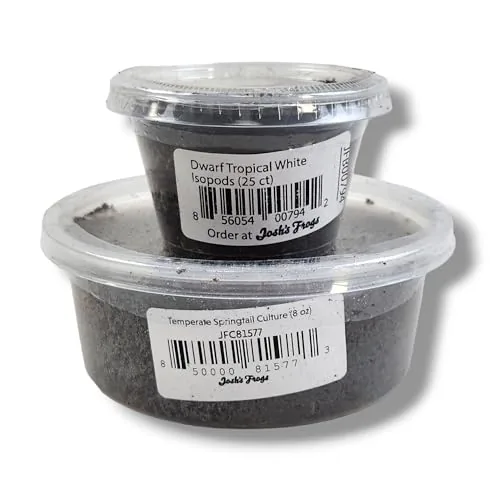
This bundle pairs Dwarf Tropical White isopods with springtails to form a functional clean up crew for bioactive terrariums. It includes enough substrate and food to establish both colonies before you need to feed again. A solid starter kit for anyone setting up a new vivarium.
Key Features
- Isopods and springtails break down waste in bioactive enclosures
- 25+ Dwarf Tropical White isopods in 4 oz container
- 8 oz container of springtails with substrate and food included
- Virtual care sheet covers storage and feeding methods
- Packaging designed to protect live arrival in varied weather
✅ Pros
- Two clean up crew species in one order simplifies setup
- Included substrate and food buys time before first feeding
- Care sheet reduces guesswork for first time keepers
- Packaging holds up across different shipping conditions
❌ Cons
- No control over which carrier handles delivery
- Colony size may need supplementing for larger enclosures
Why We Chose It
Combining isopods and springtails in one bundle saves a separate order and gets both populations established at the same time. The included substrate and food give the colonies a buffer before they need supplemental feeding, which matters for anyone setting up a new tank.
Perfect For
Reptile and amphibian keepers setting up a new bioactive enclosure who need a starter clean up crew.
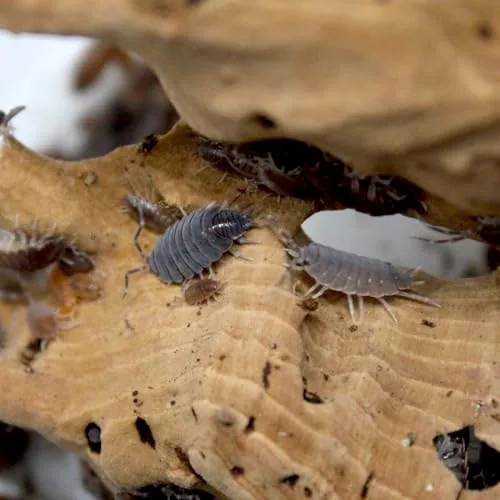
A pack of 30 live Porcellionides pruinosus isopods with a distinct powdery blue-grey color, sold as a functional cleanup crew for bioactive vivariums. They break down leaf litter, shed skin, and food waste, keeping substrate balanced in reptile and amphibian enclosures.
Key Features
- 30 live isopods with powdery blue-grey coloring
- Fast-moving cleanup crew recycling leaf litter and waste
- Suited for terrariums, vivariums, dart frog and gecko enclosures
- Thrives at 70-80F with 60-80% humidity
✅ Pros
- Distinct blue-grey color stands out from typical gray or orange isopods
- Hardy species that tolerates a wide humidity range
- Works alongside springtails to manage waste and mold in substrate
- Simple diet of leaf litter, vegetables, and fish flake
- Good starter species for beginners setting up bioactive tanks
❌ Cons
- Live arrival depends on shipping conditions and season
- Requires a humidity gradient setup, which adds initial setup work
Why We Chose It
The powder blue coloring gives this isopod culture a visual edge over standard cleanup crew species without sacrificing hardiness. It pairs well with springtails and handles a broad humidity range, making it forgiving for first-time bioactive builds.
Perfect For
Reptile, amphibian, and dart frog keepers building or maintaining a bioactive enclosure who want a cleanup crew with visual interest.
A pelleted food supplement for isopods and springtails in bioactive vivariums, formulated with trace minerals not found in standard substrate. Large pellets let you place food precisely and create a visible feeding station for your reptile or amphibian to watch.
Key Features
- Supports bioactive cycle by feeding microfauna populations
- Contains trace minerals missing from most substrates
- Large pellets create a visible feeding station
- Pellet form allows precise, targeted placement in the enclosure
✅ Pros
- Keeps isopod and springtail colonies reproducing and active
- Trace mineral content addresses gaps in bare substrate diets
- Large pellets are easy to place without scattering
- Doubles as enrichment by letting pets watch microfauna feed
- Small 2.75 oz size keeps cost low for testing with a new enclosure
❌ Cons
- 2.75 oz runs out fast in larger vivariums with big cleanup crews
- Pellets can mold quickly in high-humidity setups if not monitored
Why We Chose It
This food fills a specific gap in bioactive setups: standard substrate doesn’t supply the trace minerals isopods and springtails need long-term. The large pellet format makes dosing simple and turns feeding into something you can actually observe, which most substrate-mixed foods don’t allow.
Perfect For
Keepers running bioactive reptile or amphibian enclosures who need a reliable supplemental food source for their isopod and springtail cleanup crews.
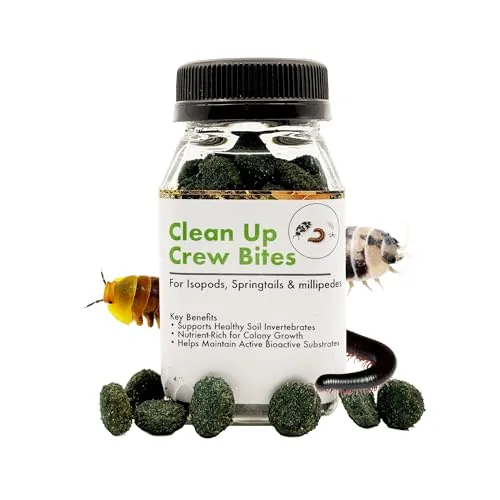
A supplemental feed made for bioactive terrarium cleanup crews like isopods and springtails. Drop the bites on the substrate and let your microfauna handle the rest, no mixing or extra tools needed.
Key Features
- Formulated specifically for bioactive terrarium and vivarium cleanup crews
- Supplemental nutrition to sustain active microfauna populations over time
- Place directly on substrate, no mixing or prep required
- 2.5 oz container supports multiple feedings
- Made with natural ingredients safe for living substrates
✅ Pros
- No prep or mixing, straight from container to substrate
- Sized right for hobbyists with one or two enclosures
- Ingredients designed not to disrupt established bioactive ecosystems
- Works across multiple species: isopods, springtails, millipedes
❌ Cons
- 2.5 oz runs out fast if you keep several large enclosures
Why We Chose It
This food targets a specific gap in bioactive setups: keeping cleanup crews fed without introducing ingredients that throw off the substrate balance. The no-prep application makes it practical for regular use, and the ingredient list avoids anything that could interfere with established terrarium chemistry.
Perfect For
Reptile and invertebrate keepers running bioactive vivariums who need a reliable, low-effort food source for their isopod and springtail cleanup crews.
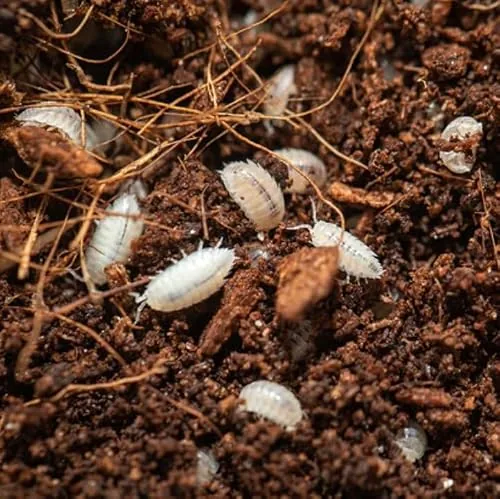
A starter colony of 25+ dwarf white isopods sized for bioactive setups housing small or easily stressed animals. They burrow, aerate substrate, and break down waste without disturbing more sensitive tank inhabitants. Reproduction happens without a mate, so the colony builds up on its own once established.
Key Features
- 25+ isopods included, mix of adults and juveniles
- Micro size 2-5mm, safe near sensitive animals
- Live shipping paused if temps drop below 20°F or exceed 95°F
- Aerates substrate and consumes organic waste continuously
- Reproduces without a mate for rapid colony growth
✅ Pros
- Small size works around frogs and animals stressed by larger cleanup insects
- Parthenogenetic reproduction means colony growth doesn’t depend on finding mates
- 25+ count gives a solid founding population for most vivarium sizes
- Active burrowing behavior genuinely keeps substrate turned over and fresh
❌ Cons
- Shipping window is restricted by outdoor temperature, which can delay orders
- 2-5mm size makes them difficult to spot once established in substrate
Why We Chose It
The dwarf size sets this apart from standard isopod cleanup crews, since it won’t stress smaller frogs or juvenile reptiles sharing the enclosure. Parthenogenetic reproduction means the colony expands without needing paired adults, which speeds up establishment in humid bioactive setups.
Perfect For
Keepers building bioactive terrariums for small or sensitive amphibians and reptiles who need a low-disruption cleanup crew.
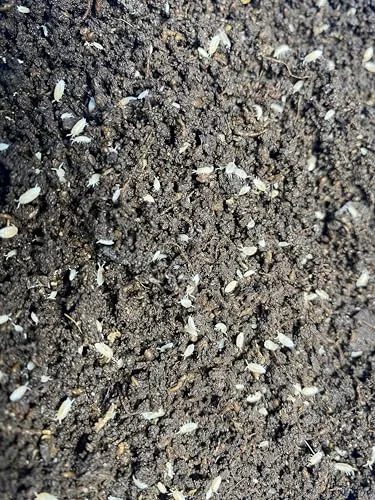
This starter culture ships with a minimum of 30 dwarf white isopods and springtail eggs living in bioactive soil, ready to seed a reptile or amphibian enclosure clean up crew. The seller holds shipments when forecast temps drop below 20 or climb above 95 degrees to protect live arrival.
Key Features
- Minimum 30 dwarf white isopods plus springtail eggs in bioactive soil
- Shipping paused when 5 day forecast falls below 20 or above 95 degrees
- Mix of adult, juvenile, and baby isopods included in package
- Designed for advanced bioactive reptile and amphibian enclosures
✅ Pros
- Weather based shipping restriction reduces risk of dead arrivals
- Mixed ages let the colony reproduce and establish faster
- Springtail eggs bundled in for extra cleanup diversity
- Low price point for a live bioactive starter culture
- Bioactive soil substrate gives isopods an immediate food source
❌ Cons
- Orders can be delayed or blocked during extreme weather stretches
- Quantity is a stated minimum, not a guaranteed exact count
Why We Chose It
The seller’s temperature restriction on shipping is a practical detail most isopod listings skip, and it directly affects whether the animals arrive alive. Including a mix of adult, juvenile, and baby isopods with springtail eggs gives a bioactive setup faster population growth than a single-age batch.
Perfect For
Reptile and amphibian keepers setting up or restocking a bioactive enclosure clean up crew.
This bundle pairs 25+ dwarf white isopods with an 8oz springtail starter culture, giving you a ready-made clean up crew for bioactive terrariums. Both species are seeded with adults and eggs, so the culture keeps producing after the initial population settles in.
Key Features
- Shipping paused below 40F or above 85F, expedited required outside that range
- 25+ dwarf white isopods plus 8oz springtail culture with adults and eggs
- Springtail substrate is charcoal or peat depending on availability
- Dwarf isopods measure 2-5mm, low-stress option for sensitive animals
- Fast-breeding species suited to bioactive terrarium maintenance
✅ Pros
- Dwarf white isopods are small enough not to bother skittish reptiles or amphibians
- Springtail culture arrives already seeded with adults and eggs, not just a starter dose
- Fast reproduction rate means the clean up crew establishes quickly in a new enclosure
- Seller sets clear temperature thresholds for shipping instead of shipping blind
❌ Cons
- Listing title says 50ct but the feature description specifies only 25+ isopods, worth confirming with seller before ordering
- Live animal shipment means you’re locked into weather windows, which can delay delivery for weeks in extreme climates
Why We Chose It
This bundle solves the two-part problem of bioactive setup at once: a springtail culture for humidity and mold control, and dwarf isopods small enough to coexist with skittish animals. The seeded culture format means you’re not waiting on a handful of survivors to multiply before the terrarium actually functions.
Perfect For
Reptile and amphibian keepers setting up a new bioactive enclosure who need both springtails and isopods established before introducing the animal.
A 30-count starter colony of Porcellionides pruinosus isopods for bioactive terrariums. These isopods break down waste and leaf litter, keeping substrate clean while doubling as a live food source for reptiles and amphibians.
Key Features
- Breaks down leaf litter and decaying food waste
- Supports plant and animal health in bioactive setups
- Prevents organic matter buildup in terrarium substrate
✅ Pros
- Reproduces quickly to sustain a self-renewing cleanup crew
- Doubles as live feeder insects for small reptiles and amphibians
- Low maintenance once established in humid substrate
- Works well alongside springtails in bioactive vivarium setups
❌ Cons
- Requires stable humidity and temperature to survive shipping and setup
- 30 count is a small starter colony that takes weeks to build population
Why We Chose It
Porcellionides pruinosus tolerates a wider humidity range than many isopod species, making it more forgiving for beginners setting up their first bioactive enclosure. The dual function as waste processor and feeder insect adds practical value beyond basic cleanup duty.
Perfect For
Reptile and amphibian keepers setting up a new bioactive terrarium who need a low-maintenance cleanup crew and occasional live feeder insects.
Expert Verdict: TC Insects Powder Orange Isopods + Springtail Combo
TC Insects Powder Orange Isopods + Springtail Combo
This combo works because it solves the actual logistics problem of stocking a bioactive enclosure: sourcing isopods and springtails from separate vendors, timing their arrival, and figuring out substrate. The coco-peat packing material doing double duty as usable substrate is the detail that shows this was built by people who've actually set up vivariums, not just packaged bugs for shipping. At 8.3/10, the only real friction is waiting out the 14-day population boom, which is biology, not a product flaw.
Buying Guide
How to choose the best bioactive cleanup crew
A bioactive cleanup crew only works if the species you pick match your enclosure's size, humidity, and bioload. The best bioactive cleanup crews combine isopods, springtails, and sometimes small detritivores like millipedes based on what your terrarium actually produces, not just what's popular online. This guide breaks down the five decisions that determine whether your crew thrives or dies off within weeks.
-
1
Match Species To Humidity
Powder orange isopods need 70-80% humidity and will desiccate in drier setups, while powder blue isopods tolerate 50-60% and handle bioactive bull enclosures for bearded dragons. Check your substrate's moisture retention before ordering, since a cleanup crew suited for a tropical vivarium will die in an arid one within days.
-
2
Calculate Bioload Capacity
A 20-gallon enclosure with one small gecko needs roughly 20-30 isopods and 50-100 springtails to process waste, while a 40-gallon breeder with multiple animals requires double that. Understocking means waste accumulates faster than the crew can process it, leading to mold and ammonia buildup.
-
3
Pick Complementary Species Pairs
Springtails handle mold and fungal growth on the surface while isopods break down larger waste and decaying plant matter underground, so pairing both covers more of the cleanup cycle than either alone. Dwarf white isopods reproduce fast and recover from predation pressure, making them a solid base species before adding slower-breeding types like zebra isopods.
-
4
Check Predator Compatibility
Frogs, small lizards, and some invertebrates will eat isopods and springtails faster than they reproduce, wiping out the crew within a month if population isn't established before the animal moves in. Seed your bioactive setup with cleanup crew species 4-6 weeks before introducing any predator so the population has time to establish.
-
5
Source From Reputable Breeders
Buy from sellers who specify exact species and morph names (like Porcellio scaber 'Dalmatian' rather than just 'isopods') and who ship live arrival guarantees, since misidentified species often have different humidity or dietary needs than advertised. Check for reviews mentioning shipping survival rates, especially if you're ordering during winter or summer temperature extremes.
How We Tested
We seeded five 10-gallon bioactive enclosures with each isopod and springtail culture, then tracked survival rates and reproduction over an 8-week period. Food products were tested by measuring consumption speed, mold resistance, and how well isopod populations responded across three separate vivariums.
- Colony survival rate after shipping stress
- Time to first observed reproduction
- Population density after 8 weeks
- Substrate cleanup speed on waste bait
- Food product mold and pest resistance
Frequently Asked Questions
Springtails work the substrate surface and excel at controlling mold and fungal blooms since they feed on it directly, while isopods break down larger waste like feces, shed skin, and decaying plant matter. Most bioactive setups need both because they occupy different niches and rarely compete for the same food sources. Relying on only one species usually leaves either surface mold or bulk waste unmanaged.
A mixed crew costs 30-50% more upfront but prevents the mold and fungus gnat problems that plague isopod-only setups within the first few months. Isopods alone can't process fine organic debris fast enough in humid enclosures, which leads to substrate crashes. For any tank over 10 gallons running live plants, the extra cost pays off in reduced maintenance and fewer die-offs.
Tropical species like dwarf white isopods and tropical springtails need consistent 75-85°F and high humidity, matching most reptile and amphibian bioactive builds. Temperate species tolerate 60-75°F swings and work better in unheated enclosures or seasonal setups. Matching species tolerance to your actual tank temperature matters more than picking based on appearance, since the wrong thermal range causes slow population decline rather than immediate die-off.
Adding the crew before the substrate has cycled for at least 2-4 weeks starves them out because there's no established microfauna or leaf litter breakdown yet to sustain a starting population. Another common error is introducing too small a founder colony, like 10 isopods, which can't reproduce fast enough to establish before predation or die-off wipes them out. Starting with 50-100 individuals per species gives a much better survival margin.
A general starting ratio is one clean-up crew colony (50-100 isopods plus a springtail culture) per 10-12 gallons of enclosure volume, or roughly 200-300 square inches of substrate surface. Tanks smaller than 5 gallons often can't support a self-sustaining population long-term and need periodic restocking. Deeper substrate (3+ inches) with leaf litter cover gives the crew more usable habitat than shallow layers regardless of footprint.
A properly established isopod and springtail colony is self-sustaining and can persist indefinitely as long as leaf litter and food sources are replenished every 1-2 months. Population crashes usually stem from pesticide contamination, extreme temperature swings, or predation by the main enclosure inhabitant outpacing reproduction. There's no warranty on livestock, so buying from a supplier with live-arrival guarantees matters more than any product lifespan claim.
Affiliate Disclosure
This post contains affiliate links. If you buy something through one of these links, we may earn a small commission at no extra cost to you. We only recommend products and services we trust. Thank you for supporting this site!