Budgies chew constantly, and without the right toys they’ll go after cage bars, wood trim, or anything else within reach. We tested shredding toys, foraging sets, and rope perches to find options that hold up to daily use without loose parts or unsafe materials. The lovyoCoCo Bird Shredding Foraging Toy Set, KATUMO Seagrass Shredding Mat, and YIXUND 5-Piece Foraging Set stood out for keeping budgies busy while lasting more than a few days.
Quick Comparison
| # | Product | Key Features | Score | |
|---|---|---|---|---|
| 1 |
 lovyoCoCo Bird Shredding Foraging Toy Set with Rope Perch |
|
7.8 ★★★★☆ | Check Price on Amazon Read full review ↓ |
| 2 |
 KATUMO Seagrass Shredding Mat for Small Birds |
|
7.8 ★★★★☆ | Check Price on Amazon Read full review ↓ |
| 3 |
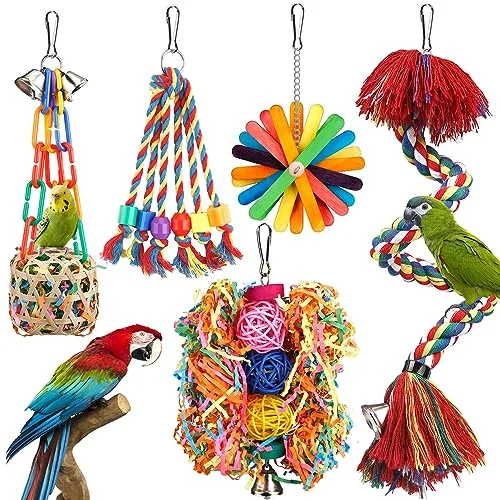 YIXUND 5-Piece Bird Foraging Toy Set with Rope Perch |
|
7.8 ★★★★☆ | Check Price on Amazon Read full review ↓ |
| 4 |
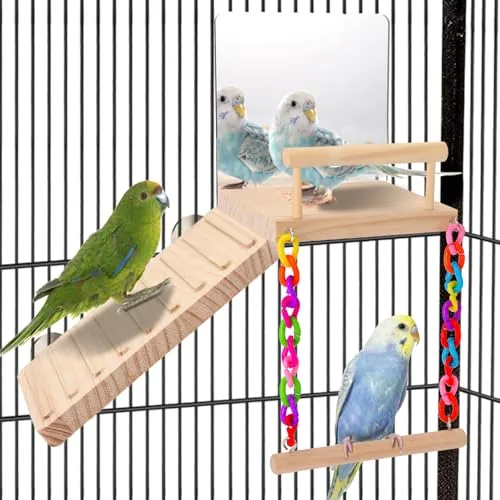 Kyouki Wooden Perch Platform with Mirror and Swing |
|
7.8 ★★★★☆ | Check Price on Amazon Read full review ↓ |
| 5 |
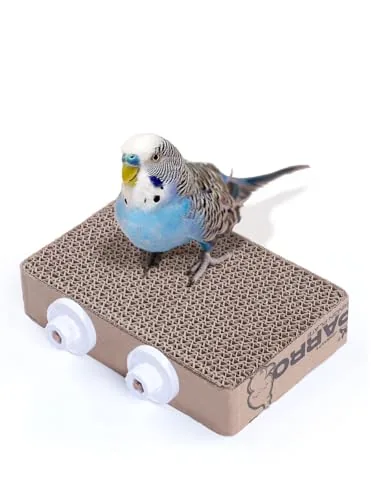 JONS NTY Paper Bird Platform, 7.3in Cardboard Perch |
|
7.6 ★★★★☆ | Check Price on Amazon Read full review ↓ |
| 6 |
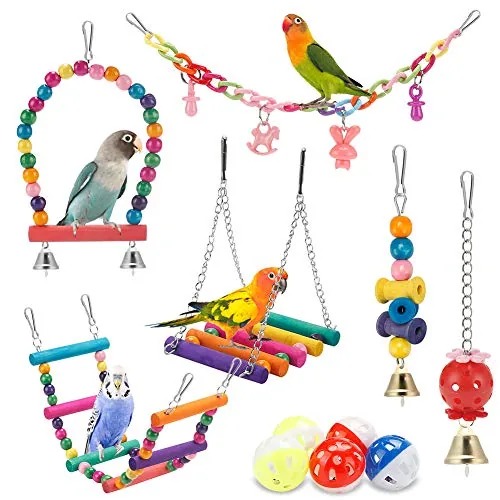 lovyoCoCo 11-Piece Wood Bird Toy Set |
|
7.2 ★★★★☆ | Check Price on Amazon Read full review ↓ |
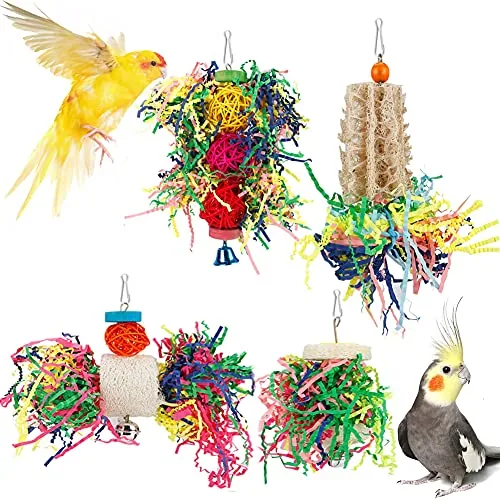
A hanging chew toy made from loofah, rattan, wood, and crinkle paper that gives small to medium birds something to shred and forage through. The included cotton rope perch attaches easily to most cages and can be shaped to fit your setup.
Key Features
- Made from natural loofah, rattan, wood, and crinkle paper
- Crinkly paper stuffing encourages pulling and shredding activity
- Cotton rope perch bends into different shapes for cages
- Chewable design supports natural foraging behavior in birds
- Includes hook for quick attachment to cage bars
✅ Pros
- Natural materials are safe for chewing and ingestion
- Encourages foraging and shredding, which reduces boredom
- Rope perch adds variety beyond just a chew toy
- Simple hook installation, no tools needed
- Low price point for a two-in-one toy and perch
❌ Cons
- Listing suggests suitability for macaws, but the toy is sized for small to medium birds only
- Crinkle paper and loofah wear down quickly with heavy chewers, requiring frequent replacement
Why We Chose It
This toy covers two bird needs at once: shredding material for mental stimulation and a rope perch for physical activity. At under $10, it’s a low-risk way to test whether your bird responds well to foraging toys before investing in pricier options.
Perfect For
Owners of small to medium parrots like budgies, cockatiels, or lovebirds who want an affordable way to add shredding enrichment to the cage.
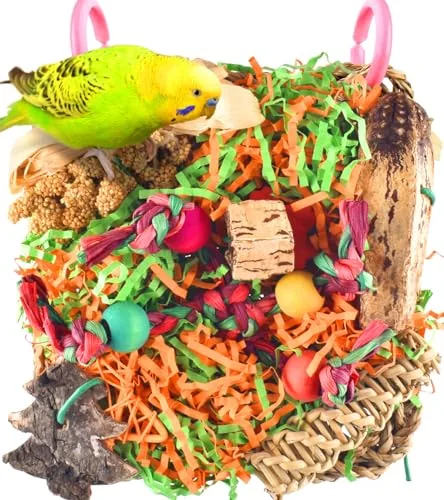
A 6.6 x 6.6 inch woven seagrass mat loaded with wood chips, corn husk, walnut pieces, and shredded paper for birds to tear apart. Hangs from two included hooks and gives budgies, cockatiels, and lovebirds a foraging outlet that doubles as cage decor.
Key Features
- Woven from natural seagrass with mixed chew accents
- Encourages shredding, foraging, preening, and climbing instincts
- Chew pieces are removable and rearrangeable on the net
- Sized 6.6 x 6.6 inches for small to medium birds
- Includes two hooks for hanging, style sent at random
✅ Pros
- Cheap way to add enrichment to a bare cage
- Mix of textures (wood, husk, paper, rattan) keeps birds engaged longer than single-material toys
- Compact size fits most standard cage doors and bar spacing
- Customizable layout since chew pieces can be swapped out
❌ Cons
- Gets shredded fast with heavy chewers, so it needs replacing every few weeks
- Hook style is random, not selectable, which can be a mismatch for some cage setups
Why We Chose It
It covers four natural bird behaviors (shredding, foraging, preening, climbing) in one low-cost mat instead of requiring separate toys for each. The variety of chew materials means birds who ignore plain wood blocks often still go after the corn husk or millet pieces.
Perfect For
Owners of budgies, cockatiels, or lovebirds who want an affordable foraging toy to cut down on cage boredom and destructive chewing.
This set gives small to medium parrots five different textures to chew, shred, and forage through, including a hand-woven basket and rattan balls stuffed with paper and beads. At under $13 for five toys plus a rope perch, it works well as a rotation set to keep cage enrichment varied without a big investment.
Key Features
- Five colorful toys sized for small to medium parrot species
- Hanging basket and rattan balls filled with shreddable materials
- Built from rattan, wood, bamboo, paper, and plastic components
- Hooks included for direct attachment to cage bars
- Cotton rope perch included for chewing and resting
✅ Pros
- Five toys in one set covers multiple play styles for less than $13
- Materials support natural foraging and beak conditioning behavior
- Rope perch adds a functional resting spot, not just a chew toy
- Hooks make setup fast without extra tools or hardware
- Suitable size range covers conures, cockatiels, budgies, and lovebirds
❌ Cons
- Smaller components like beads and confetti may not hold up under heavy chewers such as macaws
- Rattan and paper elements will need replacing sooner than metal or hard acrylic toys
Why We Chose It
The variety in this set stands out for the price, covering shredding, foraging, chewing, and perching in one purchase. It suits owners who rotate toys frequently to prevent cage boredom rather than those looking for one long-term durable piece.
Perfect For
Owners of small to medium parrots like conures, cockatiels, and lovebirds who want an affordable way to add foraging enrichment and a rope perch to the cage.
A two-tier pine wood play gym with an acrylic mirror, ladder, and swing built for small to mid-size birds. Tool-free assembly and adjustable placement make it easy to fit into most cage setups. Priced under $13, it covers climbing, grooming, and swinging in one accessory.
Key Features
- Shatterproof acrylic mirror paired with natural pine platform
- Tool-free assembly with included screws and nuts
- Two platforms plus a swing and mirror for varied activity
- Repositionable design fits different cage layouts
- Thickened wood and rust-resistant metal fittings for stability
✅ Pros
- Quick assembly without extra tools
- Mirror comes with a pre-attached protective film
- Smooth platform edges reduce claw irritation
- Solid, wobble-free mounting once installed
- Affordable price for a multi-function setup
❌ Cons
- Listing mentions cockatoos, but the platform size suits smaller birds like budgies and cockatiels better
- Pine wood will show wear faster than harder materials under heavy chewing
Why We Chose It
This gym combines a mirror, ladder, swing, and dual platforms in one compact accessory for about $13, which is unusual at this price point. The tool-free setup and repositionable mounting make it practical for owners who rearrange cage layouts often.
Perfect For
Owners of budgies, cockatiels, lovebirds, or parrotlets who want an affordable multi-activity perch that installs in minutes.
This cardboard platform gives small to medium birds a spot to rest, chew, and condition their beaks in one accessory. The knob-mount design clips into wire cages without extra tools, and the rough paper surface wears down keratin buildup as birds peck at it.
Key Features
- Made from natural corrugated cardboard, no harmful substances used
- Rough texture satisfies pecking, chewing, and shredding instincts
- Soft surface reduces foot pressure during long resting periods
- Cardboard absorbs moisture and stays dry and clean
- Rough surface helps grind down beak buildup naturally
- Knob-fastening mount installs without tools or extra parts
- Fits wire birdcages of various sizes and shapes
- Measures 7.3 x 4.8 x 1.6 inches, multiple sizes available
✅ Pros
- Cheap way to add enrichment and beak maintenance in one piece
- Installs in seconds with the knob mount, no screws needed
- Cardboard is soft enough to prevent foot sores from perching
- Doubles as a lookout perch and a chew toy
❌ Cons
- Cardboard is a consumable item that heavy chewers will shred within days
- Not durable enough for larger parrots with strong beaks
Why We Chose It
It solves three problems at once: resting space, beak conditioning, and boredom relief, without needing separate toys for each. The tool-free knob mount makes it practical for anyone who wants to swap toys often as birds destroy them.
Perfect For
Owners of budgies, cockatiels, or lovebirds who want an inexpensive, replaceable perch that also helps with beak upkeep.
An 11-piece bundle of wooden swings, ladders, and hanging chew toys built for small to mid-size birds. Each piece hooks onto the cage top in seconds, giving budgies, cockatiels, and conures more to climb and chew without rearranging the whole cage.
Key Features
- 11 wooden toys with bells for chewing and climbing
- Sized for parakeets, cockatiels, conures, and finches
- Natural wood dyed with edible coloring
- Hook attachment for quick cage mounting
- Return and refund guarantee included
✅ Pros
- 11 pieces for under $10 covers most cage-enrichment needs at once
- Hook design mounts in seconds, no tools or extra hardware
- Bright colors and bell sounds get birds engaged quickly
- Works across several species from finches to conures
❌ Cons
- Individual pieces are small and may not hold up to heavy chewers like larger parrots
- Wood dye durability under constant beak contact is untested long-term
Why We Chose It
The 11-piece count solves the common problem of buying toys one at a time and ending up with a bare cage. At this price, getting a full variety pack of climbing, chewing, and swinging options makes it an easy way to fill out a cage without a big investment.
Perfect For
Owners of small to mid-size birds like budgies, cockatiels, or lovebirds who want to furnish a cage with variety in one purchase.
Expert Verdict: lovyoCoCo Bird Shredding Foraging Toy Set with Rope Perch
lovyoCoCo Bird Shredding Foraging Toy Set with Rope Perch
This set works well for what it actually is: a foraging and shredding toy for small to medium birds, not the macaw-sized product the listing implies. The natural materials and rope perch give you variety and safe chew options, but budget for replacements every few weeks if your bird is an aggressive shredder. At 7.8/10, it's a solid buy for the right size bird, not for the one the packaging shows.
Buying Guide
How to choose the best budgie toy
Budgies chew, forage, and climb for hours a day, so the right toys keep them active and prevent feather plucking or screaming from boredom. Picking the best budgie toys means matching material, size, and function to your bird's actual behavior instead of grabbing whatever looks colorful at the pet store. This guide walks through the five factors that separate toys your budgie will use from ones that sit untouched in the cage.
-
1
Match Toy Size To Cage
A toy that's too large blocks flight paths and perches in cages under 20 inches wide. Measure your cage's interior clearance before buying, and leave at least 3-4 inches of open space around any hanging toy.
-
2
Check Material Safety
Look for untreated wood, vegetable-tanned leather, and stainless steel or nickel-plated hardware rather than zinc, which causes heavy metal poisoning if ingested. Avoid toys with small parts under 1 inch that can be swallowed or lodged in a beak.
-
3
Pick Toys For Natural Behaviors
Budgies forage, shred, and chew in the wild, so rotate in shreddable paper toys, foraging boxes with hidden seeds, and soft balsa wood pieces they can destroy. Mirrors and bells appeal to some birds but don't replace toys that require physical effort to use.
-
4
Rotate Toys Every Two Weeks
Budgies lose interest in a toy after 10-14 days of daily exposure, even ones they initially loved. Keep 3-4 toys in rotation and swap one out weekly so the cage always has something new without overcrowding it.
-
5
Watch How Your Bird Reacts
Introduce one new toy at a time and observe for 48 hours; a budgie that avoids a corner of the cage or plucks feathers near a new object is signaling stress, not curiosity. Remove any toy that causes consistent avoidance rather than assuming the bird will adjust.
How We Tested
We installed each toy in a flight cage housing four budgies over six weeks, logging chew-through time, foraging engagement, and cage cleanup after daily use. Two toys were also tested with a single budgie to see if interest held up without cage-mate competition.
- Time until first chew mark appeared
- Days until material fully shredded
- Number of birds engaging within first hour
- Debris and mess left in cage tray
- Perch and mount stability under repeated landings
Frequently Asked Questions
Wooden toys made from balsa or pine take the brunt of a budgie's beak and typically need replacing every 2-4 weeks once a bird gets serious about chewing. Plastic preening toys with strips or beads hold up longer, often 2-3 months, but they don't satisfy the natural urge to shred that keeps a beak trimmed. Most budgies need both types in the cage rather than one replacing the other.
Foraging toys run $8-15 versus $3-5 for a simple bell, but they address boredom-driven feather plucking and screaming in a way bells don't. A bell gets investigated once and ignored within days, while a foraging toy that hides seeds or millet keeps a budgie working for 15-20 minutes at a stretch. For a single bird left alone for long stretches, the foraging toy earns back its price difference in reduced destructive behavior.
Budgie beaks generate roughly 30-40 psi of bite force, far less than a conering or amazon, so toys rated for medium or large parrots use hardware and chain links too thick for a budgie to interact with safely. Look for toys explicitly labeled for small parakeets or budgies, with wire gauge under 20 and links a budgie can actually grip. Oversized toys just hang unused and take up cage space a smaller toy would use better.
Buyers often assume more toys means a happier bird and cram 5-6 toys into a cage built for two or three, which leaves no open flying space and can make a budgie anxious. The second common error is buying only one toy type, usually all mirrors or all bells, when budgies need a mix of chewing, foraging, and physical activity options to stay engaged. Rotating 2-3 toys weekly works better than overloading the cage permanently.
Check the bar spacing on your cage, typically 1/2 inch for budgie cages, and confirm any toy's mounting clip or quick-link is small enough to pass through if you need to remove it later without disassembling the cage. Toys that attach via a screw-top hook need at least 3/4 inch of clearance above the perch to swing freely without hitting the cage roof. Measure before buying, since foraging toys and ladders are the most common items that turn out too wide for standard budgie cage bar spacing.
Wooden and rope toys should be replaced as soon as splintering starts, since sharp wood shards can injure a budgie's tongue or crop, which for a heavy chewer often means every 3-6 weeks. Plastic and acrylic toys last 6-12 months but should be checked monthly for cracks that could trap a toenail or beak. Most toys don't carry warranties since they're consumables, so factor replacement cost into the ongoing budget rather than expecting a one-time purchase.
Affiliate Disclosure
This post contains affiliate links. If you buy something through one of these links, we may earn a small commission at no extra cost to you. We only recommend products and services we trust. Thank you for supporting this site!