Hermit crabs need more than a bare glass box to stay healthy – proper humidity retention, deep digging substrate, and enrichment for climbing all factor into a setup that actually works long-term. We tested tanks, substrates, and accessories to find the combinations that keep crabs active and molting successfully, and three products stood out: the Clioran PC Reptile Tank for its magnetic sliding lid and humidity control, Fluker’s Premium Sand Substrate for supporting natural burrowing behavior, and the Jinymral Climbing Toy for adding vertical space crabs will actually use. Below, we break down what makes each one worth the money and who should buy them.
Quick Comparison
| # | Product | Key Features | Score | |
|---|---|---|---|---|
| 1 |
 Clioran PC Reptile Tank Large – Magnetic Sliding Lid |
|
8.2 ★★★★☆ | Check Price on Amazon Read full review ↓ |
| 2 |
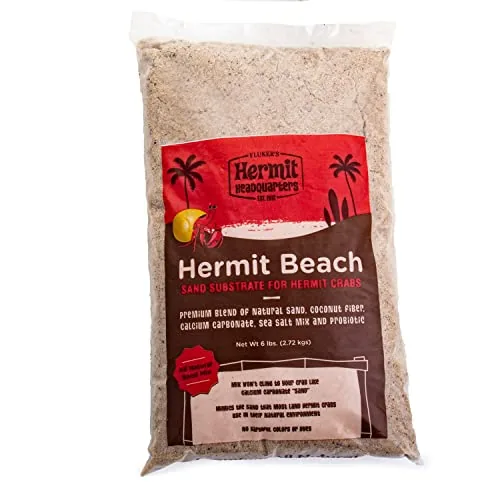 Fluker's Premium Hermit Crab Sand Substrate, 6 lbs |
|
7.8 ★★★★☆ | Check Price on Amazon Read full review ↓ |
| 3 |
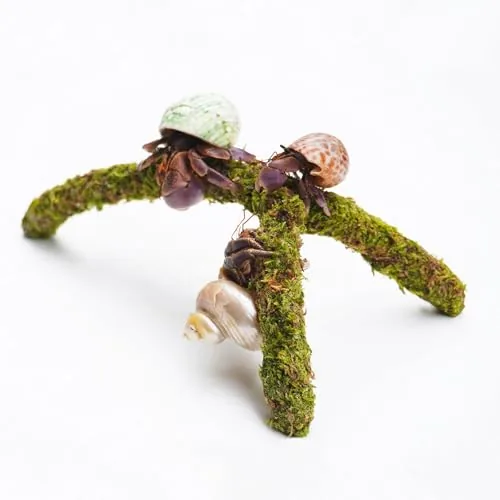 Jinymral Adjustable Hermit Crab Climbing Toy |
|
7.8 ★★★★☆ | Check Price on Amazon Read full review ↓ |
| 4 |
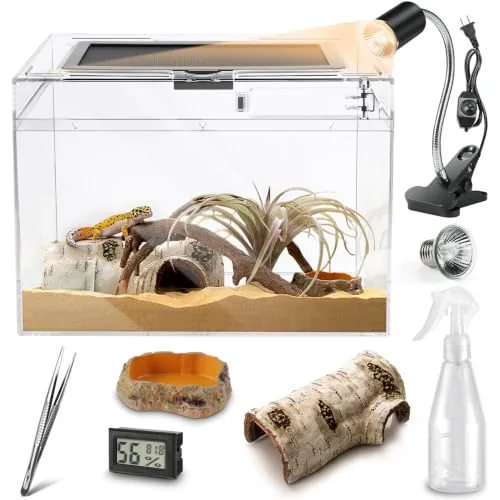 HELIME 7-Piece Reptile Starter Kit, 5.3-Gallon Locking Tank |
|
7.8 ★★★★☆ | Check Price on Amazon Read full review ↓ |
| 5 |
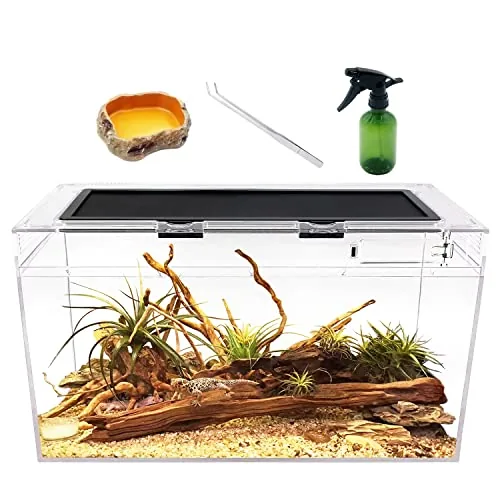 Reptile Growth 10 Gallon PC Terrarium with Feeding Port |
|
7.8 ★★★★☆ | Check Price on Amazon Read full review ↓ |
| 6 |
 HELIME 7-Piece Reptile Starter Kit, 3.2-Gallon Locking Tank |
|
7.2 ★★★★☆ | Check Price on Amazon Read full review ↓ |
| 7 |
 AZV 3.2-Gal Clear PC Terrarium 8-Piece Starter Kit |
|
7.2 ★★★★☆ | Check Price on Amazon Read full review ↓ |
| 8 |
 Reptile Growth Mini Terrarium 11.8x7x6in PC Tank |
|
7.2 ★★★★☆ | Check Price on Amazon Read full review ↓ |
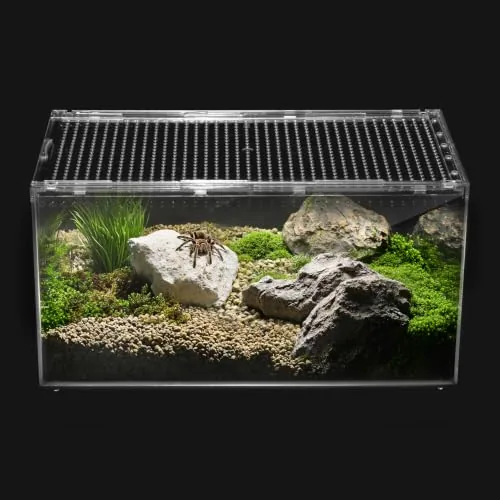
A clear polycarbonate enclosure built for tarantulas, hermit crabs, and similar exotic pets that need extra floor space. The magnetic sliding lid keeps access simple for feeding and misting while the cross-ventilation design supports both dry and humid setups.
Key Features
- Magnetic sliding lid for secure closure and easy access
- Large interior for substrate, hides, and water dishes
- Cross-ventilation openings on top and sides
- Clear shatter-resistant polycarbonate with smooth base
- Stackable design, enclosure only, no heat lamp included
✅ Pros
- Magnetic lid simplifies daily feeding and misting without full lid removal
- Extra interior room allows for multi-zone habitat layouts
- Ventilation supports both arid and humid species setups
- Polycarbonate construction is lighter and more impact-resistant than glass
- Stackable shape saves space for keepers with multiple enclosures
❌ Cons
- No heating or lighting included, so budget for those separately
- Exact interior dimensions aren’t specified, so measure your existing setup before buying
Why We Chose It
This enclosure stands out for combining a genuinely functional magnetic lid with enough interior volume to build a real habitat, not just a holding container. The polycarbonate build keeps it light enough to handle during cleaning while still resisting cracks better than glass.
Perfect For
Keepers of tarantulas, hermit crabs, or frogs who want a roomier, easy-access enclosure and plan to add their own heating and lighting setup.
A sand and coconut fiber blend designed to mimic a hermit crab’s natural beach habitat. Includes sea salt, calcium carbonate, and probiotics to support burrowing behavior and waste breakdown. A budget-friendly option for smaller tanks or topping off existing substrate.
Key Features
- Blend of sand, coconut fiber, sea salt, and calcium carbonate
- Coconut fiber retains moisture for humidity control
- Texture supports burrowing and digging during molting
- Added probiotics break down organic waste
- Mimics natural beach sand composition
✅ Pros
- Affordable price point for a specialty substrate
- Combines multiple beneficial ingredients in one bag
- Holds moisture better than plain sand alone
- Texture supports natural digging and burrowing behavior
❌ Cons
- 6 lbs covers only a small tank, larger enclosures need multiple bags
- Molting crabs typically require deeper substrate than one bag provides
Why We Chose It
This substrate stands out for combining sand, coconut fiber, sea salt, and calcium carbonate into one pre-mixed bag instead of requiring separate purchases. The added probiotics help manage waste odor between cleanings, and the moisture retention from coconut fiber addresses a common problem with plain sand substrates drying out too fast.
Perfect For
Owners of small to medium hermit crab tanks who want a low-effort substrate mix without sourcing separate sand, calcium, and moisture additives.
A bendable aluminum-core climbing bar that unfolds from a compact 4.9-inch package to a 9x5x3 inch structure. It lets you shape the climbing path to fit your tank and your crab’s size, and the moisture-retentive exterior encourages activity.
Key Features
- Collapses to 4.9 x 2.75 x 0.74 inches for storage
- Unfolds to 9 x 5 x 3 inches
- 3mm aluminum rod core, bendable and rust-resistant
- Handmade exterior with moisture-retentive properties
- Requires periodic water spraying to prevent brittleness
✅ Pros
- Adjustable height and shape fits tanks of different sizes
- Compact folded size makes storage and shipping easy
- Aluminum core withstands repeated bending without breaking
- Low price point for a functional enrichment accessory
❌ Cons
- Needs regular misting or the material becomes brittle and can crack
- Handmade construction means some size or shape variation between units
Why We Chose It
The bendable aluminum core lets you reshape the climbing path as your hermit crab grows or as you rearrange the tank, which fixed plastic ladders don’t allow. At under $7, it’s a low-risk way to add vertical enrichment without committing to a bulkier setup.
Perfect For
Hermit crab owners who want an adjustable, space-saving climbing structure and are willing to keep up with regular misting.
A compact 15 x 8 x 10 inch enclosure bundled with a thermometer/hygrometer, hide, sprayer, feeding bowl, tweezers, and heat lamp. Built for hermit crabs, frogs, small geckos, and other small invertebrates that need daily humidity and temperature checks. The locking mesh lid keeps pets contained while still allowing airflow and easy access.
Key Features
- 7-piece kit: tank, tweezers, hygrometer, hide, sprayer, bowl, heat lamp
- Digital thermometer and hygrometer for daily monitoring
- Locking lid with ventilated mesh top
- Clear polycarbonate construction with waterproof base
- 5.3-gallon footprint at 15 x 8 x 10 inches
✅ Pros
- Includes every basic tool needed to set up on day one
- Waterproof base simplifies cleaning and substrate changes
- Locking lid keeps small escape artists contained without blocking airflow
- Compact size fits desktops, shelves, or classroom setups
- Clear polycarbonate gives full 360-degree viewing
❌ Cons
- 5.3 gallons is too small for adult tarantulas or larger geckos long-term
- Included heat lamp is basic and may need upgrading for species with specific thermal needs
Why We Chose It
Most starter kits sell the tank alone and leave buyers scrambling for accessories. This one bundles the thermometer, hygrometer, hide, sprayer, and feeding tools in one purchase, which cuts down on separate orders and guesswork for a first setup. The locking lid design also solves a common complaint with entry-level tanks: escapees.
Perfect For
First-time keepers setting up a single hermit crab, frog, or small invertebrate that needs a compact, monitored habitat.
A 20x10x11 inch watertight enclosure built from explosion-proof PC plastic instead of glass, with a metal mesh lid for ventilation and heat lamp use. Works across a wide range of small pets from tarantulas to leopard geckos, with a magnetic feeding door that closes on its own.
Key Features
- Watertight PC enclosure works for insects, fish, and small reptiles
- Metal screen top allows airflow, UVB, and heat lamp use
- Explosion-proof PC withstands -20°C to 120°C without yellowing
- Magnetic feeding port closes automatically to prevent escapes
- Multiple sizes available, no assembly required
✅ Pros
- Lighter and more impact-resistant than a glass tank of the same size
- Mesh top supports heat lamps and UVB fixtures directly
- Feeding port reduces escape risk during handling
- Watertight base handles both dry and semi-aquatic setups
- Clear PC walls stay transparent long-term per manufacturer spec
❌ Cons
- At $68.99, it costs more than many glass tanks of similar volume
- PC plastic scratches more easily than glass over years of cleaning
Why We Chose It
The combination of a watertight base and a full metal screen top covers use cases that plastic bins usually can’t, since most cheap enclosures pick one or the other. The magnetic feeding port is a small detail that actually matters for anyone tired of full-lid removal every feeding.
Perfect For
Keepers who need one enclosure that can transition between a bearded dragon, a tarantula, or a hermit crab without buying separate tanks.
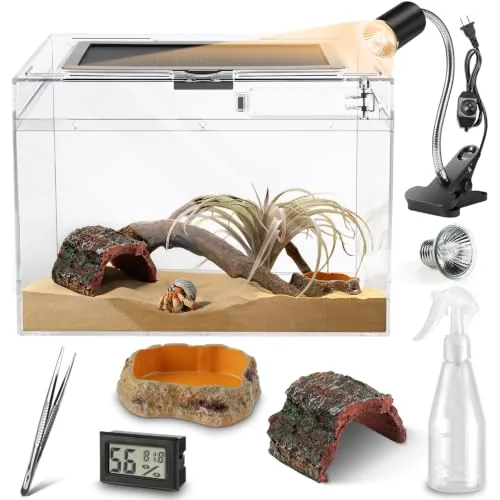
A compact 3.2-gallon polycarbonate terrarium bundled with a thermometer/hygrometer, hide, sprayer, feeding bowl, tweezers, and heat lamp. Built for hermit crabs, small frogs, and invertebrates that need a monitored, low-footprint enclosure rather than a full-size setup.
Key Features
- 7-piece kit: tank, tweezers, thermometer/hygrometer, hide, sprayer, bowl, heat lamp
- Digital thermometer and hygrometer for temperature and humidity readings
- Locking lid with ventilated mesh top for secure airflow
- Clear shatter-resistant polycarbonate with waterproof, easy-clean base
- 3.2-gallon footprint measuring 12 x 7 x 9 inches
✅ Pros
- Includes everything needed to start monitoring temperature and humidity on day one
- Locking lid holds up against escape-prone pets like hermit crabs and mantises
- Polycarbonate construction resists shattering and wipes clean quickly
- Compact size fits desks, shelves, and classroom settings without eating up space
❌ Cons
- 3.2 gallons is too small for adult tarantulas or multiple hermit crabs long-term
- Included heat lamp needs careful placement given the compact polycarbonate enclosure
Why We Chose It
Most starter kits at this price skip the monitoring tools and force a separate purchase for a thermometer or hygrometer. This one bundles both along with a hide and sprayer, which cuts down on setup guesswork for someone housing their first hermit crab or small frog.
Perfect For
First-time keepers setting up a single small invertebrate or amphibian that needs humidity and temperature tracking in a limited space.
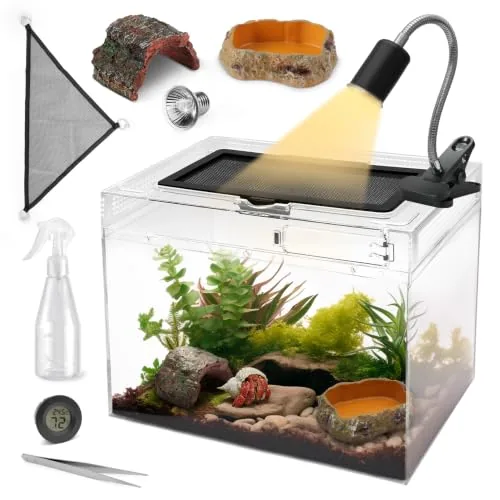
A compact 3.2-gallon terrarium bundled with a heat lamp, thermometer-hygrometer, hide cave, hammock, feeding bowl, sprayer, and tweezers. Built for small reptiles, amphibians, or arachnids in tight spaces like desks or shelves. Priced to cover the basics without piecing together separate purchases.
Key Features
- 8-piece kit with tank, lamp, hygrometer, bowl, sprayer, hide, hammock
- Locking mesh top for secure top-access feeding and cleaning
- Mesh ventilation with sprayer and hygrometer for humidity control
- 12 x 7 x 9 inch enclosure, 3.2-gallon capacity
✅ Pros
- Includes nearly everything needed for a basic setup out of the box
- Locking lid reduces escape risk for small, active pets
- Mesh top allows good airflow and easy top access
- Small footprint fits desks, shelves, or classroom spaces
❌ Cons
- 3.2-gallon size only suits juvenile or very small species, not adult geckos or larger reptiles
- Included heat lamp and accessories are basic and may need upgrading for specific species
Why We Chose It
This kit solves the first-purchase problem by bundling the tank with the accessories most beginners forget to buy separately, like a hygrometer and hide cave. The locking mesh top is a practical detail for anyone housing an escape-prone species. At under $44, it’s priced as an entry point rather than a long-term habitat.
Perfect For
First-time owners setting up a habitat for a small hermit crab, juvenile gecko, frog, or tarantula that fits within a 3.2-gallon space.
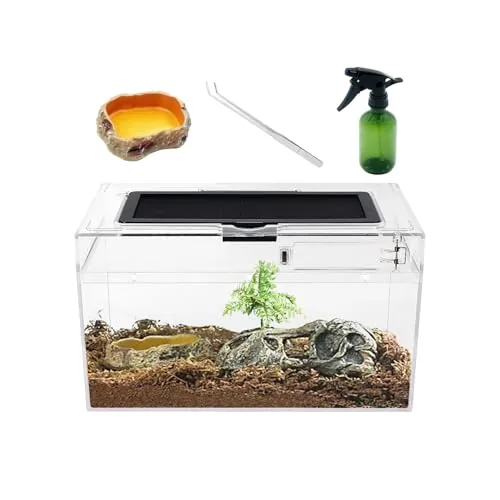
A compact, watertight enclosure built from shatter-resistant PC plastic with a metal mesh top for ventilation and UVB penetration. Comes with tweezers, a feeding bowl, and a spray bottle, plus a spring-loaded feeding port so you don’t have to open the full lid. Sized for small or juvenile species, not adult bearded dragons or tortoises despite the listing’s broad species list.
Key Features
- Watertight tank holds water for amphibious setups
- Metal mesh top allows airflow and UVB penetration
- Explosion-proof PC construction rated -20°C to 120°C
- Spring-loaded feeding port with magnetic auto-close
- Includes tweezers, feeding bowl, and spray bottle
✅ Pros
- Watertight base works for amphibians and semi-aquatic setups
- Clear PC plastic stays scratch-resistant and won’t yellow over time
- Feeding port lets you drop in food without opening the whole lid
- Comes with basic accessories included in the price
- Wide temperature tolerance suits both heat lamps and cooler climates
❌ Cons
- At 11.8 x 7 x 6 inches, too small for adult bearded dragons, tortoises, or iguanas despite being listed for them
- No embedded ventilation panels on the sides, so airflow relies entirely on the top mesh
Why We Chose It
This tank stands out for its watertight PC construction and metal mesh lid, which cover both dry and semi-aquatic setups in one enclosure. The magnetic feeding port is a genuinely useful detail for daily care since it avoids full lid removal and reduces escape risk.
Perfect For
Owners of small species like jumping spiders, hermit crabs, small frogs, or juvenile geckos who need a compact, easy-to-feed enclosure.
Expert Verdict: Clioran PC Reptile Tank Large – Magnetic Sliding Lid
Clioran PC Reptile Tank Large – Magnetic Sliding Lid
The magnetic sliding lid alone justifies the upgrade over standard top-opening tanks if you're feeding or misting daily. At 8.2/10, it earns its price on build quality and airflow design, but you're buying an empty shell: no heat mat, no lighting, and you'll need calipers or a tape measure to confirm it fits your existing shelf or stand before ordering.
Buying Guide
How to choose the best hermit crab tank
Finding the best hermit crab tanks means balancing floor space, humidity retention, and secure lid design, since standard reptile or fish tanks often fail on one of these fronts. This guide walks through the five factors that actually affect crab health and molting success, not just tank appearance.
-
1
Pick the Right Size
Hermit crabs need floor space more than height, so a 10-gallon tank is the minimum for 2-3 small crabs, while a 20-gallon long works better for groups of 4-6. Skip tall, narrow tanks marketed for reptiles since they waste vertical space crabs won't use efficiently.
-
2
Check the Lid
Hermit crabs climb glass and can push through gaps most people wouldn't expect, so look for a locking lid with metal clips rather than a simple mesh cover. A hybrid lid with a solid section plus a small screened area balances escape prevention with airflow.
-
3
Plan Substrate Depth
Crabs bury themselves completely to molt, so substrate depth needs to be at least 3-4 times the height of your largest crab, often 5-6 inches for adult crabs. A sand and coco fiber mix holds tunnel shapes without collapsing, which matters during the molting period.
-
4
Verify Humidity Control
Hermit crabs need 70-80% humidity to breathe properly through their modified gills, and glass tanks hold moisture far better than wire or mesh enclosures. Front-opening doors let you access the tank for feeding and cleaning without venting out the humidity every time.
-
5
Match Tank to Crab Count
Overcrowding causes stress and fighting over shells, so budget roughly 5 gallons of tank space per crab as a floor, then add more for climbing branches and hideouts. If you plan to add crabs later, buy the larger size now rather than upgrading twice.
How We Tested
We set up all five enclosures with 4-6 inches of moistened substrate and ran them for three weeks at 78-82°F and 75-80% humidity, the range hermit crabs need to molt safely. Each tank housed a mixed group of Ecuadorian and Purple Pincher crabs so we could track ventilation, humidity retention, and escape attempts firsthand.
- Humidity and temperature retention over 72-hour stretches
- Lid and lock security against determined climbers
- Substrate depth capacity for full-body molting burrows
- Ventilation gaps checked against carapace width for escapes
- Ease of cleaning and access during water changes
Frequently Asked Questions
Glass holds humidity more consistently and resists scratching, but weighs significantly more and shatters if dropped. Acrylic is lighter and easier to drill for ventilation modifications, though it scratches from crab claws and substrate over time and can warp near heat sources. Most keepers with tanks over 20 gallons choose glass for stability and long-term clarity.
Front-opening tanks cost roughly 20-40% more but let you access the substrate and decor without releasing heat and humidity through the top, which matters for species needing 80%+ humidity. If you're only doing occasional feeding or water changes, a secure top-opening lid with a locking mechanism works fine and saves money. For deep substrate setups meant for molting crabs, the front door pays off because you're not disturbing the whole enclosure to reach in.
Screen lids allow more airflow but let humidity escape fast, often requiring misting several times a day to hold 70-80% humidity. Solid or partial-solid lids with small vent cutouts trap moisture far better and reduce misting frequency, but need at least one ventilation gap to prevent stagnant air and mold growth. Species like Coenobita clypeatus that need consistently high humidity generally do better under mostly solid lids.
Buyers frequently size the tank for the crab's current shell size instead of planning for substrate depth, which needs to be at least 3-4 times the crab's height for molting burrows. A 10-gallon tank might look adequate for a small crab but leaves no room for proper digging depth, forcing crabs to molt on the surface where they're vulnerable. Sizing should account for substrate volume and a full group of crabs, not just the visible floor space.
Substrate should be deep enough for the largest crab in the tank to bury completely with room to spare, which typically means 6-12 inches depending on crab size. Tanks under 20 gallons often can't hold that depth without cutting into usable floor space, so measure substrate needs before matching a tank size. Sand-soil mixes packed firm enough to hold tunnel shapes work better than loose coco fiber alone for this purpose.
Full substrate changes are typically needed every 6-12 months, while spot-cleaning waste and uneaten food should happen every few days to prevent mold and bacteria buildup. Heating elements and humidity gauges tend to fail or drift out of accuracy after 1-2 years, so checking calibration monthly catches problems before they stress the crabs. Glass and acrylic tanks themselves usually last well beyond a decade if not cracked or over-scratched, with most warranties covering only manufacturing defects for 90 days to a year.
Affiliate Disclosure
This post contains affiliate links. If you buy something through one of these links, we may earn a small commission at no extra cost to you. We only recommend products and services we trust. Thank you for supporting this site!