Praying mantises need vertical space to molt, cross-ventilation to prevent mold, and enough visibility to actually enjoy watching them hunt, which rules out most generic critter cages. We tested acrylic enclosures from CourtyardAid, Cycodo, and MYGIIKAKA to find which ones hold humidity without trapping stagnant air and which lids make feeding easier instead of turning it into an escape opportunity. Below are the three that held up, with notes on dimensions and setup so you can match the enclosure to your mantis’s size and molt stage.
Quick Comparison
| # | Product | Key Features | Score | |
|---|---|---|---|---|
| 1 |
 CourtyardAid Pre-Assembled Acrylic Jumping Spider Enclosure |
|
8.3 ★★★★☆ | Check Price on Amazon Read full review ↓ |
| 2 |
 Cycodo Acrylic Jumping Spider Enclosure 5x5x8 In |
|
8.0 ★★★★☆ | Check Price on Amazon Read full review ↓ |
| 3 |
 MYGIIKAKA Acrylic Small Reptile Habitat, 7.87×4.72×4.33in |
|
7.8 ★★★★☆ | Check Price on Amazon Read full review ↓ |
| 4 |
 MYGIIKAKA Acrylic Terrarium 13.78×7.48×7.87in |
|
7.8 ★★★★☆ | Check Price on Amazon Read full review ↓ |
| 5 |
 MaryCarrie Large Acrylic Jumping Spider Terrarium 8.5x12in |
|
7.8 ★★★★☆ | Check Price on Amazon Read full review ↓ |
| 6 |
 GTSEEMUU Acrylic Jumping Spider Enclosure 4.7×4.3×7.8in |
|
7.8 ★★★★☆ | Check Price on Amazon Read full review ↓ |
| 7 |
 YIMITEE 12x6x6 Acrylic Jumping Spider Enclosure |
|
7.8 ★★★★☆ | Check Price on Amazon Read full review ↓ |
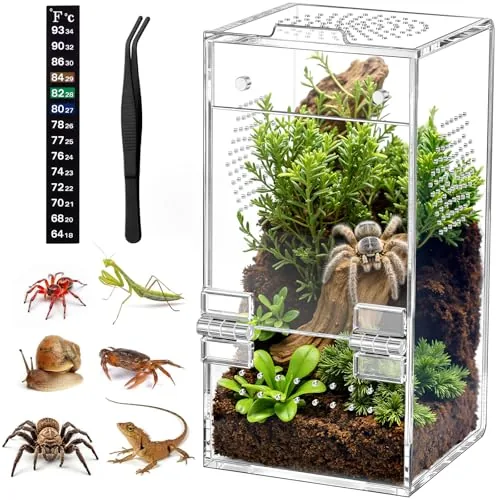
A fully assembled acrylic terrarium built for jumping spiders and other small invertebrates, with a sealed base and 287 micro ventilation holes for airflow control. The magnetic side door and 360-degree clear panels make feeding and observation simple without disturbing webbing.
Key Features
- 287 micro ventilation holes across all four sides for airflow
- Fully assembled with sealed, leak-proof base
- Magnetic side-opening door avoids disturbing upper corner webs
- Scratch-resistant acrylic construction for a clear 360-degree view
- 85.7 cubic inches of interior space, 58% larger than 3x3x6 boxes
✅ Pros
- Arrives fully assembled with no leaking seams
- Ventilation design maintains stable humidity without stale air
- Magnetic door placement protects spider webbing during feeding
- Non-slip pads keep the enclosure stable on shelves
- Acrylic stays clear longer than standard PP plastic cages
❌ Cons
- Interior space is still small for larger invertebrate species
- No substrate, plants, or decor included
Why We Chose It
The sealed base and 287-hole ventilation layout solve two common complaints with budget spider enclosures: leaking substrate and poor airflow. The magnetic door placement on the side, rather than the top, shows attention to how jumping spiders actually build their habitats.
Perfect For
Hobbyists keeping a single jumping spider or similarly sized invertebrate who want a low-maintenance, leak-free enclosure with clear viewing.
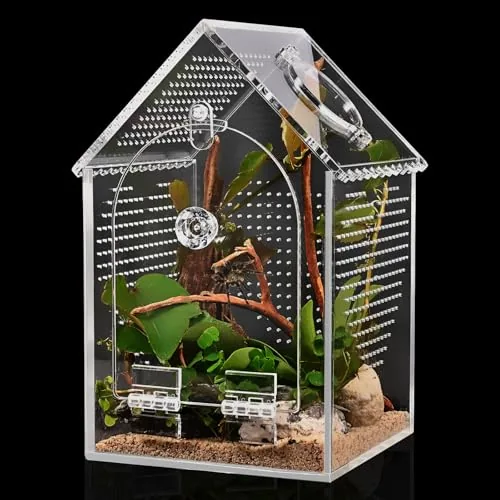
A small acrylic terrarium built for jumping spiders and other tiny invertebrates, with a knob latch instead of magnets and 1mm vents that keep spiderlings and fruit flies contained. The front door and top feeding port make daily care straightforward without disturbing the whole setup.
Key Features
- Knob latch closure replaces magnets for quieter, more secure sealing
- Thickened acrylic construction resists warping over long-term use
- One-piece build, no assembly required out of the box
- 1mm ventilation holes on four sides prevent tiny escapees
- Front-opening door plus top feeding port for easy maintenance
✅ Pros
- Knob latch holds up better than magnetic closures over time
- Clear acrylic gives full 360-degree viewing of pet behavior
- Ships fully assembled and ready to use immediately
- Micro ventilation keeps fruit flies and spiderlings from escaping
- Separate feeding port reduces disturbance during cleaning
❌ Cons
- 5x5x8 inch footprint limits it to small species, not full-size reptiles
- No built-in substrate or humidity control, so extras are needed for tropical species
Why We Chose It
This enclosure solves the two most common complaints with small bug habitats: weak magnetic doors and escape gaps around vents. The knob latch and 1mm ventilation holes are practical fixes that matter for anyone keeping jumping spiders or spiderlings. Ready-to-use construction and dual access ports also cut down on setup and maintenance friction.
Perfect For
Keepers of jumping spiders, small mantises, or juvenile inverts who need a secure, easy-to-clean enclosure without any assembly.
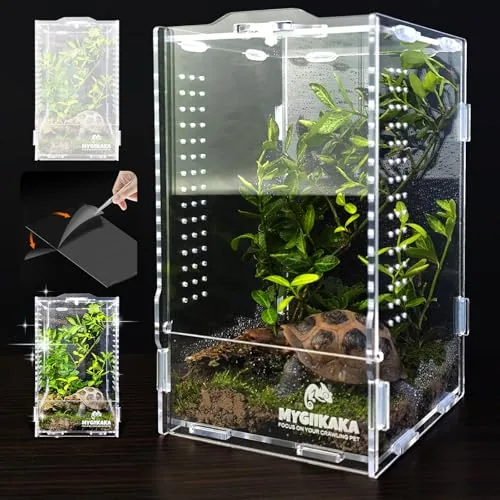
A compact acrylic enclosure sized for jumping spiders, small mantises, and other tiny invertebrates. The clear panels and clamshell lid make daily feeding and observation simple without a full tank setup.
Key Features
- Acrylic enclosure measures 7.87 x 4.72 x 4.33 inches
- Fully transparent walls for 360 degree viewing
- Clamshell top opens and closes for easy access
- Tool-free setup using rubber bands, folds flat for storage
- Side ventilation holes plus a locking handle for security
✅ Pros
- Very affordable at under $10
- Clear acrylic walls make it easy to check on the animal from any angle
- Ventilation holes on both sides prevent stale air buildup
- Locking handle keeps small escape artists contained
- Folds down for storage when not in use
❌ Cons
- Small footprint limits it to juvenile or naturally tiny species
- Acrylic can scratch or cloud over time with regular cleaning
Why We Chose It
It solves a specific problem: most reptile tanks are oversized for something like a jumping spider or small mantis. This one is scaled correctly, transparent on all sides, and cheap enough to buy several for separate specimens.
Perfect For
Hobbyists keeping jumping spiders, small mantises, or other tiny invertebrates that need a properly sized, ventilated enclosure.
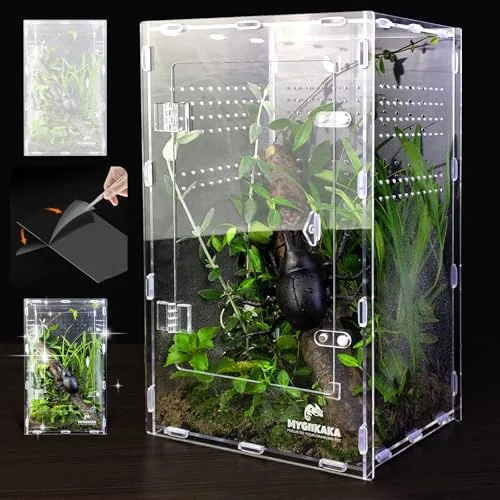
A compact acrylic enclosure sized for jumping spiders, small mantises, and juvenile tarantulas. The clam-shell top and side ventilation holes make daily feeding and cleaning straightforward without disturbing the animal.
Key Features
- Acrylic enclosure measures 13.78 x 7.48 x 7.87 inches
- Fully transparent walls for 360 degree viewing
- Clam-shell top opens and closes easily
- Rubber band assembly, disassembles for flat storage
- Side ventilation holes and top feeding hole
- Locking handle secures the enclosure shut
✅ Pros
- Clear acrylic on all sides makes monitoring easy without opening the enclosure
- Feeding hole lets you drop in prey without lifting the whole lid
- Folds flat for storage when not housing an animal
- Ventilation holes on two sides reduce moisture buildup
- Locking handle adds a layer of security against escapes
❌ Cons
- Rubber band construction can loosen over time and needs occasional tightening
- Small ventilation holes may not suit species needing higher humidity control
Why We Chose It
The size and clam-shell design solve a specific problem for keepers of small invertebrates who need frequent visual access without stressing the animal. Its flat-pack assembly is a genuine space saver for anyone running multiple enclosures.
Perfect For
Hobbyists keeping a single jumping spider, small mantis, or juvenile tarantula who want easy feeding access and full visibility.
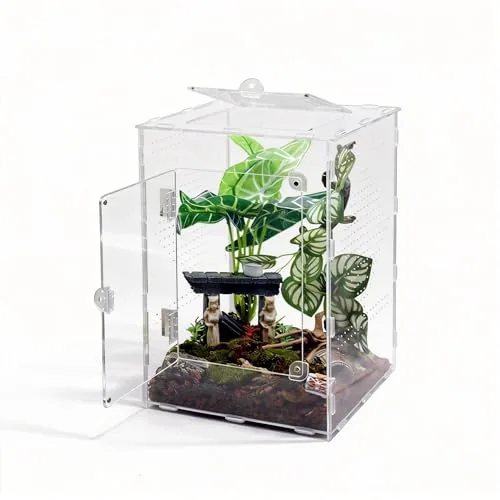
This acrylic enclosure gives arboreal species like jumping spiders and mantises 12 inches of vertical climbing room. Magnetic front and top doors make feeding and cleaning simple without risking an escape.
Key Features
- 8.5×8.5×12 inch enclosure with vertical climbing space
- Magnetic front and top doors for feeding and maintenance
- 1mm precision air vents regulate airflow and humidity
- Transparent acrylic panels allow viewing from every angle
- Interlocking panels assemble without tools or glue
✅ Pros
- Vertical space suits arboreal jumping spiders and mantises well
- Dual magnetic doors speed up daily feeding and cleaning
- Assembles in minutes with no tools or adhesive needed
- Ventilation holes are small enough to contain tiny prey insects
- Clear acrylic walls give unobstructed viewing on all sides
❌ Cons
- Acrylic scratches more easily than glass over repeated cleaning
- No included substrate, branches, or decor, so setup costs extra
Why We Chose It
The combination of top and front magnetic access solves the usual problem of reaching into a tall enclosure without letting fast-moving spiders escape. The 12 inch height also gives arboreal species room to build webs and molt properly, which flat enclosures don’t allow.
Perfect For
Keepers housing a single jumping spider, arboreal tarantula, or mantis who want easy front and top access without disturbing the whole habitat.
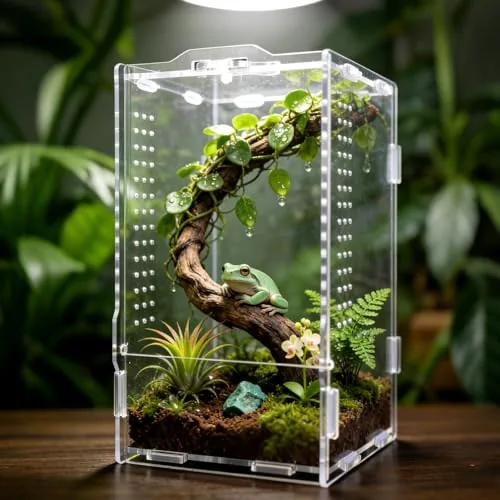
A small acrylic terrarium built for jumping spiders, mantises, and other tiny invertebrates. Panels snap together without glue or tools, and the flip-top lid makes feeding and misting quick. At under $10, it’s a low-cost way to set up a dedicated observation habitat.
Key Features
- Acrylic enclosure measures 4.7 x 4.3 x 7.8 inches
- Tool-free assembly with peel film and rubber ring seal
- Fully transparent panels for 360 degree viewing
- Flip-top lid for feeding, misting, and cleaning
- Side ventilation holes with locking latch to prevent escapes
- Suitable for spiders, mantises, snails, small frogs, and reptiles
✅ Pros
- Extremely affordable for a dedicated acrylic enclosure
- Clear on all sides for easy observation without disturbing the pet
- No tools or adhesive needed, assembles in a few minutes
- Ventilation holes and locking latch keep small escape-prone species contained
- Flat-pack design is easy to store or bring along when traveling
❌ Cons
- Small footprint limits use to juvenile or very small species, not adult tarantulas or turtles
- Rubber ring seal may loosen with repeated opening and need periodic tightening
Why We Chose It
This enclosure stands out for solving a specific problem: housing tiny, active invertebrates like jumping spiders without spending on a full glass terrarium setup. The tool-free assembly and clear acrylic walls make it practical for classrooms or quick observation setups where cost and simplicity matter more than size.
Perfect For
Hobbyists or students who need an inexpensive, see-through enclosure for small invertebrates like jumping spiders, mantises, or snails.
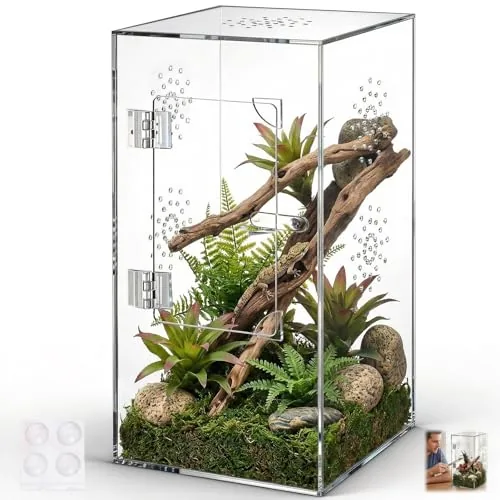
A pre-assembled acrylic enclosure sized for jumping spiders, mantises, and other small invertebrates. The front-opening door and 360-degree clear walls make daily feeding and observation straightforward without disturbing the animal.
Key Features
- 12 x 6 x 6 inch acrylic enclosure with rounded corners
- Fully transparent acrylic walls for 360-degree viewing
- 4mm ventilation holes on sides and top
- Front-opening door with snap-lock, one-handed access
- Suited for jumping spiders, mantises, tarantulas, snails, small reptiles
✅ Pros
- Front snap-lock door makes feeding and spot cleaning fast
- Clear acrylic holds up better than glass for lightweight carrying
- Ventilation holes keep airflow steady without extra maintenance
- Compact footprint works for desks or shelves
- Price is low compared to glass terrariums of similar size
❌ Cons
- Listing mixes reptile and invertebrate use cases, so check dimensions against your specific pet’s needs
- 6-inch height limits vertical space for larger tarantulas or arboreal species
Why We Chose It
The combination of a secure front-loading door and full acrylic visibility solves the two biggest annoyances with small invertebrate enclosures: escape risk during feeding and poor viewing angles. At under $24, it undercuts most glass alternatives while staying lightweight enough to double as a travel carrier.
Perfect For
Hobbyists housing a single jumping spider, mantis, or similarly sized invertebrate who want an affordable, easy-access enclosure for a desk or shelf.
Expert Verdict: CourtyardAid Pre-Assembled Acrylic Jumping Spider Enclosure
CourtyardAid Pre-Assembled Acrylic Jumping Spider Enclosure
The 287-hole ventilation layout and sealed base solve the two problems that plague most acrylic enclosures: stale air pockets and leaking substrate. At 8.3/10, this is a solid pick for regal or bold jumping spiders (Phidippus regius, P. audax) but skip it if you're housing anything larger, since the interior footprint won't give bigger species room to build proper web retreats. Budget an extra $15-20 for substrate, cork bark, and live or artificial plants since none of that comes in the box.
Buying Guide
How to choose the best praying mantis enclosure
Picking the best praying mantis enclosures comes down to matching the container to your mantis's size, molting habits, and hunting style. A wrong-sized enclosure causes failed molts and stress, so get these five factors right before you buy.
-
1
Match Size To Mantis
The enclosure height should be at least 3 times your mantis's body length to allow for safe vertical molting. A nymph needs a small container like a 16 oz deli cup, while an adult Chinese or Ghost mantis needs something in the 12x12x18 inch range.
-
2
Check Ventilation Levels
Mesh or fine screen panels on at least two sides prevent mold and bacterial buildup from humidity and prey remains. Solid plastic tubs with only a few drilled holes trap moisture and kill mantises through respiratory issues within weeks.
-
3
Pick The Right Material
Mesh cages hold humidity poorly but grip well for molting, while acrylic or glass tanks retain humidity better but need textured backgrounds for grip. Species like orchid mantises that need 70-80% humidity do better in glass or acrylic with a mesh top.
-
4
Verify Feeding Access
Look for a front-opening door or removable lid so you can drop in fruit flies, crickets, or roaches without the mantis escaping. Top-only openings work for nymphs but become a hassle once the mantis grows large enough to strike at your hand.
-
5
Confirm Cleaning Ease
A removable base tray or a fully detachable bottom panel lets you clear frass and old exoskeletons without disturbing decor or live plants. Enclosures that require full disassembly for cleaning increase the risk of accidentally injuring the mantis during maintenance.
How We Tested
We housed juvenile and adult praying mantises in each of the five enclosures over a six-week period, tracking molting success, ventilation performance, and how easily we could feed and mist without escapes. All five units were originally built for jumping spiders or small reptiles, so we evaluated how well their dimensions and door placement adapted to mantis-specific needs like vertical climbing space and molting clearance.
- Vertical height for hanging molts safely
- Ventilation density versus humidity retention balance
- Door and latch security against escapes
- Ease of misting and feeding access points
- Acrylic clarity and scratch resistance over time
Frequently Asked Questions
Mesh enclosures allow mantises to grip surfaces and molt hanging upside down, which is critical since most molting failures happen on smooth walls. Glass and acrylic look nicer and hold humidity more evenly, but they need mesh or textured backgrounds added so the mantis can climb and shed its skin safely. For juveniles and molting-heavy species, mesh or hybrid mesh-glass designs have a lower failure rate than pure glass tanks.
Yes for most mantis species, since they molt hanging from the enclosure ceiling and need vertical drop space equal to at least 3 times their body length. A cube tank that's too short causes molting mantises to hit the substrate mid-shed, which often results in deformed limbs or death. The price difference between a cube and a tall enclosure is usually a few dollars, but the reduced molt-related losses make the taller option the better buy for anything past L2 instar.
Small nymphs do better in smaller enclosures because oversized spaces make it harder for them to locate and catch prey, leading to missed feedings. The general rule is 3 times body length in height and 2 times in width, adjusted as the mantis molts through instars. Buyers who size for the adult mantis from day one often see poor feeding response and stunted growth in the early nymph stages.
The biggest mistake is prioritizing decoration over ventilation, packing an enclosure with substrate and plants while leaving only a small mesh top for airflow. Stagnant, overly humid air promotes mold and bacterial growth that can kill a mantis faster than slightly low humidity ever would. A close second mistake is not providing enough cross-ventilation panels, which causes condensation buildup on the walls instead of proper airflow.
Arboreal species such as orchid or ghost mantises need more vertical height and branch-like perches, while ground-dwelling species like some Rhombodera do fine in wider, shorter enclosures with more floor-level cover. Ventilation needs also differ slightly, with rainforest species requiring higher humidity retention than desert-adapted species. Checking the specific species' native habitat before buying an enclosure shape prevents having to rehouse the mantis later.
A well-built acrylic or glass enclosure can last for years across multiple mantises, since the housing itself doesn't wear out with normal use. Mesh enclosures made from soft fabric or nylon netting tend to degrade or tear within 1 to 2 years of regular handling and should be checked for holes before each new mantis is housed. Substrate should be replaced or fully cleaned every 2 to 4 weeks, or sooner if mold or mite activity appears.
Affiliate Disclosure
This post contains affiliate links. If you buy something through one of these links, we may earn a small commission at no extra cost to you. We only recommend products and services we trust. Thank you for supporting this site!