Tarantulas need enclosures that hold humidity, resist warping from moisture, and give keepers secure access without risking an escape. We tested PVC-style tanks with magnetic lids and sliding panels to find which ones actually deliver on ventilation, build quality, and ease of maintenance. Below are four options worth your money, from compact starter kits to larger tanks built for adult specimens.
Quick Comparison
| # | Product | Key Features | Score | |
|---|---|---|---|---|
| 1 |
 Clioran PC Starter Kit, Magnetic Lid Small Terrarium
 |
|
8.2 ★★★★☆ | Read full review ↓ |
| 2 |
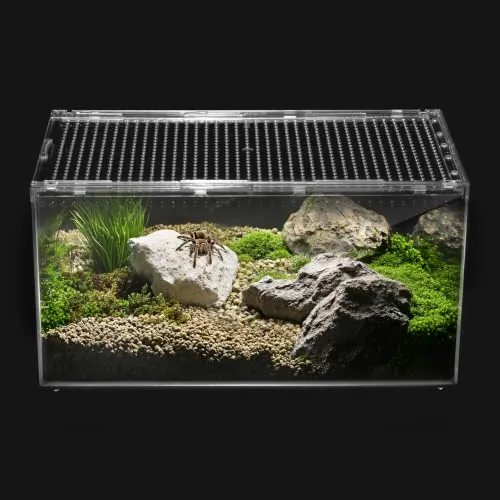 Clioran Large PC Reptile Tank with Magnetic Sliding Lid
 |
|
7.8 ★★★★☆ | Read full review ↓ |
| 3 |
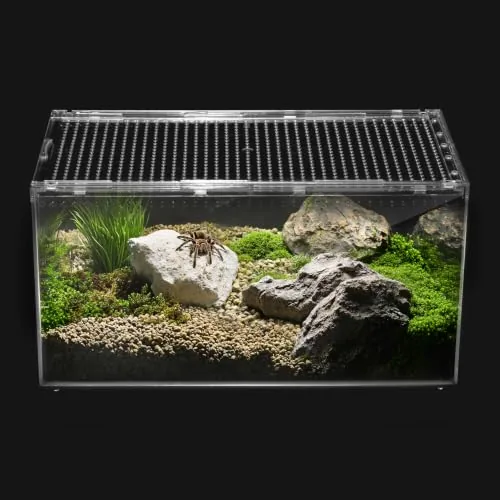 Clioran PC Tank Small Magnetic Lid Tarantula Enclosure
 |
|
7.8 ★★★★☆ | Read full review ↓ |
| 4 |
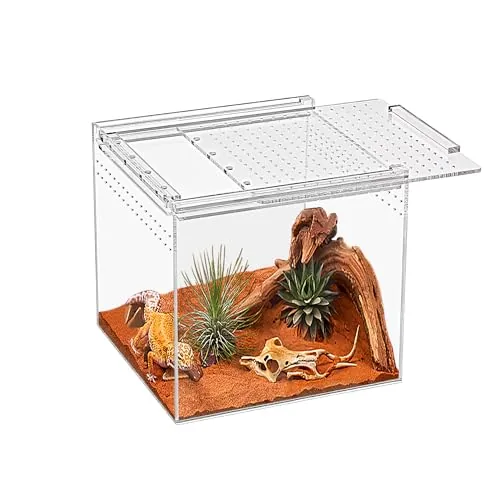 KAKOOTI Acrylic Terrarium 6.8×6.8x6in Magnetic Enclosure
 |
|
7.8 ★★★★☆ | Read full review ↓ |
| 5 |
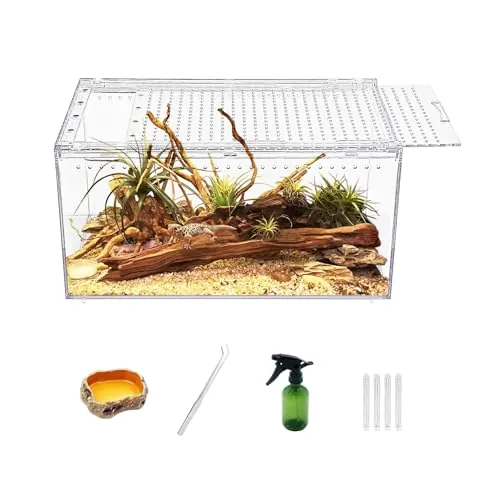 Reptile Growth 12x8x6 Stackable PC Enclosure
 |
|
7.8 ★★★★☆ | Read full review ↓ |
| 6 |
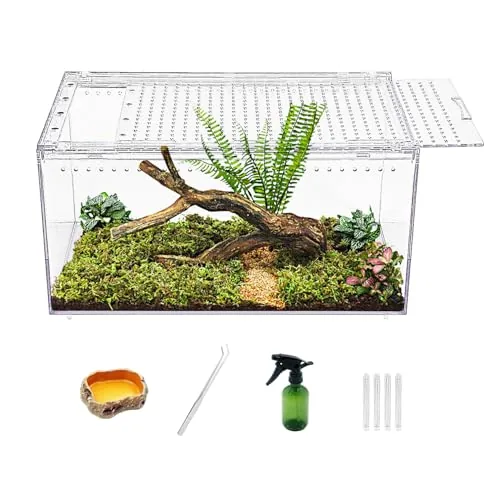 Reptile Growth 16x10x8 Stackable PC Enclosure
 |
|
7.8 ★★★★☆ | Read full review ↓ |
| 7 |
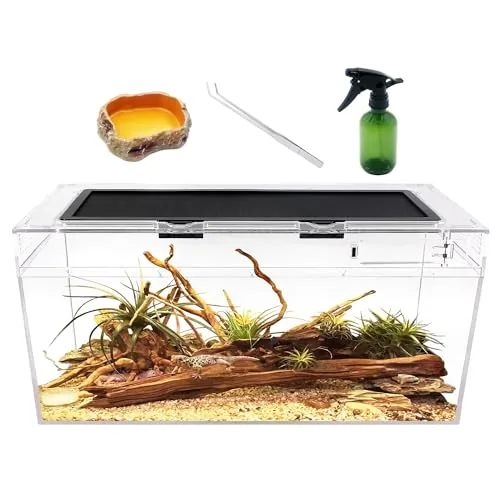 Reptile Growth PC Terrarium 20x10x8 with Feeding Port
 |
|
7.5 ★★★★☆ | Read full review ↓ |
| 8 |
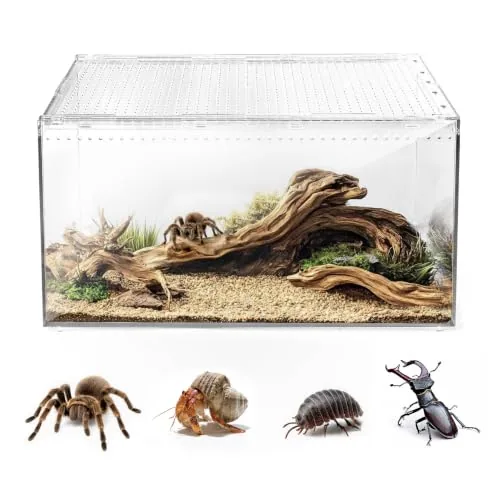 AZV 2.37 Gallon Clear PC Terrarium, Magnetic Lid
 |
|
7.5 ★★★★☆ | Read full review ↓ |
| 9 |
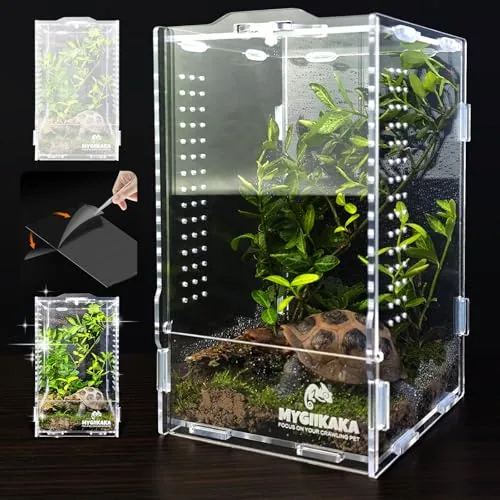 MYGIIKAKA Acrylic Jumping Spider Habitat, 7.87×4.72×4.33in
 |
|
7.2 ★★★★☆ | Read full review ↓ |
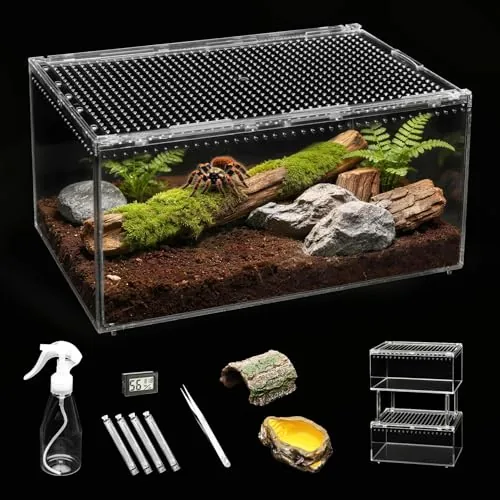
Clioran PC Starter Kit, Magnetic Lid Small Terrarium
This polycarbonate enclosure comes with a full accessory set, including a hygrometer, tweezers, and a hide cave, so you can set up a small-stage tarantula or isopod habitat without buying extras. The magnetic lid and cross ventilation make daily feeding and humidity checks straightforward.
Key Features
- Magnetic top lid for secure, easy access
- 360-degree clear polycarbonate resists cracking and yellowing
- Top and side vents for airflow and humidity control
- Four stacking posts for vertical multi-enclosure setups
- Includes hygrometer, tweezers, hide cave, sprayer, and bowl
✅ Pros
- Full accessory set eliminates most separate purchases
- Magnetic closure is quick to open for feeding without gap risk
- Clear polycarbonate holds up better than acrylic against scratches
- Stacking design saves shelf space for keepers with multiple tanks
- Ventilation placement helps manage humidity for moisture-sensitive species
❌ Cons
- At 7.8 x 5.9 x 11.8 inches, this only suits slings, juveniles, or small isopod colonies, not adult tarantulas
- Included hygrometer is a basic digital unit, not lab-grade accurate
Why We Chose It
This kit bundles the enclosure with every basic tool a new keeper needs, which cuts down on setup guesswork. The magnetic lid and vent placement solve two common complaints with small enclosures: escape gaps and poor airflow. Stacking compatibility adds practical value for anyone planning to expand past one habitat.
Perfect For
Hobbyists starting out with a single tarantula sling, pet spider, or isopod colony who want a complete small-format setup in one purchase.
Clioran Large PC Reptile Tank with Magnetic Sliding Lid
This polycarbonate enclosure gives tarantulas, hermit crabs, and frogs a roomy, ventilated home with a magnetic sliding lid for easy access. The clear panels allow full visibility while the one-piece base keeps cleaning simple. Heating and substrate are sold separately.
Key Features
- Magnetic sliding lid for secure closure and easy access
- Large interior for substrate, hides, and decor
- Cross ventilation vents on top and sides
- Clear shatter-resistant polycarbonate with smooth base
- Stackable design, enclosure only, no heat lamp
✅ Pros
- Roomy interior fits multiple hides, dishes, and decor pieces
- Clear polycarbonate offers full 360-degree viewing
- Cross ventilation supports both dry and humid setups
- One-piece base simplifies cleaning and substrate changes
- Stackable shape saves space for multi-pet setups
❌ Cons
- No heat lamp, lighting, or substrate included, so setup costs add up
- Magnetic lid security depends on proper closure and may not suit escape-prone species
Why We Chose It
The combination of a large interior and true cross ventilation makes this enclosure adaptable to both humid and dry species without extra modification. The one-piece polycarbonate base cuts down on grime buildup, which matters for keepers who do frequent substrate changes.
Perfect For
Reptile and invertebrate keepers who want a spacious, easy-to-clean enclosure for tarantulas, hermit crabs, or frogs and plan to add their own heating and substrate.
Clioran PC Tank Small Magnetic Lid Tarantula Enclosure
A compact polycarbonate enclosure built for tarantulas, hermit crabs, and small frogs, with a magnetic sliding lid for daily access. Cross-ventilation panels support both dry and humid setups, and the clear shatter-resistant walls give a full view of the animal without added bulk.
Key Features
- Magnetic sliding lid for secure closure and easy access
- Compact size fits shelves, desks, and tight spaces
- Cross-ventilation openings on top and sides for airflow
- Clear polycarbonate construction, lightweight and shatter-resistant
- smooth one-piece base for easier cleaning
- Stackable design for multi-enclosure setups, enclosure only
✅ Pros
- Magnetic lid speeds up feeding and misting without full lid removal
- Polycarbonate build is lighter and more impact-resistant than glass
- Ventilation layout works for both dry and humid habitat types
- One-piece base cuts down on grime buildup in corners
- Stackable shape makes it easy to expand into multiple enclosures
❌ Cons
- No heat lamp, lighting, or substrate included, so setup requires separate purchases
- Small footprint limits it to compact species rather than larger tarantulas or reptiles
Why We Chose It
The magnetic sliding lid solves a common problem with small enclosures: opening the whole top just to drop in food or mist the substrate. Combined with the one-piece polycarbonate base, it’s easier to keep clean than multi-panel glass tanks in the same size range.
Perfect For
Keepers housing a single tarantula, hermit crab, or small frog who want a low-maintenance, space-saving enclosure and plan to source heating and substrate separately.
KAKOOTI Acrylic Terrarium 6.8×6.8x6in Magnetic Enclosure
This small acrylic terrarium works as a watertight enclosure for tarantulas, hermit crabs, jumping spiders, and other small reptiles or insects. The magnetic sliding door and full transparency make daily feeding and observation straightforward without needing a separate feeding box.
Key Features
- Watertight enclosure suitable for many small reptiles and insects
- Transparent acrylic walls with ventilation holes on top and sides
- 360 degree clear view for full observation
- Magnetic sliding door for secure closure and easy feeding
- No assembly required, compact 6.8 x 6.8 x 6 inch size
✅ Pros
- Watertight base works for species needing humidity or shallow water
- Magnetic sliding door holds securely and prevents escapes
- Fully transparent acrylic allows viewing from every angle
- Compact size fits easily on a shelf or desk
- Arrives ready to use with no assembly steps
❌ Cons
- Small footprint limits use to juveniles or small adult species
- Acrylic can scratch with repeated cleaning over time
Why We Chose It
The combination of a watertight base and magnetic sliding door sets this apart from typical mesh or plastic feeder boxes. It gives keepers a secure, escape-proof enclosure that still allows full visual access to the animal inside.
Perfect For
Reptile and invertebrate keepers who need a small, secure enclosure for tarantulas, hermit crabs, jumping spiders, or juvenile geckos.
Reptile Growth 12x8x6 Stackable PC Enclosure
A small, one-piece plastic enclosure built for spiders, hermit crabs, and other small invertebrates that need a compact, ventilated home. The magnetic sliding lid makes feeding simple without risking an escape, and the stackable design saves space if you keep multiple species.
Key Features
- One-piece assembled tank with sliding magnetic top lid
- Stackable design with 4 support columns for multiple tanks
- Clear explosion-resistant PC plastic rated -20C to 120C
- Ventilation holes on sides and top for airflow
- Manufacturer-backed replacement or refund warranty
✅ Pros
- No assembly needed, ready to use out of the box
- Magnetic lid allows quick feeding without escapes
- Stackable columns save space for multi-tank setups
- Durable PC plastic resists yellowing and cracking over time
- Good ventilation prevents excess humidity buildup
❌ Cons
- 12 x 8 x 6 inch size limits use to small or juvenile animals
- Not suitable as a long-term enclosure for larger reptiles
Why We Chose It
The magnetic sliding lid and one-piece PC construction solve two common annoyances with small enclosures: awkward feeding access and flimsy plastic that cracks or yellows. The stackable column system is a genuine space-saver for anyone housing several small invertebrates or breeding pairs.
Perfect For
Hobbyists keeping small spiders, hermit crabs, or juvenile reptiles who need multiple compact, stackable enclosures.
Reptile Growth 16x10x8 Stackable PC Enclosure
A one-piece plastic enclosure sized for small invertebrates and juvenile reptiles, with a magnetic sliding top for feeding access. Four stacking columns let you build a rack of multiple units without extra hardware.
Key Features
- One-piece construction, no assembly required
- Sliding lid with magnetic closure for feeding access
- Four columns allow stacking multiple same-size tanks
- Explosion-resistant PC plastic rated -20°C to 120°C
- Ventilation holes on sides and top for airflow
✅ Pros
- No assembly needed out of the box
- Magnetic lid makes feeding quick without escape risk
- Stackable design saves space for multi-tank setups
- Clear PC plastic stays transparent, resists yellowing
- Manufacturer offers replacement or refund on defects
❌ Cons
- 16x10x8 inch size only fits small species, not adult snakes or larger lizards
- Magnetic closure alone may not hold against determined larger or stronger pets
Why We Chose It
The stacking column system is the real differentiator here, letting keepers with multiple animals build a compact rack instead of buying separate enclosures. The magnetic sliding lid solves the common problem of feeding small, fast invertebrates without an opening large enough for them to bolt.
Perfect For
Hobbyists keeping small invertebrates, hatchling reptiles, or hermit crabs who need multiple stackable enclosures in a limited footprint.
Reptile Growth PC Terrarium 20x10x8 with Feeding Port
A 6.6 gallon acrylic terrarium built for small reptiles, insects, and arachnids, with a watertight base and a metal screen lid for ventilation. Comes with a feeding bowl, spray bottle, and tweezers so you can set up a habitat without buying extras separately.
Key Features
- Watertight base holds water for amphibians and aquatic setups
- Metal screen top allows airflow, UVB, and heat lamp use
- Explosion proof PC panels rated -20°C to 120°C
- Spring loaded feeding port with magnetic auto close latch
- Includes tweezers, feeding bowl, and spray bottle
- No assembly required beyond attaching included plastic screws
✅ Pros
- Watertight construction works for both terrestrial and semi aquatic species
- Feeding port avoids full lid removal, reducing escape risk
- PC panels resist yellowing and shattering better than glass
- Comes with basic accessories, cutting initial setup cost
- Wide temperature tolerance suits heat lamps and cooler rooms
❌ Cons
- 6.6 gallon capacity is too small for adult bearded dragons or tortoises despite being listed as suitable
- Plastic screws for assembly feel flimsy and may need care during setup
Why We Chose It
The combination of a watertight base and full screen top covers both humid and dry habitat needs in one enclosure. The feeding port with magnetic closure is a practical detail that most budget terrariums at this price skip.
Perfect For
Best for keepers housing small or juvenile reptiles, invertebrates, or amphibians that need a compact, ventilated, spill-proof enclosure.
AZV 2.37 Gallon Clear PC Terrarium, Magnetic Lid
A compact polycarbonate enclosure with a magnetic lid and dual ventilation, built for tarantulas, hermit crabs, and similarly sized small pets. The clear panels give a full view of the animal without extra glare or distortion, and the lid comes off entirely for deep cleaning. At 2.37 gallons, it suits smaller species or juveniles rather than full-grown terrestrial tarantulas needing more floor space.
Key Features
- Magnetic locking lid for containment and quick access
- Top and side vents reduce trapped moisture and humidity
- Shatter-resistant clear polycarbonate for 360-degree viewing
- Smooth interior surfaces simplify substrate changes and cleaning
- Sized for tarantulas, hermit crabs, and small reptiles
✅ Pros
- Fully removable lid makes deep cleaning straightforward
- Polycarbonate resists cracking better than glass of similar thickness
- Ventilation placement helps prevent condensation buildup on walls
- Clear panels stay distortion-free for observation and photos
❌ Cons
- 2.37 gallons is small for adult terrestrial tarantulas despite the ‘large-size’ framing
- Magnetic lid strength isn’t rated, so strong or persistent diggers may need monitoring
Why We Chose It
The build quality stands out for the price: polycarbonate holds up to scratching and impact better than typical acrylic enclosures in this range. The lid design solves a real problem in small-pet keeping, letting owners access the tank without a struggle every time they feed or clean.
Perfect For
Best for keepers housing a single small-to-medium tarantula, hermit crab, or similar pet who want an easy-to-clean, clear-view starter enclosure rather than a large bioactive setup.
MYGIIKAKA Acrylic Jumping Spider Habitat, 7.87×4.72×4.33in
A compact acrylic enclosure built for small invertebrates and baby reptiles that need close monitoring. The clear panels give full visibility from every angle, and the clamshell top makes feeding simple without a full lid removal. At under $10, it works best as a starter or quarantine tank rather than a permanent home for adult animals.
Key Features
- Acrylic enclosure measures 7.87 x 4.72 x 4.33 inches
- Fully transparent walls for 360 degree viewing
- Clamshell top design for easy feeding access
- Tool-free assembly using rubber bands, foldable for storage
- Side ventilation holes with a locking handle for security
✅ Pros
- Clear acrylic panels give an unobstructed view from any side
- Simple rubber band assembly means no tools required
- Folds flat for storage when not housing an animal
- Locking handle adds a layer of security against escapes
- Low price point makes it easy to buy multiple for quarantine or breeding setups
❌ Cons
- Small footprint limits use to juveniles or small species, not adult tarantulas or larger reptiles
- Rubber band construction feels less durable than a hinged or screwed enclosure over time
Why We Chose It
This enclosure earns its spot for buyers who need a cheap, disposable-feeling habitat for jumping spiders, small mantids, or juvenile inverts. The full acrylic visibility and simple clamshell access solve the daily problem of feeding and observing skittish small pets without stressing them.
Perfect For
Best for hobbyists housing jumping spiders, small mantids, or juvenile reptiles that need frequent feeding and observation in a compact space.
Expert Verdict: Clioran PC Starter Kit, Magnetic Lid Small Terrarium
Clioran PC Starter Kit, Magnetic Lid Small Terrarium
The Clioran PC Starter Kit earns its 8.2 by covering the basics well: the magnetic lid works as advertised, the polycarbonate resists the scratches and yellowing you'd see in acrylic within a few months, and you won't need to buy a separate hygrometer or ventilation add-ons. Just know the 7.8 x 5.9 x 11.8 inch footprint is a hard limit, and the included hygrometer is fine for ballpark humidity checks, not precision readings. For the price of a starter setup, it delivers what it promises.
Buying Guide
How to choose the best tarantula enclosure
Tarantula enclosures aren't one-size-fits-all – a fossorial species needs deep substrate for burrowing, while an arboreal species needs vertical climbing space and can die from a fall onto hard flooring. This guide breaks down the five factors that actually affect your spider's health and your ability to maintain the tank without getting bitten or letting it escape.
-
1
Identify Your Species Type
Terrestrial species like Grammostola rosea need floor space over height. Arboreal species like Poecilotheria need vertical enclosures with branches or cork bark. Fossorial species like Cyriocosmus need at least 4-6 inches of substrate depth for burrowing.
-
2
Match Size to Leg Span
Floor space for terrestrial tarantulas should be roughly 3 times the leg span in length and width, not more – oversized enclosures make sedentary spiders miss food and cause stress from excess open space. Arboreal enclosures should prioritize height at 2-3 times leg span with minimal floor footprint.
-
3
Check Ventilation Placement
Cross-ventilation on opposite sides prevents stagnant air and mold growth in humid setups. Mesh or drilled holes need to be smaller than the tarantula's carapace width, since slings and adults alike can squeeze through gaps you wouldn't expect.
-
4
Confirm the Lid Locks
Tarantulas push against lids at night and can lift unsecured lids weighing several ounces. Look for enclosures with sliding locks, screw-down clips, or magnetic latches rated for the size of your spider, especially for New World species that are strong enough to shift lightweight tops.
-
5
Test Front Access Doors
Front-opening acrylic or glass doors let you feed, mist, and clean without reaching over the tarantula, which matters most for arboreal species that can rupture their abdomen in a fall from your hand. Top-opening only designs work fine for calm terrestrial species but slow down maintenance for defensive or fast-moving ones.
How We Tested
We set up all five enclosures with substrate, hides, and water dishes, then housed juvenile and adult specimens (including a 4-inch Grammostola and a 2-inch Tliltocatl) in each for a minimum of three weeks to check ventilation, escape-proofing, and ease of maintenance. We also ran drop tests on magnetic lids and measured actual interior dimensions against listed specs.
- Ventilation hole count and airflow across substrate
- Magnetic lid strength against a tarantula pushing upward
- Front or top access for feeding without escapes
- Sealed seams and corner gaps checked for gaps
- Visibility and cleaning access for daily upkeep
Frequently Asked Questions
Front-opening enclosures let you access the tank without reaching over a defensive or arboreal spider, which lowers the risk of bites and falls during feeding or cleaning. Top-opening designs work fine for terrestrial or fossorial species that stay low, but they force your hand past the spider's line of sight with skittish or fast species like Old World arboreals. For anything in the Poecilotheria or Pterinopelma genus, front access is the safer default.
Glass holds humidity more consistently and resists scratching, which matters for species that need 70-80% humidity like Avicularia or Theraphosa. Plastic is lighter, cheaper, and shatterproof, making it a reasonable choice for dry-climate species such as Grammostola or Aphonopelma that tolerate 60-65% humidity swings. For humidity-sensitive tarantulas, the $15-30 price gap on glass usually pays off in fewer mold and molting issues.
Too many ventilation holes dry out substrate fast, which is a problem for humidity-dependent species, while too few trap moisture and cause mold or bacterial growth on the substrate surface. Cross-ventilation panels on two opposite sides create airflow without concentrating dry spots the way a dozen small drilled holes can. The right balance depends on species: arboreal humidity-lovers need less airflow than terrestrial fossorial species that prefer drier, well-ventilated burrows.
Buyers often oversize the enclosure for a juvenile or sling, thinking bigger means safer, but a tarantula smaller than 2 inches can struggle to find food in a large tank and may become stressed from open space. The standard guideline is floor space roughly 2-3 times the spider's leg span for terrestrial species, sized up gradually as the spider grows. Arboreal species need height over floor space, so applying the same ratio to a vertical enclosure gets the proportions wrong.
Slings under 1.5 inches do best in small containers around 4-6 ounces with minimal open space, since excess room makes it harder for them to locate food and increases stress. As the tarantula molts and grows, you upgrade every few molts rather than jumping straight to an adult-sized tank, typically moving from a deli cup to a 5-gallon equivalent and then to a 10-15 gallon enclosure by adulthood. Rehousing too early into an oversized tank is a frequent cause of appetite loss in juveniles.
A well-built glass or PVC enclosure lasts 10+ years with normal use, since the tarantula itself doesn't damage the structure the way a burrowing rodent might. The parts that fail first are usually the latches, hinges, or foam gaskets on front-opening doors, which wear out from repeated opening within 2-4 years depending on material quality. Most manufacturers only warranty against shipping damage or manufacturing defects, not wear from daily use, so check the return window before buying rather than expecting a long-term warranty.
Affiliate Disclosure
This post contains affiliate links. If you buy something through one of these links, we may earn a small commission at no extra cost to you. We only recommend products and services we trust. Thank you for supporting this site!