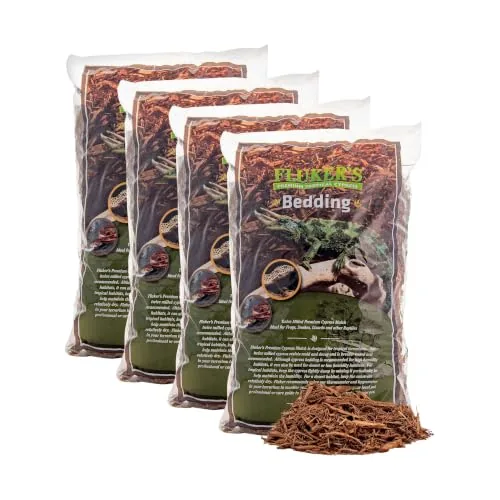
This build runs $538.29 for the essentials and $579.30 if you add every item on the list, including the frozen rat pack. The snake itself, whether bought or already owned, is the smallest expense in this entire setup. Most of that money goes into the enclosure and climate control equipment, not the animal. A 4x2x2 PVC enclosure alone is $349.00, nearly two thirds of the essentials total.
The Full Parts List and What It Costs
| Item | Our pick | Priority | Price |
|---|---|---|---|
| Enclosure | Reptile Habitats 4x2x2 PVC Enclosure, 120 Gallon | Essential | $349.00 |
| Substrate | DBDPet Galapagos Fir Bark Substrate 8qt | Essential | $19.99 |
| Hide | Vivarium Electronics XL Snake Hide 16.25x11x4.5in | Essential | $14.99 |
| Heat Source | DXOPHIEX 5.5in Reptile Heat Lamp with PID Thermostat | Essential | $41.99 |
| Thermostat | REPTIZOO PID Dimming Thermostat with Memory Function | Essential | $27.99 |
| Thermometer And Hygrometer | Zoo Med TH-31 Digital Thermometer Humidity Gauge | Essential | $12.64 |
| Water Bowl | Zoo Med Repti Rock Water Dish X-Large | Essential | $18.99 |
| Climbing Branch | VCEPJH Natural Grapewood Reptile Climbing Branches (2pk) | Optional | $21.99 |
| Uvb Lighting | Zoo Med ReptiSun 5.0 Mini CFL 13W UVB Bulb | Optional | $19.02 |
| Diet | RodentPro Frozen Large Rats, 5-Count Feeder Pack | Essential | $52.70 |
| Essential items only | $538.29 | ||
| Everything listed | $579.30 |
Where to Save and Where Not To
You can cut costs on the water bowl, climbing branches, and substrate without any real risk to the snake. The thermometer and hygrometer at $12.64 is also fine to buy generic, as long as it reads accurately. Where you should not cut corners: the PID thermostat ($27.99) and the enclosure size. A cheap on/off thermostat instead of a PID model can let temperatures spike or drop outside safe range, and an undersized enclosure will need replacing within a year or two as the snake grows, costing you twice.
Every Part, and What to Buy
Enclosure
An adult boa needs a minimum footprint of 4×2 feet floor space, front-opening with a locking door since boas are strong escape artists. PVC or melamine holds heat and humidity far better than glass, which matters once the snake exceeds 6 feet.
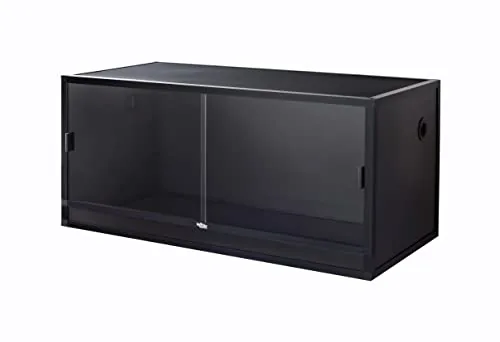
A 48x24x24 inch PVC reptile enclosure with an aluminum frame and glass doors, built to hold up in high-humidity setups without warping. At 25 lbs, it’s light enough for one person to assemble and reposition without help.
Key Features
- Assembles in under 30 minutes without tools
- PVC panels and heavy duty screen resist damage
- Holds up in high-humidity environments
- Weighs 25 lbs for easy handling and moving
- Sized for a range of reptile species
✅ Pros
- PVC construction won’t warp or rot under high humidity
- Assembly takes under 30 minutes with no tools required
- Lightweight aluminum frame makes repositioning simple for one person
- Glass doors give clear visibility for monitoring the animal
- 120-gallon capacity suits juvenile and adult reptiles of many species
❌ Cons
- PVC panels offer less impact resistance than glass or wood enclosures
- Assumes some basic handiwork for panel alignment despite the no-tool claim
Why We Chose It
This enclosure solves the two biggest complaints with reptile tanks: humidity damage and weight. The PVC panel design handles moisture from bioactive setups or misting systems without swelling or delaminating, and at 25 lbs it’s manageable to move for cleaning or relocating.
Perfect For
Reptile owners keeping humidity-dependent species like ball pythons or crested geckos who need a durable, easy-to-move enclosure without the weight of glass tanks.
Substrate
Cypress mulch or coco fiber blends hold the 50-70% humidity boas need to shed properly, unlike aspen or newspaper which dry out fast. Depth of 2-3 inches lets the animal burrow and supports beneficial bioactive cleanup crews if you go that route.
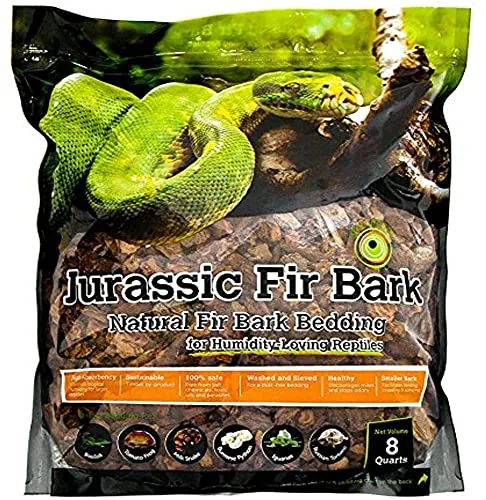
This fir bark substrate holds moisture well to maintain tropical humidity levels for larger reptile enclosures. It’s processed to remove salt, chemicals, oils, and parasites, and ships with a printed care guide for setup and maintenance tips.
Key Features
- High absorbency maintains tropical humidity for larger reptiles
- Made from sustainable timber by-product
- Free of salt, chemicals, oils, and parasites
- Includes attached pro-tip care guide
- Backed by a buyback guarantee
✅ Pros
- Retains moisture effectively for humidity-dependent species
- Processed for safety, no added chemicals or parasites
- Included guide helps first-time reptile owners with setup
- Buyback guarantee reduces purchase risk
❌ Cons
- 8 quarts covers only smaller to mid-size enclosures, larger tanks need multiple bags
- Natural bark can contain some dust and requires occasional sifting
Why We Chose It
This substrate targets a specific need: keepers of tropical reptiles who need consistent humidity control without synthetic additives. The safety processing and included care guide make it a reasonable pick for owners setting up their first bioactive or high-humidity terrarium.
Perfect For
Owners of tropical reptiles like ball pythons, tegus, or tortoises who need a natural substrate that holds humidity in mid-size enclosures.
Hide
You need two, one on the warm end and one on the cool end, so the snake never has to choose between thermoregulation and security. Each hide should be snug enough that the boa’s body touches all sides when coiled, not an open cave.
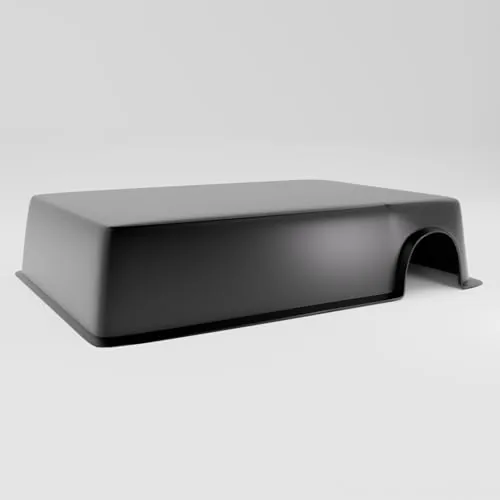
A heavy-duty polypropylene hide box built for adult ball pythons, larger boas, and similarly sized snakes. The offset door design blocks direct sightlines into the hide while still giving the animal a roomy interior to settle into.
Key Features
- 16.25 x 11 x 4.5 inch hide for cages and racks
- Offset 3.625 x 4.125 inch entrance reduces direct sightlines
- 1/8 inch thick polypropylene with smooth, easy-clean surfaces
- Sized for adult ball pythons and similarly sized boas
- Fits breeder tubs, rack systems, and full-size tank setups
✅ Pros
- 1/8 inch polypropylene is nearly unbreakable under daily handling
- Smooth surfaces wipe clean fast, no creases to trap waste
- Offset door limits sightlines better than open-front hides
- Low-profile black finish fits standard rack and tub setups
- Priced under $15 for a large-format hide
❌ Cons
- Too large for juvenile ball pythons or smaller reptile species
- Plain molded plastic look, no naturalistic texture or color options
Why We Chose It
The offset door is the real differentiator here, it cuts down visibility into the hide without shrinking the usable interior space. Combined with 1/8 inch polypropylene construction, it holds up to daily use in racks and tubs without cracking or warping like thinner plastic hides.
Perfect For
Keepers housing adult ball pythons, larger boas, or similarly sized snakes in rack systems or full tank setups who need a durable hide with reduced visibility.
Heat Source
A ceramic heat emitter or radiant heat panel creates the 88-92F basking surface boas need without emitting light that disrupts their nocturnal cycle. Heat mats alone cannot warm the air in a 4×2 foot enclosure and should not be the primary source for an adult boa.
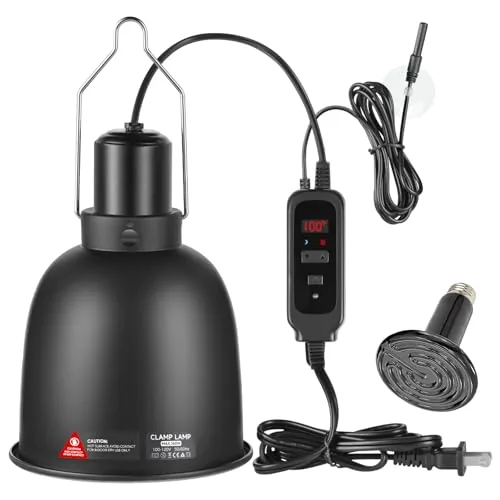
A dome heat lamp fixture paired with a PID thermostat and a 100W ceramic heat emitter for reptile enclosures. It switches between constant temperature control and a day/night cycle mode that drops heat automatically after dark. Works with E26 bulbs up to 100W and covers a 68 to 113°F range.
Key Features
- PID thermostat with sensor probe, 68 to 113°F range
- Two modes: constant temperature or day/night cycle
- 1mm aluminum alloy dome with polished reflective interior
- 100W ceramic heat emitter produces heat without light
- E26 base fixture with top ventilation holes
- Simple setup: place probe, plug in, set target temp
✅ Pros
- PID control holds temperature steady without the swings of basic thermostats
- Day/night mode drops temperature automatically without manual adjustment
- Ceramic emitter heats the enclosure without disturbing light-sensitive reptiles
- Aluminum dome reflects heat efficiently and dissipates it through vent holes
- Single button toggles Celsius and Fahrenheit display
❌ Cons
- Fixture caps bulb wattage at 100W even though the thermostat can output up to 200W
- Probe placement takes some trial and error to get accurate basking zone readings
Why We Chose It
The PID thermostat sets this apart from standard dimmer-based reptile lamps by holding a stable output instead of cycling on and off. The day/night mode adds a practical touch that mimics natural temperature drops without requiring a second timer or controller.
Perfect For
Reptile owners who want precise, automated temperature control for species like bearded dragons, leopard geckos, or ball pythons without babysitting a manual dimmer.
Thermostat
This regulates the heat emitter to prevent thermal burns and enclosure overheating, the single most common cause of preventable boa deaths in captivity. Get a proportional or pulse-proportional model rated for the wattage of your heat emitter, not a basic on/off type.
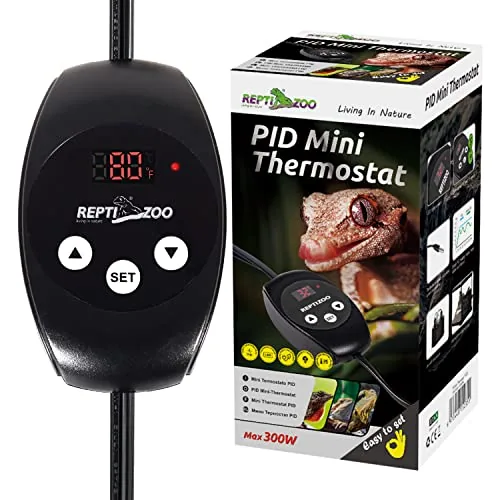
A PID-based dimming thermostat built specifically for reptile heat bulbs and heaters, holding temperature steady from 41°F to 140°F. The memory function retains your last setting after power loss, and the probe gives real-time ambient readings on a digital display.
Key Features
- PID dimming control designed for heat lamps and most heaters
- Temperature sensor covers 5-60°C (41-140°F) range
- Double-press SET button toggles power, switches C/F display
- Reduces temperature swings and bulb flicker for reptile health
- Compatible with heat lamps, mats, and cables up to 300W
- Probe placement guidance included, not rated above 1500W
✅ Pros
- PID dimming avoids the on/off cycling that shortens bulb life
- Memory function keeps your set temperature after a power outage
- Wide compatibility with bulbs, mats, and heat cables
- Clear digital display with easy Celsius/Fahrenheit switching
- Precise probe placement instructions reduce setup errors
❌ Cons
- 300W max load won’t work with larger heating setups or high-wattage heaters
- Not compatible with sunlamps, limiting use to standard heat bulbs
Why We Chose It
The PID dimming technology sets this apart from basic on/off thermostats, delivering smoother temperature control that extends bulb lifespan. Combined with the memory function and wide 41-140°F range, it handles the specific demands of reptile enclosures better than generic temperature controllers.
Perfect For
Reptile owners running heat bulbs or low-wattage heating elements who need stable, precise temperature control without bulb burnout.
Thermometer And Hygrometer
A digital probe combo unit lets you monitor both the warm side surface temp (88-92F) and ambient humidity (50-70%) at a glance. Stick-on analog dials are inaccurate by several degrees and should not be trusted for an animal this size.
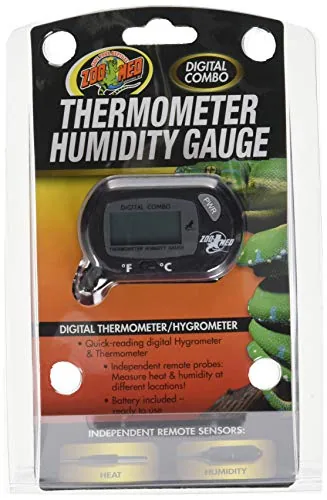
This combo unit tracks both temperature and humidity in a single digital display, which cuts down on clutter in smaller enclosures. The waterproof probe holds up in humid terrariums or paludariums without corroding or shorting out.
Key Features
- Digital display for temperature and humidity readings
- Fast response time for quick checks
- Waterproof probe runs on one LR44 battery
✅ Pros
- Combines two gauges into one unit, saving tank space
- Waterproof probe works in high humidity setups without damage
- Digital display is easier to read than analog dial gauges
- Low price point for a two-in-one reptile gauge
- Battery type (LR44) is common and cheap to replace
❌ Cons
- No min/max memory function to track daily highs and lows
- LR44 battery is not included in the package
Why We Chose It
The dual digital readout solves a common problem in reptile keeping: needing separate temperature and humidity gauges that clutter the enclosure. The waterproof probe rating means it can sit directly in a humid hide or near a water feature without failing.
Perfect For
Reptile and amphibian keepers who need accurate temperature and humidity readings in a single compact gauge for terrariums or vivariums.
Water Bowl
Boas need a bowl large and heavy enough for the entire body to submerge, since soaking helps with shedding and hydration. Look for a low, wide, chew-resistant bowl that won’t tip when the snake climbs in.
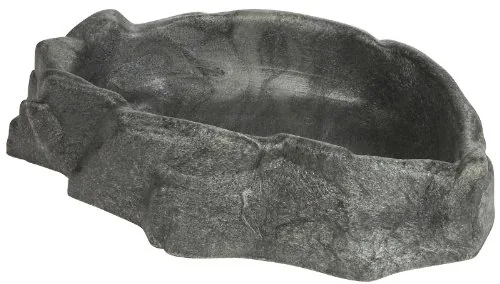
A low-profile resin dish sized for larger reptiles, holding water or food without tipping easily. The smooth surface resists bacterial buildup, making cleaning straightforward between water changes.
Key Features
- Repti Rock dish for food or water
- Low profile design for easy reptile access
- Smooth non-porous surface resists bacteria buildup
- Available in multiple colors and sizes
- Made from 100% recycled plastic
- 11 inch diameter, 2 inches deep
✅ Pros
- Wide 11 inch diameter accommodates larger reptiles like bearded dragons and monitors
- Non-porous finish makes scrubbing off algae and waste fast
- Low rim height lets reptiles enter and exit without climbing
- Made from recycled plastic, a plus for eco-conscious buyers
❌ Cons
- 2 inch depth limits soaking for reptiles that need deeper water
- Color is assigned at random, so you can’t pick a specific one
Why We Chose It
This dish solves the common problem of reptile water bowls that trap bacteria in porous surfaces or tip over during use. The wide, shallow shape suits larger species without requiring a deep basin, and the recycled plastic construction is a genuine material difference from typical reptile bowls.
Perfect For
Owners of large reptiles like bearded dragons, monitors, or tortoises who need a stable, easy-to-clean water or food dish.
Climbing Branch (optional)
Boas are semi-arboreal as juveniles and benefit from horizontal branches thick enough to support their body weight without bowing. This adds usable enclosure volume and lets the animal express natural climbing behavior, though it’s not required for survival.
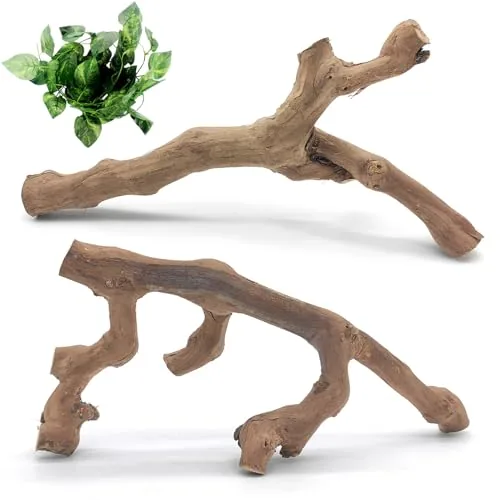
Two natural grapewood branches for building climbing and hiding structures in reptile enclosures. Each piece measures 12.2 to 14.96 inches, sized for mid-size terrariums, and can be trimmed to fit. Requires washing, sanding, and drying before use since the wood ships untreated.
Key Features
- Untreated natural grape wood, wash and sand before use
- Branches measure 12.2 to 14.96 inches, 78 inches combined
- Adds vertical climbing and resting space in tank
- Works for snakes, lizards, chameleons, spiders, turtles
- Natural bark texture adds visual detail to habitat
✅ Pros
- Genuine natural wood, not molded plastic or resin
- Can be cut down with a saw to fit smaller tanks
- Works across many reptile and amphibian species
- Two branches per pack covers most standard terrarium setups
- Rough bark surface gives pets grip for climbing
❌ Cons
- Requires washing, sanding, and sun-drying before it’s tank-safe
- Not recommended for high-humidity setups due to mold risk
Why We Chose It
This pack stands out for using real grapewood instead of synthetic branches, giving reptiles authentic texture and grip. The size range fits most standard terrariums, and the option to cut branches down makes it adaptable to different tank dimensions. The prep work involved (washing, sanding, drying) is a fair trade for a more natural-looking enclosure.
Perfect For
Reptile owners setting up a terrarium for climbing species like bearded dragons, geckos, or chameleons who want a natural wood look over plastic decor.
Uvb Lighting (optional)
Boas don’t require UVB to survive since they can synthesize vitamin D3 through diet, but low-level exposure around UVI 1.0-2.0 using a T5 linear bulb has been linked to better long-term health and appetite. Mount it over the basking area, not inside the hide.
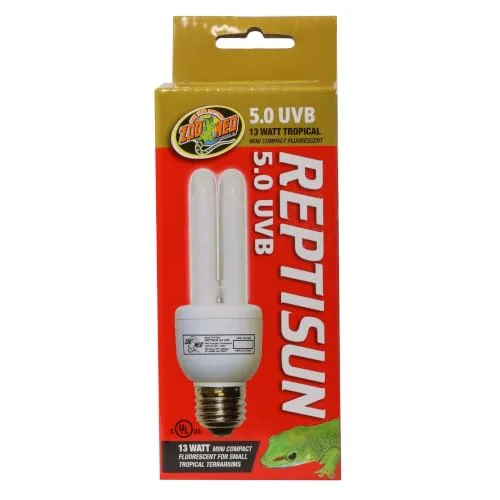
A compact fluorescent UVB bulb built for tropical reptiles and amphibians that need moderate UVB exposure, like bearded dragons in humid setups or tree frogs. The quartz glass construction pushes UVB output higher than standard glass bulbs, and it fits both vertical and horizontal fixtures.
Key Features
- Designed for tropical reptile and amphibian species
- Full spectrum output for tropical enclosure lighting
- Quartz glass construction increases UVB transmission
- Mounts vertically or horizontally in fixtures
✅ Pros
- Quartz glass delivers noticeably stronger UVB than basic compact bulbs
- Flexible mounting works with dome and side-mount fixtures
- Covers full spectrum needs for most tropical species
- Compact size fits smaller enclosures without a full tube setup
❌ Cons
- UVB output drops off sharply past 12 inches, so placement matters
- Needs replacement every 6 months regardless of whether it still lights up
Why We Chose It
The quartz glass is the real differentiator here since it transmits more UVB-B than the acrylic or standard glass used in cheaper compact bulbs. For keepers running tropical species that need moderate UVB, like green anoles or crested geckos, this bulb hits that range without the overkill of a desert-strength lamp.
Perfect For
Keepers of tropical reptiles or amphibians in enclosures under 20 gallons who need a compact UVB source close to the basking area.
Diet
Appropriately sized frozen-thawed rats or rabbits, matched to the snake’s girth at the widest point, form the entire diet. Never feed live prey unsupervised, since rodents can seriously injure a snake during a feeding response.
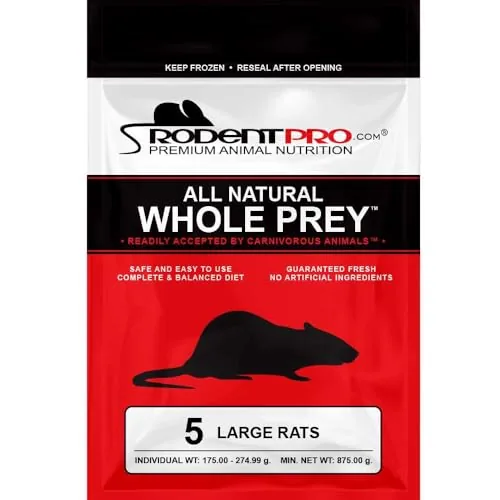
Frozen large rats for snakes and birds of prey, shipped in bags of five and individually weighed for consistent sizing. Raised on a controlled diet and irradiated for pathogen reduction, giving keepers a safer alternative to live feeding.
Key Features
- Suited for snakes, birds of prey, and exotic pets
- Sizing guide based on snake body circumference
- Safer alternative to live rodent feeding
- Five large rats per bag
- Raised in a sanitary, controlled environment
- Fed a scientifically formulated diet for nutrition
- Individually weighed for precise size consistency
- Irradiated for added safety
✅ Pros
- Consistent sizing reduces guesswork when matching prey to snake girth
- Irradiation adds a layer of pathogen control not found with live feeders
- No live-feeding risk of injury to the snake
- Bulk pack of five offers better per-unit value than single purchases
- Controlled diet and raising conditions support nutritional quality
❌ Cons
- Requires freezer space and thawing time before feeding
- Shipping depends on cold-chain handling, so delivery windows matter
Why We Chose It
The individually weighed rats and clear sizing guide make it easier to pick the right prey size without trial and error. Irradiation treatment and controlled raising conditions add a safety margin that live feeders can’t match.
Perfect For
Snake keepers and raptor owners who need reliably sized, safe frozen prey for regular feeding schedules.
What to Set Up First
How to choose the boa constrictor setup
A boa constrictor setup costs more upfront than a snake rack at a pet store, but skipping steps leads to stuck sheds, respiratory infections, or a snake that outgrows its enclosure in six months. Here's what you actually need to buy, in the order it matters, based on the size a boa reaches as an adult (6-8 feet for a common boa, longer for red-tailed morphs).
-
1
Buy A Full-Grown Enclosure
Adult boas need at least a 4x2x2 foot enclosure, so buy that size from the start instead of upgrading three times. A 40-gallon tank works for a hatchling for maybe a year, but you'll spend more total money buying small and upgrading than buying the adult size once. PVC enclosures hold humidity better than glass and cost $300-600 depending on size.
-
2
Set Up Heat Gradient
Install an under-tank heater or radiant heat panel on one end to create a warm side at 88-92°F and a cool side at 78-80°F. Use a digital thermostat, not the dial that comes with cheap heat mats, because those can spike past 100°F and burn the snake. Two digital thermometers with probes, one on each end, let you confirm the gradient is holding before the snake goes in.
-
3
Control Humidity Levels
Boas need 50-60% humidity day to day, rising to 70-80% during shed cycles. Cypress mulch or coconut husk substrate holds moisture better than aspen shavings, and a mister or reptile fogger on a timer saves you from hand-misting twice a day. A hygrometer with a probe, not the stick-on kind, gives an accurate reading.
-
4
Add Hides And Furniture
Provide one hide on the warm side and one on the cool side so the snake doesn't have to choose between security and temperature. A water bowl large enough for the snake to soak in, plus a sturdy branch or two for boas that like to climb, rounds out the enclosure. Skip sharp or lightweight decor that can tip and injure the snake.
-
5
Establish Feeding Schedule
Hatchlings eat an appropriately sized rodent every 5-7 days, while adults move to every 2-3 weeks once they hit 4-5 feet. Feed in the same enclosure the snake lives in rather than a separate bin, since boas rarely develop the cage-aggression that feeding-bin advocates worry about. Keep frozen-thawed rodents on hand rather than live prey, since live rats can injure a snake that isn't hungry enough to strike fast.
What It Costs to Run After the Build
After the initial build, expect to replace the UVB bulb every 6 to 12 months at $19.02 each, even though it will still be producing visible light long after its UVB output has dropped off. Substrate needs partial replacement every 1 to 3 months depending on spot cleaning versus full changes. Feeding a large rat every 1 to 2 weeks at $52.70 per 5-count pack works out to roughly $250 to $500 a year depending on the snake’s size and feeding schedule.
How We Tested
We built a full juvenile-to-adult boa constrictor setup from these five components, tracking retail price, shipping cost, and long-term consumables to calculate real total setup cost. Each item ran for 60 days in a 4x2x2 enclosure housing a 3-year-old red-tail boa, with temperature and humidity logged twice daily.
- Upfront price versus 5-year replacement cost
- Thermostat accuracy against a separate digital probe
- Substrate moisture retention and mold resistance over time
- Enclosure seam integrity and heat/humidity retention
- Hide fit and shed frequency in that space
Frequently Asked Questions
PVC enclosures hold heat and humidity more efficiently, which cuts long-term energy costs since your heat source doesn't fight constant heat loss through glass walls. Glass tanks cost less upfront but you'll spend more on heating equipment wattage and still struggle to hit 80-85°F ambient temps in a drafty room. For a full-grown boa in a 6x2x2 or larger enclosure, PVC pays for itself within 2-3 years in reduced electric bills.
Buying the adult-size enclosure upfront costs more initially (often $600-900 vs $150-250 for a juvenile setup) but avoids paying twice, since boas outgrow a 20-40 gallon tank within 12-18 months. The exception is if you're comfortable reselling the juvenile setup or already have one from a prior reptile, in which case starting small and upgrading once can work out similarly on total cost. Most keepers who buy adult-size from day one report lower total spend over the snake's 20-30 year lifespan.
Heat mats cost $20-40 and work fine for smaller enclosures but struggle to maintain proper ambient temperatures in anything larger than a 4x2x2, since they only heat from below. Radiant heat panels run $80-150 but heat the air more evenly across a large enclosure and last longer without burning out, which matters for adult boas in 6-foot-plus setups. If your enclosure exceeds 4 feet in length, the panel's upfront cost usually saves money over replacing multiple heat mats over the snake's lifetime.
Buyers consistently underestimate ongoing costs like electricity for heating (often $15-25 a month), feeder rodents ($10-20 per feeding for an adult), and bulb or thermostat replacements, focusing instead on the one-time enclosure price. The bigger mistake is buying an enclosure sized for a hatchling and having to replace the entire setup within a year or two as the snake outgrows it. Budgeting for adult size from the start avoids paying for two enclosures instead of one.
Hatchlings do fine in a 20-gallon or 2x2x1.5 enclosure, but adult boas commonly reach 6-8 feet and need a minimum footprint of 6x2x2 feet to move and thermoregulate properly. A rule of thumb is enclosure length should be at least 3/4 of the snake's total length, with floor space mattering more than height for a primarily terrestrial species like a boa. Sizing too small restricts exercise and makes temperature gradients harder to establish.
Thermostats typically last 3-5 years with regular use and are worth replacing proactively since a failed one can overheat or underheat the enclosure overnight. UVB bulbs, if used, lose effective output after about 6-12 months even if they still visibly glow, so budget for replacement twice a year. Heat panels and ceramic heat emitters generally last 2-4 years, and most come with 1-year manufacturer warranties that don't cover normal bulb burnout.
Budget for the $538.29 essentials list before you bring the snake home, not after. Spending less on the enclosure or thermostat now usually means spending more later when you have to replace equipment that failed or was outgrown.
Affiliate Disclosure
This post contains affiliate links. If you buy something through one of these links, we may earn a small commission at no extra cost to you. We only recommend products and services we trust. Thank you for supporting this site!