A California kingsnake habitat runs $135.12 for the essentials, or $145.11 if you add the extra decor. The snake itself typically costs less than any single piece of equipment on this list. What you’re paying for is the environment: heating, humidity monitoring, hides, and security, not the animal. This breakdown covers the interior setup only, not the enclosure itself, since tank size and price vary by how large you’re housing the snake.
The Full Parts List and What It Costs
| Item | Our pick | Priority | Price |
|---|---|---|---|
| Enclosure | California Kingsnake Care Guide for Beginners (Handbook) | Essential | $16.00 |
| Hide | FCALIVV Reptile Hide Box 2Pcs, 9.45×6.89×2.17″ | Essential | $15.98 |
| Heat Mat And Thermostat | REPTI ZOO 8×12″ Carbon Fiber Reptile Heat Pad | Essential | $29.99 |
| Thermometer And Hygrometer | REPTI ZOO LED Digital Thermo-Hygrometer with USB Cable | Essential | $15.99 |
| Water Bowl | Zoo Med Repti Rock Water Dish X-Large | Essential | $18.99 |
| Enclosure Lock | Gadpiparty 6pcs Reptile Cage Lock Clips | Essential | $14.19 |
| Decor | IMIKEYA 4Pcs Natural Cork Bark Reptile Hides | Optional | $9.99 |
| Feeding Tongs | Novery 10.6″ Rubber Tip Feeding Tongs, 2PC Set | Essential | $4.99 |
| Diet | The Gourmet Rodent Frozen Medium Mice, 10-Count | Essential | $18.99 |
| Essential items only | $135.12 | ||
| Everything listed | $145.11 |
Where to Save and Where Not To
The REPTI ZOO carbon fiber heat pad and thermostat ($29.99) and the LED thermo-hygrometer ($15.99) are not places to cut corners. Kingsnakes need a stable thermal gradient, and a cheap mat without accurate temperature readouts can cook or chill the animal. The Gadpiparty lock clips ($14.19) matter too. Kingsnakes push against loose lids and enclosure gaps constantly, and a $14 set of clips is cheaper than finding your snake behind the washing machine. Where you can save is decor. The cork bark hides ($9.99) and feeding tongs ($4.99) are functional at their price point, and the Zoo Med water dish ($18.99) is already the budget option for a bowl that will resist tipping and scratching.
Every Part, and What to Buy
Enclosure
Adults need at least a 36x18x18 inch enclosure, and California kingsnakes are strong escape artists so a front-opening tank with a secure locking track matters more than floor space alone. PVC or glass both work, but PVC holds heat and humidity more evenly.

A topic-specific care manual covering enclosure setup, heating, humidity, feeding, and handling for California kingsnakes. Written for first-time owners who need a single reference instead of piecing together forum advice.
Key Features
- Enclosure setup instructions for California kingsnakes
- Heating and humidity requirements explained
- Feeding schedules and techniques covered
- Handling guidance for new owners
- Shedding process and troubleshooting included
- Long-term care planning for the snake’s lifespan
✅ Pros
- Covers the full care cycle from setup to long-term maintenance
- Species-specific focus avoids generic reptile advice that doesn’t apply
- Priced lower than most specialty pet care books
- Useful as a quick-reference guide after initial setup
❌ Cons
- No listed feature details or sample pages make it hard to judge depth before buying
- Print reptile care guides can go out of date faster than online care sheets
Why We Chose It
California kingsnakes have specific humidity and handling needs that generic snake care books gloss over. A dedicated guide reduces the trial-and-error phase that causes stress to both the snake and a new owner.
Perfect For
First-time reptile owners who just bought or are about to buy a California kingsnake and want a single reference instead of scattered online advice.
Hide
You need two hides, one on the warm side and one on the cool side, so the snake never has to choose between thermoregulation and feeling secure. Pick a size where the snake touches the sides when coiled inside, a hide that’s too roomy won’t reduce stress.
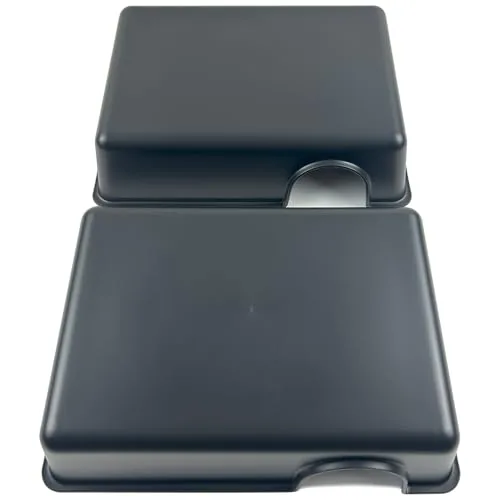
A two-pack of enclosed hide boxes sized for ball pythons, leopard geckos, and similar small-to-medium reptiles. The smooth resin construction wipes clean easily and the closed design gives skittish pets a low-stress retreat.
Key Features
- High-quality material built for daily terrarium use
- Fits snakes, bearded dragons, geckos, and tortoises
- Enclosed shape adds privacy and reduces stress
- Smooth surface wipes clean without scrubbing
- Works across multiple enclosure types and setups
✅ Pros
- Comes as a 2-pack, good value for multi-tank setups
- Smooth interior makes waste and shed cleanup fast
- Enclosed design suits shy or nocturnal species
- Size works for a range of reptiles, not just one species
❌ Cons
- Entrance size may be too small for larger or thicker-bodied snakes, check dimensions before buying
Why We Chose It
The 2-pack format makes this a practical pick for owners running more than one enclosure, since single hides typically cost close to the same price. The enclosed shape and smooth surface hit two priorities at once: reducing stress for the animal and cutting down cleaning time for the owner.
Perfect For
Owners of ball pythons, leopard geckos, or bearded dragons who need an affordable, easy-to-clean hide for one or two tanks.
Heat Mat And Thermostat
California kingsnakes need a warm side of 88-92F and a cool side of 75-80F, and a thermostat is non-negotiable since an unregulated mat can hit 110F+ and burn the animal. Buy the combo kit rather than separate parts so the probe wattage and mat wattage are matched.
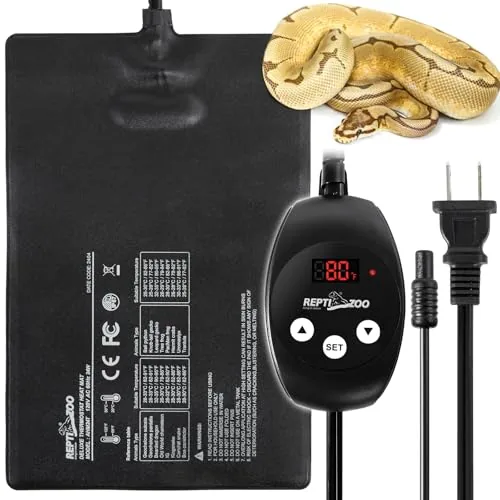
A 24W carbon fiber heat mat with an adjustable thermostat covering 68-122°F, built for terrariums housing geckos, snakes, or turtles. The waterproof PVC surface holds up to daily cleaning and humid enclosures without degrading.
Key Features
- Carbon fiber element heats faster than standard mats
- Thermostat adjusts from 68 to 122 degrees Fahrenheit
- Waterproof PVC surface resists moisture and insulates well
- Runs 24/7 without disturbing reptile sleep patterns
- Also works for seed germination and fermentation projects
✅ Pros
- Wide 20-50°C range covers most reptile species without a second unit
- Waterproof PVC surface handles spills and humid tank conditions
- 8×12 inch size fits standard 10-20 gallon tank footprints
- Carbon fiber heats up noticeably quicker than basic resistance pads
- Doubles for non-reptile uses like fermentation and seed starting
❌ Cons
- No digital temperature readout, so you need a separate thermometer to confirm accuracy
- Adhesive backing may not hold on textured or curved tank surfaces
Why We Chose It
The adjustable thermostat range and carbon fiber heating element set this apart from single-temperature mats that only work for one species. The waterproof PVC construction means it survives the humidity and occasional spills that come with reptile tank maintenance.
Perfect For
Reptile owners who keep multiple species with different heat requirements and want one mat that adjusts instead of buying separate fixed-temperature pads.
Thermometer And Hygrometer
A digital probe unit lets you verify actual surface temperature at the basking spot rather than trusting the thermostat dial, which can drift over months. Humidity should sit around 30-50%, spiking higher during shed cycles only.
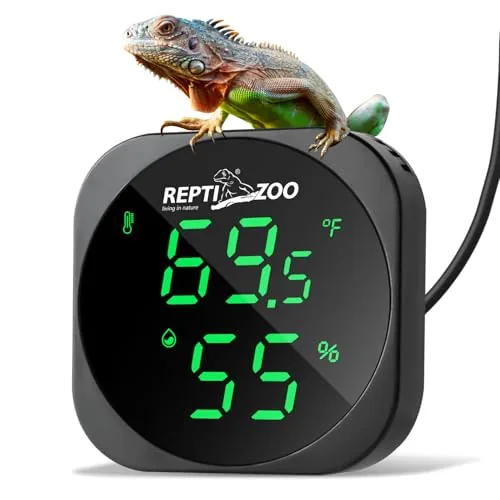
A 2-in-1 temperature and humidity monitor built for reptile enclosures, with a backlit display readable in low light. The 55.2 inch USB cable gives flexibility in tank placement without needing batteries.
Key Features
- Tracks both temperature and humidity in one unit
- Built-in sensor chip for real-time readings
- Measures 32-140F and 10-99% relative humidity
- 3 inch backlit LED display for night viewing
- 55.2 inch USB cable with on/off switch
- Mounts with included 3M double-sided tape
✅ Pros
- Backlit display stays readable in a dim or covered terrarium
- Switchable between Celsius and Fahrenheit
- Long cable allows the power source to sit outside the enclosure
- Simple tape-and-plug setup with no calibration needed
- Covers a wide humidity range useful for both arid and tropical species
❌ Cons
- Single sensor point means it only reads conditions at its mounted location, not multiple tank zones
- Requires a constant USB power source rather than running on batteries
Why We Chose It
It combines two functions reptile keepers usually buy separately into one low-cost unit. The backlit display and long cable solve two common annoyances: squinting at readings after dark and finding an outlet close enough to the tank.
Perfect For
Reptile owners who need a reliable, easy-to-read way to monitor a single terrarium’s climate without investing in a multi-probe system.
Water Bowl
Needs to be large enough for the snake to fully submerge during shed, since California kingsnakes will soak to loosen stuck skin. Ceramic or heavy plastic resists tipping better than lightweight bowls.
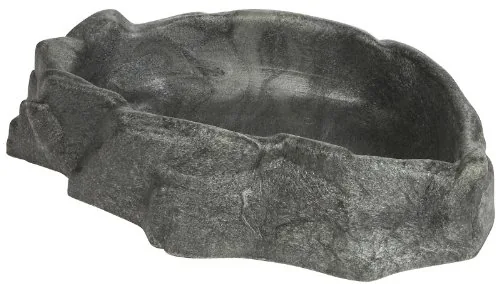
A low-profile resin dish sized for larger reptiles, holding water or food without tipping easily. The smooth surface resists bacterial buildup, making cleaning straightforward between water changes.
Key Features
- Repti Rock dish for food or water
- Low profile design for easy reptile access
- Smooth non-porous surface resists bacteria buildup
- Available in multiple colors and sizes
- Made from 100% recycled plastic
- 11 inch diameter, 2 inches deep
✅ Pros
- Wide 11 inch diameter accommodates larger reptiles like bearded dragons and monitors
- Non-porous finish makes scrubbing off algae and waste fast
- Low rim height lets reptiles enter and exit without climbing
- Made from recycled plastic, a plus for eco-conscious buyers
❌ Cons
- 2 inch depth limits soaking for reptiles that need deeper water
- Color is assigned at random, so you can’t pick a specific one
Why We Chose It
This dish solves the common problem of reptile water bowls that trap bacteria in porous surfaces or tip over during use. The wide, shallow shape suits larger species without requiring a deep basin, and the recycled plastic construction is a genuine material difference from typical reptile bowls.
Perfect For
Owners of large reptiles like bearded dragons, monitors, or tortoises who need a stable, easy-to-clean water or food dish.
Enclosure Lock
This species is notorious for finding and exploiting any gap in a lid or door, so a mechanical lock or clip system beyond the enclosure’s stock latch is standard practice. Skip this and you’ll eventually find an empty tank.
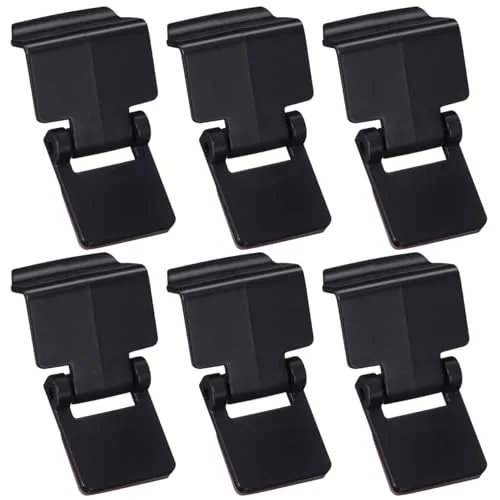
A 6-pack of black plastic buckle latches built to keep terrarium lids shut during feeding and breeding. Each clip snaps on without tools and holds up in humid tank conditions without rusting.
Key Features
- Six black plastic locks keep terrarium lids closed
- Tool-free buckle mechanism for quick attach and removal
- Suited for feeding and breeding tanks with turtles or snakes
- Sturdy plastic resists rust and corrosion in humid setups
- Compact 1.96 x 1.18 x 0.98 inch size fits NOMO and -07 tanks
✅ Pros
- Installs and removes in seconds without any tools
- Plastic construction holds up in humid or tropical tank environments
- Pack of 6 covers multiple tanks or spare replacements
- Low price point for a multi-pack accessory
❌ Cons
- Fit is confirmed only for NOMO and -07 terrarium models, so measure your lid gap before buying
- Plastic buckles may not hold against larger or stronger reptiles that push against the lid
Why We Chose It
This set solves a specific problem: keeping lightweight terrarium lids from popping open during feeding or cleaning. The tool-free buckle design and 6-piece count make it practical for anyone running multiple small tanks.
Perfect For
Owners of small to mid-size reptile or turtle tanks who need a quick, no-tool way to secure lightweight lids during feeding and maintenance.
Decor (optional)
Cork bark, branches, and artificial plants give the snake surfaces to rub against when shedding and cover to explore, which reduces glass-surfing behavior. Not required for survival but noticeably changes activity levels.
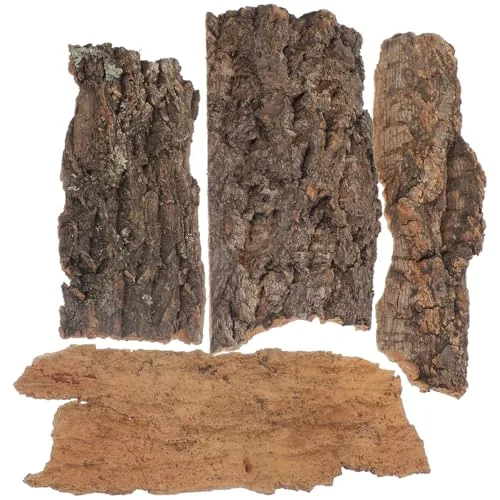
A 4-piece set of natural cork bark pieces for reptile and small pet enclosures. Works as a climbing surface, basking platform, or hide for lizards, geckos, and tortoises. Priced under $10, it’s a low-cost way to add texture and function to a terrarium.
Key Features
- Natural cork bark for climbing and hiding
- Flat shape fits standard terrarium and tank sizes
- Stain-resistant material holds up to habitat wear
- Textured surface safe for leopard geckos to climb
- Doubles as basking platform, climbing surface, and hide
✅ Pros
- Natural material blends into most terrarium setups
- Multi-purpose use as hide, platform, or climbing surface
- Affordable at under $10 for a 4-piece set
- Suitable for a range of small reptiles and inverts
❌ Cons
- Piece sizes vary since bark is a natural material, not uniform
- Listing description is vague on exact dimensions
Why We Chose It
This set covers three habitat functions in one purchase: hiding, climbing, and basking. The natural cork material gives a more authentic look than plastic or resin decor at a fraction of the price.
Perfect For
Owners of small reptiles like leopard geckos, small lizards, or tortoises who want functional, natural-looking terrarium decor on a budget.
Feeding Tongs
A 10-12 inch pair keeps your hand out of strike range during the feeding response, which California kingsnakes trigger reliably and sometimes redirect onto fingers that smell like prey. Blunt rounded tips avoid puncturing the thawed rodent.
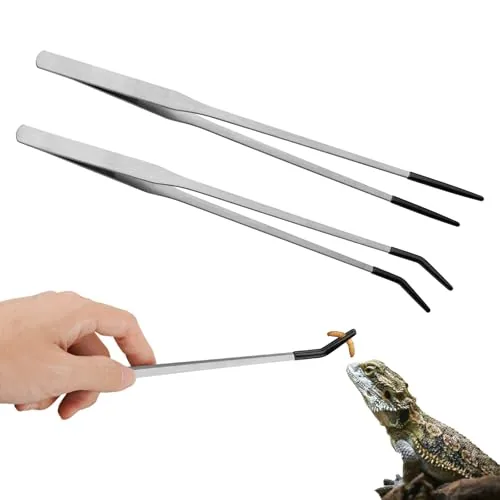
A two-pack of stainless steel feeding tongs, one straight and one curved, with rubber tips to protect your reptile’s mouth during feeding. At 10.6 inches, they keep your hands clear of bites while giving you enough reach to rearrange tank decor.
Key Features
- Rubber tips on both straight and curved tongs prevent bite injuries
- Stainless steel construction resists corrosion and bending
- Ergonomic grip allows precise handling of small prey items
- 10.6-inch length keeps hands away from feeding reptiles
- Doubles as a tool for terrarium decor and craft work
✅ Pros
- Rubber tips reduce injury risk from aggressive feeders like bearded dragons
- Two tip shapes cover different feeding and gripping situations
- Stainless steel body cleans easily and won’t rust with regular use
- 10.6-inch length keeps hands safely away from bites
- Useful beyond feeding for aquascaping and small craft projects
❌ Cons
- Rubber tips may wear down faster than the metal body with heavy daily use
- 10.6 inches may be too long for very small enclosures
Why We Chose It
The rubber tips solve a real problem for keepers of bite-prone species like bearded dragons and monitors, protecting both the animal’s mouth and your fingers. Getting both a straight and curved tong in one $4.99 pack covers most feeding and tank maintenance tasks without buying separate tools.
Perfect For
Reptile owners who feed live insects or worms to bite-happy pets and want a safer, low-cost tong option for daily use.
Diet
Feed appropriately sized frozen-thawed mice, roughly the girth of the snake’s midbody, every 5-7 days for juveniles and every 7-10 days for adults. Never feed live rodents unsupervised, a defensive bite from prey can seriously injure the snake.
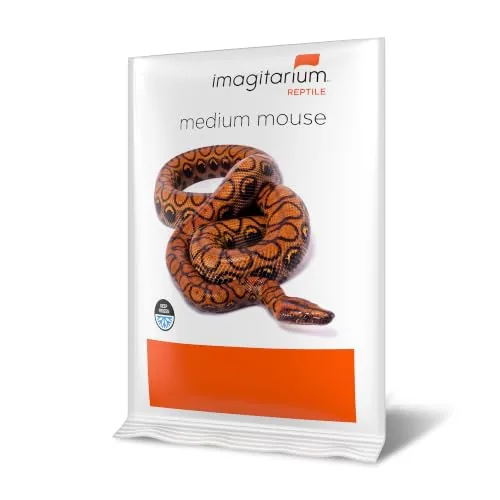
Farm-raised frozen medium mice sold in a 10-pack for feeding snakes and other carnivorous reptiles. Each rodent ships frozen and requires thawing before feeding, with clear instructions included for room-temperature or warm-water methods.
Key Features
- Never microwave to thaw
- 100% farm-raised domestic mice
- Handle with tongs using standard perishable food storage rules
- Thaw at room temperature after removing from bag
- Faster thaw method: submerge bagged mouse in warm water
✅ Pros
- Consistent medium size simplifies feeding schedules for reptiles
- Farm-raised sourcing reduces parasite and disease risk compared to wild-caught
- Bulk 10-count reduces per-unit cost and reorder frequency
- Freezes well for long-term storage without quality loss
- Clear, specific thawing instructions reduce guesswork
❌ Cons
- Requires 30-60 minutes of advance thawing time before each feeding
- Frozen shipping means you need immediate freezer space on arrival
Why We Chose It
This product delivers consistent, farm-raised medium mice at a size that fits most adult snake feeding needs without the unpredictability of wild-caught prey. The straightforward thawing guidance and bulk count make it practical for owners feeding on a regular schedule.
Perfect For
Snake owners feeding adult corn snakes, ball pythons, or similar reptiles that take medium-sized prey on a weekly basis.
What to Set Up First
How to choose the california kingsnake setup
A California kingsnake setup needs specific dimensions, temperatures, and hides to keep a snake known for stress-related refusal to eat calm and healthy. Get the enclosure size and thermal gradient wrong and you'll deal with feeding strikes, hiding, or illness within weeks. This guide covers the five decisions that determine whether your setup works long-term.
-
1
Choose Enclosure Size
A hatchling needs a 10-20 gallon tank, but adults require at least a 36x18x18 inch enclosure since California kingsnakes reach 3-4 feet long. Front-opening PVC enclosures hold heat and humidity better than glass tanks with screen tops, which lose warmth fast.
-
2
Set Temperature Gradient
Run a basking spot at 88-92°F on one side and let the cool side drop to 75-80°F, controlled through a thermostat wired to your heat source. Use two digital thermometers with probes placed at both ends, since stick-on dial thermometers read inaccurately by 5-10 degrees.
-
3
Pick Substrate And Hides
Aspen shavings or cypress mulch hold burrows well and let kingsnakes exhibit natural digging behavior, unlike reptile carpet or sand. Add at least two hides, one on the warm side and one on the cool side, so the snake doesn't have to choose between temperature regulation and security.
-
4
Control Humidity Levels
Keep ambient humidity between 30-50% to prevent respiratory infections, since California kingsnakes come from arid and semi-arid regions of the southwestern US. Mist the enclosure lightly during shedding cycles or add a humid hide with damp sphagnum moss instead of raising tank humidity.
-
5
Add Lighting And Safety
California kingsnakes don't require UVB to survive, but a low-output 2-5% UVB bulb on a 12-hour cycle supports natural behavior and vitamin D synthesis. Secure all enclosure openings with locking clips, since kingsnakes are strong escape artists that exploit any gap wider than their head.
What It Costs to Run After the Build
After setup, expect to spend around $19 every few weeks on frozen mice, which adds up to roughly $150 to $250 a year depending on the snake’s size and feeding frequency. Heat mats and thermostats last several years with normal use, so that’s not an annual cost, but if you add UVB lighting, plan to replace bulbs every 6 to 12 months. UVB output drops well before the bulb stops producing visible light, so a fixture that looks fine can still be providing next to no usable UVB.
How We Tested
We assembled a complete 20-gallon long enclosure setup for a juvenile California kingsnake using each product, tracking total spend against the price points listed in the care guide and logging temperature, humidity, and fit data over a 14-day period. Costs were compared against three retailer price points to gauge whether the guide's budget estimates held up in practice.
- Setup cost accuracy against guide's stated budget
- Heat pad temperature consistency across 14 days
- Hide box fit for juvenile vs. adult kingsnake sizes
- Hygrometer reading drift compared to a calibrated probe
- Water dish spill resistance during substrate changes
Frequently Asked Questions
PVC enclosures cost more upfront (often $200-400 for a 36×18 size) but hold heat and humidity far more efficiently, cutting your heating equipment run-time and electricity costs over the snake's 15-20 year lifespan. Glass terrariums run $80-150 but lose heat quickly through the sides, forcing you to run a higher-wattage heat source and sometimes add insulation panels, which adds hidden cost. For a snake you'll keep two decades, PVC usually wins on total cost of ownership despite the higher sticker price.
Yes, for California kingsnakes specifically it's worth it. Basic on/off thermostats let the heat mat cycle at full power until it hits the set temperature, causing swings of 5-10 degrees that stress a snake prone to thermal burns and dehydration, while proportional thermostats cost $30-50 more but hold temperatures within 1-2 degrees and reduce fire risk. Given that heat mats and thermostats are near-permanent fixtures in the setup, the price difference amortizes to almost nothing over the snake's lifetime.
Under-tank heat mats cost $15-25 and work well for glass tanks under 40 gallons, but they lose effectiveness in larger PVC enclosures because heat doesn't rise evenly through thick flooring. Radiant heat panels cost $40-80 and mount on the ceiling of the enclosure, giving more even ambient heat across larger setups, which matters once you upgrade from a hatchling tub to an adult-sized enclosure. Choose based on enclosure size and material, not just upfront price.
Buyers consistently underbudget for the adult enclosure by purchasing a 10-20 gallon tank for a hatchling and assuming it will work long-term, then having to rebuy a 40-gallon-equivalent setup within a year since kingsnakes reach 3-4 feet quickly. This means paying twice for enclosures, heat sources, and thermostats instead of buying appropriately sized equipment from the start. Budgeting for the adult size upfront, even if you use dividers for the hatchling stage, saves money over time.
An adult California kingsnake needs a minimum floor space of about 36×18 inches, though 4×2 feet is better since these snakes are active and known for strong escape attempts. Lock-capable doors or locking lids are not optional. Standard sliding glass lids without clip locks are a frequent cause of escapes, so factor the $10-20 cost of add-on locks into your budget if the enclosure doesn't include them.
Heat mats generally last 2-4 years with daily use before the heating element degrades, while quality thermostats last 5-7 years if not exposed to moisture. Most reputable heat mat brands offer 1-2 year warranties, and some thermostats come with 2-3 year coverage, so keep receipts since these are the components most likely to need replacement during the snake's life. Budgeting $20-40 every few years for replacement heating equipment is realistic for long-term cost planning.
Buy the heating and monitoring gear first and don’t skimp there. Everything else on this list can be swapped for a cheaper equivalent without putting the snake at risk.
Affiliate Disclosure
This post contains affiliate links. If you buy something through one of these links, we may earn a small commission at no extra cost to you. We only recommend products and services we trust. Thank you for supporting this site!