A cockatiel setup runs $258.64 for the essentials and $276.62 if you add every item on this list. The bird itself, typically $75-150 depending on where you buy, isn’t the expense. The cage, lighting, and feeding gear are what add up, and the 52-inch cage alone accounts for over a third of the total at $91.99.
The Full Parts List and What It Costs
| Item | Our pick | Priority | Price |
|---|---|---|---|
| Enclosure | Yaheetech 52″ Rolling Bird Cage for Small Parrots | Essential | $91.99 |
| Perches | kathson Natural Grapevine Bird Perch, 3-Pack | Essential | $17.09 |
| Full Spectrum Lighting | Oiibo AvianSun 2.4% UVB Bird Cage Light Kit | Essential | $52.99 |
| Cage Liner | HA SHI Unscented Newsprint Bird Cage Liners, 120-Pack | Essential | $27.75 |
| Food And Water Dishes | MotBach 3-Pack Stainless Steel Bird Feeding Bowls | Essential | $9.99 |
| Carrier | Suertree Bird Carrier with Stainless Steel Mesh & Bottom Cleanout | Essential | $36.90 |
| Toys | BBjinronjy Sola Ball Bird Toys, 2-Pack | Optional | $8.99 |
| Bath | Penn-Plax Bird Bath with Mirror – Compact Cage Attachment | Optional | $8.99 |
| Diet | ZuPreem FruitBlend Pellets for Cockatiels & Conures, 2 lb | Essential | $16.64 |
| Cleaning Supplies | Nature’s Miracle Bio-Enzymatic Bird Cage Cleaner, 24 oz | Essential | $5.29 |
| Essential items only | $258.64 | ||
| Everything listed | $276.62 |
Where to Save and Where Not To
The UVB lighting is not a place to cut corners. Cockatiels kept without full spectrum light develop calcium deficiencies over time, so the $52.99 Oiibo kit is a real cost of keeping the bird healthy, not an upsell. The cage size matters more than the cage brand: a smaller enclosure than the 52-inch model will save you money up front but cost you in a bored, stressed bird. Where you can economise: the toys ($8.99 for two) and the bath ($8.99) are nice-to-haves, and generic stainless dishes ($9.99 for three) work as well as branded ones.
Every Part, and What to Buy
Enclosure
Cockatiels need a minimum of 20x20x24 inches, larger for a pair, with horizontal bar spacing of 1/2 to 5/8 inch so a head can’t slip through. Horizontal bars matter more than floor space since cockatiels climb as much as they perch.
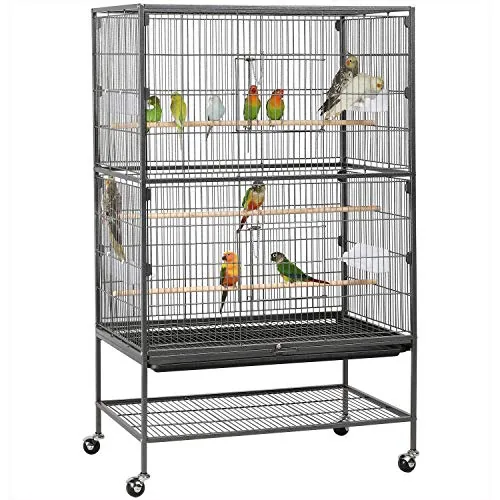
This 52-inch bird cage gives cockatiels, lovebirds, and small conures a roomy 31.1 x 20.5 x 37.2 inch interior with tight 5/8 inch bar spacing to prevent escapes. The powder-coated metal build and rolling stand make it a practical long-term home that’s easy to move and clean.
Key Features
- Interior measures 31.1″ L x 20.5″ W x 37.2″ H with 5/8″ bar spacing
- 52″ height including 14.8″ rolling stand for eye-level viewing
- Powder-coated metal construction with water-resistant hammered finish
- Two front doors with latches, 10.4″ L x 8″ W opening
- Pull-out tray with metal grate separates birds from droppings
- Four-wheel rolling stand with smooth ball-shaped casters
✅ Pros
- Solid powder-coated metal holds up well to daily use and moisture
- Pull-out tray and grate system make cleaning fast
- Rolling stand lets you reposition the cage without lifting it
- Dual front doors simplify feeding and rearranging perches or toys
- Bar spacing is tight enough to stop small birds from squeezing out
❌ Cons
- 5/8″ bar spacing rules out larger parrots like African greys or amazons
- Single pull-out tray may need daily emptying with messier species
Why We Chose It
The combination of a genuinely spacious interior, tight bar spacing, and a mobile stand covers what most small-to-medium bird owners actually need. The powder-coated finish and pull-out tray system show attention to long-term durability and daily maintenance rather than just looks.
Perfect For
Owners of cockatiels, lovebirds, small conures, or parakeets who want a roomy, mobile cage without stepping up to a large parrot enclosure.
Perches
Varying perch diameter between 1/2 inch and 3/4 inch prevents the constant pressure points that cause bumblefoot. Natural wood dowels with irregular surfaces work better than uniform plastic or sandpaper perches, which wear down foot pads unevenly.
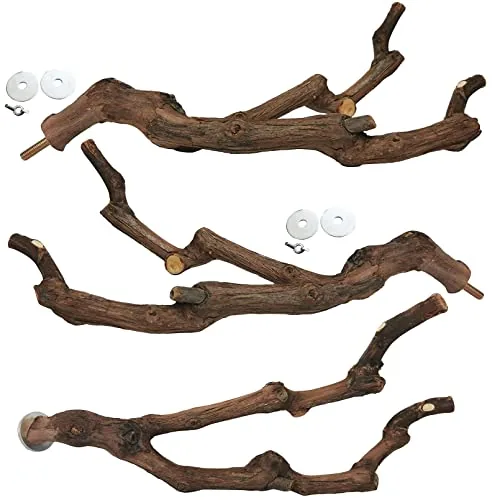
These are unprocessed grapevine branches sized for small to medium birds, with a rough bark surface that helps wear down claws naturally. The wing nut mounting system means you can swap them into most cages without tools. Since each piece is a real branch, shapes and thickness vary slightly between the three included.
Key Features
- Made from natural, unpainted wild grapevine wood
- Installs with built-in bolt and wing nut, no tools needed
- About 9 inches long, 0.7 to 1.1 inch diameter
- Textured bark surface improves grip and claw conditioning
- Chewable, paint-free material satisfies natural gnawing instinct
✅ Pros
- Unpainted natural wood is safe for chewing
- Tool-free installation with wing nut and bolt
- Varying branch diameters help exercise foot muscles
- Textured surface reduces slipping on the perch
- Three perches per pack cover multiple cage spots
❌ Cons
- Natural branches vary in shape and thickness, so fit isn’t uniform
- Diameter may be too narrow for larger parrot species
Why We Chose It
This perch uses raw, unpainted grapevine instead of dyed or coated dowels, which matters for birds that chew constantly. The variable diameter across the three branches gives feet a workout that a uniform plastic perch can’t. Installation takes minutes since the wing nut and bolt are already built into each piece.
Perfect For
Owners of budgies, cockatiels, or lovebirds who want a natural chew-safe perch that also helps maintain claw length.
Full Spectrum Lighting
Indoor cockatiels kept away from unfiltered sunlight need a UVB source rated around 5.0 to synthesize vitamin D3 for calcium metabolism. Place the fixture within 12 inches of perches with no glass or plastic in between, since both block UVB transmission.
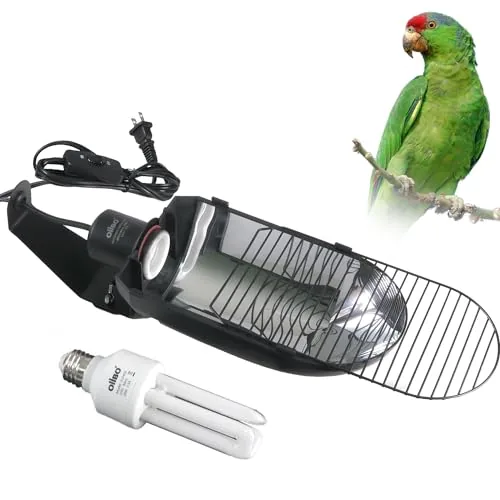
This kit pairs a U-shaped reflector hood with a 20W compact fluorescent bulb rated at 2.4% UVB output, aimed at supporting vitamin D3 synthesis in caged birds. It mounts without tools using a bolt-through clamp and includes a protective grill to keep the bulb away from beaks and feathers.
Key Features
- 2.4% UVB/UVA bulb supports vitamin D3 and calcium metabolism
- U-shaped reflector boosts brightness, supports bulbs up to 50W
- One-touch switch with built-in ballast prevents flicker
- Bolt-through mount and clip-on grill require no tools
- E26 socket fits small to medium wire cages
✅ Pros
- Delivers measurable UVB output for bone and metabolic health
- Tool-free bolt-through mounting saves setup time
- Ballast starts instantly without flickering
- Safety grill keeps bulb protected from bird contact
- 12-month manufacturer support included
❌ Cons
- Only rated for small and medium cages, not large aviaries
- Included bulb is 20W even though fixture supports up to 50W
Why We Chose It
This kit stands out for combining a functional UVB source with practical mounting hardware rather than relying on a generic clamp. The flicker-free ballast and reinforced grill address two common complaints with cheaper bird lighting kits.
Perfect For
Owners of budgerigars, cockatiels, parakeets, canaries, or small doves housed in wire cages who need a reliable UVB source without complex installation.
Cage Liner
Paper-based liner on the tray floor lets you monitor droppings daily for early signs of illness. Skip wood shavings like cedar or pine, since their aromatic oils irritate a bird’s respiratory system.
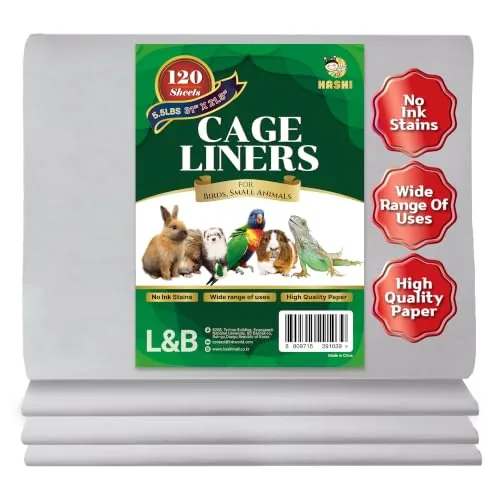
These 31 x 21.5 inch newsprint sheets are sized for large bird cages, reptile terrariums, and rabbit hutches, cutting down on daily cutting and taping. The ink-free, unscented paper is safe near food and water dishes, and the 120-sheet count means you won’t run out mid-month.
Key Features
- 120 flat sheets, 31 x 21.5 inches, for regular changes
- Large size fits big cages, terrariums, and small animal habitats
- Unprinted, unscented newsprint gives an ink-free surface
- Soiled sheets lift out fast for quick disposal
- Doubles as packing paper, wrapping material, or craft surface
✅ Pros
- One large sheet covers most trays without cutting or overlapping
- No ink or fragrance, so it’s safe near food and water dishes
- Fast lift-out-and-replace design cuts down daily cleaning time
- 120-sheet count covers weeks of changes for most single-cage setups
- Extra sheets are usable for packing, wrapping, or drawing projects
❌ Cons
- Plain newsprint doesn’t absorb liquid as well as padded or gel liners
- Sheets need trimming to fit smaller or irregularly shaped trays
Why We Chose It
The 31 x 21.5 inch size is genuinely large enough to cover big cage trays in one piece, which most competing newsprint liners don’t offer. Combined with the unscented, ink-free paper, it’s a straightforward option for owners who want fewer seams and no added chemicals near their animals.
Perfect For
Owners of large birds, reptiles, or rabbits who change liners often and want a big, ink-free sheet that doesn’t require piecing together smaller liners.
Food And Water Dishes
Stainless steel dishes resist the bacterial buildup that plastic develops in scratches over time. Fit at least three cups total, one for pellets, one for fresh food, one for water, since cockatiels foul water dishes quickly by dunking food in them.
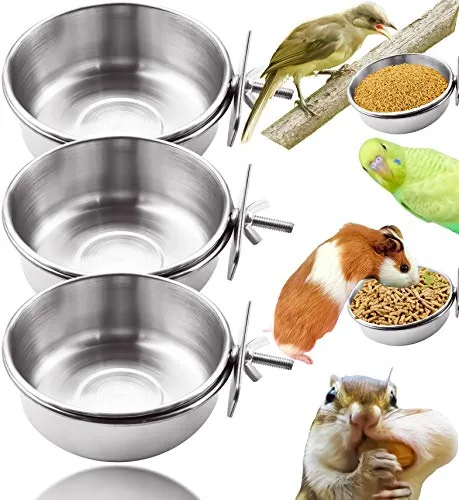
Three stainless steel cups with clip-on brackets for cages housing birds, hamsters, or guinea pigs. Each bowl measures 3.9 inches across and mounts to cage bars to stop spills. Simple two-piece design pulls apart for quick cleaning.
Key Features
- Stainless steel bowl, 3.9 inch diameter, 1.8 inch height, 113g
- Two-part design: removable bracket plus steel bowl
- Clamps to cage bars, mounts inside or outside
- Compatible with parrots, parakeets, hamsters, guinea pigs, and similar pets
- Set includes three bowls
✅ Pros
- Stainless steel resists denting and won’t crack like plastic
- Bracket detaches from bowl in seconds for washing
- Clamp mount keeps bowls anchored, reducing spilled food and water
- Three bowls cover food, water, and treats separately
- Fits a wide range of cage sizes and pet species
❌ Cons
- 3.9 inch diameter limits capacity for larger birds like macaws
- Plastic bracket clamp may loosen with heavy daily use
Why We Chose It
The all-steel bowl construction holds up better than the plastic dishes that ship with most cages, and the clamp system solves the tipped-water problem cheaply. Getting three bowls for under ten dollars makes it easy to dedicate separate dishes to food, water, and treats without buying multiples.
Perfect For
Owners of small to medium birds or small mammals who need spill-resistant, easy-clean cage dishes without paying for a premium single bowl.
Carrier
A hard-sided carrier with secure latches and ventilation slots is non-negotiable for vet visits and emergency evacuation. Size it so the bird can stand upright and turn around, roughly 12x12x12 inches for a single cockatiel.
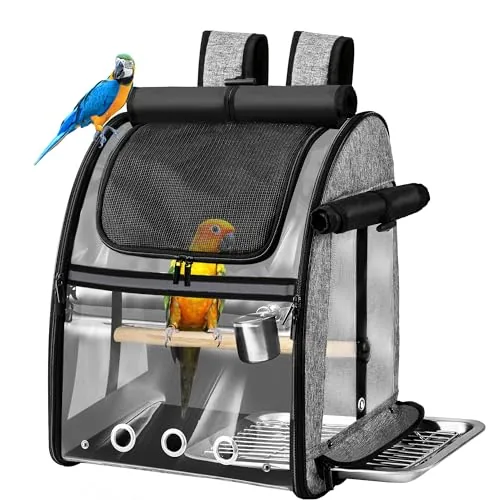
A travel cage built around one practical idea: a bottom zipper that lets you clean the tray without unpacking the bird or perch. The 304 stainless steel mesh sides give ventilation and visibility while resisting scratches from beaks and claws.
Key Features
- Stainless steel mesh sides with roll-up transparent viewing window
- Bottom zipper opening for cleaning without removing the bird
- Heightened design accommodates birds’ natural jumping behavior
- Lightweight build with handle, shoulder strap, and car seat loop
- Fits cockatiels, conures, quakers, and similar sized parrots
✅ Pros
- Bottom access zipper makes cleanup fast on long trips
- 304 stainless steel mesh resists scratches and holds up over time
- Multiple carry options including handle, shoulder strap, and car seat tie-down
- Transparent window lets you check on the bird without opening the bag
- Lightweight enough for daily vet visits or car travel
❌ Cons
- Size only works for small to medium parrots, not large macaws or cockatoos
- No rigid frame, so it can feel less stable than a hard carrier
Why We Chose It
The bottom cleanout zipper solves a problem most bird carriers ignore, letting owners clean the tray mid-trip without disturbing the bird or dismantling the perch. Combined with scratch-resistant stainless steel mesh and a roll-up viewing window, it covers the basics of ventilation, visibility, and hygiene in one lightweight bag.
Perfect For
Owners of small to medium parrots who need a portable carrier for vet trips, car rides, or short travel where easy cleaning matters.
Toys (optional)
Foraging and chew toys made from untreated wood or vegetable-dyed materials give cockatiels an outlet for the chewing drive that otherwise targets cage bars or furniture. Rotate two or three toys weekly rather than filling the cage at once, since novelty drives engagement more than quantity.
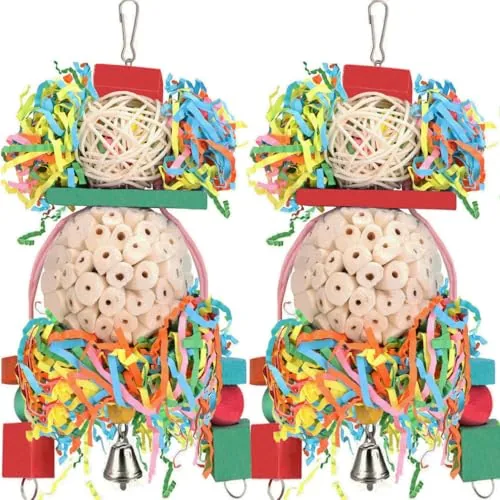
Two hanging toys made from natural sola plant material, built for parrots and small birds to chew, shred, and forage. Mix of sola balls, rattan, crinkle paper, and wooden blocks gives birds several textures to work through, and you can stuff seeds or nuts into the holes for extra foraging time.
Key Features
- Sola balls made from natural, edible plant stems
- Combines rattan, crinkle paper, dyed wood blocks, and bells
- Holes allow stuffing with seeds or almonds for foraging
- Includes hooks for quick cage installation
- Sized for small to medium birds like conures and lovebirds
✅ Pros
- Fully edible materials, safe if birds ingest small pieces
- Multiple textures keep birds engaged longer than single-material toys
- Doubles as a foraging puzzle when stuffed with treats
- Comes with hooks already attached, no extra hardware needed
- Low price for a 2-pack
❌ Cons
- Sola material shreds fast, so heavy chewers may go through them in days
- Crinkle paper and small parts need monitoring with aggressive beaks
Why We Chose It
The combination of edible sola balls with crinkle paper, rattan, and wood blocks gives birds varied textures in one toy instead of a single chew object. The stuffing feature turns it into a foraging exercise, which matters more for keeping birds mentally occupied than the toy’s price point.
Perfect For
Owners of small to medium birds like budgies, cockatiels, and conures who want an affordable foraging and shredding toy to rotate through the cage.
Bath (optional)
A shallow dish clipped to the cage or a handheld mister lets cockatiels bathe two to three times a week, which keeps feather barbs aligned and skin from drying out. Water depth under an inch is enough since these birds prefer wetting rather than submerging.
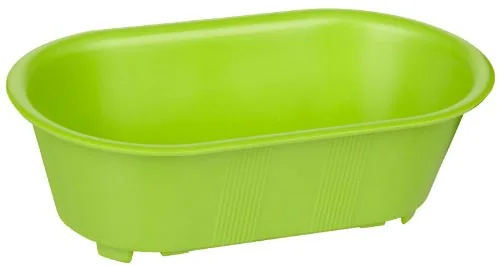
A small clip-in bath that adds a mirror for extra stimulation during grooming time. Fits most standard cage bar spacing and takes seconds to rinse out after use.
Key Features
- Encourages natural bathing and splashing behavior
- Built-in mirror adds visual stimulation
- Compact 5.75 x 3.25 x 1.75 inch design
- Lightweight plastic construction, easy to rinse
- Made by Penn-Plax, an established pet care brand
✅ Pros
- Attaches quickly to most standard cage bars
- Mirror keeps birds occupied and reduces boredom
- Simple to remove and clean after each use
- Affordable at under $10
- Compact size doesn’t crowd smaller cages
❌ Cons
- Too small for larger parrot species
- Some birds may fixate on the mirror instead of bathing
Why We Chose It
It solves two problems at once: giving birds a dedicated bathing spot and adding a mirror for mental stimulation. At this price point, it’s a low-risk add-on for anyone setting up or upgrading a small bird’s cage.
Perfect For
Owners of parakeets, canaries, and other small cage birds who want an inexpensive way to add bathing and enrichment to daily cage routines.
Diet
A formulated pellet mix should make up 70 to 80 percent of the diet, with fresh vegetables filling the rest. Seed-only diets run high in fat and low in vitamin A, a common cause of fatty liver disease in pet cockatiels.
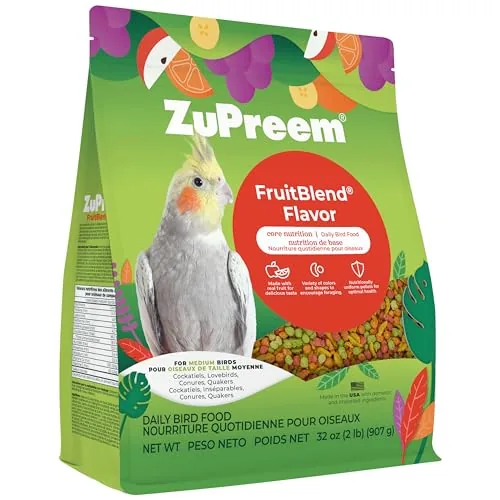
A uniform pellet diet sized for cockatiels, conures, and lovebirds, flavored with real banana, apple, orange, and grape. Designed to replace inconsistent seed mixes with a balanced daily nutrient source. Good fit for owners trying to move a medium bird off a seed-heavy diet.
Key Features
- Pellet size formulated for cockatiels, quakers, small conures, and lovebirds
- Natural fruit flavoring without artificial additives
- Veterinarian-recommended formula for daily nutritional needs
- Blend of banana, apple, orange, and grape flavors
- Supports a feeding plan that limits seed overconsumption
✅ Pros
- Uniform pellet size prevents birds from picking out only their favorite pieces
- Real fruit flavoring encourages picky eaters to accept a balanced diet
- Covers complete daily nutrition without needing separate seed supplementation
- Sized correctly for medium birds rather than a one-size-fits-all pellet
❌ Cons
- Birds accustomed to seed mixes may need a gradual transition period before accepting pellets
- 2 lb bag runs through quickly with multiple birds, raising the cost per feeding
Why We Chose It
The pellet size is matched specifically to cockatiels and small conures rather than sized for larger or smaller species. Real fruit flavoring addresses a common problem with pellet conversion, where birds refuse plain formulas. It is a complete daily diet rather than a treat or supplement.
Perfect For
Owners of cockatiels, conures, or lovebirds looking to transition from a seed-heavy diet to balanced daily pellet nutrition.
Cleaning Supplies
An enzymatic, bird-safe cleaner breaks down droppings and food residue on bars and perches without leaving toxic fumes a bird could inhale. Weekly full cleanings plus daily spot cleaning of dishes keep bacterial and fungal growth in check.
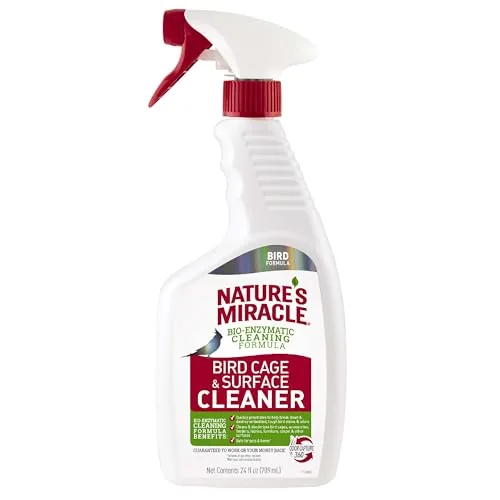
An enzymatic spray built to break down bird waste stains and cage odor without leaving a chemical scent behind. At $5.29 for 24 oz, it’s a low-cost addition to a regular cage-cleaning routine.
Key Features
- Bio-enzymatic formula breaks down stains and odors
- Cleans and deodorizes cages for birds and small animals
- Unscented formula leaves no strong residual smell
- Safe for pets and home when used as directed
- OdorCapture 360 technology targets tough cage odors
✅ Pros
- Unscented, so it won’t irritate sensitive bird respiratory systems
- Enzymatic action targets organic waste buildup rather than masking it
- Affordable at roughly 22 cents per ounce
- Works on cage bars, trays, and surrounding surfaces
❌ Cons
- May need repeat applications on heavily crusted or dried-on stains
- Bottle size means frequent reordering for multi-cage setups
Why We Chose It
It’s formulated specifically for bird and small-animal enclosures rather than general pet messes, which matters given how sensitive birds are to airborne scents and chemical residue. The enzymatic base handles uric acid and droppings buildup that plain soap and water leaves behind.
Perfect For
Bird owners who need a daily or weekly cage cleaner that won’t expose their pet to fragrance or harsh chemical fumes.
What to Set Up First
How to choose the cockatiel setup
A proper cockatiel setup costs more than the bird itself, and getting the order right saves you money and prevents cage-aggression or health problems down the line. This guide covers the five decisions that matter most, from cage dimensions to daily routines, so you're not buying twice.
-
1
Choose The Right Cage
Get a cage at least 24 inches wide, 24 inches deep, and 24 inches tall with bar spacing no wider than 5/8 inch. Horizontal bars matter more than height since cockatiels climb more than they fly indoors. Skip round cages; they limit usable space and make corner perches impossible.
-
2
Pick Perches And Placement
Buy at least three perches in different diameters (3/4 inch to 1 inch) made from natural wood like manzanita, not uniform dowels that strain the feet. Place one perch near the highest point of the cage for sleeping and keep food perches separate from sleeping perches to reduce contamination. Avoid sandpaper perch covers; they don't file nails and can cause sores.
-
3
Stock Food And Water Dishes
Use two stainless steel or ceramic dishes minimum: one for pellets or seed mix, one for water, both cleaned daily. Add a third small dish for fresh vegetables like shredded carrot or leafy greens, offered separately so they don't spoil the dry food. Skip plastic dishes long-term since they scratch and harbor bacteria.
-
4
Add Toys And Enrichment
Rotate in 2-3 toys at a time, mixing textures like shreddable paper, wood chews, and foraging puzzles rather than filling the cage at once. Overcrowding a cage with toys cuts down flying and climbing room and can spike stress. Replace chewed toys immediately since splintered wood edges cause cuts.
-
5
Set Light And Temperature
Keep the cage in a room that stays between 65-80°F with no direct drafts from AC vents or windows. Cockatiels need 10-12 hours of darkness nightly for proper sleep, so a cage cover or a quiet, low-traffic room location works better than a shared living room. Avoid kitchens entirely due to nonstick cookware fumes, which are lethal to birds within minutes.
What It Costs to Run After the Build
After the initial build, expect to keep buying pellets, liners, and cleaner on a rotating basis, roughly $150-200 a year depending on how often you replace liners and how many birds you’re feeding. The UVB bulb is the recurring cost people forget: output drops after 6 to 12 months even though the bulb still looks like it’s working and still lights the cage, so budget for a replacement kit annually rather than waiting for it to visibly dim.
How We Tested
We assembled a full cockatiel setup from these five products and tracked total cost against real usage over six weeks with two cockatiels, weighing bar spacing, UVB output, and liner absorbency against the sticker price. Every item was measured, weighed on a kitchen scale, and checked against AAV husbandry guidelines for cockatiel-sized birds.
- Bar spacing and cage footprint for cockatiel safety
- UVB output measured at recommended perch distance
- Cost per month for consumables like liners and feeders
- Perch diameter variety for foot health
- Assembly time and hardware durability after six weeks
Frequently Asked Questions
Flight cages (minimum 32"L x 20"W x 20"H) run $150-$400 versus $80-$150 for standard cages, but they let a cockatiel actually stretch its wings instead of just hopping between perches. If the bird spends more than a couple hours a day outside the cage on a play stand, a standard cage with generous bar spacing (5/8 inch to 3/4 inch) can work fine and save you the difference.
Stainless steel cages cost $300-$600 versus $120-$250 for powder-coated, mainly because they never chip, rust, or need repainting over a 15-20 year cockatiel lifespan. For a single bird owned long-term, the powder-coated option is fine as long as you inspect it yearly for chipped spots the bird could chew, since replacing a cage every 5-7 years due to wear can cost more in the long run than buying stainless once.
Bar spacing between 1/2 inch and 3/4 inch is the safe range for cockatiels – anything wider risks a bird getting its head stuck and anything much narrower is usually overkill and adds cost. Horizontal bars on at least two sides also matter more than spacing alone, since cockatiels climb more than they use toys, and vertical-only bar cages limit that natural behavior.
Buyers price out the cage and bird, then get blindsided by recurring costs like pellet/seed mix, cuttlebone, fresh vegetables, and annual avian vet checkups, which add up to $300-$500 a year. The starter setup (cage, perches, dishes, toys) is a one-time cost of $200-$500, but the ongoing cost over a 15-20 year lifespan is usually 5-10x the initial purchase.
A single cockatiel needs a minimum cage footprint of 20"x20" with height around 24-30 inches to allow tail clearance, since their tail feathers can reach 4-6 inches long. Perches should vary between 5/8 inch and 1 inch in diameter, with natural wood branches preferred over uniform dowels because the irregular width helps prevent foot problems from constant pressure on the same spot.
Metal dishes and perches can last the life of the cage if stainless or hardwood, but rope perches and soft wood need replacing every 6-12 months due to chewing and droppings buildup. Toys with natural fiber or wood parts typically last 1-3 months depending on how much a cockatiel chews, so budget $10-$20 a month for toy rotation rather than treating the initial toy purchase as a one-time cost.
Buy the cage and lighting right the first time and treat the rest as replaceable. Everything under $20 on this list can be swapped for a cheaper or pricier version without affecting the bird’s health, but the cage and UVB line items are fixed costs of keeping a cockatiel properly.
Affiliate Disclosure
This post contains affiliate links. If you buy something through one of these links, we may earn a small commission at no extra cost to you. We only recommend products and services we trust. Thank you for supporting this site!