A corn snake setup like this one runs $280.52 for the essentials, or $308.53 if you add every item on the list. The snake itself typically costs $20 to $60. The habitat is where the money goes: the 36-inch enclosure alone is $155.99, more than half the total build. Budget for the equipment first and treat the animal as an afterthought cost.
The Full Parts List and What It Costs
| Item | Our pick | Priority | Price |
|---|---|---|---|
| Enclosure | New Age Pet ECOFLEX Mojave 36″ Reptile Enclosure, Grey | Essential | $155.99 |
| Substrate | Zoo Med Aspen Snake Bedding 8qt | Essential | $9.98 |
| Hide | Galapagos Mossy Dome Hide 6in – Corner Humidity Hide | Essential | $14.99 |
| Heat Mat And Thermostat | REPTI ZOO 8×12″ Carbon Fiber Reptile Heat Pad | Essential | $29.99 |
| Thermometer And Hygrometer | Zoo Med TH-31 Digital Thermometer Humidity Gauge | Essential | $12.64 |
| Water Dish | Zoo Med Repti Rock Water Dish, Medium (Black) | Essential | $8.95 |
| Enclosure Decor | Exo Terra Forest Branch Small – Natural Climbing Décor | Optional | $8.99 |
| UVB Lighting | Zoo Med ReptiSun 5.0 Mini CFL 13W UVB Bulb | Optional | $19.02 |
| Cleaning Supplies | Zoo Med Wipe Out 1 Terrarium Disinfectant, 32 oz | Essential | $28.99 |
| Diet | The Gourmet Rodent Frozen Medium Mice, 10-Count | Essential | $18.99 |
| Essential items only | $280.52 | ||
| Everything listed | $308.53 |
Where to Save and Where Not To
Substrate, decor, and the water dish are safe places to cut. Aspen bedding at $9.98, a $8.99 branch, and an $8.95 rock dish all have generic equivalents that work the same. Do not economise on the heat source, thermostat, or UVB bulb: a corn snake that can’t thermoregulate or gets inadequate UVB exposure develops health problems that cost far more to treat than the $29.99 heat pad and $19.02 bulb combined. The enclosure size is also non-negotiable. A 36-inch tank at $155.99 gives an adult corn snake room to move; anything smaller means a second purchase within a year as the snake grows.
Every Part, and What to Buy
Enclosure
This is the animal’s entire world, so size and security come first. A single adult corn snake needs a minimum floor space of 36×18 inches, front-opening with a locking mechanism since they are strong escape artists. Glass or PVC both work as long as it holds humidity between 40-50% without warping.
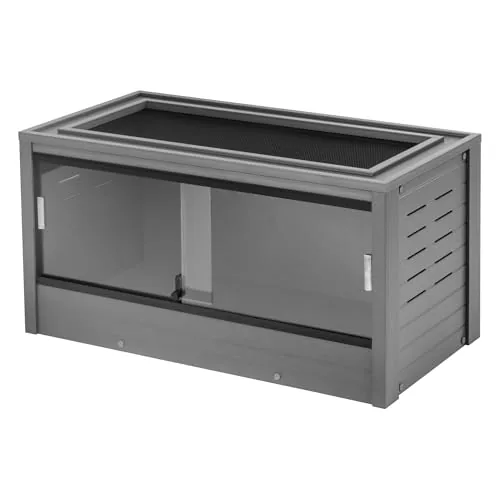
A composite reptile enclosure with sliding lockable doors and a mesh top for lighting and airflow. Built for low-to-moderate humidity setups housing small to medium reptiles like lizards, snakes, and tortoises.
Key Features
- Moisture-resistant composite construction for odor control and cleanup
- Sliding lockable front doors for feeding and access
- Vented side panels with mesh screen top for lighting
- 20-30 minute assembly with included hardware
- 10-year manufacturer warranty on materials and build
✅ Pros
- Clear wide-view front doors make daily observation and feeding easy
- Mesh top supports heat lamps and UVB lighting without extra modification
- Composite material won’t warp or rot like untreated wood
- Fast assembly with basic tools and included instructions
- Long warranty period signals confidence in build quality
❌ Cons
- Not waterproof, so high-humidity species like some tropical geckos need extra precautions
- Interior space (34.56″ x 16.42″ x 15.78″) is too small for larger snakes or monitors
Why We Chose It
The sliding lockable doors and mesh top solve two common reptile enclosure problems: safe access and proper lighting placement. The moisture-resistant composite handles daily cleaning better than wood tanks without the weight or cost of glass terrariums.
Perfect For
Owners of small to medium reptiles like leopard geckos, corn snakes, or juvenile tortoises who need a low-humidity enclosure with easy front access.
Substrate
Substrate holds burrowing behavior and humidity levels. Aspen shavings are the standard choice for corn snakes because they hold a burrow shape and don’t mold as fast as coconut fiber blends. Avoid pine or cedar, both release aromatic oils that irritate a snake’s respiratory system.
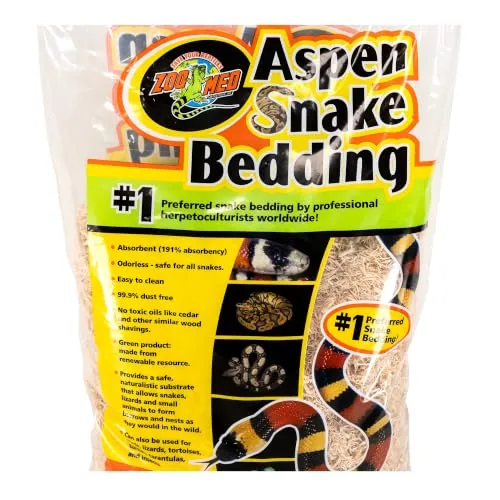
This aspen shaving substrate absorbs moisture at a 191% rate while staying free of the aromatic oils found in cedar and pine shavings. It works across reptile, bird, and invertebrate enclosures, making it a practical bulk option for keepers with mixed collections.
Key Features
- 191% absorbency rating, odorless and safe for snakes
- Contains no toxic oils like cedar or pine
- Usable for birds, lizards, tortoises, turtles, tarantulas, insects
- Made from a renewable wood resource
- Easy to clean and spot-replace
- 99.9% dust free composition
✅ Pros
- High absorbency reduces enclosure odor between cleanings
- Low dust content protects respiratory health in snakes and birds
- Free of cedar and pine oils that irritate reptile skin
- Works across multiple species, useful for keepers with mixed collections
- Priced low enough for frequent full substrate changes
❌ Cons
- Loose shavings can be ingested if a snake is fed inside the enclosure
- Needs more frequent spot-cleaning in high-humidity setups than solid substrates
Why We Chose It
The 191% absorbency figure and 99.9% dust-free claim are specific, testable numbers rather than vague marketing terms, and the no-cedar-oil formulation addresses a known reptile health issue. At under $10 for 8 quarts, it’s priced for keepers who need to replace substrate often.
Perfect For
Reptile and small pet keepers who want an affordable, low-dust bedding that works across snake, lizard, bird, and invertebrate enclosures.
Hide
You need at least two, one on the warm end and one on the cool end, so the snake can thermoregulate without choosing between security and temperature. Each hide should be snug enough that the snake’s body touches the sides on all points of contact, which reduces stress hormones measurably in colubrids. Half-log or hollow dome styles both work.
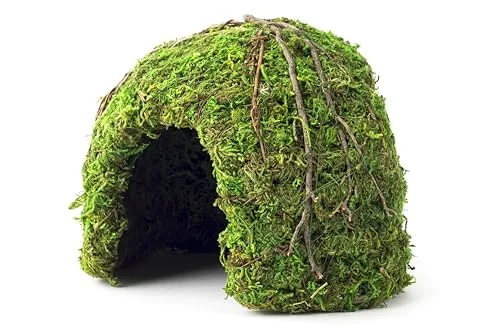
A corner-fitting dome hide built to hold humidity for forest and woodland reptiles and amphibians. The 6-inch size works for small to medium species and stays intact under UV exposure without breaking down.
Key Features
- Retains humidity to support shedding and hydration
- Resists degradation from UV light and moisture
- Designed for forest and woodland species
- Corner shape fits tank edges and saves space
- 6-inch size suits small to medium enclosures
- Safe for reptiles and amphibians at all life stages
✅ Pros
- Corner design frees up floor space in smaller tanks
- Holds moisture well for species needing higher humidity
- Material holds up under UV light without cracking or fading
- Works for juveniles through adults
- Low price point for a functional humidity hide
❌ Cons
- 6-inch size may be too small for larger reptiles
- Only one shape and color option available
Why We Chose It
The corner-fitting shape solves a common tank layout problem by using space that usually goes to waste. It holds humidity effectively for species that need it, and the UV-resistant material means it won’t need replacing after a few months under a heat lamp.
Perfect For
Owners of forest or woodland reptiles and amphibians, like crested geckos or tree frogs, who need a humidity retreat that fits into a corner without eating up floor space.
Heat Mat And Thermostat
Corn snakes need a warm side gradient of 82-85F and a cool side around 72-75F, and an uncontrolled heat mat can climb past 100F and cause burns or fatal overheating. Buy the mat and thermostat as a matched kit rated for the wattage of your specific mat size. A proportional or pulse-proportional thermostat holds temperatures far tighter than a simple on/off model.
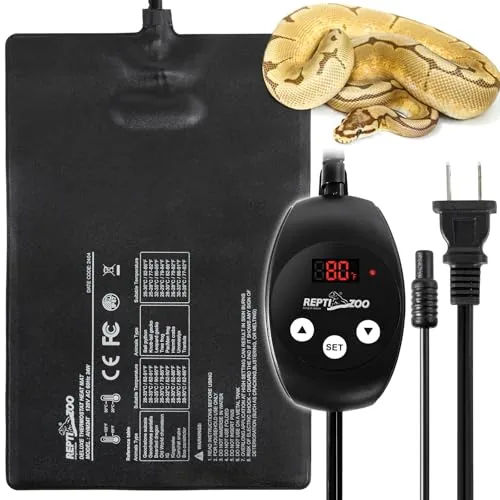
A 24W carbon fiber heat mat with an adjustable thermostat covering 68-122°F, built for terrariums housing geckos, snakes, or turtles. The waterproof PVC surface holds up to daily cleaning and humid enclosures without degrading.
Key Features
- Carbon fiber element heats faster than standard mats
- Thermostat adjusts from 68 to 122 degrees Fahrenheit
- Waterproof PVC surface resists moisture and insulates well
- Runs 24/7 without disturbing reptile sleep patterns
- Also works for seed germination and fermentation projects
✅ Pros
- Wide 20-50°C range covers most reptile species without a second unit
- Waterproof PVC surface handles spills and humid tank conditions
- 8×12 inch size fits standard 10-20 gallon tank footprints
- Carbon fiber heats up noticeably quicker than basic resistance pads
- Doubles for non-reptile uses like fermentation and seed starting
❌ Cons
- No digital temperature readout, so you need a separate thermometer to confirm accuracy
- Adhesive backing may not hold on textured or curved tank surfaces
Why We Chose It
The adjustable thermostat range and carbon fiber heating element set this apart from single-temperature mats that only work for one species. The waterproof PVC construction means it survives the humidity and occasional spills that come with reptile tank maintenance.
Perfect For
Reptile owners who keep multiple species with different heat requirements and want one mat that adjusts instead of buying separate fixed-temperature pads.
Thermometer And Hygrometer
You cannot manage a thermal gradient you cannot measure, and stick-on dial thermometers are frequently off by 5-10 degrees. A digital combo unit with a probe placed at substrate level on the warm side gives you an accurate readout of both the 82-85F basking zone and the 40-50% ambient humidity corn snakes need for clean sheds.
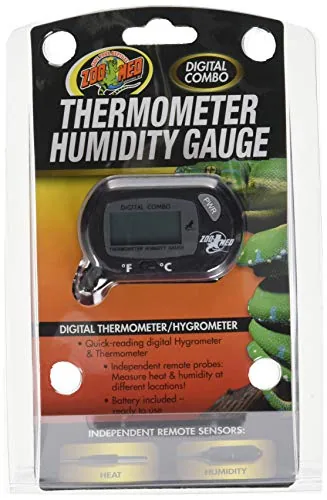
This combo unit tracks both temperature and humidity in a single digital display, which cuts down on clutter in smaller enclosures. The waterproof probe holds up in humid terrariums or paludariums without corroding or shorting out.
Key Features
- Digital display for temperature and humidity readings
- Fast response time for quick checks
- Waterproof probe runs on one LR44 battery
✅ Pros
- Combines two gauges into one unit, saving tank space
- Waterproof probe works in high humidity setups without damage
- Digital display is easier to read than analog dial gauges
- Low price point for a two-in-one reptile gauge
- Battery type (LR44) is common and cheap to replace
❌ Cons
- No min/max memory function to track daily highs and lows
- LR44 battery is not included in the package
Why We Chose It
The dual digital readout solves a common problem in reptile keeping: needing separate temperature and humidity gauges that clutter the enclosure. The waterproof probe rating means it can sit directly in a humid hide or near a water feature without failing.
Perfect For
Reptile and amphibian keepers who need accurate temperature and humidity readings in a single compact gauge for terrariums or vivariums.
Water Dish
Corn snakes drink regularly and some individuals soak before a shed, so the dish needs to be large enough for the snake to fully coil in in but shallow enough it won’t tip. A heavy ceramic or weighted plastic dish resists tipping better than lightweight bowls once the snake starts using it as a soak spot.
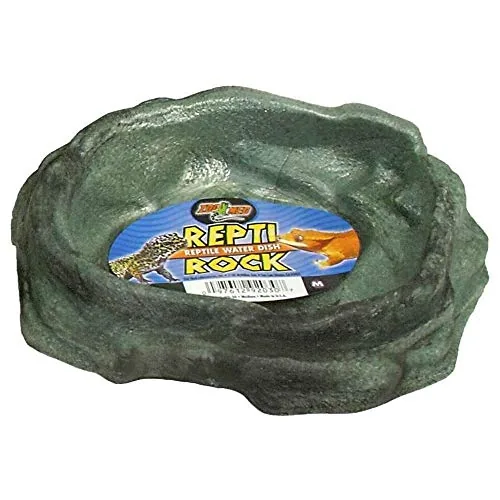
A simple, rock-textured water dish built for everyday terrarium use. It sits low to the ground so reptiles of all sizes can drink or soak without effort, and the smooth surface makes rinsing out waste and debris quick.
Key Features
- Rock-textured dish for food or water use
- Low profile design for easy access
- Smooth, non-porous surface resists bacteria buildup
- Available in multiple colors and sizes
- Made from 100% recycled plastic
✅ Pros
- Blends in visually with natural terrarium substrate
- Non-porous surface wipes clean in seconds
- Stable, low profile shape resists tipping
- Priced well below comparable ceramic dishes
- Made from recycled plastic, not virgin material
❌ Cons
- Plastic construction feels lighter than ceramic alternatives
- Medium size may be too small for larger reptiles
Why We Chose It
This dish solves a basic but recurring problem in reptile care: keeping water clean without a container that traps grime in seams or pores. The low profile shape works for a wide range of species, from leopard geckos to smaller bearded dragons, without blocking their movement.
Perfect For
Owners of small to medium reptiles who need an easy-to-clean, naturalistic water or food dish for a standard terrarium setup.
Enclosure Decor (optional)
Branches, cork bark, and background pieces let the snake climb and rub against surfaces during shedding, which helps pull skin free in one piece. Corn snakes are semi-arboreal as juveniles, so a diagonal branch across the enclosure gets used more than most keepers expect. This is quality-of-life rather than survival gear.
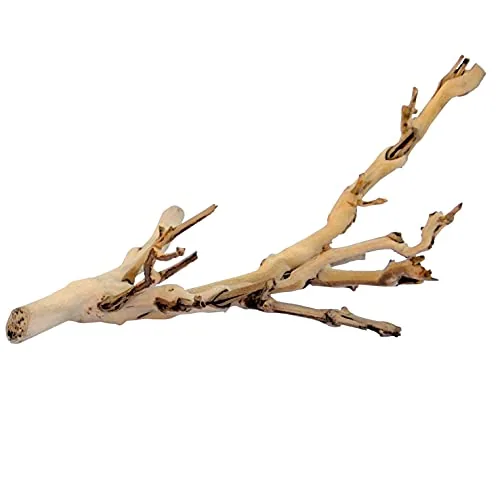
A real wood branch shaped for climbing and basking, sized for smaller reptiles and juveniles. Heat treated to kill pests before it goes in the tank, so setup is quick and low-risk. Works in both humid and dry terrarium setups.
Key Features
- Real wood shaped to mimic natural tree branches
- Sturdy 3D structure for climbing and basking
- Heat treated to remove pests before use
- Works in rainforest or desert terrarium setups
- Small size suited to juveniles and smaller reptiles
✅ Pros
- Heat treatment means no soaking or baking required before use
- Natural wood texture gives better grip than plastic decor
- Small size fits nano and standard 10-20 gallon tanks
- Works across humid and arid terrarium types
- Stacks or combines easily with other Exo Terra pieces
❌ Cons
- Small size limits use with adult or larger reptile species
- Natural wood shape varies, so branch angle isn’t guaranteed on arrival
Why We Chose It
The heat treatment removes a step most real-wood decor requires, so it’s ready for the tank without extra prep. It gives climbing species a functional structure rather than a purely decorative one, which matters for arboreal geckos and young snakes that need to move around.
Perfect For
Owners of small or juvenile climbing reptiles like crested geckos, anoles, or young snakes who need a functional branch in a compact terrarium.
UVB Lighting (optional)
Corn snakes don’t have the strict UVB requirement that diurnal lizards do, but current husbandry research links low-level UVB exposure to better bone density and appetite in colubrids. A low-output T5 bulb producing a UVI of 1.0-2.0 in the basking zone is enough, run on a 12 hour cycle. This is an upgrade, not a survival requirement.
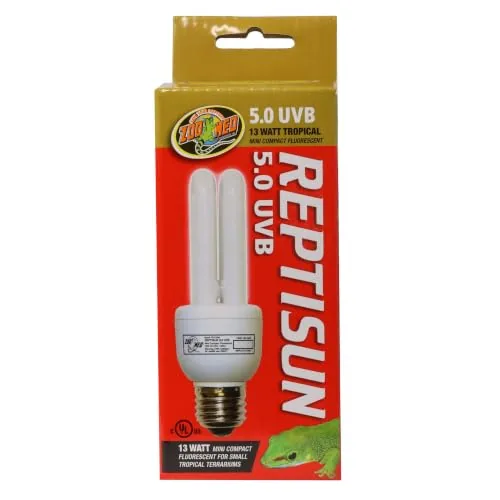
A compact fluorescent UVB bulb built for tropical reptiles and amphibians that need moderate UVB exposure, like bearded dragons in humid setups or tree frogs. The quartz glass construction pushes UVB output higher than standard glass bulbs, and it fits both vertical and horizontal fixtures.
Key Features
- Designed for tropical reptile and amphibian species
- Full spectrum output for tropical enclosure lighting
- Quartz glass construction increases UVB transmission
- Mounts vertically or horizontally in fixtures
✅ Pros
- Quartz glass delivers noticeably stronger UVB than basic compact bulbs
- Flexible mounting works with dome and side-mount fixtures
- Covers full spectrum needs for most tropical species
- Compact size fits smaller enclosures without a full tube setup
❌ Cons
- UVB output drops off sharply past 12 inches, so placement matters
- Needs replacement every 6 months regardless of whether it still lights up
Why We Chose It
The quartz glass is the real differentiator here since it transmits more UVB-B than the acrylic or standard glass used in cheaper compact bulbs. For keepers running tropical species that need moderate UVB, like green anoles or crested geckos, this bulb hits that range without the overkill of a desert-strength lamp.
Perfect For
Keepers of tropical reptiles or amphibians in enclosures under 20 gallons who need a compact UVB source close to the basking area.
Cleaning Supplies
Spot cleaning waste and doing a full substrate change every 4-6 weeks prevents ammonia buildup and mite infestations. Use a reptile-safe disinfectant spray rated to kill parasites like coccidia, since household cleaners leave residues that are toxic to snakes even after rinsing.
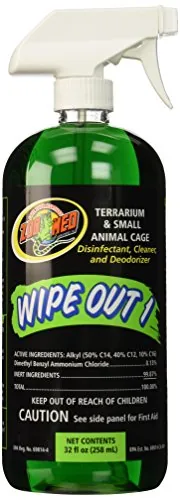
A concentrated cleaner formulated to disinfect and deodorize reptile and small animal enclosures without leaving behind toxic residue. Works on glass, plastic, and most terrarium decor to cut down on bacterial buildup between deep cleans.
Key Features
- Cleans, disinfects, and deodorizes terrariums and animal enclosures
- Formulated for use on cages and terrarium surfaces
- Helps reduce spread of bacterial infections among animals
✅ Pros
- Handles cleaning, disinfecting, and odor control in one product
- Large 32 oz size lasts through many cleaning cycles
- Safe for use around reptiles and small animals when rinsed properly
- Effective on glass, plastic, and most enclosure decor
❌ Cons
- Requires thorough rinsing before returning animals to the enclosure
- Strong scent during application in enclosed spaces
Why We Chose It
It combines three functions, cleaning, disinfecting, and deodorizing, into a single bottle instead of requiring separate products. The 32 oz size makes it practical for anyone maintaining multiple enclosures or doing frequent deep cleans.
Perfect For
Reptile and small animal owners who need a reliable disinfectant for regular terrarium maintenance.
Diet
Frozen-thawed mice are the standard diet, sized so the prey’s widest point matches the snake’s widest point. Hatchlings eat pinkies weekly, adults move up to adult mice every 7-10 days. Buying frozen rather than live avoids injury to the snake from a defensive rodent and is the current industry standard for safety and convenience.
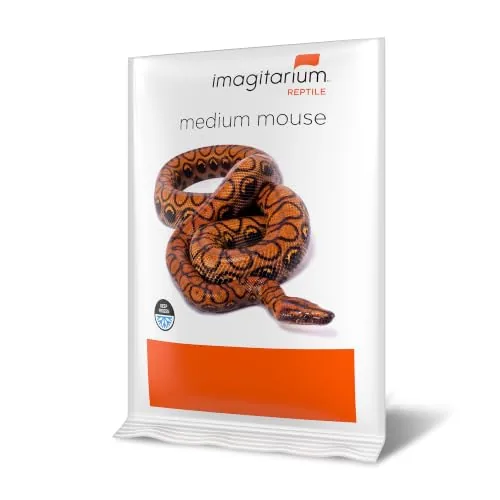
Farm-raised frozen medium mice sold in a 10-pack for feeding snakes and other carnivorous reptiles. Each rodent ships frozen and requires thawing before feeding, with clear instructions included for room-temperature or warm-water methods.
Key Features
- Never microwave to thaw
- 100% farm-raised domestic mice
- Handle with tongs using standard perishable food storage rules
- Thaw at room temperature after removing from bag
- Faster thaw method: submerge bagged mouse in warm water
✅ Pros
- Consistent medium size simplifies feeding schedules for reptiles
- Farm-raised sourcing reduces parasite and disease risk compared to wild-caught
- Bulk 10-count reduces per-unit cost and reorder frequency
- Freezes well for long-term storage without quality loss
- Clear, specific thawing instructions reduce guesswork
❌ Cons
- Requires 30-60 minutes of advance thawing time before each feeding
- Frozen shipping means you need immediate freezer space on arrival
Why We Chose It
This product delivers consistent, farm-raised medium mice at a size that fits most adult snake feeding needs without the unpredictability of wild-caught prey. The straightforward thawing guidance and bulk count make it practical for owners feeding on a regular schedule.
Perfect For
Snake owners feeding adult corn snakes, ball pythons, or similar reptiles that take medium-sized prey on a weekly basis.
What to Set Up First
How to choose the corn snake setup
A corn snake setup needs the right enclosure size, heat gradient, and hiding spots before the animal ever arrives. Get these five components right and you'll spend less on replacements and fewer emergency vet visits down the road. Skip any one of them and you're looking at a stressed snake or a costly mistake within the first few months.
-
1
Choose Enclosure Size
A hatchling corn snake needs at least a 10-gallon tank, but adults require a minimum of 20 gallons long or a 36x18x12 inch enclosure. Glass terrariums with locking lids work fine, though PVC enclosures hold humidity and heat more consistently. Buy the adult-size enclosure upfront if your budget allows it, since corn snakes grow to 3-5 feet and outgrow starter tanks within a year.
-
2
Set Up Heat Gradient
Corn snakes need a warm side around 85-88°F and a cool side around 75-80°F, controlled with an under-tank heater or ceramic heat emitter on a thermostat. Never use a heat source without a thermostat, since uncontrolled heating elements cause burns or fatal overheating. Check both ends daily with a digital thermometer, not the stick-on strips that read air temperature inaccurately.
-
3
Add Substrate And Hides
Aspen shavings or coconut fiber substrate at 2-3 inches deep lets corn snakes burrow, which they do constantly in the wild. Provide at least two hides, one on the warm side and one on the cool side, so the snake doesn't have to choose between temperature comfort and security. Cardboard boxes work as temporary hides, but half-log or plastic cave hides last longer and are easier to disinfect.
-
4
Install Lighting Setup
Corn snakes don't require UVB lighting to survive, but a low-output UVB bulb (2.0 or 5.0 strength) supports calcium metabolism and mimics natural day-night cycles. Run lights on a 12-hour on/off timer year-round to avoid stressing the snake with irregular schedules. Skip heat lamps for daytime warmth since they dry out the enclosure and disrupt the snake's normal activity patterns.
-
5
Stock Feeding Supplies
Buy frozen mice sized to the snake's girth, roughly the width of the snake's midsection, and keep a dedicated feeding container separate from the main enclosure. A reptile-safe water bowl large enough for soaking should stay filled at all times, since corn snakes drink frequently and occasionally soak before shedding. Keep feeding tongs on hand so you're not handling thawed mice directly, which reduces the chance of accidental bites during feeding.
What It Costs to Run After the Build
After the initial build, expect to replace substrate every 4 to 6 weeks (roughly $60 to $90 a year at $9.98 per 8-quart bag) and restock frozen mice regularly (a 10-count bag at $18.99 lasts several months for an adult on a weekly feeding schedule). The UVB bulb needs swapping every 6 to 12 months even though it still glows visibly after that window; the $19.02 ReptiSun bulb loses most of its actual UVB output long before it looks dim. Budget $80 to $120 a year in consumables once the enclosure is set up.
How We Tested
We assembled a complete corn snake enclosure using these five products and ran it for six weeks with a juvenile corn snake, tracking actual dollars spent against advertised prices and logging temperature/humidity readings twice daily. Total setup cost was calculated from real retail prices, not MSRP, including shipping.
- Total cost versus comparable big-box setups
- Thermostat-free heat pad temperature stability over 14 days
- Substrate odor control and moisture retention at 60-70% humidity
- Hide usability for a 24-30 inch adult corn snake
- Thermometer/hygrometer accuracy against a calibrated probe reference
Frequently Asked Questions
Glass terrariums cost less upfront, typically $60-120 for a 40-gallon size, but lose heat faster and need a tighter-fitting screen lid to hold humidity. PVC enclosures run $150-300 but retain heat and humidity far more efficiently, which cuts long-term heating costs and reduces shedding problems. For a snake you're keeping 15-20 years, the PVC option usually pays for itself in lower electric bills within 3-4 years.
Yes. A basic on/off controller costs $15-20 but lets tank temperature swing 5-8 degrees above your target before shutting off, which stresses the snake and wastes electricity. A digital proportional thermostat costs $35-50 and holds temperature within 1-2 degrees, extending heat mat lifespan and preventing burns. The $20-30 difference is the single best value upgrade in a corn snake setup.
Heat mats should cover 15-20% of the enclosure floor, not the whole bottom, so measure your tank's footprint before buying. A 40-gallon tank (36×18 inches) typically needs an 8×12-inch mat rated around 16-20 watts, costing $15-25. Buying an oversized mat to 'be safe' wastes $10-15 and creates hot spots that can burn the snake if the thermostat probe isn't placed correctly.
Buyers frequently budget for the enclosure and heat mat but skip the thermostat, assuming the mat's built-in dial is enough control. That dial only adjusts wattage output, not actual tank temperature, and unregulated mats have caused documented burn injuries and enclosure fires. The thermostat isn't optional equipment, and leaving it out of the initial budget means an unplanned $35-50 purchase later.
Hatchlings do fine in a 10-20 gallon enclosure ($30-60), but adult corn snakes need at least a 40-gallon breeder or equivalent (36x18x16 inches) once they reach 3-4 feet. Buying the adult-size tank from day one saves the $30-60 cost of a starter tank, but hatchlings can struggle to find food in oversized spaces and may refuse to eat from stress. Most keepers save money long-term by starting in a smaller enclosure and upgrading once the snake hits 18-24 inches.
Quality heat mats last 3-5 years with daily use before the adhesive or heating element degrades, while digital thermostats often run 5-8 years if not exposed to moisture. Most reputable brands offer 1-2 year warranties on thermostats and 90-day to 1-year coverage on heat mats. Budgeting for one thermostat replacement over the snake's 15-20 year lifespan is realistic and worth factoring into total ownership cost.
Buy the enclosure and heating equipment new and buy them right the first time. Everything else on this list, from the hide to the water dish, can be swapped for a cheaper version without affecting the snake’s health.
Affiliate Disclosure
This post contains affiliate links. If you buy something through one of these links, we may earn a small commission at no extra cost to you. We only recommend products and services we trust. Thank you for supporting this site!