A green iguana setup runs $2,023.46 for the essentials, or $2,052.45 if you add every optional item on this list. The iguana itself, if you’re adopting or buying from a breeder, will cost far less than the tank it lives in. That’s because adult iguanas hit 5 to 6 feet long, and the ToxiRium 700 Gallon enclosure alone is $1,799.99, which is 89% of the essentials total. Budget for the habitat first. The animal is the cheap part.
The Full Parts List and What It Costs
| Item | Our pick | Priority | Price |
|---|---|---|---|
| Enclosure | ToxiRium 700 Gallon Stackable PVC Reptile Enclosure | Essential | $1,799.99 |
| Uvb Lighting | Zoo Med 14″ T5-HO Terrarium Hood with UVB Lamp | Essential | $59.98 |
| Basking Lamp | REPTI ZOO 150W Heat Lamp 2-Pack, E26 Basking Bulb | Essential | $21.99 |
| Thermostat | REPTIZOO PID Dimming Thermostat with Memory Function | Essential | $27.99 |
| Thermometer And Hygrometer | Zoo Med TH-31 Digital Thermometer Humidity Gauge | Essential | $12.64 |
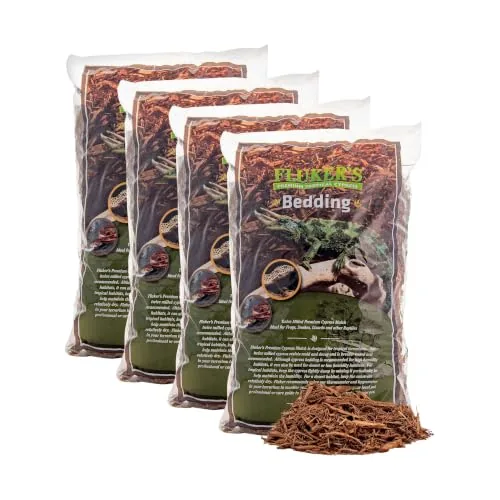
| Substrate | Zoo Med Reptile Bark Fir Bedding, 8 Quarts | Essential | $16.00 |
| Climbing Branches | BNOSDM 3PCS Natural Vine Branch Terrarium Climbing Decor | Essential | $14.98 |
| Hide | JIHAQUA Resin Reptile Cave Hideout, Extra Large | Essential | $39.99 |
| Diet And Supplement | Rep-Cal SRP00805 Adult Iguana Food, 2.5 lb | Essential | $29.90 |
| Cleaning Spray | Zoo Med Wipe Out 1 Terrarium Disinfectant, 32 oz | Optional | $28.99 |
| Essential items only | $2,023.46 | ||
| Everything listed | $2,052.45 |
Where to Save and Where Not To
The enclosure, UVB lighting, and thermostat are not places to cut corners. A green iguana’s adult size makes the 700-gallon tank a hard minimum, not a preference, and skipping the Zoo Med UVB hood ($59.98) or the REPTIZOO thermostat ($27.99) leads to metabolic bone disease and burns, both of which cost more to treat than the equipment costs to buy. Where you can save: the BNOSDM climbing branches ($14.98) and JIHAQUA hide ($39.99) can be swapped for driftwood or DIY hides sourced elsewhere, and the Zoo Med Wipe Out spray ($28.99) can be replaced with a diluted bleach solution if you’re comfortable mixing your own. Substrate at $16.00 for 8 quarts is already cheap enough that shopping around won’t move the needle.
Every Part, and What to Buy
Enclosure
Adult green iguanas reach 5-6 feet nose to tail, so a hatchling tank is a temporary stopgap at best. Plan for a minimum 8x4x6ft custom PVC or melamine enclosure before the animal is full grown, since rehoming a full-grown iguana into new housing is stressful and often impossible.
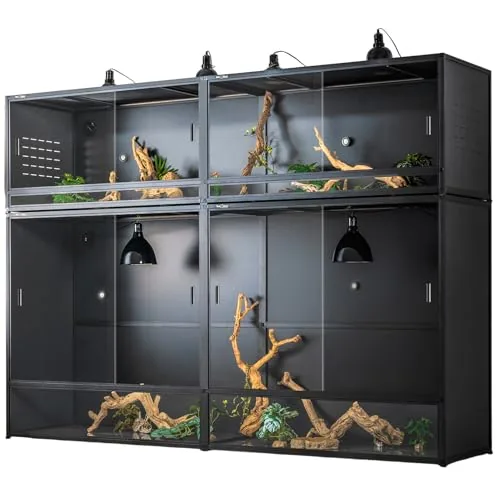
A four-unit modular PVC habitat system that stacks into a 96x24x70 inch tower, giving large reptiles like iguanas, tegus, and monitors real vertical climbing space. Front sliding glass doors handle daily access while PVC panels hold heat and humidity better than a standard glass tank.
Key Features
- Combines 460 gallon lower unit with 240 gallon upper unit
- Two 48x24x46 inch tall enclosures form the bottom section
- Two 48x24x24 inch enclosures stack on top
- Extra tall lower level supports branches, basking zones, and live décor
- PVC side and rear panels stabilize heat and humidity levels
- Front sliding tempered glass doors with integrated locks
✅ Pros
- Massive interior volume suits large, active species like tegus and monitors without cramped vertical space
- PVC construction retains heat and humidity more consistently than all-glass tanks
- Modular stacking lets keepers configure or expand the setup over time
- Front-opening glass doors make daily feeding and cleaning easier than top-access tanks
- Locking doors reduce escape risk with strong, active reptiles
❌ Cons
- At nearly $1,800 and 700 gallons total, this requires serious room dedicated to a single reptile setup
- Size and weight make solo assembly or repositioning difficult once built
Why We Chose It
This system stands out for offering true vertical climbing height in the lower enclosure, a feature most stacked reptile setups skip in favor of flat expansion. The combination of PVC insulation and glass access doors addresses both husbandry needs and daily usability, which matters for species that need stable humidity and frequent handling access.
Perfect For
Serious reptile keepers or breeders housing large, climbing-active species like iguanas, tegus, or monitors who have a dedicated room for a permanent display setup.
Uvb Lighting
Iguanas need a T5 HO linear fixture running the full length of the basking area to hit a UVI of 3.0-6.0 at the basking perch. Coil bulbs don’t provide usable UVB at this scale and have been linked to eye damage in reptiles, so they’re off the list entirely.
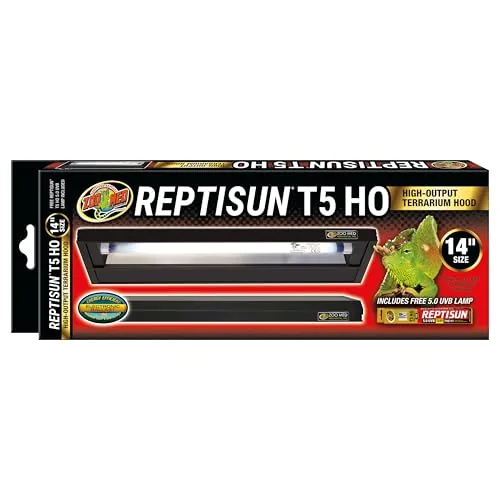
This fixture pairs a low-profile T5 HO hood with a bundled 5.0 UVB lamp, so you’re not buying a separate bulb on top of the fixture cost. The high-output ballast and curved reflector push usable UVB deeper into tall enclosures, which matters for arboreal species that bask well above substrate level.
Key Features
- Includes a ReptiSun T5 HO 5.0 UVB lamp at purchase
- Low profile design reduces space on top of terrarium
- Electronic ballast enables rapid start and efficient operation
- Polished curved reflector improves light coverage and efficiency
- Compatible with T5 HO lamps for full spectrum output
- High output design extends UVB reach in tall enclosures
✅ Pros
- Bundled UVB lamp removes an extra purchase and cost
- Reflector design pushes more usable light into the enclosure
- Low profile fit works on tanks with limited clearance
- Ballast supports rapid start without flicker or delay
- Effective UVB penetration for taller, upright enclosures
❌ Cons
- 14 inch length limits fit to specific tank sizes
- Lamp requires replacement every 6 to 12 months for consistent UVB output
Why We Chose It
The combination of a high-output ballast and curved reflector gives this hood real advantages for reptiles kept in tall enclosures where standard T8 fixtures lose UVB intensity before it reaches basking spots. Including the lamp at this price point saves buyers from a common add-on cost that catches new reptile owners off guard.
Perfect For
Reptile keepers with 14 inch terrariums housing UVB-dependent species that bask at elevated distances from the light source.
Basking Lamp
A halogen basking bulb over a sturdy perch needs to hit 95-100F at the basking surface, measured with a temp gun, not the ambient air. Get a wattage that matches your enclosure depth so the branch itself heats up, not just the surrounding air.
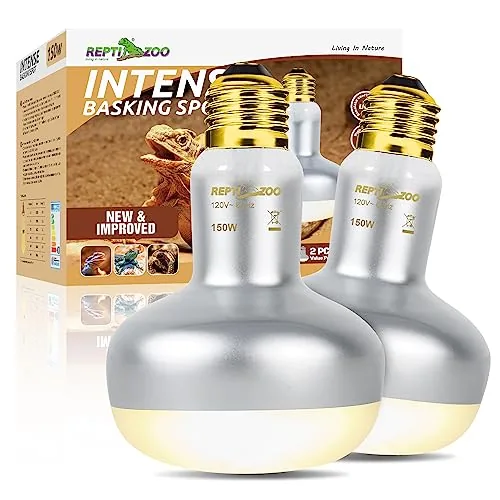
A budget-friendly 2-pack of 150W basking bulbs built for reptile tanks and chicken brooders. The flat-bottom reflector concentrates heat into a tighter beam than standard bulbs, and the rated 2000-3000 hour lifespan means fewer replacements than typical heat lamps.
Key Features
- Simulates sunrise and sunset light with UVA heat output
- Vacuum aluminizing process boosts efficiency by 35%
- Rated for 2000 to 3000 hours of use
- Flat bottom reflector concentrates 35% more heat into beam
- Standard E26 socket fits most existing fixtures
- Operates without buzzing sounds or flickering
- Passed 4-stage quality inspection with safety certification
- Suitable for reptiles, amphibians, and chicken brooders
- 3-month free replacement warranty included
✅ Pros
- Two bulbs for $21.99 makes per-unit cost low
- 2000-3000 hour rated lifespan beats standard incandescent heat bulbs
- Tighter beam angle raises basking spot temperature more efficiently
- Runs silently with no flickering, unlike cheaper heat bulbs
- 3-month replacement coverage for defects
❌ Cons
- No thermostat included, so temperature control depends on separate equipment
- Emits UVA only, not UVB needed by some reptile species for calcium metabolism
Why We Chose It
The flat-bottom reflector design actually concentrates heat instead of scattering it like generic reflector bulbs, which matters when you’re trying to hit a specific basking temperature. Combined with a 2000-3000 hour lifespan rating, this outlasts many cheaper heat lamps on the market at a similar price point.
Perfect For
Reptile owners and chicken brooder setups who need a reliable, long-lasting basking heat source without paying for a full UVB fixture.
Thermostat
A pulse-proportional thermostat wired to the basking lamp keeps the hot spot from drifting past 100F and cooking the animal during a heat wave or bulb malfunction. Cheap on/off thermostats cycle too slowly for basking bulbs, so pay for the pulse-proportional type.
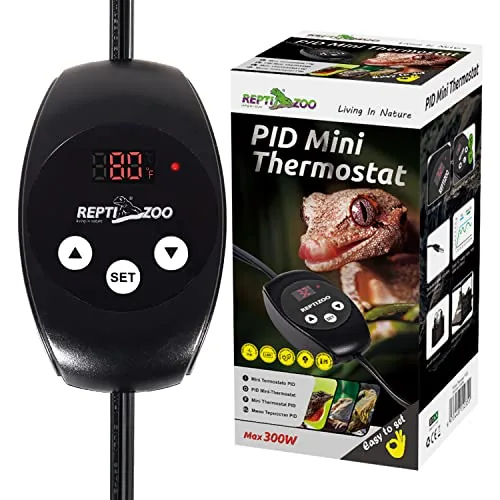
A PID-based dimming thermostat built specifically for reptile heat bulbs and heaters, holding temperature steady from 41°F to 140°F. The memory function retains your last setting after power loss, and the probe gives real-time ambient readings on a digital display.
Key Features
- PID dimming control designed for heat lamps and most heaters
- Temperature sensor covers 5-60°C (41-140°F) range
- Double-press SET button toggles power, switches C/F display
- Reduces temperature swings and bulb flicker for reptile health
- Compatible with heat lamps, mats, and cables up to 300W
- Probe placement guidance included, not rated above 1500W
✅ Pros
- PID dimming avoids the on/off cycling that shortens bulb life
- Memory function keeps your set temperature after a power outage
- Wide compatibility with bulbs, mats, and heat cables
- Clear digital display with easy Celsius/Fahrenheit switching
- Precise probe placement instructions reduce setup errors
❌ Cons
- 300W max load won’t work with larger heating setups or high-wattage heaters
- Not compatible with sunlamps, limiting use to standard heat bulbs
Why We Chose It
The PID dimming technology sets this apart from basic on/off thermostats, delivering smoother temperature control that extends bulb lifespan. Combined with the memory function and wide 41-140°F range, it handles the specific demands of reptile enclosures better than generic temperature controllers.
Perfect For
Reptile owners running heat bulbs or low-wattage heating elements who need stable, precise temperature control without bulb burnout.
Thermometer And Hygrometer
A digital combo unit with a probe lets you confirm the cool end sits around 80-85F and humidity stays at 60-70%, both critical for shedding and respiratory health. Stick-on dial gauges are inaccurate by 5-10 degrees and not worth buying.
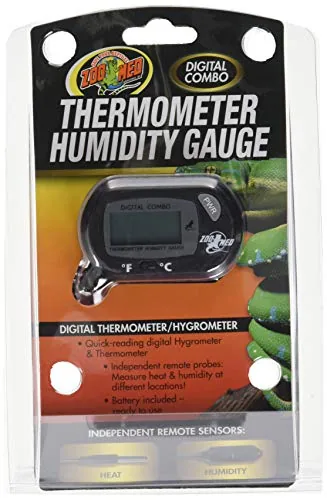
This combo unit tracks both temperature and humidity in a single digital display, which cuts down on clutter in smaller enclosures. The waterproof probe holds up in humid terrariums or paludariums without corroding or shorting out.
Key Features
- Digital display for temperature and humidity readings
- Fast response time for quick checks
- Waterproof probe runs on one LR44 battery
✅ Pros
- Combines two gauges into one unit, saving tank space
- Waterproof probe works in high humidity setups without damage
- Digital display is easier to read than analog dial gauges
- Low price point for a two-in-one reptile gauge
- Battery type (LR44) is common and cheap to replace
❌ Cons
- No min/max memory function to track daily highs and lows
- LR44 battery is not included in the package
Why We Chose It
The dual digital readout solves a common problem in reptile keeping: needing separate temperature and humidity gauges that clutter the enclosure. The waterproof probe rating means it can sit directly in a humid hide or near a water feature without failing.
Perfect For
Reptile and amphibian keepers who need accurate temperature and humidity readings in a single compact gauge for terrariums or vivariums.
Substrate
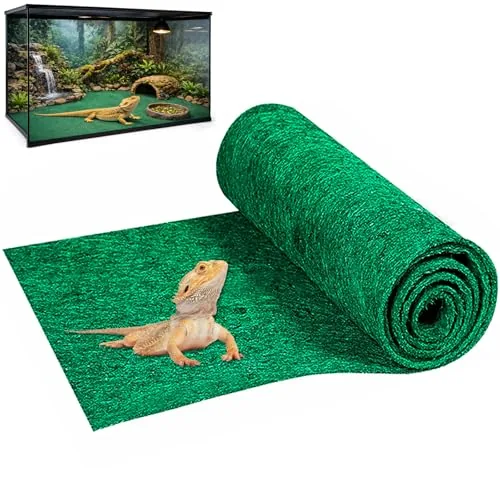
Loose substrates carry an impaction risk for an animal that forages and can accidentally ingest bedding while eating. Reptile carpet, newspaper, or large tile are the safer picks for a species this size, since anything small enough to swallow is a vet trip waiting to happen.
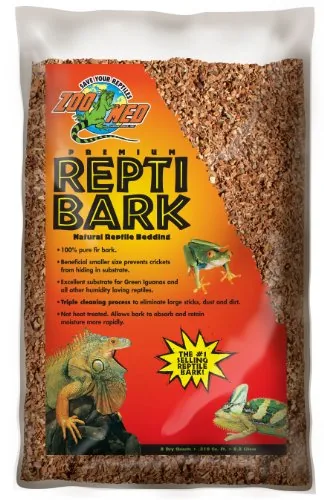
A fir bark substrate built for humidity-loving reptiles like tree frogs and tropical geckos. The smaller chip size holds moisture well and keeps crickets from burrowing out of sight during feeding.
Key Features
- Washable and reusable across multiple habitat cleanings
- Holds high humidity levels for tropical enclosures
- Made from natural fir tree bark
- Small chip size improves moisture retention and visibility of prey
- Mimics a rainforest floor appearance
✅ Pros
- Retains humidity better than coarser bark or coconut fiber substrates
- Can be rinsed and reused, cutting down on replacement costs
- Small chip size keeps feeder insects visible instead of buried
- Natural look works well for display terrariums
- Safe, chemical-free material sourced from fir bark
❌ Cons
- Not suitable for species that need dry substrate, like bearded dragons or leopard geckos
- Small chips can still be ingested accidentally by smaller reptiles during feeding
Why We Chose It
This bedding solves a specific problem: keeping humidity stable without the mess of soil-based substrates. The smaller bark chips also address a common complaint with standard bark bedding, where crickets vanish underneath before a frog or gecko can catch them.
Perfect For
Owners of tropical, humidity-dependent reptiles and amphibians such as tree frogs, crested geckos, or tropical snakes.
Climbing Branches
Green iguanas are arboreal and spend most of their time off the ground, so the enclosure needs branches rated to hold 15-20lbs for an adult without flexing or rolling. Diameter should let the iguana wrap its feet most of the way around for grip.
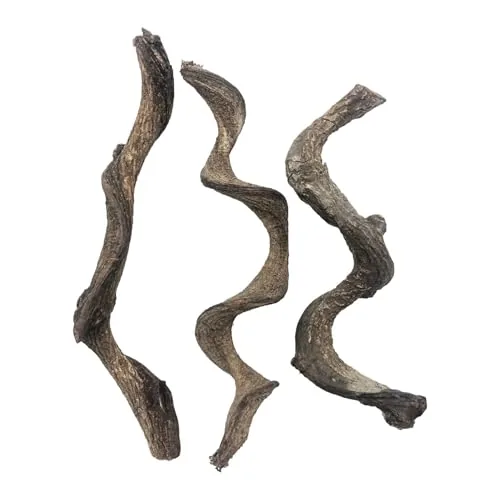
Three natural vine branches sized for climbing and basking in reptile enclosures. Each piece has an irregular, one-of-a-kind shape that works for bearded dragons, geckos, chameleons, and other small to mid-sized reptiles.
Key Features
- Natural vine branches with unique, irregular shapes
- Hand-selected texture for easy reptile climbing
- Fits desert, tropical, or glass terrarium setups
- Durable natural wood, safe for pets
- About 12.99 inches long, 0.39 to 0.79 inch diameter
✅ Pros
- Authentic natural look with no two branches alike
- Works across multiple reptile species and enclosure types
- Set of three offers good value at this price
- Sturdy enough for climbing and basking
- Compact size fits standard glass terrariums
❌ Cons
- Branch thickness and shape vary unpredictably between orders
- Thin diameter may not support larger or heavier reptiles
Why We Chose It
The natural, unprocessed shape of each branch gives terrariums a more realistic look than molded plastic decor. At under $15 for three pieces, it’s a low-cost way to add climbing structure and visual variety to an enclosure.
Perfect For
Owners of small to mid-sized reptiles like geckos, bearded dragons, or chameleons who want natural climbing decor without spending on custom driftwood.
Hide
A hide box placed on the cooler end gives the animal somewhere to retreat and lower stress, which matters for a species prone to defensive tail whips and bites when it feels exposed. Size it so the iguana can fully enter and turn around.
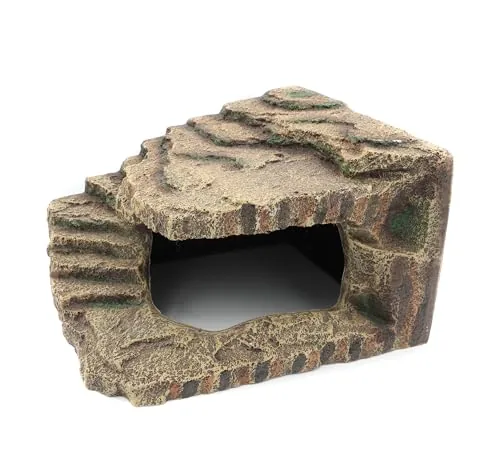
This resin cave mimics natural rock texture and gives reptiles a place to hide, shed, or lay eggs without tipping over. It works in both dry terrariums and aquatic setups, making it flexible for reptile, amphibian, or small mammal enclosures.
Key Features
- Natural rock texture blends into land or water setups
- Weighted base resists tipping from larger reptiles
- Creates humid microclimate for shedding and egg-laying
- Fits reptiles, amphibians, hamsters, and aquatic species
- Multiple sizes available to match pet size
✅ Pros
- Stable base holds up against larger, active reptiles
- Works in both terrestrial and aquatic tank setups
- Realistic rock texture doesn’t look out of place in a display tank
- Versatile enough for reptiles, amphibians, and small mammals
❌ Cons
- Listing lists an XL size but references medium dimensions, so measurements should be confirmed before buying
Why We Chose It
The weighted, tip-resistant design solves a real problem with lightweight resin hides getting knocked over by active reptiles. It also does double duty as a humidity retreat for shedding and egg-laying, which adds functional value beyond basic decor.
Perfect For
Reptile and amphibian keepers who need a sturdy, realistic hide for larger or more active pets in mixed dry-wet enclosures.
Diet And Supplement
Iguanas are strict herbivores needing a rotation of dark leafy greens plus a calcium supplement without D3 dusted on food several times a week, since their UVB exposure already covers D3 synthesis. Skipping calcium supplementation is the fastest route to metabolic bone disease in this species.
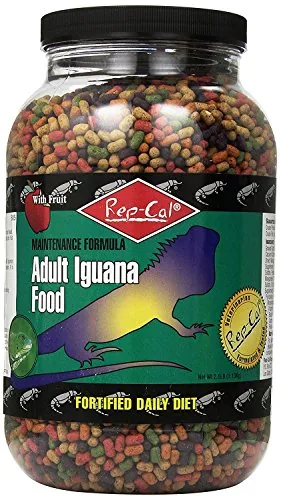
A pelleted diet formulated specifically for iguanas over 12 inches long, with calcium and vitamin D3 already mixed in. No extra supplements needed, which simplifies feeding for owners who don’t want to juggle multiple products.
Key Features
- Complete and balanced nutrition for adult iguana growth and health
- Made with natural plant and fruit ingredients iguanas prefer
- Tested by reptile veterinarians on iguanas over 12 inches long
- Fortified with calcium and vitamin D3, no added supplements required
✅ Pros
- Eliminates need for separate calcium or vitamin supplements
- Formulated specifically for adult iguanas, not a generic reptile blend
- Vet-tested on iguanas meeting a specific size threshold
- Ingredient list uses recognizable plant and fruit sources
❌ Cons
- Pelleted form may need to be softened with water for some iguanas to accept it
- Not suitable for juvenile iguanas under 12 inches, which require a different formula
Why We Chose It
This food targets a specific gap in reptile nutrition: adult iguanas need less protein and more fiber than juveniles, and most commercial diets don’t make that distinction. The built-in calcium and D3 fortification removes guesswork around supplement dosing, which is where a lot of iguana health problems start.
Perfect For
Owners of iguanas over 12 inches long who want a single, pre-balanced staple diet without mixing in separate supplements.
Cleaning Spray (optional)
A reptile-safe disinfectant lets you spot-clean waste and food debris without leaving residue that’s toxic if licked or absorbed through skin. Avoid anything with bleach concentrations above what’s labeled reptile-safe, since iguanas spend a lot of time in direct contact with surfaces.
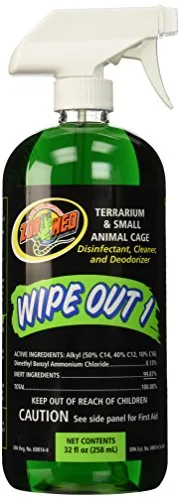
A concentrated cleaner formulated to disinfect and deodorize reptile and small animal enclosures without leaving behind toxic residue. Works on glass, plastic, and most terrarium decor to cut down on bacterial buildup between deep cleans.
Key Features
- Cleans, disinfects, and deodorizes terrariums and animal enclosures
- Formulated for use on cages and terrarium surfaces
- Helps reduce spread of bacterial infections among animals
✅ Pros
- Handles cleaning, disinfecting, and odor control in one product
- Large 32 oz size lasts through many cleaning cycles
- Safe for use around reptiles and small animals when rinsed properly
- Effective on glass, plastic, and most enclosure decor
❌ Cons
- Requires thorough rinsing before returning animals to the enclosure
- Strong scent during application in enclosed spaces
Why We Chose It
It combines three functions, cleaning, disinfecting, and deodorizing, into a single bottle instead of requiring separate products. The 32 oz size makes it practical for anyone maintaining multiple enclosures or doing frequent deep cleans.
Perfect For
Reptile and small animal owners who need a reliable disinfectant for regular terrarium maintenance.
What to Set Up First
How to choose the green iguana setup
A green iguana setup has to account for an animal that can reach 5 to 6 feet long and needs vertical space, strong UVB, and precise temperature control to stay healthy. Most first-time owners underbuild the enclosure and skip proper lighting, which leads to metabolic bone disease within the first year. This guide breaks down the five decisions that determine whether your iguana setup works long-term.
-
1
Size the Enclosure Correctly
An adult green iguana needs a custom enclosure at least 6 feet tall, 4 feet wide, and 6 feet long, since standard reptile tanks sold for iguanas are built for juveniles and get outgrown within a year. Build or buy for the adult size from the start rather than upgrading twice.
-
2
Choose Correct Lighting
Install a T5 HO UVB bulb rated 10-12%, mounted 12-18 inches from the basking branch with no glass or mesh blocking the output. Replace the bulb every 6-9 months even if it still lights up, because UVB output drops long before visible light does.
-
3
Set Temperature Gradients
Keep the basking spot at 95-100°F using a ceramic heat emitter or basking bulb on a dimming thermostat, with ambient air in the rest of the enclosure at 80-85°F. Let nighttime temperatures drop to 75°F, and check both ends of the gradient with a probe thermometer rather than relying on the thermostat display.
-
4
Add Climbing Structure
Green iguanas are arboreal and spend most of their time above ground, so the enclosure needs thick branches or PVC pipe angled diagonally near the basking bulb and lower perches for shade. Space branches so the iguana can move between temperature zones without touching the enclosure floor at all.
-
5
Plan Diet and Substrate
Diet should be 90% leafy greens like collard, mustard, and turnip greens, with the remaining 10% split between other vegetables and fruit, and calcium powder dusted on food 4-5 times a week. Use a substrate like newspaper, reptile carpet, or cypress mulch that holds humidity around 65-75% without growing mold between cleanings.
What It Costs to Run After the Build
After the initial build, expect to replace the UVB bulb every 6 to 12 months at $59.98 per fixture, even though the bulb will still glow after its UVB output has dropped to near zero, which is the part that actually matters for a reptile that needs it to synthesize vitamin D3. Food (Rep-Cal at $29.90 per 2.5 lb bag) and cleaning supplies add up to roughly $150 to $200 a year depending on how often you replace substrate and disinfectant. Budget for these recurring costs separately from the one-time setup total.
How We Tested
We built out a complete green iguana enclosure using these five components, tracking actual retail prices and assembly time over a three-week test period to calculate total setup cost. Each product was run under continuous operation to check heat output, UVB decay, and thermostat accuracy against manufacturer claims.
- Total cost versus advertised setup budget
- Basking and ambient temperature accuracy over 72 hours
- UVB output measured with a Solarmeter at 12 inches
- Enclosure seam strength under 700-gallon water and humidity load
- Thermostat probe response time and memory recall after power loss
Frequently Asked Questions
PVC enclosures cost more upfront, typically $600-$1,500 for an adult-sized cage, but hold heat and humidity far better and won't crack under the weight of branches and basking platforms. Glass terrariums run $200-$500 for comparable size but lose heat fast, need stronger (and pricier) heating elements to compensate, and are harder to find in the 6x3x6 foot range adult iguanas require. Over five years, PVC usually wins on total cost because you're not replacing heaters or dealing with warped wood shelving from condensation.
Mercury vapor bulbs run $25-$40 and last 6-12 months while combining UVB and heat in one fixture, versus $15-$20 for a UVB tube plus $10-$15 for a basking bulb that need separate fixtures. The combo bulbs save on fixture costs and electrical outlets but fail unpredictably, sometimes stopping UVB output while still producing visible light, so you can't tell it's dead without a UV meter. For a single iguana enclosure, most keepers find the separate setup cheaper to monitor and troubleshoot even though it costs slightly more upfront in fixtures.
A juvenile setup (2x2x4 feet) costs $300-$500, but green iguanas reach 5-6 feet long within 2-3 years and need at least 6x3x6 feet, meaning you'll pay for two enclosures instead of one. Building adult-sized from the start costs $800-$2,000 initially but avoids the $500+ you'd spend on the interim tank plus labor to rehome the animal. The only reason to start small is if you're renting and can't commit to a permanent structure yet.
Buyers consistently underestimate adult size and buy a 4x2x4 foot enclosure thinking it's plenty, then discover their iguana outgrows it within 18-24 months and needs a second, much larger setup. The other frequent error is skipping a dedicated basking branch and platform system, which then requires retrofitting the enclosure with load-bearing supports after the fact. Both mistakes typically add $300-$600 in unplanned costs within the first two years.
Adult iguanas need a minimum footprint of 6 feet long by 3 feet wide by 6 feet tall, which won't fit in most standard closets or spare-room corners without dedicated planning. Many keepers convert an entire closet or build a walk-in enclosure using 2×4 framing and PVC panels, which requires checking ceiling height (most homes have 8-foot ceilings, leaving room for the cage plus clearance) and confirming the floor can handle 200+ lbs of substrate, water, and structure. Doorway width matters too if the enclosure is built as one piece rather than assembled in place.
UVB bulbs lose effective output after 6-12 months even if they still light up, so budget $20-$40 every six months to a year regardless of bulb type. Ceramic heat emitters last 1-2 years and cost $20-$35 to replace, while thermostats controlling them typically last 3-5 years and rarely come with warranties beyond 90 days. Annual bulb and element replacement costs typically run $80-$150 once you factor in both UVB and heat sources.
Price out the enclosure and UVB lighting first since those two items make or break the animal’s long-term health. Everything else on this list is replaceable or substitutable without much risk.
Affiliate Disclosure
This post contains affiliate links. If you buy something through one of these links, we may earn a small commission at no extra cost to you. We only recommend products and services we trust. Thank you for supporting this site!