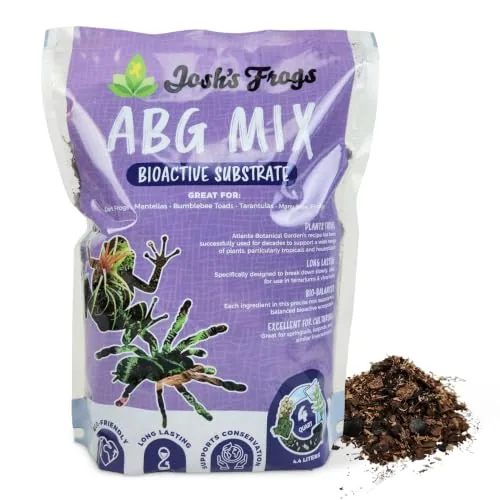
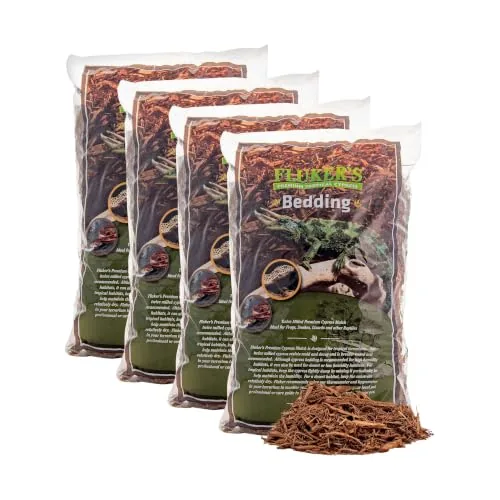
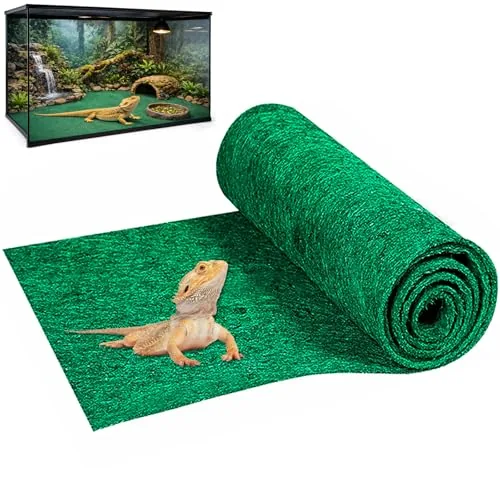
A Hermann’s tortoise setup runs $292.63 for the essentials and $322.31 if you add every item in this list. The tortoise itself, if you’re buying captive-bred, often costs less than the enclosure alone. That’s the part people don’t expect: you’re not paying for the animal, you’re paying for a wooden habitat, UVB lighting, and a thermostat to keep it all in range. Budget for the setup before you budget for the tortoise.
The Full Parts List and What It Costs
| Item | Our pick | Priority | Price |
|---|---|---|---|
| Enclosure | Aivituvin Wooden Tortoise Habitat with Storage Shelf | Essential | $129.99 |
| Substrate | Legigo 10LB Compressed Coconut Husk Reptile Substrate | Essential | $24.99 |
| UVB Lighting | Zoo Med ReptiSun 10.0 HO T5 UVB, 34″ 39W | Essential | $31.29 |
| Basking Bulb | Zoo Med Basking Spot Lamp 75W, 2-Pack | Essential | $19.96 |
| Thermostat | REPTIZOO PID Dimming Thermostat with Memory Function | Essential | $27.99 |
| Thermometer And Hygrometer | Vodolo Digital Reptile Thermometer Hygrometer 2-Pack | Essential | $5.99 |
| Hide | Minandyanmei Terracotta Reptile Hide with Humid Hideout | Essential | $24.24 |
| Water Dish | KooingTech Tortoise Water Dish 7.1×5.5in Faux Stone Bowl | Essential | $12.99 |
| Diet | Mazuri Tortoise Diet 1.25 LB Bag | Essential | $15.19 |
| Cleaning Supplies | Zoo Med Wipe Out 1 Terrarium Disinfectant, 32 oz | Optional | $29.68 |
| Essential items only | $292.63 | ||
| Everything listed | $322.31 |
Where to Save and Where Not To
The enclosure at $129.99 and the UVB fixture at $31.29 are not places to cut corners. A tortoise that doesn’t get proper UVB output develops metabolic bone disease, and a flimsy enclosure won’t hold the temperature gradient a Hermann’s needs. The thermostat at $27.99 is the same story: without it you’re guessing at basking temps, and guessing wrong either cooks or chills the animal. Where you can save is the water dish and hide. Both are usable ceramic or plastic pieces you may already own, so the $24.24 hide and $12.99 dish are the two line items worth skipping if you’re improvising.
Every Part, and What to Buy
Enclosure
Hermann’s tortoises need an open-top enclosure with solid walls, not a glass tank, since glass causes pacing and stress. Minimum floor space for one adult is 6ft x 2ft, and hatchlings still need at least 3ft x 2ft to establish separate basking and cool zones.
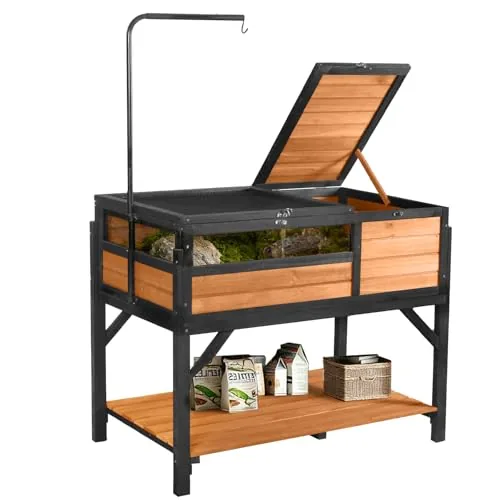
A wooden two-bedroom enclosure that works on a tabletop or the floor thanks to removable legs. Comes with an adjustable heat lamp holder and an acrylic viewing panel so you can check on your pet without opening the cage.
Key Features
- Removable legs let you use it tabletop or floor-standing
- Adjustable lamp holder ranges 11 to 31 inches tall
- Acrylic panel gives full visibility into the activity area
- Two-bedroom layout adds space for turtles or small reptiles
- Moisture-proof finish supports both indoor and outdoor placement
✅ Pros
- Flexible setup works as a floor cage or tabletop enclosure
- Lamp holder rotates 360 degrees and adjusts to different heights
- Acrylic viewing window makes daily monitoring easy without disturbing the pet
- Weatherproof construction holds up for outdoor use in good weather
- Two separate living areas suit multiple small reptile species
❌ Cons
- Wood construction requires regular cleaning to prevent odor buildup
- Assembly involves multiple parts and takes time to set up correctly
Why We Chose It
This enclosure solves a real problem for tortoise owners: needing a habitat that adapts to different spaces without buying separate units. The adjustable lamp mount and acrylic viewing panel add functional value beyond a basic wooden box.
Perfect For
Owners of tortoises, small lizards, or chameleons who need a habitat that can move between indoor tabletop setups and outdoor placement.
Substrate
A mix of topsoil and coco coir at 3-4 inches deep lets the tortoise dig and hold humidity at the 40-60% range Hermann’s need. Avoid reptile carpet or sand-only mixes, which don’t support burrowing behavior and can cause impaction if ingested.
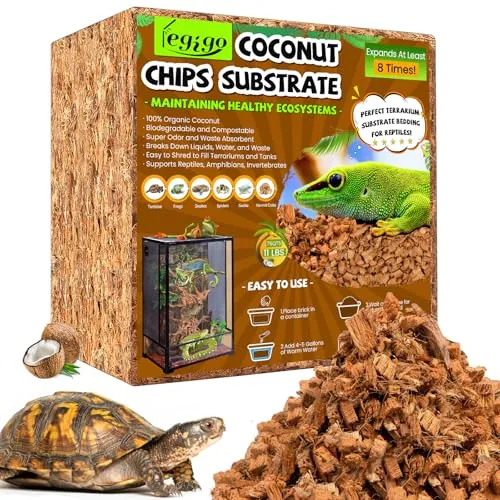
This compressed coconut fiber brick expands into 72 quarts of natural bedding once soaked in water. It holds humidity well for tropical species like ball pythons and absorbs waste odors, cutting down on how often you need to change the substrate.
Key Features
- 10 lb compressed brick measures 11.81 x 11.81 x 5.31 inches
- 100% organic coconut fiber, safe texture for digging species
- Absorbs odors and excess moisture, rehydrate by misting
- Expands with water, compact form saves storage space
- Suits reptiles, amphibians, invertebrates, and doubles as garden mulch
✅ Pros
- Holds humidity well for tropical enclosures like ball python tanks
- Compact brick form takes up little storage space before use
- Soft texture supports natural burrowing without injury risk
- Absorbs waste odors, reducing how often you clean the tank
- Reusable as garden mulch or hydroponic medium after terrarium use
❌ Cons
- Requires soaking and expansion time before it’s ready to use
- High humidity setups may need monitoring for mold growth over time
Why We Chose It
The compressed brick format solves a real storage problem compared to bulky pre-expanded bags, and the coconut fiber texture works well for burrowing species without the sharp edges some substrates have. Its ability to hold humidity while still allowing spot cleaning makes it practical for daily reptile care.
Perfect For
Owners of ball pythons, snakes, tortoises, or hermit crabs who need a humidity-retentive, odor-absorbing substrate that’s easy to store before use.
UVB Lighting
A T5 HO 10.0 UVB tube run the length of the enclosure gives the UVI of 3-6 Hermann’s need in the basking zone for vitamin D3 synthesis and shell development. Coil bulbs don’t provide even coverage and have a history of causing eye damage, so stick with linear T5 fixtures.

This high-output T5 UVB bulb delivers stronger UVB and brighter light than the standard ReptiSun 10.0, making it suited for taller or larger enclosures. It supports proper calcium metabolism in reptiles, helping prevent metabolic bone disease when paired with a compatible fixture.
Key Features
- Higher UVB output and brighter light than standard ReptiSun 10.0
- Increased UVB range suited for larger reptile habitats
- Helps prevent or reverse metabolic bone disease in reptiles
- Used and recommended by zoos and veterinarians
✅ Pros
- Strong UVB output reaches deeper into large or tall enclosures
- Supports calcium metabolism and bone health in reptiles
- 34-inch length covers wide basking areas evenly
- T5 HO bulbs last longer than compact fluorescent alternatives
- Backed by professional and zoo use
❌ Cons
- Requires a compatible T5 HO fixture, sold separately
- UVB output declines over time and needs replacement every 6-12 months
Why We Chose It
This bulb stands out for its higher UVB intensity compared to standard ReptiSun models, which matters for species with high UVB needs like bearded dragons and monitors. Its 34-inch length and consistent output make it a dependable choice for larger, multi-reptile setups.
Perfect For
Owners of large or tall reptile terrariums housing UVB-dependent species such as bearded dragons, uromastyx, or iguanas.
Basking Bulb
A halogen or incandescent basking bulb creates a hot spot of 90-95F for digestion, with the cool end staying in the 70-75F range. Wattage depends on enclosure height and ambient room temperature, so buy one rated adjustable via a dimming thermostat rather than a fixed-wattage bulb.
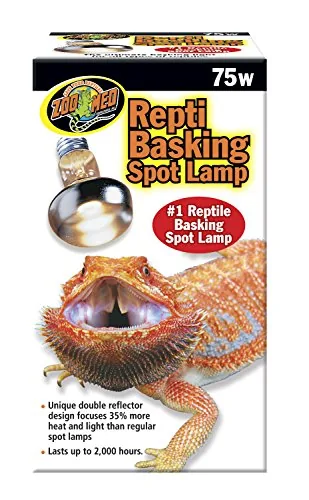
A double-reflector incandescent bulb that concentrates heat and light into a tighter basking beam than standard spot lamps. Comes as a 2-pack, so you get a backup or can light two enclosures at once. Built for diurnal reptiles that need a defined hot spot to thermoregulate.
Key Features
- Emits UVA rays for reptile psychological well-being
- Raises ambient terrarium temperature for reptiles and amphibians
- Double reflector design boosts heat and light output by 35%
- Tighter beam concentrates basking site more than standard bulbs
- 75 watts of power output
- Suited to diurnal reptiles needing basking heat
- Concentrated beam delivers heat to specific basking spots
✅ Pros
- Noticeably tighter, more concentrated basking spot than standard heat bulbs
- Double reflector design improves heat efficiency at the same wattage
- Two-pack means a ready spare when the first bulb burns out
- Simple screw-in fit for standard dome fixtures
- Reliable brand with consistent output batch to batch
❌ Cons
- No UVB output, so a separate UVB bulb is still needed for most species
- Incandescent bulbs run hot and have a shorter lifespan than ceramic or halogen alternatives
Why We Chose It
The double reflector design is the real differentiator here, pushing 35% more heat and light into a tighter beam than a standard spot lamp. That matters for reptiles that need a precise, hot basking zone rather than diffuse warmth across the tank. Getting two bulbs at under $20 total makes it easy to keep a spare on hand.
Perfect For
Owners of diurnal reptiles like bearded dragons or box turtles who need a concentrated 75W basking spot and want a backup bulb on hand.
Thermostat
A dimming or pulse-proportional thermostat keeps the basking bulb from overheating the enclosure, which is critical since Hermann’s overheat quickly in a closed tortoise table. Choose one rated for the wattage of your basking bulb with a probe placement at basking height, not floor level.
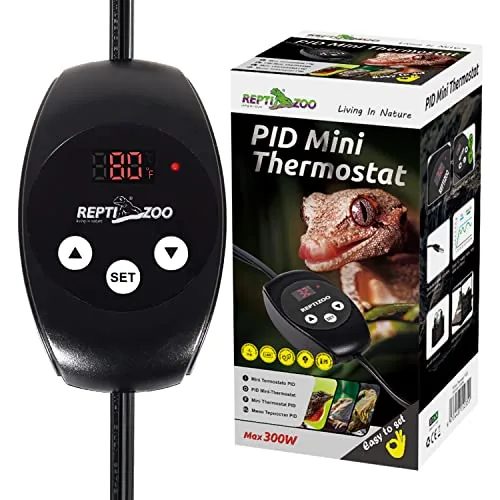
A PID-based dimming thermostat built specifically for reptile heat bulbs and heaters, holding temperature steady from 41°F to 140°F. The memory function retains your last setting after power loss, and the probe gives real-time ambient readings on a digital display.
Key Features
- PID dimming control designed for heat lamps and most heaters
- Temperature sensor covers 5-60°C (41-140°F) range
- Double-press SET button toggles power, switches C/F display
- Reduces temperature swings and bulb flicker for reptile health
- Compatible with heat lamps, mats, and cables up to 300W
- Probe placement guidance included, not rated above 1500W
✅ Pros
- PID dimming avoids the on/off cycling that shortens bulb life
- Memory function keeps your set temperature after a power outage
- Wide compatibility with bulbs, mats, and heat cables
- Clear digital display with easy Celsius/Fahrenheit switching
- Precise probe placement instructions reduce setup errors
❌ Cons
- 300W max load won’t work with larger heating setups or high-wattage heaters
- Not compatible with sunlamps, limiting use to standard heat bulbs
Why We Chose It
The PID dimming technology sets this apart from basic on/off thermostats, delivering smoother temperature control that extends bulb lifespan. Combined with the memory function and wide 41-140°F range, it handles the specific demands of reptile enclosures better than generic temperature controllers.
Perfect For
Reptile owners running heat bulbs or low-wattage heating elements who need stable, precise temperature control without bulb burnout.
Thermometer And Hygrometer
A combo digital unit with a probe lets you check basking spot temperature and ambient humidity in one reading instead of guessing from a dial gauge. Place the probe at the basking site and check humidity near substrate level, since Hermann’s need 40-60% and respiratory issues start below that.
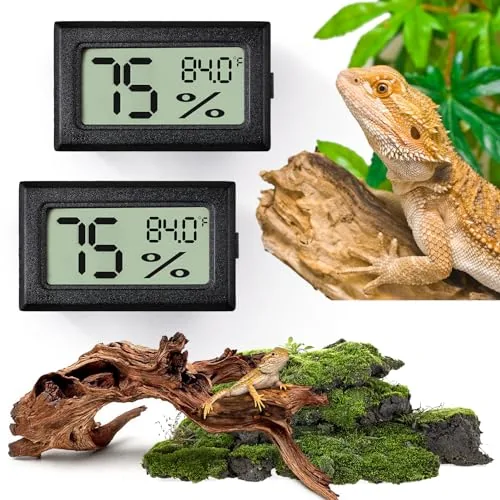
A budget stick-on thermometer and hygrometer combo for reptile tanks, sold in a two-pack so you can monitor separate enclosures or multiple zones in one tank. The LED display switches between Fahrenheit and Celsius and reads clearly in low light.
Key Features
- High-precision chip measures temperature within 0.9°F accuracy
- Two units included for monitoring multiple tank zones
- LED display readable in low light, switches F/C
- Adhesive mount installs in seconds, no wiring
- Runs on replaceable batteries for long-term use
✅ Pros
- Two units for the price of one basic thermometer
- No wiring or tools needed for setup
- LED screen stays readable at night
- Switches between Fahrenheit and Celsius easily
- Replaceable battery avoids buying disposable units repeatedly
❌ Cons
- Adhesive-mounted sensors read tank surface temperature, not always ambient air accurately
- Battery not specified as included in the package
Why We Chose It
At under $6 for two units, this covers both sides of a tank or two separate enclosures without buying separate gauges. The adhesive mounting and cordless design keep the setup simple for anyone who doesn’t want to drill holes or run wires through a terrarium.
Perfect For
Reptile owners who need affordable, no-fuss temperature and humidity readings for multiple tanks or tank zones.
Hide
A hide box on the cool end gives the tortoise a place to retreat from light and regulate stress, and doubles as a humid hide if you pack damp sphagnum moss inside. Size it so the tortoise can fully enter and turn around, since a cramped hide gets ignored.
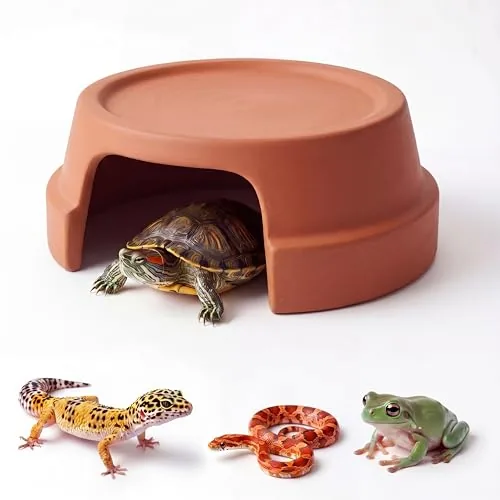
This terracotta hide holds moisture better than plastic or resin caves, which helps reptiles that need higher humidity for shedding or egg-laying. The closed design gives skittish animals a real sense of enclosure instead of an open bowl shape.
Key Features
- Made from natural terracotta for breathability and moisture retention
- Retains humidity inside for hiding and spawning
- Weighted base resists tipping from larger reptiles
- Closed shape limits sightlines for a hidden feel
✅ Pros
- Terracotta holds humidity longer than plastic hides, cutting down on spray frequency
- Heavy base stays put even with bearded dragons or larger geckos pushing against it
- Works across multiple setups: reptile tanks, turtle basking areas, guinea pig cages
- Natural material won’t leach odors or discolor like some dyed plastic hides
- Closed entrance design reduces stress for shy or newly introduced animals
❌ Cons
- Listed dimensions are inconsistent (6.9×6.9 in title vs 6.89×3.35 in specs), so measure your enclosure before buying
- Terracotta can crack if dropped on a hard floor during tank cleaning
Why We Chose It
Terracotta does something plastic hides can’t: it actually absorbs and slowly releases moisture, which matters for species that need humidity spikes for shedding or egg-laying. The closed entrance and weighted base also solve two common complaints with cheaper hides, tipping and animals refusing to use an open cave.
Perfect For
Owners of humidity-dependent reptiles or amphibians, like leopard geckos or small turtles, who need a stable hide that also helps maintain enclosure moisture.
Water Dish
A shallow dish that the tortoise can climb into and out of unassisted is needed for both drinking and soaking, which helps with hydration and shell health. Depth should not exceed the height of the tortoise’s shell at the front edge to prevent drowning risk in hatchlings.
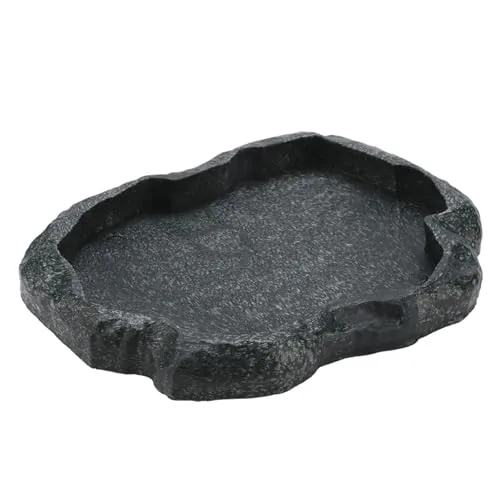
A shallow, stone-textured resin dish sized for small to medium reptiles like bearded dragons, geckos, and small tortoises. The molded rock finish blends into a naturalistic tank setup while staying light enough to move for cleaning.
Key Features
- Molded faux-stone texture and color for natural tank decor
- Smooth surface with no cracks or pits to trap grime
- ABS resin construction resists cracking and weighs less than real stone
- Doubles as decoration or a food and water dish
- Measures 7.09 x 5.51 x 0.79 inches with 0.6 inch depth
✅ Pros
- Lightweight compared to actual stone or ceramic dishes
- Smooth ABS surface wipes clean without scrubbing corners
- Realistic rock finish matches naturalistic enclosure setups
- Low price point for the size offered
- Works across multiple reptile species, not limited to one animal
❌ Cons
- 0.6 inch depth is too shallow for tortoises that need to soak fully
- ABS resin can scratch over time from claws, dulling the stone finish
Why We Chose It
This bowl earns a spot for buyers who want tank decor and function in one piece without paying for real stone. The smooth ABS interior means less scrubbing at water changes, and the size fits most small to medium enclosures without crowding.
Perfect For
Owners of bearded dragons, geckos, small snakes, or juvenile tortoises who need a low-profile, easy-clean water or food dish that looks like natural rock.
Diet
Hermann’s are grazing herbivores that need a high-fiber, low-protein diet of weeds and leafy greens, supplemented with a calcium powder dusted on food 2-3 times a week. Commercial tortoise pellets can supplement but shouldn’t replace fresh graze, since captive diets too high in protein cause shell pyramiding.
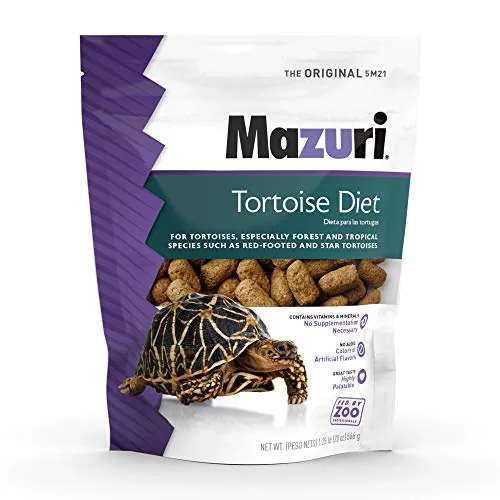
A pelleted diet formulated for tropical and forest tortoise species with omnivorous feeding habits. Contains no artificial colors or flavors, with added vitamins to support immune and eye health. Sized for smaller collections or as a trial bag before committing to bulk quantities.
Key Features
- Moderate protein and energy for omnivorous tropical and forest tortoises
- No added colors or artificial flavors in formula
- Contains antioxidants, vitamin E, and vitamin A
- Large particle size with high palatability
✅ Pros
- Formulated specifically for omnivorous tortoise species, not a generic reptile blend
- No artificial colors or flavors in the ingredient list
- Added vitamin E and vitamin A support immune and eye health
- Large particle size holds up well and reduces mess
- Small bag size works well for testing acceptance before buying in bulk
❌ Cons
- 1.25 lb bag runs out quickly for owners with multiple tortoises or large adults
- Not appropriate for strictly herbivorous tortoise species due to protein content
Why We Chose It
This diet targets a specific dietary niche, omnivorous tropical and forest tortoises, rather than trying to cover every species with one formula. The added vitamins and lack of artificial additives make it a straightforward, functional choice for owners who want a dependable base diet.
Perfect For
Owners of omnivorous tropical or forest tortoise species looking for a palatable, nutritionally balanced staple diet without artificial additives.
Cleaning Supplies (optional)
A reptile-safe disinfectant spray lets you clean the enclosure, water dish, and hide without leaving residues toxic to the tortoise. Look for one labeled safe for reptile habitats rather than a generic household cleaner, since bleach residue on porous decor can linger and cause irritation.
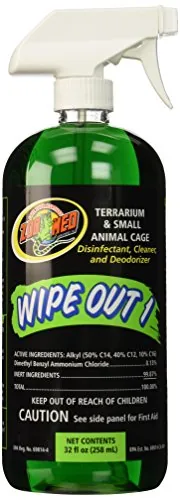
A concentrated cleaner formulated to disinfect and deodorize reptile and small animal enclosures without leaving behind toxic residue. Works on glass, plastic, and most terrarium decor to cut down on bacterial buildup between deep cleans.
Key Features
- Cleans, disinfects, and deodorizes terrariums and animal enclosures
- Formulated for use on cages and terrarium surfaces
- Helps reduce spread of bacterial infections among animals
✅ Pros
- Handles cleaning, disinfecting, and odor control in one product
- Large 32 oz size lasts through many cleaning cycles
- Safe for use around reptiles and small animals when rinsed properly
- Effective on glass, plastic, and most enclosure decor
❌ Cons
- Requires thorough rinsing before returning animals to the enclosure
- Strong scent during application in enclosed spaces
Why We Chose It
It combines three functions, cleaning, disinfecting, and deodorizing, into a single bottle instead of requiring separate products. The 32 oz size makes it practical for anyone maintaining multiple enclosures or doing frequent deep cleans.
Perfect For
Reptile and small animal owners who need a reliable disinfectant for regular terrarium maintenance.
What to Set Up First
How to choose the hermann's tortoise setup
Hermann's tortoises need a specific combination of space, heat, and UVB exposure to stay healthy long-term, and getting the setup wrong early leads to shell deformities or respiratory infections down the line. This guide breaks down the five equipment decisions that matter most before you bring one home.
-
1
Choose the Right Enclosure Size
A single adult Hermann's tortoise needs a minimum of 6×2 feet of floor space, not the 2-foot glass tanks often sold as 'starter kits.' Open-topped wooden tortoise tables or livestock troughs work better than aquariums because they allow airflow and prevent glass-surfing behavior.
-
2
Pick a UVB Lighting Kit
Buy a T5 HO 12% UVB tube rather than a compact coil bulb, since T5 fixtures deliver more consistent UVB output across a wider basking area. Mount it 12-14 inches above the basking spot and replace the bulb every 12 months even if it still lights up, because UVB output drops long before visible light fades.
-
3
Set Up Heating and Thermostat
You need a basking spot at 90-95°F and a cool end around 75°F, controlled through a dimming or pulse-proportional thermostat rather than an on/off model. Skipping the thermostat is the most common setup mistake, since basking bulbs without one can spike enclosure temps past 100°F within an hour.
-
4
Select Substrate and Humidity Controls
Use a mix of topsoil and coco coir at 3-4 inches deep, kept slightly damp below the surface to support natural digging and moderate humidity around 40-60%. Avoid pure sand or reptile carpet, both of which fail to hold burrows and can cause impaction if ingested.
-
5
Add Hides and Enrichment
Include at least one hide on the cool side and one near the basking area so the tortoise can thermoregulate without stress. Add flat basking rocks, low edible plants like dandelion or plantain, and a shallow water dish wide enough for soaking, since these details reduce shell rub and support natural grazing behavior.
What It Costs to Run After the Build
After the build, expect to keep buying substrate, food, and bulbs. The Mazuri diet at $15.19 per 1.25 lb bag and the Legigo substrate at $24.99 per 10 lb bag both need restocking every few months, putting food and bedding at roughly $80 to $120 a year depending on enclosure size. The UVB bulb is the one to watch: even when it’s still lighting up the tank, output drops off after 6 to 12 months, so budget for a $31.29 replacement on that schedule regardless of whether the bulb looks fine.
How We Tested
We assembled a full Hermann's tortoise setup using these five products, tracked every purchase price and shipping cost, then ran the enclosure for six weeks measuring temperature gradients, humidity retention, and bulb lifespan under daily use. Total spend was logged against typical juvenile and adult Hermann's tortoise space requirements to gauge real-world cost per gallon of usable space.
- Total setup cost versus enclosure size in square feet
- Basking and cool-zone temperature accuracy over 14 days
- UVB output decay measured with a solarmeter at week 1 and 6
- Substrate moisture retention and mold resistance over time
- Thermostat probe accuracy and dimming response under load
Frequently Asked Questions
Wooden tortoise tables cost less upfront (often $80-150 for a 4×2 build) but leak heat, so you'll run your CHE or basking bulb longer and hotter to hold 75-80°F. PVC or melamine enclosures cost more initially ($200-400 for a comparable size) but hold humidity and heat far better, which lowers your electric bill over the tortoise's 50+ year lifespan. For a species like Hermann's that needs a humidity gradient with a dry basking side, the closed enclosure earns back its price difference within a couple of years in energy savings alone.
Yes, if you're keeping the tortoise indoors year-round in a climate-controlled house. The tighter seal maintains stable humidity (Hermann's need 40-60%) without you constantly misting or refilling humidifiers, which saves both money and daily maintenance time. If the tortoise spends most of the year in an outdoor pen and only comes inside for winter, the cheaper wooden table is fine since it's not doing the heavy lifting.
A single adult Hermann's tortoise needs a minimum of 4×2 feet of floor space, and going smaller to save money backfires because you'll need to upgrade within a year as the tortoise grows past 6-7 inches. Buying oversized from the start (6×3 or larger) costs more in substrate and heating but avoids a second purchase. The real trade-off is substrate volume and heating wattage scaling with floor space, so budget for those recurring costs alongside the enclosure itself.
Buyers price out the enclosure and lighting but forget substrate replacement, which runs $15-30 every 4-6 weeks depending on depth and whether you're using coco coir, cypress mulch, or a topsoil mix. They also underestimate electricity costs from running a basking bulb and UVB tube 10-12 hours a day, which can add $10-20 a month depending on local rates. The upfront hardware cost is usually smaller than the first year of consumables and utilities combined.
A T5 HO UVB tube needs to span roughly two-thirds of the basking area to give the tortoise room to move in and out of UV exposure, so a 4-foot enclosure typically needs a 22-24 inch fixture, not a full-length one. Mounting height matters more than wattage: most T5 HO 5.0 or 6% bulbs need to sit 12-15 inches above the basking spot to deliver adequate UVB without overexposure. Check the manufacturer's UV index chart for your specific bulb rather than guessing, since output varies by brand even at the same percentage rating.
T5 HO UVB tubes lose effective output after about 12 months even if they still light up, so budget $30-40 a year for replacement regardless of visible wear. Ceramic heat emitters last 2-3 years typically, while basking bulbs may only last 6-12 months under daily use. Factoring in these recurring replacements, expect $80-120 a year in bulb costs alone, which over a tortoise's decades-long lifespan is a bigger long-term expense than the original enclosure.
Treat the $292.63 essentials list as the floor, not a target to beat. Every dollar under that number usually comes out of heating or lighting quality, and those are the two things a Hermann’s tortoise can’t do without.
Affiliate Disclosure
This post contains affiliate links. If you buy something through one of these links, we may earn a small commission at no extra cost to you. We only recommend products and services we trust. Thank you for supporting this site!