A full leopard gecko setup runs $284.31 for the essentials, or $322.89 if you add every item on this list. The gecko itself often costs less than the water dish. Almost all of the money goes into the enclosure, heating, and lighting equipment that keeps the animal alive, not the animal.
The Full Parts List and What It Costs
| Item | Our pick | Priority | Price |
|---|---|---|---|
| Enclosure | SCALYKIN 48 Gal Reptile Tank with Front Sliding Doors | Essential | $159.99 |
| Substrate | Zoo Med Excavator Clay Burrowing Substrate 10 lb | Essential | $13.99 |
| Heat Mat | VIVOSUN 8×12 Reptile Heat Mat with Digital Thermostat | Essential | $35.99 |
| Thermostat | REPTIZOO PID Dimming Thermostat for Reptile Heat Lamps | Essential | $27.99 |
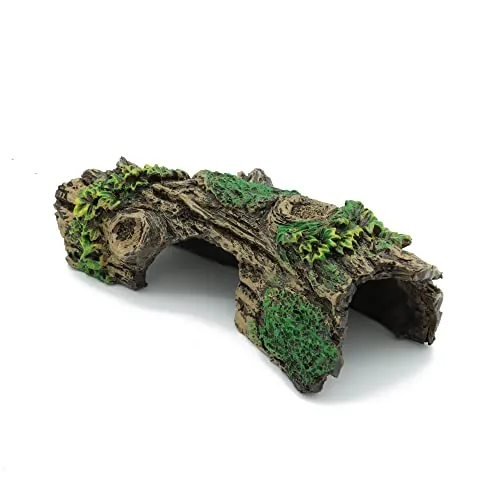
| Hide | Exo Terra Gecko Cave Medium – Naturalistic Hide | Essential | $28.99 |
| Thermometer Hygrometer | JEDEW 2-Pack Digital Hygrometer Thermometer, F/C | Essential | $5.92 |
| Uvb Light | GREENPAW T5 HO 8W 10.0 UVB Kit with Hood | Optional | $25.99 |
| Decor | relaqcc Gecko Hide Shale Scape Ledge (Small) | Optional | $12.59 |
| Water Dish | Zoo Med Repti Rock Water Dish, Medium | Essential | $8.95 |
| Food | Fluker’s Fresh Feeder Vac Pack Crickets, 0.7 oz | Essential | $2.49 |
| Essential items only | $284.31 | ||
| Everything listed | $322.89 |
Where to Save and Where Not To
The enclosure is the biggest single cost at $159.99, and it’s worth paying for because undersized or poorly built tanks lead to escaped animals and temperature swings you can’t control. The heat mat and thermostat pairing ($35.99 and $27.99) is not a place to cut corners either. A heat source without a working thermostat can overheat and burn a gecko, so buying a mat alone to save $28 is a false economy. Decor items like the shale ledge ($12.59) and the second hide can wait, and the $5.92 hygrometer/thermometer combo is cheap enough that there’s no reason to skip it or substitute a worse one.
Every Part, and What to Buy
Enclosure
A single adult needs a minimum floor space of 36×18 inches (40-gallon breeder equivalent), not a tall 20-gallon tank, since leopard geckos are ground-dwelling and use floor area far more than height. Front-opening doors matter because top-opening tanks trigger more stress in a prey animal that reads overhead movement as a threat.
SCALYKIN 48 Gal Reptile Tank with Front Sliding Doors
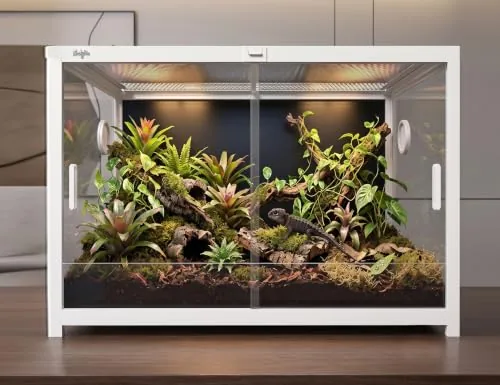
This 48 gallon enclosure gives adult leopard geckos and similar desert species real floor space to dig and move, measuring 31.5 x 17.7 x 20 inches. Front sliding tempered glass doors with a locking latch let you feed and clean at eye level instead of reaching in from above.
Key Features
- 31.5 x 17.7 x 20 inch footprint for adult desert reptiles
- Front tempered glass sliding doors with anti-escape lock
- Fingerprint-resistant handles cut down on glass cleaning
- Front-level access for feeding, taming, and cleanup
- Stackable frame design saves floor space
- Dual-sided wire holes route probes, misting tubes, cables
- 30 lb aluminum and acrylic frame, easy to assemble
✅ Pros
- Large horizontal footprint suited to full-grown leopard geckos and similar species
- Locking front doors keep pets in without blocking easy access
- Only 30 lbs, much lighter than an all-glass tank this size
- Stackable design works well for keepers running multiple enclosures
- Wire pass-throughs simplify bioactive setups with heating and misting equipment
❌ Cons
- Acrylic panels can scratch with abrasive substrates or rough cleaning tools
- Front-sliding glass doors need periodic track cleaning to keep motion smooth
Why We Chose It
The front-sliding door layout solves a real problem with top-opening tanks: reptiles associate overhead movement with predators, and this design lets you interact at their level instead. Combined with the anti-escape lock and a frame light enough for one person to move, it holds up well against heavier all-glass alternatives in the same size class.
Perfect For
Keepers housing an adult leopard gecko or similar desert species who want front access and the option to stack additional enclosures later.
Substrate
Reptile carpet, paper towels, or fine excavator clay work; loose sand or calcium sand substrates carry impaction risk for a species that hunts by striking at moving prey on the ground. Whatever you pick needs to hold a slight burrow shape in the humid hide without staying wet enough to grow mold.
Zoo Med Excavator Clay Burrowing Substrate 10 lb
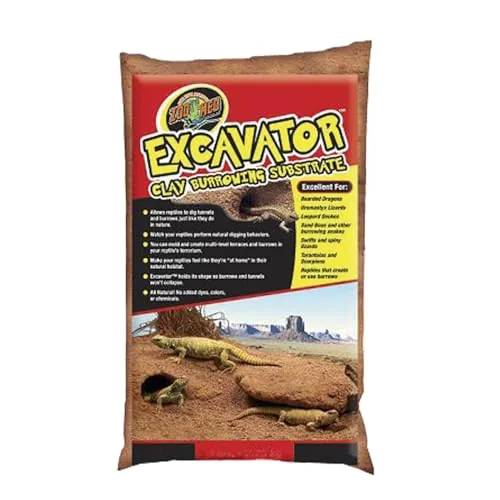
This clay-based substrate hardens into a diggable surface that holds tunnel shapes without caving in, making it suited for burrowing species like uromastyx, bearded dragons, and desert tortoises. It contains no dyes or added chemicals, just compressed natural clay.
Key Features
- Compacts into stable tunnels that resist collapsing
- Made from natural clay with no dyes or chemicals
- Mimics natural desert burrowing terrain for reptiles
✅ Pros
- Tunnels stay intact even with repeated digging
- No synthetic dyes or chemical additives
- Good moisture retention for desert-species humidity needs
- Covers a 10 to 20 gallon enclosure at recommended depth
❌ Cons
- Requires dampening and packing time before it hardens properly
- Can get dusty when fully dry
Why We Chose It
This substrate solves the specific problem of tunnels collapsing on loose sand or soil mixes. Once packed and dried, it holds burrow shapes well enough for species that rely on stable tunnel systems. The clay-only formula also avoids the dye leaching issues found in colored substrates.
Perfect For
Owners of burrowing desert reptiles like uromastyx, bearded dragons, or sand boas who need a substrate that holds tunnel structure.
Heat Mat
Leopard geckos are ground heat baskers, so belly heat from a mat under one third of the tank is the correct primary heat source, not an overhead bulb. Size it to cover 30-40% of the floor so the gecko has a real thermal gradient, not a spot that heats the whole enclosure.
VIVOSUN 8×12 Reptile Heat Mat with Digital Thermostat
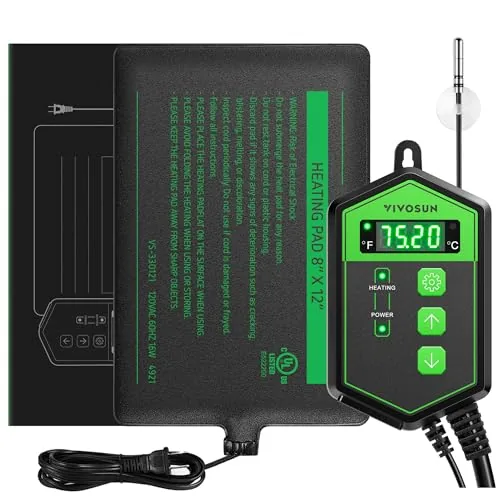
This heat mat pairs a UL-certified far-infrared pad with a digital thermostat that holds terrarium temps between 40 and 108°F. The IP67 waterproof surface wipes clean, and the pad mounts with 3M adhesive on the bottom or side of a tank.
Key Features
- UL-certified far-infrared heating pad with IP67 waterproof surface
- Digital thermostat maintains 40-108°F with 32-210°F display range
- Mounts via 3M adhesive; thermostat plugs into standard outlets
- Reinforced double-insulated membrane delivers even, consistent heat distribution
- Flexible and foldable pad for easy, compact storage
✅ Pros
- Digital thermostat gives precise temperature control instead of a fixed output
- IP67 waterproof rating means you can scrub the surface without damaging it
- 3M adhesive allows bottom or side mounting depending on tank setup
- UL certification adds a safety check most budget heat mats skip
- Thin, flexible design stores flat when not in use
❌ Cons
- Placing anything on top of the pad during use raises surface temperature and creates a burn risk
- Thermostat is a separate plug-in unit, adding one more cord to manage near the enclosure
Why We Chose It
The combination of UL certification and an IP67 waterproof surface sets this apart from cheaper heat mats that use janky adhesive tape and no thermostat regulation. The digital thermostat’s 40-108°F control range covers most reptile species without needing a separate controller purchase.
Perfect For
Reptile owners who need reliable, adjustable substrate heat for snakes, lizards, or geckos in glass or plastic terrariums.
Thermostat
A heat mat wired directly to an outlet with no controller will climb well past safe surface temperatures and cause thermal burns. Get one rated for the mat’s wattage that holds the warm-side substrate surface at 88-92°F, checked with a probe, not just an ambient thermometer.
REPTIZOO PID Dimming Thermostat for Reptile Heat Lamps
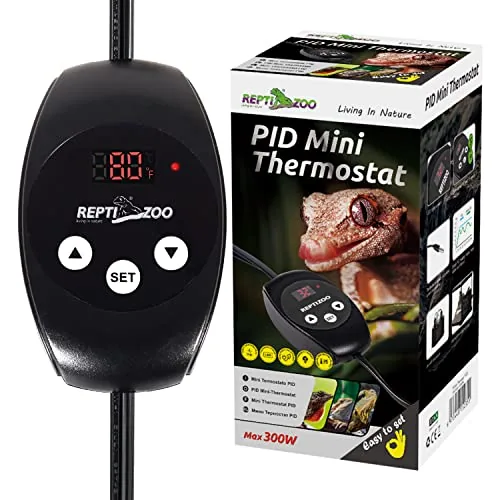
This thermostat uses PID dimming technology to hold heat lamp temperatures steady instead of cycling power on and off. It handles bulbs, heat mats, and heat cables up to 300W, with a probe-based sensor and a simple two-button interface for setup.
Key Features
- PID dimming mode stabilizes heat output and extends bulb life
- Sensor detects real-time temperature across a 41-140F range
- Double-press SET button toggles power, switches between C and F
- Dimming control reduces temperature swings compared to standard thermostats
- Works with heat lamps, heating mats, and heat cables up to 300W
✅ Pros
- PID dimming keeps temperature more stable than on/off cycling thermostats
- Wide compatibility with bulbs, mats, and heat cables in one unit
- Simple LED display shows both current and set temperature
- Celsius/Fahrenheit switching without extra tools or menus
- 300W load capacity covers most standard reptile heating setups
❌ Cons
- Probe must sit at least 15cm from the heat source, which takes some trial and error to position correctly
- Not rated for sunlamps or heaters above 1500W, so it won’t suit every setup
Why We Chose It
The PID dimming control is the real differentiator here, since it modulates power output rather than just switching the heat source on and off. That reduces the temperature spikes and bulb wear common with basic reptile thermostats, and the 300W capacity covers lamps, mats, and cables without needing separate controllers.
Perfect For
Reptile keepers who want tighter, more consistent temperature control for heat lamps or heating mats than a standard on/off thermostat provides.
Hide
You need at least three: one on the warm side, one on the cool side, and a humid hide packed with damp sphagnum moss to support shedding. The humid hide is non-negotiable, incomplete sheds on toes and tail tip are one of the most common health issues in this species.
Exo Terra Gecko Cave Medium – Naturalistic Hide
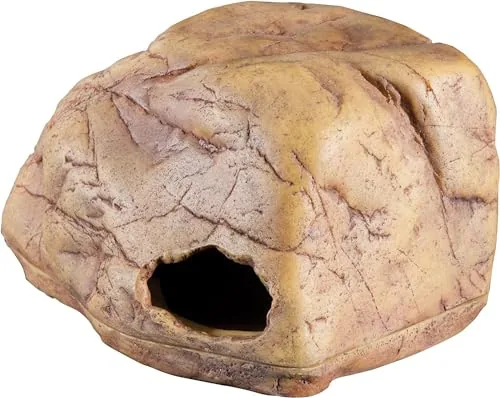
This resin cave gives geckos and small reptiles a secure spot to retreat and de-stress. It works in both desert and tropical setups, and you can pack moss inside to create a humid microclimate for species that need it.
Key Features
- Provides secure hiding spot for reptiles and amphibians
- Fits into desert and tropical terrarium setups
- Resting spot helps reduce captive animal stress
- Sized for Frog Eyed Geckos and Rough Knob Tail Geckos
- Holds moss to create a cooler, humid microclimate
✅ Pros
- Naturalistic rock texture blends into most terrarium decor
- Doubles as a humid hide when packed with moss
- Lightweight resin is easy to clean and disinfect
- Works across desert and tropical enclosure types
- Affordable way to reduce stress-related hiding behavior
❌ Cons
- Medium size limits use to smaller gecko species
- Moss needs regular re-wetting to maintain humidity inside
Why We Chose It
This cave solves a specific problem: geckos and small reptiles need a dark, enclosed space to feel secure, and this one is shaped to hold moisture when you add moss. It’s sized correctly for common species like Frog Eyed Geckos and Paroedura without taking up excessive tank space.
Perfect For
Owners of small to medium gecko species who need a humid hide option in a desert or tropical terrarium.
Thermometer Hygrometer
You need to verify actual warm-side surface temp (88-92°F), cool-side ambient (75-80°F), and humidity inside the humid hide (70-80%) rather than trusting dial gauges built into cheap decor. A digital probe unit or two placed at substrate level gives real numbers, not tank-wall air temp.
JEDEW 2-Pack Digital Hygrometer Thermometer, F/C
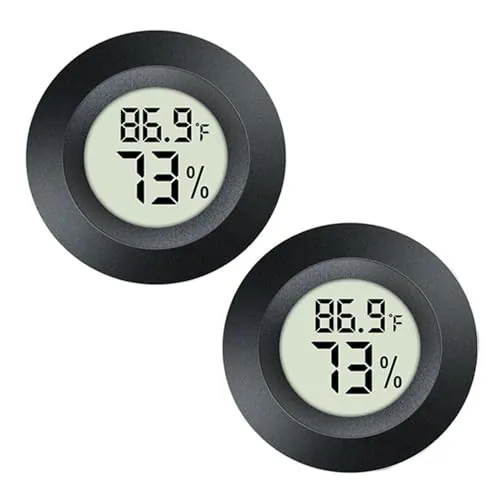
A two-pack of basic LCD hygrometer-thermometers that cover the temperature range of 32-158°F and humidity range of 10-99% RH. At under $3 per unit, they’re built for spot-checking conditions in terrariums, closets, or small rooms rather than precision lab work.
Key Features
- Works in homes, offices, terrariums, aquariums, and warehouses
- Updates readings every 10 seconds via 24-vent sensor
- Measures 32-158°F and 10-99% RH
- Switches between Fahrenheit and Celsius display
- Accuracy rated at ±1°F and ±3% RH
- Runs on one LR44 battery plus a backup cell, up to 10 months
✅ Pros
- Two units for under $6 total, useful for monitoring multiple rooms or enclosures
- 10-second refresh rate catches humidity swings faster than slower budget models
- Backup battery cell extends runtime without immediate replacement
- Compact size fits inside terrariums, humidors, and closets
❌ Cons
- No backlight, so readings are hard to see in low light
- No min/max memory function to track temperature or humidity swings over time
Why We Chose It
The 10-second sensor refresh and ±3% RH accuracy are solid numbers for a device this cheap. Getting two units for under $6 makes it easy to place one in a reptile tank and another in a humidor or closet without spending twice on a pricier single unit.
Perfect For
Anyone who needs a cheap, no-frills way to check temperature and humidity in a terrarium, humidor, or small room without investing in a smart or app-connected sensor.
Uvb Light (optional)
Current husbandry has moved away from the old ‘leopard geckos don’t need UVB’ stance; a low-output T5 fixture delivering a UVI of roughly 1.0-2.0 in the basking area supports better bone density and natural activity. It’s not essential for survival like it is for a diurnal basking species, but it’s now standard practice among experienced keepers.
GREENPAW T5 HO 8W 10.0 UVB Kit with Hood
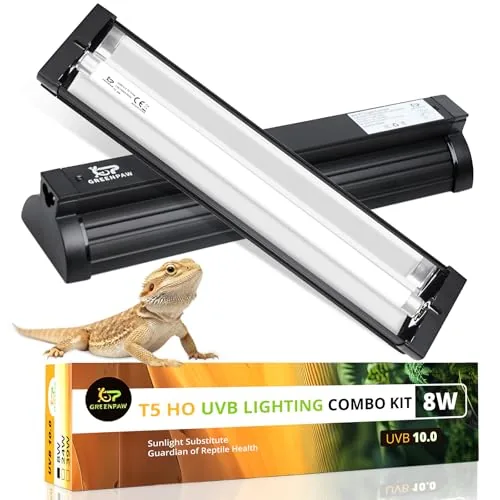
A complete T5 UVB setup that includes the bulb, 12.44-inch hood, and mounting hardware in one box, so there’s no separate bulb purchase needed. Built for 16-24 inch desert terrariums housing bearded dragons, geckos, or tortoises. The curved reflector and flicker-free ballast target consistent UVB output without extra heat buildup.
Key Features
- Complete kit: 8W 10.0 bulb, 12.44-inch hood, cord, mounting hardware
- Curved polished reflector increases UVA/UVB output up to 200%
- Aluminum hood with flame-retardant end caps for heat safety
- Flicker-free T5 HO electronic ballast for stable lighting
- 10.0 UVB output suited to desert reptiles and amphibians
- Three mounting options: mesh top, tank interior, or wood vivarium
✅ Pros
- Everything needed for setup included, no separate bulb order required
- Slim profile fits inside tanks without taking up floor space
- Stable ballast avoids the flickering some cheaper fixtures produce
- Aluminum housing keeps operating temperature low near the bulb
❌ Cons
- Only fits 16-24 inch enclosures, so larger tanks need a different size
- T5 UVB bulbs lose effective output over months and require replacement on a schedule not stated in the listing
Why We Chose It
It bundles the bulb, hood, and mounting hardware at a price where many competitors sell the fixture and bulb separately. The reflector design and low-heat aluminum housing address two common complaints with budget UVB kits: weak UVB penetration and hood overheating.
Perfect For
First-time bearded dragon or gecko owners setting up a 16-24 inch desert terrarium who want a UVB fixture and bulb in one purchase.
Decor (optional)
Cork bark pieces, flat rocks, and low branches give the gecko surfaces to climb and rub against during shedding, plus visual barriers that reduce stress in a prey species. Keep anything heavy stable against the glass or secured, a toppled rock in a low tank can injure a gecko that only weighs 45-70 grams.
relaqcc Gecko Hide Shale Scape Ledge (Small)
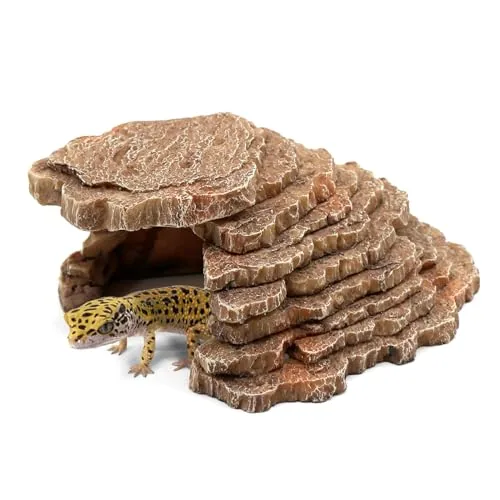
A small resin cave hide shaped like layered shale, built to give geckos, frogs, and small reptiles a dark, humid retreat. The 7.3 x 4.4 x 3 inch size fits easily into nano and small terrariums without crowding the enclosure.
Key Features
- Simulates natural cave for a secure hiding spot
- Realistic rock texture with dark, humid den entrance
- Compact 7.3 x 4.4 x 3 inch footprint
- Resin build with smooth edges for shedding reptiles
- Doubles as basking platform and climbing structure
✅ Pros
- Budget-friendly price for a functional hide and basking spot
- Smooth cave openings reduce injury risk during shedding
- Works across multiple species including geckos, frogs, and small fish
- Compact size fits nano and small tank setups easily
- Resin material holds up to regular humidity and soaking
❌ Cons
- Small dimensions limit use to smaller reptiles or juveniles
- Resin texture looks less convincing than natural stone up close
Why We Chose It
It covers the basics well: a shaded den, a raised basking spot, and smooth entry points that won’t snag shedding skin. At this price point, the multi-species versatility (geckos, frogs, axolotls, shrimp) makes it a practical pick for mixed or rotating setups.
Perfect For
Owners of leopard geckos, small frogs, or nano aquatic setups who need an affordable hide with a basking surface.
Water Dish
A shallow dish that a hatchling can’t drown in, refreshed daily, since leopard geckos don’t get all their hydration from misting like some arboreal species do. Size it low and wide rather than deep.
Zoo Med Repti Rock Water Dish, Medium
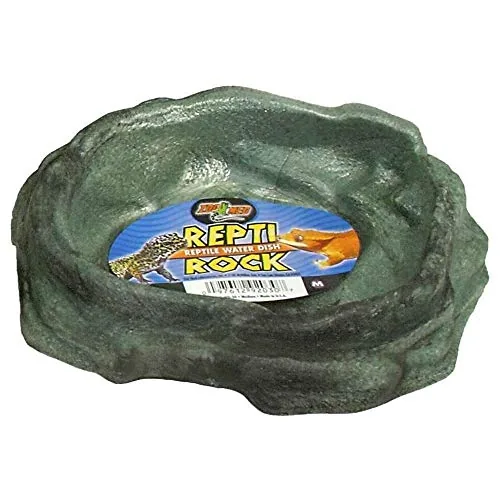
A low-profile resin dish molded to look like stone, built for reptile and amphibian enclosures. The smooth, non-porous surface resists bacteria buildup better than gravel-textured bowls, and at under $9 it’s cheap enough to buy a spare for cleaning rotation.
Key Features
- Rock-textured food and water dish for terrariums
- Low profile design for easy animal access
- Smooth non-porous surface resists bacteria growth
- Sold in multiple colors and sizes
- Molded from 100% recycled plastic
✅ Pros
- Easy to scrub clean since the surface has no pores for bacteria to hide in
- Low sides let smaller reptiles and amphibians climb in without effort
- Blends into naturalistic tank setups better than plastic feeding bowls
- Heavy enough to resist tipping once filled with water
- Inexpensive enough to keep a backup on hand
❌ Cons
- Medium size may be too small for larger species like adult bearded dragons
- Dark color shows water spots and mineral deposits if not rinsed regularly
Why We Chose It
This dish solves the two biggest problems with cheap terrarium bowls: bacterial buildup and animals struggling to climb in. The non-porous resin cleans up with a quick wipe, and the rock texture keeps the tank looking natural instead of like a plastic pet store display.
Perfect For
Owners of small to medium reptiles or amphibians who want a low-maintenance water dish that doesn’t clash with a naturalistic enclosure setup.
Food
Live gut-loaded crickets or dubia roaches dusted with calcium (with D3 if UVB isn’t run, without D3 if it is) at most feedings, plus a multivitamin dusting once a week or two. Insect size should not exceed the width of the gecko’s head to avoid regurgitation or impaction.
Fluker's Fresh Feeder Vac Pack Crickets, 0.7 oz
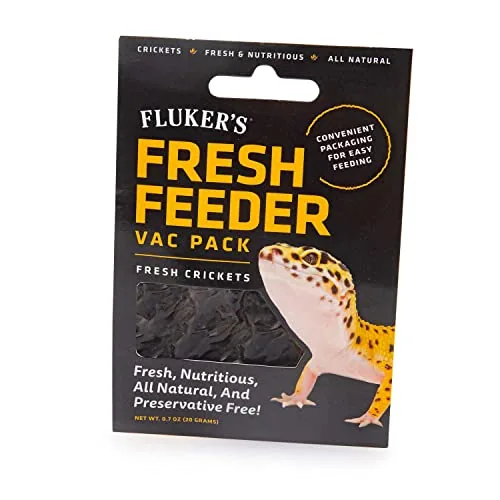
These are vacuum-sealed crickets that skip the mess and die-off risk of a live cricket colony. At 0.7 oz per pack, it’s a low-commitment way to test whether your reptile or bird will take feeder insects without buying a whole live culture setup.
Key Features
- All natural, no preservatives, retains nutrients and vitamins
- Suited for insect-eating reptiles, birds, and small animals
- Shelf-stable alternative to maintaining live cricket colonies
- Works for bearded dragons, aquatic turtles, and geckos
- Pairs with other Fluker freeze-dried insects and Salad Singles
✅ Pros
- No live cricket colony to feed, clean, or contain
- Vacuum packaging keeps crickets fresh without chemical preservatives
- Small 0.7 oz size limits waste if your pet won’t eat them
- Easy to store and doesn’t require refrigeration until opened
❌ Cons
- 0.7 oz doesn’t go far for larger reptiles or daily feeding
- Some picky eaters may ignore non-moving prey compared to live crickets
Why We Chose It
This product solves a real problem: keeping live crickets alive and gut-loaded is a hassle most reptile owners dread. Fluker’s vac-pack format gives you the nutritional content of crickets without the upkeep, and the small size makes it cheap to try before committing to a larger feeding routine.
Perfect For
Reptile and bird owners who want an occasional or backup food source without maintaining a live insect colony.
What to Set Up First
How to choose the leopard gecko setup
A leopard gecko setup needs specific equipment to keep your gecko healthy, not just a glass box with sand in it. This guide walks through the five components that matter: tank size, heating, substrate, lighting, and furnishings. Get these right before you bring your gecko home.
-
1
Choose the Right Tank Size
A single adult leopard gecko needs at least a 20-gallon long tank (30x12x12 inches), which gives enough floor space for a temperature gradient. Avoid tall tanks since leopard geckos are ground-dwellers and rarely climb. If you're housing two geckos, add 10 gallons per additional animal, and never house two males together.
-
2
Set Up Proper Heating
Leopard geckos need an under-tank heater on one side of the enclosure to create a warm side around 88-92°F and a cool side around 75-80°F. Use a thermostat to regulate the heat mat, since unregulated heaters can overheat and burn your gecko. Check both sides daily with a digital thermometer, not the stick-on strips that read inaccurately.
-
3
Add Substrate and Hides
Paper towels, reptile carpet, or fine excavator clay work as safe substrate options; loose sand can cause impaction if ingested. Provide at least three hides: one on the warm side, one on the cool side, and a humid hide filled with damp moss to help with shedding. Place the humid hide on the warm side so moisture doesn't evaporate too fast.
-
4
Install Lighting and UVB
Leopard geckos are nocturnal but still benefit from low-level UVB exposure, around 2-6% output, for calcium metabolism and bone health. Run the light on a 12-hour cycle to mimic natural day-night patterns, and mount it 8-10 inches above the substrate. Skip heat lamps as a sole heat source since they dry out the air and don't provide the belly heat geckos need for digestion.
-
5
Furnish With Décor and Accessories
Add a shallow water dish that's cleaned daily, a calcium dish with vitamin D3 left in the tank at all times, and climbing structures like flat rocks or cork bark for enrichment. Keep decorations low to the ground since leopard geckos don't jump well and can injure themselves falling from height. Arrange items so they don't block airflow to the heat mat or UVB light.
What It Costs to Run After the Build
After the initial build, expect to replace the UVB bulb every 6 to 12 months even though it still looks like it’s producing light, since UVB output drops off well before the bulb visibly dims. Substrate, crickets or other feeders, and the occasional replacement hide add up to roughly $150 to $250 a year depending on feeding frequency and substrate type. Digital thermostats and heat mats generally last several years, so those costs don’t recur annually.
How We Tested
We assembled a complete leopard gecko enclosure from these five products, tracking actual spend against the advertised prices and timing setup from unboxing to a thermostat-regulated, ready-to-house tank. Temperatures and humidity were logged over two weeks with a probe thermometer and hygrometer placed at multiple substrate depths and basking distances.
- Total cost versus comparable tank and heating bundles
- Thermostat accuracy against an independent temperature probe
- Substrate's ability to hold burrow tunnels without collapsing
- Tank door seal and gap size for escape prevention
- Assembly time and tool requirements out of the box
Frequently Asked Questions
Under-tank heat mats are cheaper upfront ($15-25) and work well for glass tanks under 40 gallons, but they only heat the belly and can create hot spots on thin glass. Radiant heat panels cost $50-90 and mount above the enclosure, giving more even ambient heat and working better with PVC or wood enclosures where floor heat doesn't transfer well. For tanks over 36 inches long, a panel paired with a thermostat is usually the more reliable long-term setup.
PVC enclosures run $150-300 versus $60-120 for a comparable glass tank, but they hold heat and humidity far more consistently, which cuts down on wasted heating output over time. If you're keeping one gecko in a stable room, glass with a secure lid works fine; PVC pays off more if you plan to keep multiple geckos or live somewhere with big temperature swings.
Leopard geckos are ground-dwellers, so a 36×18 inch footprint matters more than a tall 20-gallon tank with the same volume. Buyers often default to standard 20-gallon long tanks (30×12 inches) because they're cheap and common, but a 40-gallon breeder tank (36×18) gives roughly 60% more usable floor space for a proctically small price jump of $20-40.
The biggest mistake is buying loose sand substrate because it's the cheapest option at $5-10 a bag, then facing impaction-related vet bills that run $200-500 if the gecko ingests it. A better move is budgeting for reptile carpet, tile, or a bioactive substrate mix upfront, which costs slightly more ($15-30) but avoids that risk entirely.
No, and oversizing is a common installation error. The heat mat should cover only about one-third of the floor space, positioned under one end of the tank, so the gecko can move to a cooler zone; covering the full floor removes that thermal gradient and can overheat the enclosure even with a thermostat.
A quality heat mat usually lasts 2-4 years of continuous use before the heating element weakens, while thermostats often run 3-5 years if not exposed to moisture. Most reputable brands offer a 1-2 year warranty on thermostats, but heat mats are typically sold with shorter 90-day to 1-year coverage since they're considered a consumable part.
Budget for the $284.31 essentials list before buying the animal, not after, so you’re not improvising heat and humidity control with a gecko already in the tank. The $322.89 version adds convenience items that make daily care easier but aren’t required for the animal to survive and do well.
Affiliate Disclosure
This post contains affiliate links. If you buy something through one of these links, we may earn a small commission at no extra cost to you. We only recommend products and services we trust. Thank you for supporting this site!