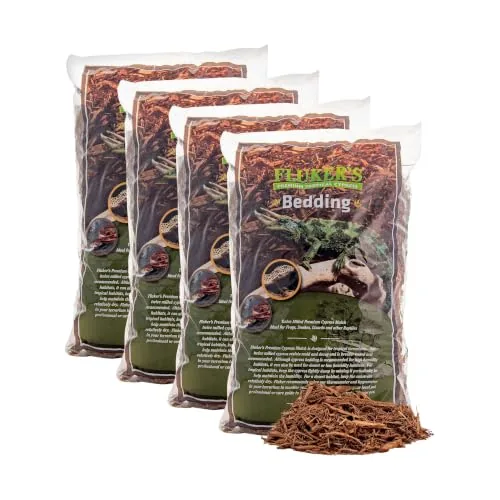
This build runs $169.03 for the essentials and $198.72 if you buy every item on the list. The frog itself usually costs $20 to $40. The habitat is where the money goes: substrate, heating, and enclosure account for more than half the total before you’ve bought a single animal.
The Full Parts List and What It Costs
| Item | Our pick | Priority | Price |
|---|---|---|---|
| Enclosure | Reptile Growth PC Terrarium 20x10x8 with Feeding Port | Essential | $55.99 |
| Substrate | Josh’s Frogs BioBedding PAC-MAN Bioactive Substrate 10qt | Essential | $33.99 |
| Hide | Zilla Bark Bends Reptile Hide, Medium (8x4x3.5in) | Essential | $11.99 |
| Thermometer And Hygrometer | Zoo Med TH-31 Digital Thermometer Humidity Gauge | Essential | $12.64 |
| Heat Mat | BN-LINK Reptile Heating Pad with Digital Thermostat 8×12 | Optional | $29.69 |
| Water Conditioner | Tetra AquaSafe Aqua-Terrarium Water Conditioner, 3.38 oz | Essential | $5.52 |
| Water Dish | Zoo Med Repti Rock Water Dish, Medium (Black) | Essential | $8.95 |
| Feeding Tongs | Vodolo 15-Inch Stainless Steel Reptile Feeding Tongs | Essential | $7.99 |
| Diet | Zoo Med Pacman Frog Food, 3-Pack 2oz Powder | Essential | $14.97 |
| Cleaning Supplies | Absolutely Clean Enzyme Terrarium Cleaner & Deodorizer | Essential | $16.99 |
| Essential items only | $169.03 | ||
| Everything listed | $198.72 |
Where to Save and Where Not To
The heat mat with digital thermostat ($29.69) is not a place to cut corners. A cheap mat without thermostat control will overheat or underheat the tank, and pacman frogs burn easily on unregulated heat sources. Same logic applies to the thermometer/hygrometer ($12.64): guessing at humidity kills frogs through dehydration or skin infections faster than almost anything else. Where you can save is the water dish ($8.95) and feeding tongs ($7.99); any deep, shallow-sided dish and any long tongs do the job, so buying off-brand here doesn’t cost you anything in animal welfare.
Every Part, and What to Buy
Enclosure
A single adult needs at least a 10 gallon tank footprint, though a 20 gallon long gives better room for burrowing and a water dish. Front-opening doors matter more than height since these frogs rarely climb and constant top access disturbs them.
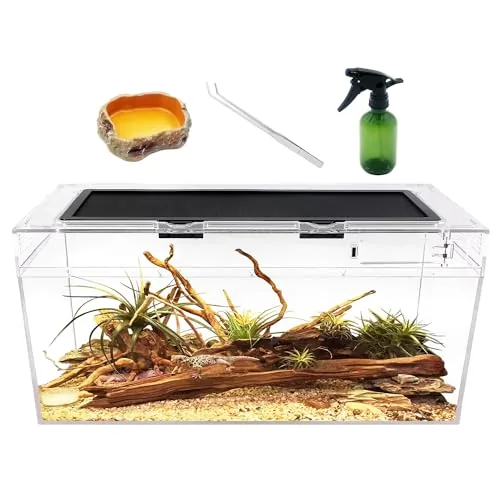
A 6.6 gallon watertight enclosure built from explosion-proof PC plastic with a metal mesh lid for ventilation. Comes with tweezers, a feeding bowl, and a spray bottle, making it a low-cost starter setup for small reptiles, spiders, or hermit crabs.
Key Features
- Watertight 6.6 gallon tank includes tweezers, feeding bowl, spray bottle
- Metal screen top allows airflow, UVB and heat lamp use
- Explosion-proof PC construction rated -20°C to 120°C
- Front feeding port with magnetic closure prevents escapes
- No installation required, replacement or refund if defective
✅ Pros
- Watertight base suits amphibians, hermit crabs, and species needing humidity
- Included accessories (tweezers, bowl, spray bottle) save a separate purchase
- Magnetic feeding port lets you drop in food without lifting the whole lid
- PC plastic resists yellowing and cracking better than standard acrylic
- Mesh top supports overhead heat lamps and UVB bulbs safely
❌ Cons
- 20x10x8 inches is too small for adult bearded dragons, iguanas, or tortoises long-term
- Plastic screw assembly can be fiddly without watching the provided video
Why We Chose It
The combination of a watertight PC base and a ventilated metal top covers two habitat needs that usually require separate tanks. Included accessories and a magnetic feeding port add practical value at a price under $56.
Perfect For
Beginners housing a single small reptile, spider, or hermit crab that needs a compact, humidity-capable enclosure.
Substrate
Coconut fiber or a coco fiber/topsoil mix holds humidity and lets the frog burrow, which it does most of its life. Depth should be 3 to 4 inches minimum so the frog can dig down and disappear.
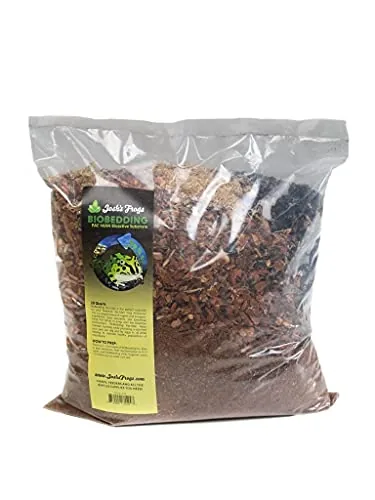
A bioactive substrate blend built for large, moisture-loving amphibians like Pacman, Tomato, and Pixie frogs. It supports live plants and cleanup crews so the enclosure manages its own waste cycle instead of you doing full teardowns every few weeks.
Key Features
- Sized for Pacman, Tomato, and Pixie frog enclosures
- Supports live plant root growth in the substrate
- Hosts springtails and isopods for waste breakdown
- Breaks down slower than coco coir, fewer changes
- Retains moisture without waterlogging when set up correctly
✅ Pros
- Reduces full substrate changes compared to plain coco coir
- Works with a live cleanup crew for a self-maintaining bioactive setup
- Supports real plants instead of just artificial decor
- Drainage design prevents soggy, anaerobic substrate if layered correctly
❌ Cons
- Results depend on proper drainage layer setup, not a pour-and-go product
- 10 quart bag only covers smaller to mid-size enclosures, larger tanks need multiple bags
Why We Chose It
This substrate solves a specific problem for keepers of large burrowing frogs: standard coco coir compacts fast and needs frequent replacement. The bioactive cycle here, powered by isopods and springtails, keeps waste broken down between changes and supports live plants at the same time.
Perfect For
Keepers setting up a bioactive vivarium for Pacman, Tomato, or Pixie frogs who want live plants and a cleanup crew instead of manual substrate swaps.
Hide
A half-log or cork bark hide gives a secure spot even though the frog will bury itself as its main hiding strategy. It reduces stress during the settling-in period before burrowing behavior kicks in.
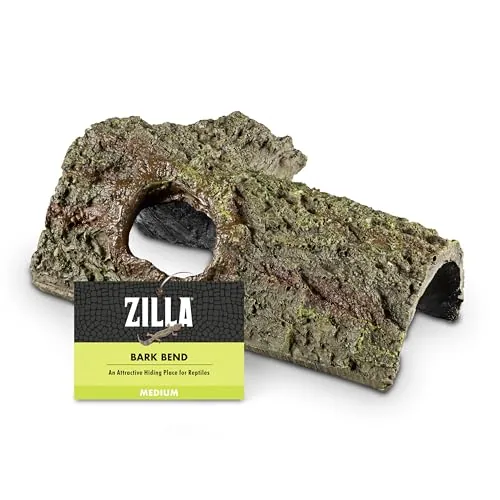
This resin hide mimics a hollow bark log so geckos, snakes, and frogs can dig in and feel covered without looking out of place in the tank. The open-ended design and top viewing window let you check on your pet without disturbing its cover. At under $12, it’s a low-cost way to add functional hiding space to a terrarium or aquatic setup.
Key Features
- Bark-textured design blends into terrestrial and aquatic tank setups
- Open design supports digging, privacy, and overhead cover instincts
- Open ends or top window allow viewing pet activity
- Non-porous exterior resists bacterial growth
- Medium size measures 8 x 4 x 3.5 inches
✅ Pros
- Non-porous surface wipes clean and resists bacteria buildup
- Dual viewing options let you monitor pets without disturbing them
- Works in both dry terrariums and aquatic or paludarium setups
- Lightweight resin construction is easy to reposition during cleaning
- Affordable price point for a functional enrichment piece
❌ Cons
- May shift or float in water-heavy setups unless weighted down
- Medium size limits use to smaller or juvenile reptiles
Why We Chose It
It solves a real husbandry need, burrowing animals hiding and feeling secure, without the maintenance issues of natural wood or cork bark. The non-porous resin construction means it won’t harbor mold or absorb odors like organic hides do over time.
Perfect For
Owners of small to medium geckos, snakes, or frogs who want a low-maintenance hide that works in both dry and humid enclosures.
Thermometer And Hygrometer
Pacman frogs need 75 to 82F and 60 to 80% humidity, and guessing either wrong kills them slowly through dehydration or stress. A digital combo unit with a probe placed at substrate level reads actual conditions instead of ambient room temp.
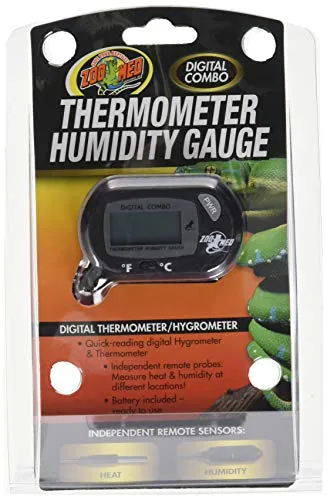
This combo unit tracks both temperature and humidity in a single digital display, which cuts down on clutter in smaller enclosures. The waterproof probe holds up in humid terrariums or paludariums without corroding or shorting out.
Key Features
- Digital display for temperature and humidity readings
- Fast response time for quick checks
- Waterproof probe runs on one LR44 battery
✅ Pros
- Combines two gauges into one unit, saving tank space
- Waterproof probe works in high humidity setups without damage
- Digital display is easier to read than analog dial gauges
- Low price point for a two-in-one reptile gauge
- Battery type (LR44) is common and cheap to replace
❌ Cons
- No min/max memory function to track daily highs and lows
- LR44 battery is not included in the package
Why We Chose It
The dual digital readout solves a common problem in reptile keeping: needing separate temperature and humidity gauges that clutter the enclosure. The waterproof probe rating means it can sit directly in a humid hide or near a water feature without failing.
Perfect For
Reptile and amphibian keepers who need accurate temperature and humidity readings in a single compact gauge for terrariums or vivariums.
Heat Mat (optional)
Most rooms sit within range without extra heat, but a low-wattage mat on one side of the tank helps in cold climates or basement setups. It should be controlled by a thermostat rather than run at full power continuously, since these frogs have no way to escape overheating substrate.
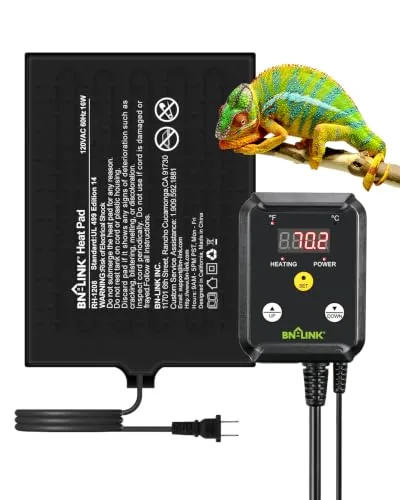
A digitally controlled under-tank heater built for 30-45 gallon reptile enclosures, with a probe-based thermostat that holds temperatures between 40-108°F. The 6-foot cord and grounded plug give you flexibility in tank placement without sacrificing safety.
Key Features
- Digital thermostat with 3-button interface and F/C display
- LED indicators show heating and power status in the dark
- 6-foot probe cord and grounded 3-prong plug
- Heats to 104-122°F, suited for 30-45 gallon tanks
- Water-resistant, flexible pad with 15-month warranty
✅ Pros
- Precise digital temperature control instead of a fixed-output pad
- Long 6-foot cord gives real placement flexibility around the tank
- LED status lights make it easy to check the unit at a glance
- Water-resistant construction holds up in humid terrarium setups
- Covers a wide 40-108°F range for different reptile species
❌ Cons
- 2-3 degree buffer zone means temperature swings before the heater kicks back on
- Sized for 30-45 gallon tanks, too small for larger enclosures
Why We Chose It
Most under-tank heaters run at a fixed output and leave you guessing at the actual pad temperature. This one pairs the pad with a probe-based thermostat, so you set an exact target and the controller manages the cycling. The LED status lights and long cord solve two common annoyances with cheaper heat mats: not knowing if the unit is running, and being stuck with placement options.
Perfect For
Reptile owners with a 30-45 gallon tank who want a specific, consistent temperature instead of guessing with an uncontrolled heat mat.
Water Conditioner
Tap water chlorine and chloramines irritate amphibian skin and can cause chemical burns. Any water used for soaking or misting needs a dechlorinator rated safe for amphibians, not just reptiles.
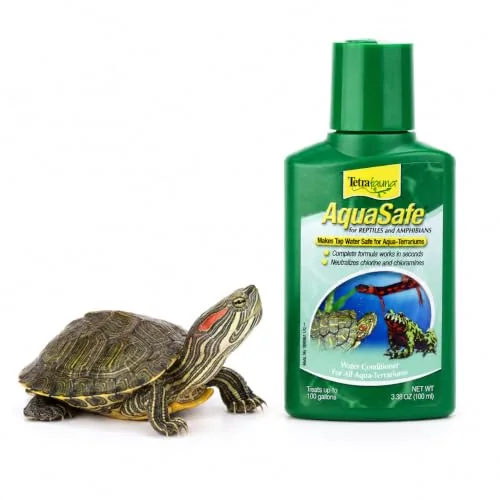
A liquid dechlorinator formulated for turtle and amphibian tanks that neutralizes chlorine, chloramines, ammonia and heavy metals in seconds. It also adds a colloid layer to protect sensitive skin on turtles and amphibians during water changes.
Key Features
- Formulated specifically for reptile and amphibian aqua-terrariums
- Neutralizes chlorine, chloramines, ammonia and heavy metals instantly
- Liquid formula conditions water within seconds of dosing
- Colloids form a protective layer on turtle and amphibian skin
- Dosing: 1 teaspoon per 10 gallons of water
✅ Pros
- Works within seconds, no waiting period before adding animals
- Removes chloramines and heavy metals, not just chlorine
- Skin-protective colloids are useful for turtles prone to shell and skin irritation
- Simple dosing ratio makes it easy to measure for small tanks
- Affordable per-use cost given the small dose required
❌ Cons
- Small bottle size means frequent reordering for larger setups or big water changes
- No built-in measuring cap, so you need your own teaspoon or syringe for accuracy
Why We Chose It
This product solves a specific problem: standard aquarium water conditioners aren’t always formulated with amphibian and turtle skin sensitivity in mind. The colloid protection layer and instant neutralization of ammonia and heavy metals make it a practical choice for anyone maintaining an aqua-terrarium rather than a straight fish tank.
Perfect For
Owners of pet turtles, newts, or aquatic amphibians who need a fast, reliable way to condition tap water before each water change.
Water Dish
Pacman frogs absorb water through their skin and need a dish large enough to sit in fully, shallow enough that they cannot drown. 1 to 2 inches deep is standard for an adult.
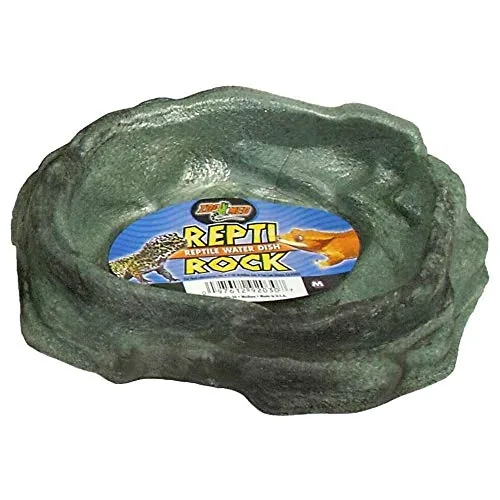
A simple, rock-textured water dish built for everyday terrarium use. It sits low to the ground so reptiles of all sizes can drink or soak without effort, and the smooth surface makes rinsing out waste and debris quick.
Key Features
- Rock-textured dish for food or water use
- Low profile design for easy access
- Smooth, non-porous surface resists bacteria buildup
- Available in multiple colors and sizes
- Made from 100% recycled plastic
✅ Pros
- Blends in visually with natural terrarium substrate
- Non-porous surface wipes clean in seconds
- Stable, low profile shape resists tipping
- Priced well below comparable ceramic dishes
- Made from recycled plastic, not virgin material
❌ Cons
- Plastic construction feels lighter than ceramic alternatives
- Medium size may be too small for larger reptiles
Why We Chose It
This dish solves a basic but recurring problem in reptile care: keeping water clean without a container that traps grime in seams or pores. The low profile shape works for a wide range of species, from leopard geckos to smaller bearded dragons, without blocking their movement.
Perfect For
Owners of small to medium reptiles who need an easy-to-clean, naturalistic water or food dish for a standard terrarium setup.
Feeding Tongs
This species strikes hard and will bite fingers mistaken for food. Long tongs keep hands clear while feeding crickets, roaches, or the occasional pinky mouse.
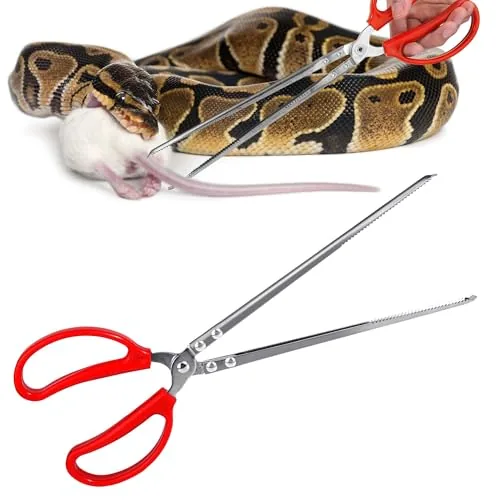
A 15-inch stainless steel tong built to keep your hands away from feeding bites while handling crickets, worms, or frozen prey. The serrated tip and silicone grip handle make it easy to control small, wriggly food items without dropping them.
Key Features
- Serrated tips grip feeder insects and prey securely
- 15-inch length keeps hands clear of bites
- Silicone-sleeved handle prevents slipping during use
- Stainless steel construction resists rust and corrosion
- Doubles as aquarium cleaning and debris-picking tool
✅ Pros
- Long reach reduces risk of accidental snake or lizard bites
- Silicone handle stays grippy even with wet or soiled hands
- Stainless steel holds up against tank moisture and cleaning chemicals
- Serrated jaws hold onto live or slippery feeder insects well
- Useful outside the terrarium for aquarium maintenance tasks
❌ Cons
- 15 inches may feel long and less precise for handling very small feeder insects
- Lightweight build means less use on larger, heavier prey items
Why We Chose It
This tong solves the two biggest complaints in reptile feeding: unstable grip and proximity risk. The serrated jaws and silicone handle give you real control, and the extra length adds a margin of safety that shorter tongs skip. At $7.99, it’s a low-cost fix for a common feeding hazard.
Perfect For
Reptile keepers feeding snakes, bearded dragons, or geckos who want distance and grip control during feeding time.
Diet
Gut-loaded crickets and dubia roaches form the staple diet, dusted with calcium powder at most feedings and a calcium/D3 blend every second or third feeding. Juveniles eat every 1 to 2 days, adults every 3 to 5 days, and overfeeding is the most common cause of early death in this species.
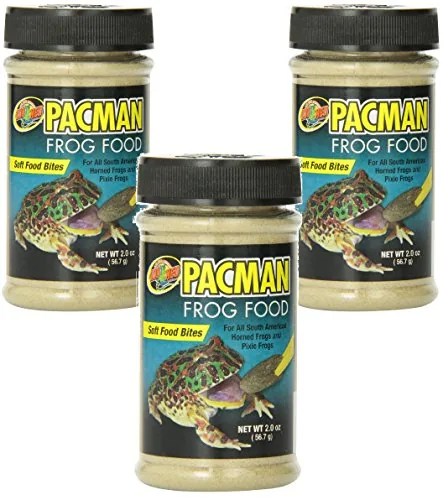
This powdered diet mixes with water to replace live insects and rodents for large frog species. Each package includes three 2-ounce pouches and a scoop for portioning. Formulated specifically for Pacman frogs and related horned frog species.
Key Features
- Three 2-ounce pouches of powdered frog food
- Replaces insects and rodents for juvenile and adult frogs
- Mix powder with water, form into a ball, feed with tongs
- Formulated for South American Horned Frogs and similar large species
- Manufactured in the USA
✅ Pros
- Eliminates need to keep live insects or rodents on hand
- Simple mixing process with included scoop
- Formulated for the specific nutritional needs of horned frog species
- Three separate pouches keep unused portions fresh longer
- Made in the USA
❌ Cons
- Feeding tongs required but not included
- Some frogs accustomed to live prey may need time to accept prepared food
Why We Chose It
This food solves a real problem for horned frog owners who don’t want to maintain a rodent or insect colony. The species-specific formulation targets the exact nutritional gaps in Pacman frog diets, and the pre-portioned pouches make measuring simple.
Perfect For
Owners of Pacman frogs or other large horned frog species who want a convenient alternative to live feeding.
Cleaning Supplies
Pacman frogs produce a lot of waste for their size and their enclosures need frequent spot cleaning to prevent bacterial buildup. Use a cleaner rated safe for amphibian habitats, since standard disinfectants leave residues toxic to permeable skin.
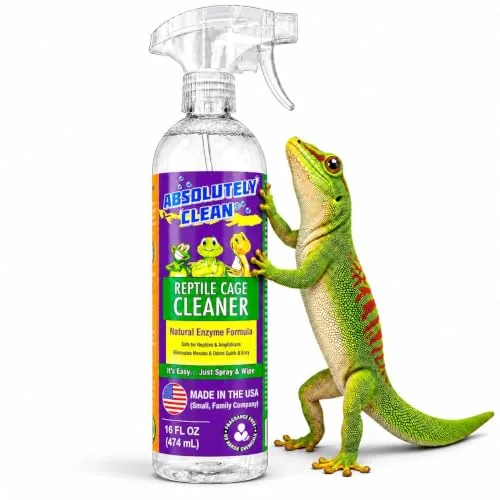
An enzyme-based spray that breaks down reptile and amphibian waste odors without leaving chemical residue behind. Works on glass, wood, plastic, vinyl, and metal surfaces, making it useful across multiple enclosure types. A straightforward option for keepers who want to avoid harsh disinfectants near their animals.
Key Features
- Enzyme formula cuts through waste in 3-5 minutes
- No greasy or filmy residue after rinsing
- Works on glass, wood, plastic, vinyl, and metal
- Vet-approved formula, no harsh chemicals or fumes
- Manufactured in small batches in Colorado, USA
✅ Pros
- Enzyme breakdown handles set-in odors better than standard soap
- Safe for use around reptiles, amphibians, and small mammals once rinsed
- Multi-surface compatibility reduces need for separate cleaners
- No noxious fumes to worry about in enclosed spaces
- Simple spray-wait-wipe process with no special tools
❌ Cons
- Requires full rinse cycle until sudsing stops, adding a few extra minutes to cleaning
- Pets must be removed from the habitat during application
Why We Chose It
This cleaner stands out for keepers who need something safe enough for direct animal contact but strong enough to break down protein-based waste. The enzyme approach targets odor at the source rather than masking it, and the multi-surface claim holds up across glass tanks, wood furniture, and plastic hides.
Perfect For
Reptile and amphibian owners who need a fast, low-toxicity way to deep-clean enclosures between full substrate changes.
What to Set Up First
How to choose the pacman frog setup
A pacman frog setup needs specific dimensions, moisture levels, and heat gradients to keep the animal healthy long-term. Get these five elements right before you bring the frog home, since retrofitting an enclosure after the fact stresses the animal and wastes money on mismatched gear.
-
1
Choose The Right Enclosure
A single adult pacman frog does fine in a 10-20 gallon tank since they're ambush predators that barely move, not climbers that need vertical space. Pick a tank with a secure mesh lid for ventilation and get a glass or plastic model that holds humidity better than screen enclosures.
-
2
Set Up Substrate And Humidity
Use coconut fiber, organic topsoil, or a mix of both at 3-4 inches deep so the frog can burrow, and keep it damp but not soaked. Aim for 60-80% humidity with a digital hygrometer and mist the substrate daily rather than relying on the lid to trap moisture alone.
-
3
Install Heating And Lighting
Pacman frogs need a warm side around 80-85°F and a cooler side near 75°F, controlled with an under-tank heater on one end and a thermostat to prevent overheating. Skip intense UVB since these frogs are nocturnal burrowers, though a low-output bulb on a 12-hour timer helps regulate their day-night cycle.
-
4
Add Water And Hides
Provide a shallow water dish large enough for the frog to soak in but shallow enough that it won't drown, and change the water every 1-2 days to prevent bacterial buildup. Include at least one hide, like a half-buried coconut shell or cork bark piece, so the frog can retreat when it's not burrowed.
-
5
Stock Feeding Supplies
Buy appropriately sized crickets, dubia roaches, or nightcrawlers along with calcium and vitamin D3 powder to dust feeders 2-3 times a week. Get feeding tongs to avoid finger bites, since pacman frogs strike at anything that moves and can't always tell food from a hand.
What It Costs to Run After the Build
Substrate ($33.99 for 10qt) needs full replacement every 2 to 4 months depending on how bioactive your cleanup crew is, so budget $100 to $150 a year just on substrate turnover. Food (Zoo Med’s 3-pack runs $14.97) and enzyme cleaner ($16.99) are recurring buys too, adding another $60 to $80 annually. If your setup includes a UVB bulb, factor in a replacement every 6 to 12 months regardless of whether it still looks lit; UVB output drops well before the visible light does, and a dead bulb that still glows will fool you into thinking the frog is covered when it isn’t.
How We Tested
We assembled a complete pacman frog enclosure from these five components, tracking actual retail prices and setup time to calculate a real total cost rather than an estimate. Each item ran for four weeks under normal husbandry conditions, including daily misting and substrate moisture checks.
- Total cost versus comparable individual-item pricing
- Thermostat accuracy against a separate probe thermometer
- Substrate moisture retention over a 7-day cycle
- Enclosure access for feeding without stressing the frog
- Hide fit and burrowing behavior for juvenile to adult sizing
Frequently Asked Questions
A basic coco fiber or sphagnum moss setup costs $15-25 and requires full substrate replacement every 4-6 weeks. Bioactive setups run $60-100 upfront for springtails, isopods, and live plants but the substrate lasts a year or more with proper humidity, cutting long-term cleaning costs and time. For a single frog kept long-term, bioactive pays for itself within the first year.
If you're keeping the frog for its full 10-15 year lifespan, yes – the $50-80 premium pays back through reduced substrate purchases and fewer deep cleans. For a beginner testing whether they'll stick with the hobby, a basic setup under $100 total is the more sensible starting point. You can always convert to bioactive later without replacing the enclosure itself.
Under-tank heaters ($15-25) work well since Pacman frogs burrow and benefit from belly heat, but they can dry out substrate faster in glass tanks. Overhead ceramic heat emitters ($20-35 plus a fixture) heat the air more evenly and pair better with high-humidity bioactive setups. Most keepers with a 20-gallon long tank get better results from a low-wattage overhead source paired with a digital thermostat, which adds $20-30 but prevents overheating.
Buyers often size the tank for an adult frog's body length instead of its footprint needs, then overspend on a tall terrarium when Pacman frogs need floor space, not height – a 10-gallon (20×10 inch footprint) works fine for one adult. The bigger mistake is skipping a thermostat to save $20-30, which leads to overheating deaths that cost far more than the part itself. Cheap thermometers/hygrometers that read inaccurately are another frequent false economy.
A single adult needs a minimum 10-gallon tank (20x10x12 inches), though a 20-gallon long gives more room for substrate depth and decor. Substrate should be 3-4 inches deep minimum since these frogs burrow, which means calculating substrate cost by volume, not just bag price. A 20-gallon long typically needs 2-3 bags of substrate at setup versus 1-2 for a 10-gallon.
Digital thermostats typically last 3-5 years and often come with a 1-2 year manufacturer warranty, so factor a $20-30 replacement into your 5-year cost estimate. Pacman frogs don't require UVB for basic care, but if you provide low-level UVB, bulbs lose effective output after 6-12 months even if they still light up. Budget $10-15 annually for bulb replacement if you're using one.
Budget close to $200 if you want everything on this list, or $169 if you skip the extras and buy consumables as you need them. Either way, spend the money on heat control and monitoring first; that’s where a bad decision costs you the animal, not just a return shipping label.
Affiliate Disclosure
This post contains affiliate links. If you buy something through one of these links, we may earn a small commission at no extra cost to you. We only recommend products and services we trust. Thank you for supporting this site!