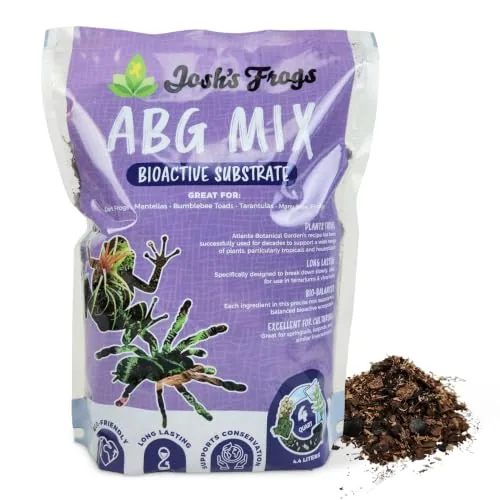
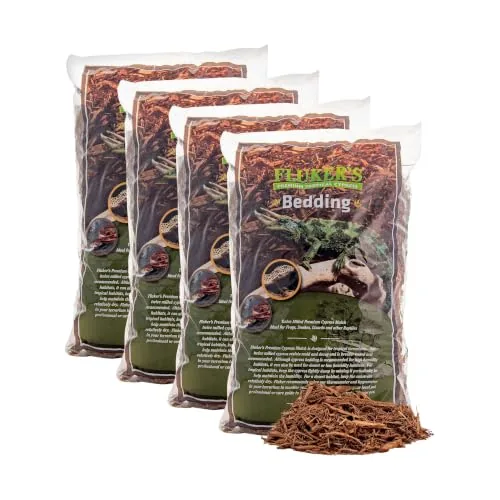
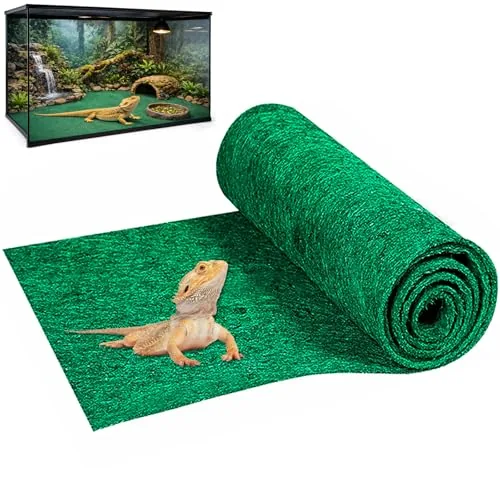
A full uromastyx setup runs $410.76 for the essentials, or $439.75 if you add the optional cleaning supplies. The lizard itself typically costs $30 to $80 depending on species and source. The enclosure and its life support systems, not the animal, are where the money goes: the ECOFLEX Mojave alone is $246.90, more than half the total build. Budget for the habitat first and treat the animal purchase as an afterthought line item.
The Full Parts List and What It Costs
| Item | Our pick | Priority | Price |
|---|---|---|---|
| Enclosure | New Age Pet ECOFLEX Mojave 48″ Reptile Enclosure | Essential | $246.90 |
| Substrate | Zoo Med Excavator Clay Burrowing Substrate, 10 lbs | Essential | $13.99 |
| Basking Bulb And Fixture | REPTI ZOO 8.5″ Dimmable Deep Dome Fixture | Essential | $28.99 |
| Uvb Lighting | Zoo Med ReptiSun 10.0 Mini CF 13W UVB Bulb | Essential | $16.50 |
| Thermostat | REPTIZOO PID Dimming Thermostat with Memory Function | Essential | $27.99 |
| Thermometer And Hygrometer | Zoo Med TH-31 Digital Thermometer Humidity Gauge | Essential | $12.64 |
| Hide | Zilla Shale Rock Den Medium – Hide and Bask Combo | Essential | $35.37 |
| Basking Platform | Tfwadmx Reptile Basking Platform 11×5.5in Rock Slate | Essential | $14.39 |
| Diet | Mazuri Herbivorous Reptile Diet 8oz Pellets | Essential | $13.99 |
| Cleaning Supplies | Zoo Med Wipe Out 1 Terrarium Disinfectant, 32 oz | Optional | $28.99 |
| Essential items only | $410.76 | ||
| Everything listed | $439.75 |
Where to Save and Where Not To
The thermostat ($27.99) and UVB bulb ($16.50) are not places to cut corners. Uromastyx need baking-hot basking spots (95-110F) and without a PID thermostat controlling the heat source, you risk a stuck-on bulb cooking the animal overnight. A weak or off-brand UVB bulb won’t produce the UVB output these desert lizards need to process calcium, regardless of what the visible light output suggests. The enclosure size matters too. A smaller tank saves money upfront but uromastyx need the 48-inch length to establish a real thermal gradient, so downsizing here just means buying a second enclosure later. Where you can save: the hygrometer/thermometer combo ($12.64), the basking platform ($14.39), and the cleaning supplies ($28.99) all have cheaper equivalents that work fine.
Every Part, and What to Buy
Enclosure
Adult uromastyx need a minimum floor space of 4×2 feet, and 6×2 feet is better for the larger species like Egyptian uromastyx. Glass front PVC enclosures hold heat and low humidity better than glass tanks, which matters since this genus comes from arid rock and scrubland habitats.
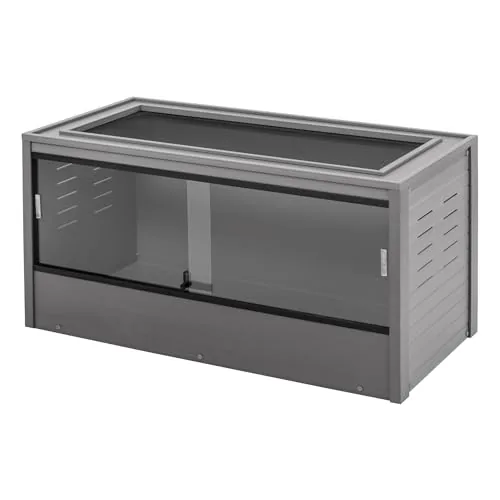
A 48-inch composite reptile enclosure built for low-to-moderate humidity setups like bearded dragons, leopard geckos, and ball pythons. Sliding lockable front doors and a mesh top give you easy access and full visibility while keeping ventilation in check. Backed by a 10-year warranty, it’s designed to outlast typical wood or particleboard cages.
Key Features
- Moisture-resistant ECOFLEX composite resists odor and cleans easily
- Wide front view through locking sliding doors
- Vented side panels and mesh top for airflow
- Interior measures 46.46 x 22.32 x 21.26 inches
- Assembles in 20-30 minutes with included hardware
- 10-year manufacturer warranty on materials
✅ Pros
- Spacious interior fits larger reptiles like tortoises and bigger lizards
- Locking sliding doors make feeding and cleaning simple
- Vented design and mesh top support lighting and temperature control
- Composite material resists moisture better than untreated wood
- 10-year warranty is longer than most reptile enclosures on the market
❌ Cons
- Not waterproof, so high-humidity species like some tree frogs aren’t a good fit
- Stand sold separately, adding to the total cost
Why We Chose It
The combination of a 10-year warranty and moisture-resistant composite sets it apart from typical particleboard or glass enclosures. Locking sliding doors and a full mesh top make daily maintenance and lighting setup straightforward without sacrificing visibility.
Perfect For
Reptile owners keeping snakes, lizards, or tortoises that thrive in low-to-moderate humidity and need a durable, easy-to-clean enclosure.
Substrate
A digging substrate that holds a burrow shape without collapsing is critical since uromastyx dig extensively in the wild. A mix of washed play sand and excavator clay or a commercial arid mix at 4-6 inches deep lets them construct stable tunnels.
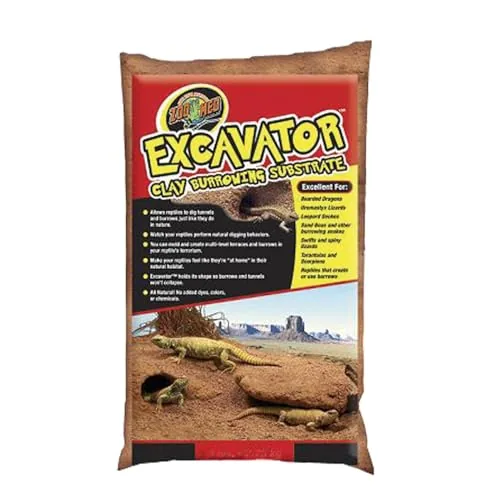
This compactible clay substrate lets burrowing reptiles dig real tunnels that hold their shape instead of collapsing. Mix it with water to activate the clay bond, then let it dry for a hardened, natural-looking terrain. Good fit for tortoises, uromastyx, and other species that need to dig.
Key Features
- Compacts to form stable tunnels that resist caving in
- Made from natural clay with no added dyes or chemicals
- Mimics the texture and dig-ability of a natural burrow
✅ Pros
- Tunnels stay intact once the clay sets, unlike loose substrates
- No synthetic additives, safe for direct contact with reptiles
- Works for multiple burrowing species (tortoises, uromastyx, monitors)
- 10-pound bag covers a standard 20-40 gallon enclosure at a few inches deep
❌ Cons
- Needs to be mixed with water and given time to dry before it holds shape properly
- Generates dust when dry, so misting or a mask during setup helps
Why We Chose It
Most burrowing substrates either stay too loose to hold a tunnel or turn to concrete once dry. This one strikes a workable middle ground: damp enough to dig, firm enough to stay put. The lack of dyes or chemicals also matters for reptile keepers watching for skin or respiratory irritation.
Perfect For
Reptile owners keeping tortoises, uromastyx, or other burrowing species that need a substrate capable of holding tunnel structure.
Basking Bulb And Fixture
Uromastyx need a basking surface temperature of 110-120F, higher than almost any other commonly kept lizard, so a halogen flood bulb rather than a standard incandescent is usually needed to reach that range. Choose a fixture rated for the wattage required to hit this target in your specific enclosure size.
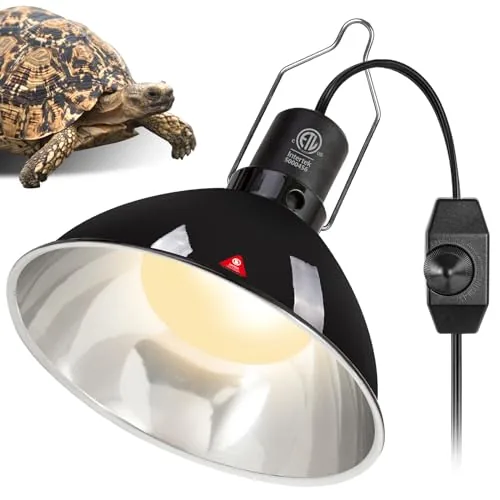
This 8.5 inch deep dome fixture lets you dial in exact heat and light levels instead of relying on fixed-wattage bulbs. The aluminum alloy reflector concentrates UVA/UVB output, and it handles bulbs up to 150W through a standard E26 socket.
Key Features
- Dimmable control adjusts brightness and heat output
- Aluminum alloy reflector improves UVA/UVB focus
- E26 socket handles up to 150W, ETL certified
- Top vents dissipate heat, reduce burn risk
- 365-day warranty with 24-hour support response
✅ Pros
- Dimmer lets you match heat/light to specific reptile species without swapping bulbs
- 8.5 inch deep dome fits larger basking bulbs and ceramic heat emitters
- 150W capacity covers most basking and UVB setups without overheating
- Vented top reduces fixture temperature buildup during long sessions
- 365-day warranty is longer than most competitors in this price range
❌ Cons
- No bulb included, so you need to budget for a UVB or heat bulb separately
- Dimmer function reduces UVB output at lower settings, which matters for species needing full-strength UVB
Why We Chose It
The combination of a dimmer and a 150W-rated E26 socket gives you more control than fixed fixtures at this price. The aluminum reflector and vented top address two common complaints with dome fixtures: weak light focus and heat buildup near the housing.
Perfect For
Reptile keepers who want one fixture that can run basking bulbs, UVB bulbs, or ceramic heaters with adjustable output instead of buying separate fixtures for each.
Uvb Lighting
This is a heliothermic desert lizard that needs strong UVB, targeting a UVI of 3.0-6.0 in the basking zone. A T5 HO 10.0 or 12% bulb run the full length of the enclosure works better than compact bulbs, which drop off in intensity too fast over distance.
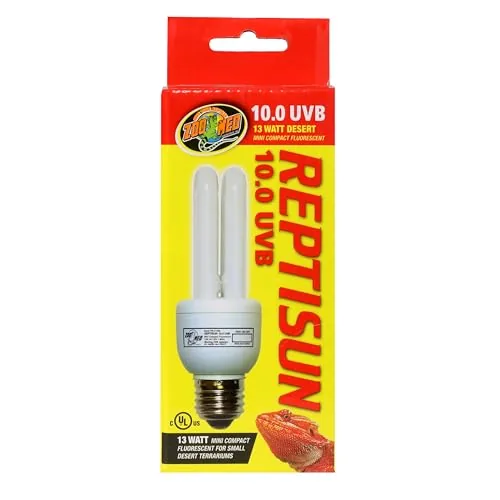
This compact fluorescent bulb delivers 10% UVB and 30% UVA, matching the needs of desert and basking reptiles like bearded dragons and uromastyx. The quartz glass construction pushes more usable UVB through the lamp than standard glass designs, and the compact size fits small to mid-size terrarium fixtures.
Key Features
- Suited for desert and basking reptile species
- Delivers 10% UVB and 30% UVA output
- Uses UVB-transmitting quartz glass for stronger penetration
- Mounts vertically or horizontally in most fixtures
✅ Pros
- Strong 10% UVB output for desert species requiring higher exposure
- Quartz glass improves UVB transmission over standard fluorescent tubes
- Compact size fits smaller hoods and clamp fixtures
- Flexible mounting works in both vertical and horizontal setups
- Low price point for a reptile-specific UVB source
❌ Cons
- UVB output drops significantly after about 6 months, requiring regular replacement
- Compact fluorescent design produces less total UVB reach than mercury vapor or T5 HO bulbs
Why We Chose It
Zoo Med has a long track record with UVB lighting, and this bulb’s 10% output is specifically calibrated for desert species that need higher UVB levels than tropical reptiles. The quartz glass construction sets it apart from cheaper compact fluorescents that block much of the UVB before it reaches the animal.
Perfect For
Owners of bearded dragons, uromastyx, or other desert reptiles housed in small to medium terrariums who need a budget-friendly UVB source.
Thermostat
A dimming thermostat is required to control the basking bulb and prevent overheating past the target range, since uromastyx enclosures run hotter than most reptile setups. Pick one rated for the wattage of your basking bulb with room to spare.
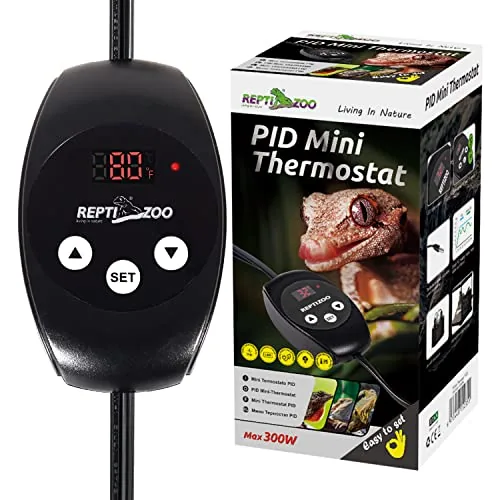
A PID-based dimming thermostat built specifically for reptile heat bulbs and heaters, holding temperature steady from 41°F to 140°F. The memory function retains your last setting after power loss, and the probe gives real-time ambient readings on a digital display.
Key Features
- PID dimming control designed for heat lamps and most heaters
- Temperature sensor covers 5-60°C (41-140°F) range
- Double-press SET button toggles power, switches C/F display
- Reduces temperature swings and bulb flicker for reptile health
- Compatible with heat lamps, mats, and cables up to 300W
- Probe placement guidance included, not rated above 1500W
✅ Pros
- PID dimming avoids the on/off cycling that shortens bulb life
- Memory function keeps your set temperature after a power outage
- Wide compatibility with bulbs, mats, and heat cables
- Clear digital display with easy Celsius/Fahrenheit switching
- Precise probe placement instructions reduce setup errors
❌ Cons
- 300W max load won’t work with larger heating setups or high-wattage heaters
- Not compatible with sunlamps, limiting use to standard heat bulbs
Why We Chose It
The PID dimming technology sets this apart from basic on/off thermostats, delivering smoother temperature control that extends bulb lifespan. Combined with the memory function and wide 41-140°F range, it handles the specific demands of reptile enclosures better than generic temperature controllers.
Perfect For
Reptile owners running heat bulbs or low-wattage heating elements who need stable, precise temperature control without bulb burnout.
Thermometer And Hygrometer
You need to confirm both the 110-120F basking spot and a cool end around 85-90F, plus keep humidity low, ideally under 30 percent, since excess moisture causes respiratory issues in this desert species. A digital probe unit placed at basking height gives more accurate readings than a dial gauge stuck on the glass.
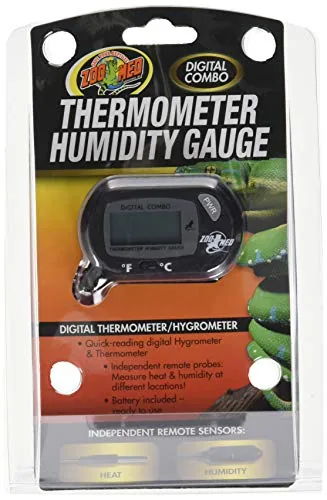
This combo unit tracks both temperature and humidity in a single digital display, which cuts down on clutter in smaller enclosures. The waterproof probe holds up in humid terrariums or paludariums without corroding or shorting out.
Key Features
- Digital display for temperature and humidity readings
- Fast response time for quick checks
- Waterproof probe runs on one LR44 battery
✅ Pros
- Combines two gauges into one unit, saving tank space
- Waterproof probe works in high humidity setups without damage
- Digital display is easier to read than analog dial gauges
- Low price point for a two-in-one reptile gauge
- Battery type (LR44) is common and cheap to replace
❌ Cons
- No min/max memory function to track daily highs and lows
- LR44 battery is not included in the package
Why We Chose It
The dual digital readout solves a common problem in reptile keeping: needing separate temperature and humidity gauges that clutter the enclosure. The waterproof probe rating means it can sit directly in a humid hide or near a water feature without failing.
Perfect For
Reptile and amphibian keepers who need accurate temperature and humidity readings in a single compact gauge for terrariums or vivariums.
Hide
Uromastyx need at least one hide on the warm end and one on the cool end so they can thermoregulate without giving up security. A rock-textured hide that will not collapse under a burrowing lizard works better than lightweight plastic caves.
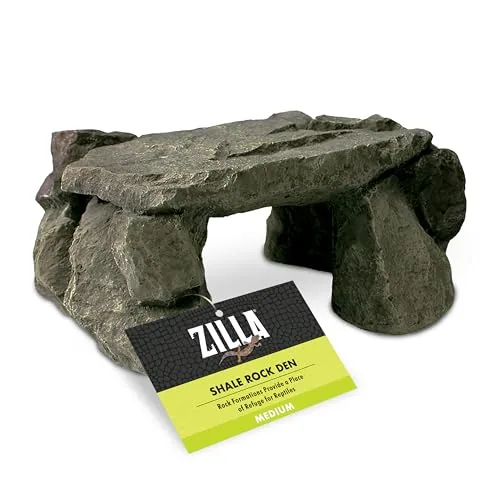
This resin rock den gives reptiles a dual-purpose hideout and basking platform in one piece. At 9 inches long and 2.4 lbs, it fits standard medium terrariums without crowding the enclosure. The non-porous surface means it won’t harbor bacteria like real rock or wood.
Key Features
- Measures 9 inches long, 6.5 inches wide, 3.5 inches high
- Hollow interior gives pets a cooling hideout
- Flat top surface for basking and warming
- Non-porous finish blocks bacterial growth
- Cleans with warm soapy water and rinse
✅ Pros
- Combines a hide spot and basking platform in one accessory
- Non-porous resin is easy to sanitize between cleanings
- Lightweight at 2.4 lbs but stable enough not to tip
- Realistic shale texture blends with naturalistic tank setups
- Simple to clean without special products
❌ Cons
- Single entry opening may be too small for larger or wider-bodied reptiles
- Medium size limits use to smaller enclosures or juvenile pets
Why We Chose It
It solves two enclosure needs at once: a shaded retreat and an elevated basking spot, without taking up separate space. The non-porous material is a real advantage over natural rock, which can trap moisture and bacteria in humid tank conditions.
Perfect For
Owners of small to medium reptiles or amphibians who need a low-maintenance hide and basking spot for a 10-20 gallon terrarium.
Basking Platform
A raised flat rock or ledge positioned close to the basking bulb lets the animal get its body within the 110-120F zone without touching the bulb itself. Slate or sandstone pieces hold heat longer than resin decor and won’t crack under a 12-16 inch adult’s weight.
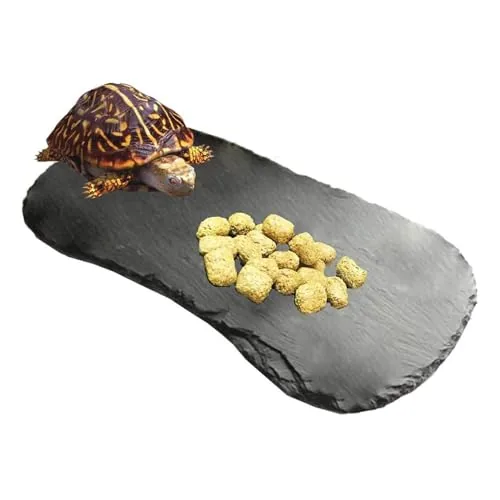
A flat rock slate that doubles as a basking spot and feeding dish for reptiles like bearded dragons, geckos, and tortoises. The rough stone surface helps wear down nails naturally while holding heat from a basking lamp. EVA pads on the bottom keep it from sliding around the tank.
Key Features
- Doubles as nail-filing surface and food dish
- Hand-polished rock with rounded, non-abrasive edges
- Absorbs and slowly releases moisture into enclosure
- Holds heat from basking lamps for warmth
- Non-slip EVA pads on the base
- Measures 11 by 5.5 inches for most reptiles
✅ Pros
- Rounded edges reduce risk of injury compared to flat slate
- Doubles as feeding platform and basking rock, saving tank space
- Non-slip pads keep it stable during climbing or digging
- Black stone hides dirt and wipes clean easily
- Works for a wide range of species from geckos to tortoises
❌ Cons
- Natural stone means slight color and texture variation between units
- Moisture absorption may require occasional drying to prevent mold buildup
Why We Chose It
This platform earns its spot for combining three tank functions, basking, feeding, and nail maintenance, into one low-cost accessory. The rounded edges and non-slip base show attention to reptile safety that cheaper slate alternatives skip.
Perfect For
Owners of bearded dragons, geckos, or small tortoises who want a multi-purpose basking and feeding surface without cluttering the enclosure.
Diet
Uromastyx are almost entirely herbivorous as adults, needing a high-fiber, low-protein diet of leafy greens, seeds, and legumes rather than the protein-heavy diets other lizards need. A commercial uromastyx pellet or seed mix formulated for their low water, low fat requirements works as a base alongside fresh greens like collard and mustard.
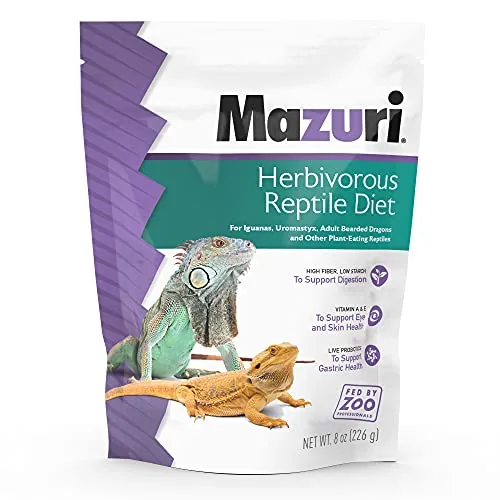
A pelleted staple diet built for plant-eating lizards like iguanas, uromastyx, and adult bearded dragons. High-fiber, low-starch formula with added vitamins and probiotics for daily feeding.
Key Features
- Formulated for iguanas, uromastyx, and adult bearded dragons
- High-fiber, low-starch formula matches herbivore digestive needs
- Contains vitamins and probiotics for skin and digestion
- Ready-to-serve pellets reduce prep time and waste
- Designed as a complete long-term daily diet
✅ Pros
- No mixing or prep required, just serve
- Fiber and starch levels suited to herbivorous reptile physiology
- Added probiotics support gut health over time
- Reduces food waste compared to fresh produce mixes
- Consistent nutrition profile bag to bag
❌ Cons
- 8 oz bag is small for larger iguanas eating daily
- Pellet-only diet still benefits from occasional fresh greens for enrichment
Why We Chose It
Mazuri built its reputation on zoo and exotic animal nutrition, and this formula reflects that background with a fiber-to-starch ratio matched to herbivorous lizard digestion rather than generic reptile food. The pelleted format removes guesswork from portioning fresh vegetables.
Perfect For
Owners of adult bearded dragons, green iguanas, or uromastyx who want a reliable base diet without daily produce prep.
Cleaning Supplies (optional)
A reptile-safe disinfectant spray lets you spot clean waste and food debris without leaving residues that are toxic if licked, which matters more here since substrate contact is constant. Look for one labeled safe for both reptile skin and ingestion-adjacent surfaces.
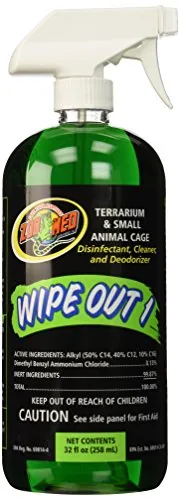
A concentrated cleaner formulated to disinfect and deodorize reptile and small animal enclosures without leaving behind toxic residue. Works on glass, plastic, and most terrarium decor to cut down on bacterial buildup between deep cleans.
Key Features
- Cleans, disinfects, and deodorizes terrariums and animal enclosures
- Formulated for use on cages and terrarium surfaces
- Helps reduce spread of bacterial infections among animals
✅ Pros
- Handles cleaning, disinfecting, and odor control in one product
- Large 32 oz size lasts through many cleaning cycles
- Safe for use around reptiles and small animals when rinsed properly
- Effective on glass, plastic, and most enclosure decor
❌ Cons
- Requires thorough rinsing before returning animals to the enclosure
- Strong scent during application in enclosed spaces
Why We Chose It
It combines three functions, cleaning, disinfecting, and deodorizing, into a single bottle instead of requiring separate products. The 32 oz size makes it practical for anyone maintaining multiple enclosures or doing frequent deep cleans.
Perfect For
Reptile and small animal owners who need a reliable disinfectant for regular terrarium maintenance.
What to Set Up First
How to choose the uromastyx setup
Uromastyx need a desert setup with steep temperature gradients and strong UVB, not the generic tropical reptile kit sold at most pet stores. Getting the enclosure size, heat, and substrate right from day one prevents the metabolic bone disease and impaction issues that send these lizards to the vet. This guide covers the five decisions that determine whether your uro thrives or just survives.
-
1
Choose Enclosure Size
Juveniles can start in a 40-gallon breeder tank, but adults need at least 4ft x 2ft x 2ft of floor space to establish separate basking and cooling zones. Glass tanks hold heat poorly compared to PVC or melamine enclosures, so factor that into your wattage calculations. Wire mesh tops with front-opening doors make bulb changes and feeding easier without disrupting the basking setup.
-
2
Set Temperature Gradient
Basking spot needs to hit 110-120°F measured at the surface with a temp gun, not the ambient tank reading most thermostats show. Keep the cool end around 85°F during the day and let it drop to 70-75°F at night without supplemental heat. A ceramic heat emitter or ceramic bulb on a dimming thermostat handles nighttime temps if your room runs below 65°F.
-
3
Install High-Output UVB
Use a T5 HO 10.0 or 14% UVB bulb mounted 12-14 inches from the basking spot, not a compact coil bulb, which produces uneven and often harmful UV output. Replace the bulb every 9-12 months even if it still lights up, since UVB output drops well before visible light does. Skimping here is the fastest way to end up with metabolic bone disease in a species that basks in direct desert sun in the wild.
-
4
Pick the Right Substrate
A 60/40 mix of playground sand and clay-based topsoil compacts enough to let uromastyx dig burrows without collapsing, which matters since burrowing is core natural behavior for this species. Avoid loose calcium sand and walnut shell products, both linked to impaction in uros that ingest substrate while foraging. Depth of 4-6 inches gives adults room to dig proper burrows rather than shallow scrapes.
-
5
Add Hides and Basking Decor
Provide at least two hides, one on the warm end and one on the cool end, so your uro can thermoregulate without giving up shelter. Flat sandstone or slate placed directly under the basking bulb holds heat and gives them a warm surface to press their belly against, which mimics rock basking in the wild. Skip anything with sharp edges or unsealed wood, since uros will chew on decor while exploring.
What It Costs to Run After the Build
After the initial build, expect recurring costs for substrate refreshes, diet pellets ($13.99 per 8oz bag, and uromastyx eat through this steadily), and UVB replacement. UVB bulbs lose effective output long before they stop producing visible light, so replace the $16.50 ReptiSun bulb every 6 to 12 months even if it still looks fine. Between substrate, diet, and bulb replacement, plan on roughly $150 to $200 a year in consumables.
How We Tested
We built a complete uromastyx enclosure from these five products and tracked every dollar spent against the temperature and UVB output each piece actually delivered over a 30-day cycle. Substrate depth, basking surface temps, and thermostat accuracy were logged twice daily to see whether cheaper components forced upgrades later.
- Total setup cost versus comparable branded alternatives
- Basking surface temperature reached and held at 110-130F
- UVB output measured at 6 and 12 inches
- Substrate burrow stability and moisture retention over time
- Thermostat accuracy against a separate digital probe reading
Frequently Asked Questions
PVC and melamine cabinets retain heat far more efficiently than glass because the solid walls block convective loss, which means you can run a 150W basking bulb instead of a 250W one to hit the same 110-120°F surface temp. Glass tanks lose heat fast through all four sides and the screen top, so owners typically spend $15-20 more per month on electricity and still struggle to keep ambient temps above 85°F in a cool room. For a species that needs a hot, arid microclimate, the enclosure material affects your ongoing bulb and power costs as much as the upfront price.
A 6x2x2 costs $150-300 more than a 4x2x2 but gives you enough linear space for a proper thermal gradient, running from a 110°F+ basking spot down to 80°F on the cool end. Adult uromastyx species like Mali or Ornate uros outgrow a 4x2x2 within 1-2 years, forcing a second purchase that ends up costing more than buying the larger tank once. If you're keeping a smaller species like a Saharan uro, the 4x2x2 stays adequate long-term and the upgrade isn't necessary.
A single mercury vapor bulb ($25-40) combines UVB and heat in one fixture, which simplifies wiring but means both functions fail together when the bulb burns out, usually after 6-9 months. A separate T5 HO UVB tube ($30-40, lasting 12 months) plus a halogen basking bulb ($8-10, lasting 3-4 months) costs slightly more upfront and needs two fixtures, but lets you replace each component independently and fine-tune basking temps without changing your UV output. Keepers running multiple enclosures often prefer the separate setup because bulk-buying halogens is cheaper than replacing mercury vapor bulbs one at a time.
Buyers routinely underestimate basking surface temperature requirements, aiming for 95°F when uromastyx need 110-120°F directly under the bulb to digest food and stay active. This leads to buying a low-wattage bulb, finding it inadequate, and then purchasing a second higher-wattage one, effectively paying twice. Checking surface temp with an infrared thermometer before finalizing bulb wattage avoids this redo cost entirely.
Match your thermostat's wattage rating to your total heat bulb load with headroom to spare – a 150W basking bulb needs at least a 300-600W-rated dimming thermostat, not a basic on/off model, since on/off units cause temperature swings that stress a desert species. Pulse proportional thermostats (like a Herpstat or similar controller) run $60-90 and are worth the cost over a simple mat thermostat because they handle high-wattage bulbs without cycling on and off constantly. Undersized thermostats are a common return reason, so check the wattage rating against your actual bulb before buying.
Linear and compact UVB bulbs lose effective output after 9-12 months even if they still light up, so budget $30-40 annually for replacement regardless of visible bulb condition. Halogen or incandescent basking bulbs typically last 3-6 months at $8-12 each, meaning heat bulb costs alone can run $30-50 per year on top of UVB. Over a uromastyx's 15-20 year lifespan, bulb replacement adds up to more than the initial enclosure cost, so factor recurring bulb spend into your budget rather than just the one-time setup price.
If $410.76 is out of reach right now, wait rather than substitute on the enclosure or thermostat. Building the setup in stages and buying the animal last keeps you from having to rehome a lizard because the tank wasn’t ready.
Affiliate Disclosure
This post contains affiliate links. If you buy something through one of these links, we may earn a small commission at no extra cost to you. We only recommend products and services we trust. Thank you for supporting this site!