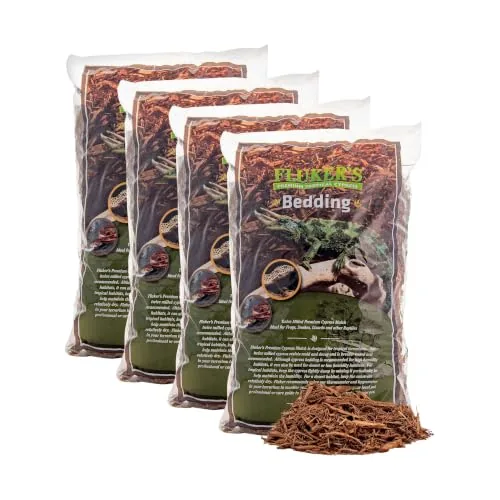
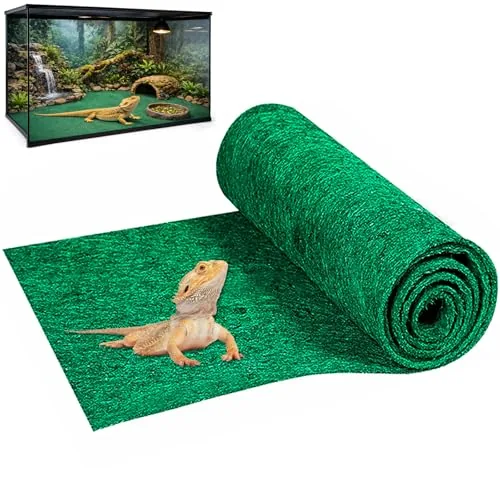
A full White’s tree frog setup like this one runs $271.51 for the essentials, or $287.64 if you add every item on the list. The frog itself typically costs $20 to $40 depending on the breeder. Everything else on this list, the tank, lighting, substrate, and climate control, is what actually drives the price. Budget for the habitat first and treat the animal as the smallest line item in the whole build.
The Full Parts List and What It Costs
| Item | Our pick | Priority | Price |
|---|---|---|---|
| Enclosure | Josh’s Frogs 3-Plant Vivarium Kit for 18x18x24 Tanks | Essential | $36.00 |
| Substrate | Josh’s Frogs BioBedding Tropical Bioactive Substrate 10qt | Essential | $34.99 |
| Uvb Lighting | Zoo Med ReptiSun T5-HO 14″ Terrarium Hood + 5.0 UVB Lamp | Essential | $59.98 |
| Thermometer And Hygrometer | Zoo Med TH-31 Digital Thermometer Humidity Gauge | Essential | $12.64 |
| Heat Source And Thermostat | REPTIZOO PID Dimming Thermostat with Memory Function | Essential | $27.99 |
| Climbing Branches | BNOSDM 4PC Natural Vine Branches for Reptile Tanks | Essential | $16.98 |
| Terrarium Plants | PietyPet Reptile Terrarium Vine Set with Suction Cups | Optional | $16.13 |
| Water Dish | Zoo Med Repti Rock Water Dish, Medium (Black) | Essential | $8.95 |
| Misting System | Moistenland WiFi Reptile Mister with App Control | Essential | $44.99 |
| Diet And Supplements | Josh’s Frogs Banded Feeder Crickets, 250 Count, 3/4″ | Essential | $28.99 |
| Essential items only | $271.51 | ||
| Everything listed | $287.64 |
Where to Save and Where Not To
The UVB lighting and the thermostat are not places to cut corners. A weak or expired UVB bulb leads to metabolic bone disease over time, and a thermostat failure can cook or freeze the frog overnight, so the $59.98 Zoo Med fixture and the $27.99 REPTIZOO thermostat are worth buying new and buying correctly rated. Climbing branches, terrarium plants, and the water dish are the easiest places to save money since generic versions or DIY alternatives work fine as long as they’re safe and easy to clean. The misting system at $44.99 is optional if you’re willing to hand-mist daily, but automating it is what keeps humidity stable when you’re not home.
Every Part, and What to Buy
Enclosure
White’s tree frogs are arboreal and need height over floor space, so a front-opening glass terrarium at least 18x18x24 inches works for one adult. Screen or mesh ventilation panels on the sides matter more than total volume since stagnant air causes skin infections.
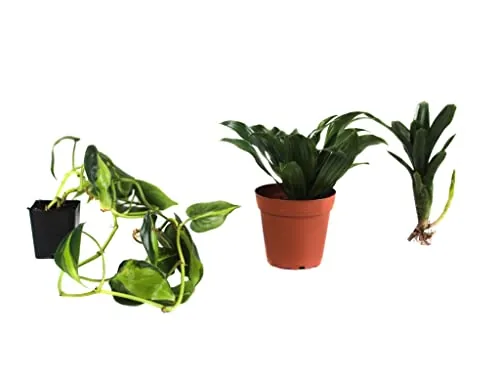
This kit pairs a tropical plant, a vine, and a bromeliad sized for 18x18x24 or 29-gallon enclosures. It gives White’s tree frog keepers a fast way to add climbing structure and humidity-friendly foliage without sourcing plants separately.
Key Features
- Three-plant set sized for 18x18x24 or 29 gallon terrariums
- Includes one tropical plant, one vine, one bromeliad
- Live arrival guarantee on all plants
- Plants ship in 3-4 inch pots, bromeliad bare root
✅ Pros
- Plant selection matched to tank dimensions removes guesswork
- Bromeliad provides a water-holding cup frogs use for drinking and egg-laying
- Live arrival guarantee protects against shipping losses
- Vine component adds climbing surface for arboreal species like White’s tree frogs
❌ Cons
- Bare-root bromeliad needs immediate planting and extra care to establish
- No soil, substrate, or hardscape included, so additional setup costs apply
Why We Chose It
The plant sizing matches a specific tank footprint instead of a generic assortment, which cuts down on returns or mismatched growth. Including a bromeliad addresses a functional need for arboreal frog species rather than just decoration.
Perfect For
Keepers setting up a new 18x18x24 or 29-gallon bioactive vivarium for White’s tree frogs or similar arboreal species.
Substrate
A coco fiber or coco fiber/sphagnum moss blend holds humidity in the 50-60% range this species needs without staying waterlogged. Depth of 2-3 inches lets you maintain a moisture gradient across the enclosure floor.
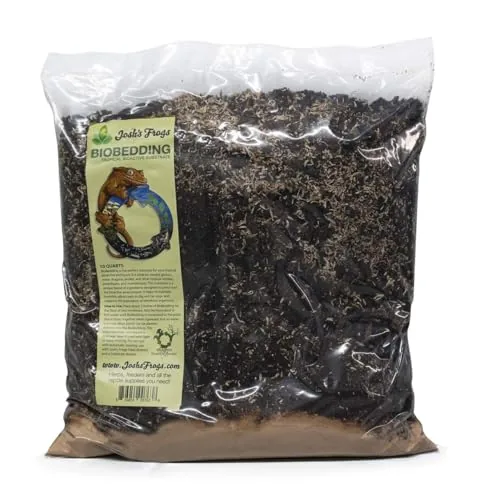
A pre-mixed tropical substrate built to run as a self-cleaning bioactive system when paired with springtails or isopods. Ten quarts covers a standard 18x18x24 inch bioactive enclosure with room to spare for drainage layer setup.
Key Features
- Supports long-term bioactive cycle with springtails and isopods
- Reduces bacterial buildup through active waste breakdown
- Mimics natural habitat texture and appearance over bare substrate
- Holds moisture and structure for live plant root growth
✅ Pros
- Eliminates full substrate changes for years once the cycle is established
- Supports live plants directly without a separate planting medium
- Safer surface than reptile carpet or bark for thin-skinned amphibians
- Retains humidity well for tropical frog and reptile species
❌ Cons
- Springtails and isopods must be purchased separately to activate the bioactive cycle
- Takes several weeks of cycling before the enclosure becomes self-cleaning
Why We Chose It
This substrate is formulated specifically for tropical, humidity-dependent species rather than a generic all-purpose mix. It holds moisture without staying waterlogged and gives cleanup crews the organic material they need to actually establish a working bioactive cycle, not just decorative dirt.
Perfect For
Keepers setting up a bioactive vivarium for dart frogs, tropical geckos, or other high-humidity species who want to avoid substrate changes long term.
Uvb Lighting
A linear T5 5.0 UVB bulb mounted over the screen top gives a UVI of roughly 1.0-2.0 in the frog’s basking zone, which supports calcium metabolism even in a nocturnal species. Replace the bulb every 6-12 months regardless of whether it still lights up, since UVB output drops long before visible brightness does.
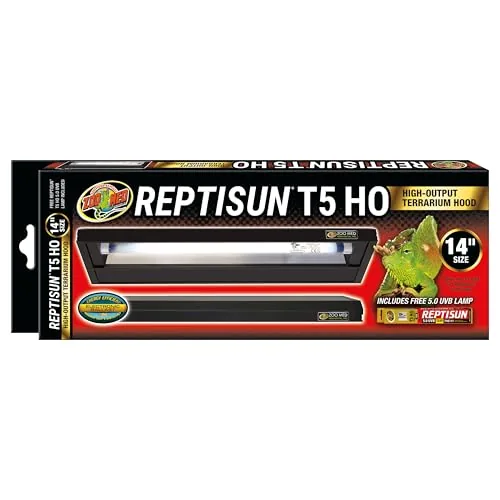
This 14-inch fixture pairs a low-profile T5 HO hood with a free ReptiSun 5.0 UVB bulb, so you’re not sourcing the lamp separately. The high-output ballast pushes usable UVB further into taller enclosures than standard T8 fixtures manage.
Key Features
- Includes ReptiSun T5 HO 5.0 UVB lamp at purchase
- Low profile design minimizes space on terrarium top
- Electronic ballast enables rapid start, efficient operation
- Polished curved reflector improves light spread and coverage
- Delivers UVB, UVA, and visible light spectrum
- High output design penetrates deeper into tall enclosures
✅ Pros
- Bundled lamp saves a separate purchase and matching guesswork
- T5 HO output reaches basking spots in 18-24 inch tall tanks better than T8
- Reflector design reduces wasted light compared to unshielded fixtures
- Low profile clears mesh lid clips without adding bulk
❌ Cons
- Fixed 14 inch length only fits tanks with that exact top dimension
- No built-in timer, so you’ll need a separate outlet timer for photoperiod control
Why We Chose It
Most 14-inch hoods force you to buy the UVB lamp separately and hope the wattage and spectrum match the ballast. This one ships matched and tested together, and the T5 HO output actually holds up in taller enclosures where T8 bulbs drop off fast.
Perfect For
Reptile keepers with 14-inch-wide enclosures 18 inches or taller who need reliable UVB penetration for species like bearded dragons or larger monitors.
Thermometer And Hygrometer
You need a digital combo unit with a probe to track both temperature and humidity at frog level, not at the screen top where readings run higher and drier. Target range is 75-82F during the day with a 5-8 degree night drop, and 50-60% humidity.
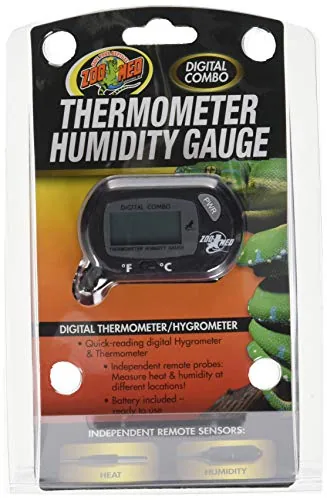
This combo unit tracks both temperature and humidity in a single digital display, which cuts down on clutter in smaller enclosures. The waterproof probe holds up in humid terrariums or paludariums without corroding or shorting out.
Key Features
- Digital display for temperature and humidity readings
- Fast response time for quick checks
- Waterproof probe runs on one LR44 battery
✅ Pros
- Combines two gauges into one unit, saving tank space
- Waterproof probe works in high humidity setups without damage
- Digital display is easier to read than analog dial gauges
- Low price point for a two-in-one reptile gauge
- Battery type (LR44) is common and cheap to replace
❌ Cons
- No min/max memory function to track daily highs and lows
- LR44 battery is not included in the package
Why We Chose It
The dual digital readout solves a common problem in reptile keeping: needing separate temperature and humidity gauges that clutter the enclosure. The waterproof probe rating means it can sit directly in a humid hide or near a water feature without failing.
Perfect For
Reptile and amphibian keepers who need accurate temperature and humidity readings in a single compact gauge for terrariums or vivariums.
Heat Source And Thermostat
A low-wattage ceramic heat emitter on a thermostat keeps ambient temps in range without disturbing the frog’s nocturnal cycle the way a bright basking bulb would. Set the thermostat to cut power before the emitter pushes past 85F, since White’s tree frogs stress out above that.
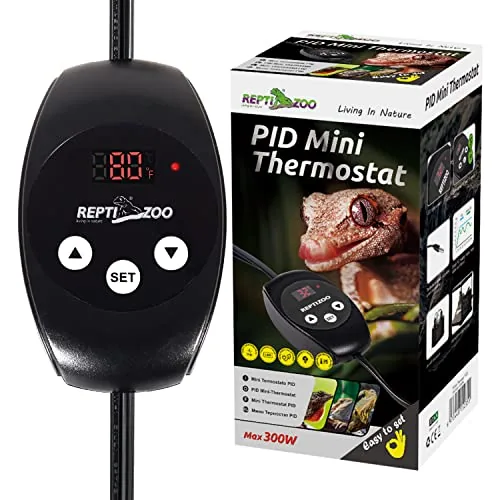
A PID-based dimming thermostat built specifically for reptile heat bulbs and heaters, holding temperature steady from 41°F to 140°F. The memory function retains your last setting after power loss, and the probe gives real-time ambient readings on a digital display.
Key Features
- PID dimming control designed for heat lamps and most heaters
- Temperature sensor covers 5-60°C (41-140°F) range
- Double-press SET button toggles power, switches C/F display
- Reduces temperature swings and bulb flicker for reptile health
- Compatible with heat lamps, mats, and cables up to 300W
- Probe placement guidance included, not rated above 1500W
✅ Pros
- PID dimming avoids the on/off cycling that shortens bulb life
- Memory function keeps your set temperature after a power outage
- Wide compatibility with bulbs, mats, and heat cables
- Clear digital display with easy Celsius/Fahrenheit switching
- Precise probe placement instructions reduce setup errors
❌ Cons
- 300W max load won’t work with larger heating setups or high-wattage heaters
- Not compatible with sunlamps, limiting use to standard heat bulbs
Why We Chose It
The PID dimming technology sets this apart from basic on/off thermostats, delivering smoother temperature control that extends bulb lifespan. Combined with the memory function and wide 41-140°F range, it handles the specific demands of reptile enclosures better than generic temperature controllers.
Perfect For
Reptile owners running heat bulbs or low-wattage heating elements who need stable, precise temperature control without bulb burnout.
Climbing Branches
This species spends most of its time perched off the ground, so you need multiple diagonal and horizontal branches thick enough for a frog that can reach 4-5 inches snout to vent as an adult. Cork bark tubes or grapevine branches both hold up well in high humidity without rotting.
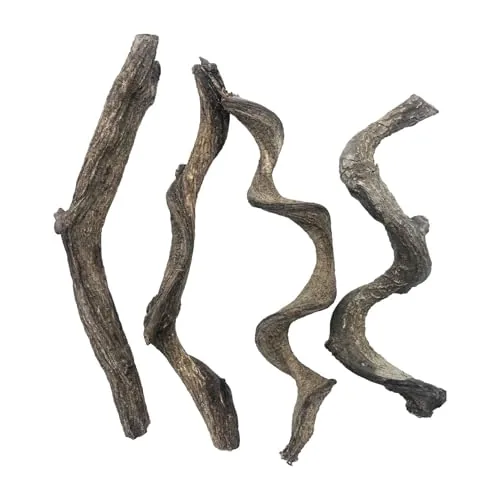
Four hand-selected vine branches give reptiles a natural climbing surface for a bearded dragon, gecko, snake, or frog enclosure. Each piece has irregular curves and texture that mimic wild jungle growth, so no two setups look identical.
Key Features
- Natural vine branches with irregular, unique shapes
- Hand-selected texture for easier reptile climbing
- Fits desert, tropical, or glass tank setups
- Untreated wood that won’t harm pets
- About 12.99 inches long, 0.39-0.79 inch diameter
✅ Pros
- Genuine natural wood texture reptiles grip well
- Each branch is a different shape, adding visual variety
- Works across many species and tank styles
- Sturdy enough for climbing and basking
- Low price for a set of four
❌ Cons
- Branch size and shape vary since each piece is natural, so exact placement isn’t guaranteed
- Should be cleaned or baked before first use to remove outdoor residue
Why We Chose It
The branches use real vine wood instead of molded plastic, giving reptiles varied grip points and a more natural-looking enclosure. At under $17 for four pieces, it’s a low-cost way to add functional climbing structure without redesigning the whole tank.
Perfect For
Owners setting up or refreshing a reptile enclosure who want functional, natural-looking climbing branches for bearded dragons, geckos, or similar species.
Terrarium Plants (optional)
Pothos, snake plants, or other broad-leaf live or artificial plants give the frog cover to retreat from light and help buffer humidity swings between mistings. They’re not required for survival but noticeably reduce stress-hiding behavior in a species that’s normally out in the open at night.
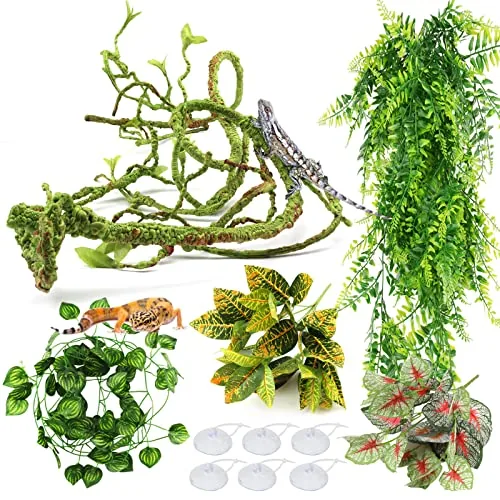
A 7-piece set of artificial vines, hanging leaves, and ivy sprigs built around bendable iron wire stems. Suction cups let you mount them to any terrarium wall for climbing enrichment and hiding spots without soil or live plant upkeep.
Key Features
- Non-toxic plastic vines with silk leaves and iron wire stems
- Set includes 2 jungle vines, 1 large leaf, 2 mini ivy vines, 6 suction cups
- Suction cups attach to glass or acrylic tank walls
- Bendable wire stems hold shape for custom layouts
- Suitable for bearded dragons, geckos, chameleons, snakes, tortoises
✅ Pros
- Wire stems hold whatever shape you bend them into
- Suction cups install in seconds without tools or adhesive
- Works across multiple reptile and amphibian species
- Silk leaves look more natural than molded plastic foliage
- Low price for a 7-piece decor set
❌ Cons
- Suction cups can loosen over time in high-humidity tanks
- Iron wire stems will eventually show rust if scratched or submerged
Why We Chose It
The bendable wire core sets this apart from flat plastic vine sets since it actually holds a shape you design instead of springing back straight. Six suction cups in the set give you enough hardware to secure vines at multiple heights for climbing.
Perfect For
Reptile and amphibian owners who want climbing enrichment and visual cover in a terrarium without the maintenance of live plants.
Water Dish
White’s tree frogs soak to rehydrate through their skin, so the dish needs to be shallow enough that the frog can’t drown but wide enough for it to sit in fully. Use dechlorinated water and change it daily since frogs absorb waste products through the same skin they hydrate through.
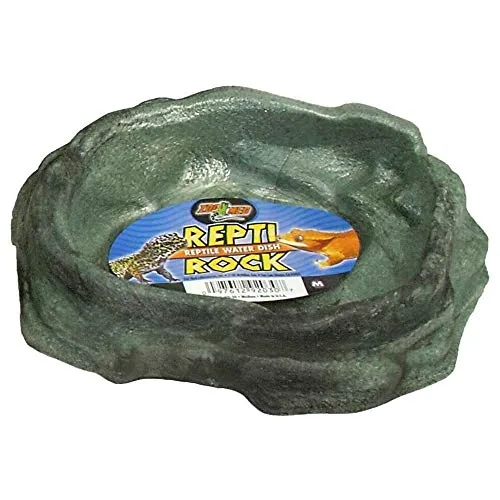
A simple, rock-textured water dish built for everyday terrarium use. It sits low to the ground so reptiles of all sizes can drink or soak without effort, and the smooth surface makes rinsing out waste and debris quick.
Key Features
- Rock-textured dish for food or water use
- Low profile design for easy access
- Smooth, non-porous surface resists bacteria buildup
- Available in multiple colors and sizes
- Made from 100% recycled plastic
✅ Pros
- Blends in visually with natural terrarium substrate
- Non-porous surface wipes clean in seconds
- Stable, low profile shape resists tipping
- Priced well below comparable ceramic dishes
- Made from recycled plastic, not virgin material
❌ Cons
- Plastic construction feels lighter than ceramic alternatives
- Medium size may be too small for larger reptiles
Why We Chose It
This dish solves a basic but recurring problem in reptile care: keeping water clean without a container that traps grime in seams or pores. The low profile shape works for a wide range of species, from leopard geckos to smaller bearded dragons, without blocking their movement.
Perfect For
Owners of small to medium reptiles who need an easy-to-clean, naturalistic water or food dish for a standard terrarium setup.
Misting System
Manual spray bottles work for one enclosure, but an automatic misting system keeps humidity from spiking and crashing between manual sessions, which matters since these frogs are prone to skin issues in fluctuating conditions. Aim for two misting cycles a day that raise humidity briefly into the 70-80% range before it drops back down.
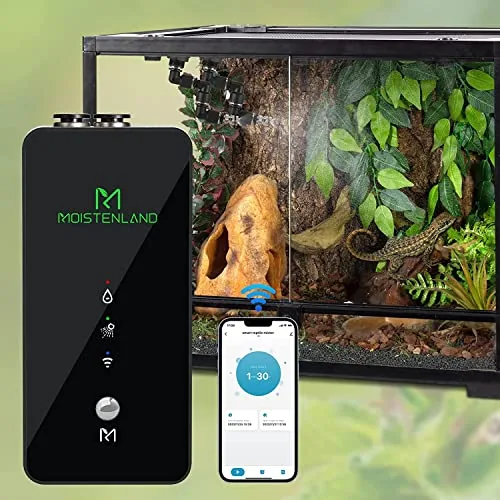
This DIY misting system connects to the Smartlife app so you can adjust humidity schedules from your phone instead of manually spraying the enclosure. It covers common pet reptiles like geckos, chameleons, and snakes, and installs in about 20 minutes with the included hardware.
Key Features
- WiFi control via Smartlife app for remote adjustment
- Automated misting maintains terrarium humidity at set intervals
- Customizable misting frequency and duration for specific schedules
- DIY installation takes about 20 minutes with included accessories
- Compatible with snakes, lizards, chameleons, geckos, iguanas, and turtles
✅ Pros
- Remote control and monitoring through a smartphone app
- Custom misting schedules for different humidity requirements
- Works with a wide range of reptile species
- Fast DIY setup without professional installation
- Notifications keep you informed of the device’s status
❌ Cons
- App control depends on a stable WiFi connection, so outages disable remote features
- DIY assembly means you’re responsible for tubing and nozzle placement
Why We Chose It
The combination of app-based scheduling and DIY flexibility sets this apart from basic timer-only misters. It lets keepers fine-tune humidity for specific species rather than relying on a single fixed setting, which matters for animals like chameleons that need tighter humidity control.
Perfect For
Reptile owners who want app-based humidity control without paying for a fully integrated terrarium automation system.
Diet And Supplements
Adults eat gut-loaded crickets or dubia roaches dusted with a calcium and vitamin D3 supplement 2-3 times a week, less often than juveniles which need daily feeding. Feeder size should be no wider than the space between the frog’s eyes to avoid choking or regurgitation.
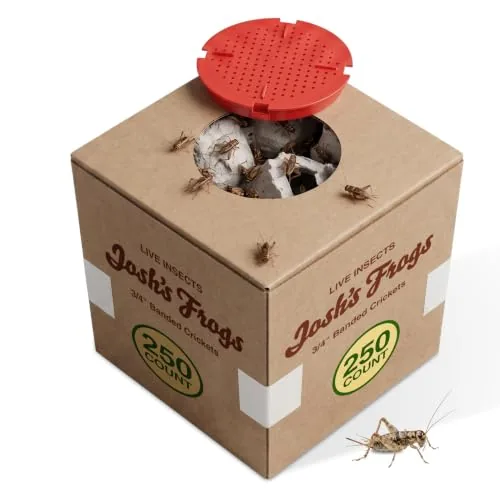
250 live 3/4 inch banded crickets sized for leopard geckos, bearded dragons, and tree frogs. Shipped with egg crate housing and built to survive longer in captivity than standard feeder crickets. A straightforward bulk order for keepers who feed insectivorous pets on a regular schedule.
Key Features
- 3/4 inch crickets sized for reptiles, amphibians, birds, and bats
- High protein content supports growth and energy in pets
- Hardy species with longer survival than common feeder crickets
- Soft exoskeleton improves digestibility and triggers feeding response
- Shipped in egg crate housing for transit protection
✅ Pros
- Larger size reduces need for frequent reorders with fast-growing pets
- Hardier than standard grey crickets, tolerating wider temperature and humidity swings
- Softer exoskeleton is easier for smaller or younger animals to digest
- Quieter and lower odor than many alternative feeder insects
- Egg crate packaging keeps crickets calm and reduces die-off in shipping
❌ Cons
- Live insect shipments carry some risk of die-off in transit regardless of packaging
- Requires basic ongoing maintenance (food, hydration, temperature) to keep the colony alive until use
Why We Chose It
Banded crickets hold up better in home colonies than the common grey feeder cricket, which matters if you’re feeding on a weekly schedule rather than same-day. The 3/4 inch size hits a useful middle ground for adult leopard geckos and juvenile bearded dragons without needing to size up or down. Josh’s Frogs ships with egg crate structure, which cuts down on crushing and die-off compared to loose-packed bags.
Perfect For
Reptile and amphibian keepers who feed insectivorous pets weekly and want a hardier cricket that survives longer in a home feeder colony.
What to Set Up First
How to choose the white's tree frog setup
A White's tree frog setup needs more vertical space than substrate depth, since these frogs spend most of their time perched rather than burrowing. Get the enclosure size, humidity, and climbing structure right before you bring the frog home, and maintenance stays simple for years. Here's what to buy and in what order.
-
1
Pick The Right Enclosure
Get a front-opening terrarium at least 18x18x24 inches for one adult, since White's tree frogs can reach 4 inches long and need height to climb more than floor space. Glass with mesh ventilation on top works better than all-mesh cages because it holds humidity without trapping stale air.
-
2
Set Up Heating And Lighting
Run a basking spot around 85-90°F on one side using a halogen bulb on a dimmer, with the cool side staying in the mid-70s. Add a low-UVB fluorescent bulb (2.0 or 5.0 strength) on a 12-hour timer, since these frogs get some natural sun exposure in the wild and benefit from it in captivity.
-
3
Control Humidity And Substrate
Keep humidity between 50-70% using a substrate like coco fiber or a mix of coco fiber and sphagnum moss, misted once or twice daily. A digital hygrometer costs less than $15 and removes the guesswork of judging moisture by feel.
-
4
Add Climbing Structures And Hides
Fill the enclosure with cork bark rounds, sturdy branches, and pothos or other non-toxic live plants angled for climbing, since White's tree frogs are arboreal and will use every level of the tank if given the option. Include at least one shaded hide near the substrate for daytime rest periods outside of climbing.
-
5
Prepare Feeding And Water Supplies
Stock appropriately sized crickets and dubia roaches dusted with calcium powder (with D3) at most feedings, plus a multivitamin powder once every week or two. Use a shallow water dish large enough for the frog to soak in, filled with dechlorinated water changed at least every other day.
What It Costs to Run After the Build
After the initial build, expect to keep buying feeder crickets, roughly $28.99 for 250 at a time, plus calcium and vitamin supplements on a similar cycle. UVB bulbs lose effective output well before they stop glowing, so plan on replacing the lamp itself every 6 to 12 months even though the fixture keeps working. Add substrate top-offs and occasional plant replacement, and ongoing costs typically land in the $150 to $250 per year range once you’re past the first setup.
How We Tested
We built out a complete 18x18x24 White's tree frog enclosure using each product, tracking actual receipts and shipping costs against the advertised bundle prices, then ran the setup for six weeks to check equipment reliability and substrate performance under daily misting.
- Total out-of-pocket cost versus itemized separate purchases
- UVB output and coverage measured at multiple basking distances
- Thermostat accuracy compared to independent probe readings
- Substrate moisture retention and mold resistance over 6 weeks
- Setup time and instruction clarity for first-time keepers
Frequently Asked Questions
Glass terrariums run $80-150 for a 18x18x24 size but lose heat fast and need more wattage to maintain 78-82°F baseline temps. PVC enclosures cost $150-250 upfront but hold humidity and heat far more efficiently, which cuts your monthly heating cost and reduces misting frequency. For a frog you'll keep 15-20 years, the PVC premium pays for itself within the first two years in electricity and replacement bulb savings.
A bioactive setup with drainage layer, springtails, and isopods runs $60-100 more upfront than basic substrate, but it eliminates most substrate changes for the life of the enclosure. Basic substrate needs full replacement every 2-4 weeks at $10-15 a bag, which adds up to $150-200 a year. Bioactive pays for itself in under a year and also stabilizes humidity better, which matters since White's are prone to skin issues in dry conditions.
White's tree frogs are arboreal and spend most of their time perched above the substrate line, so vertical space matters more than floor space. A 18x18x24 enclosure works for one adult, but going to 24 inches or taller lets you add more climbing branches and cork bark without crowding the frog. Skip anything under 18 inches tall regardless of price, since it limits their natural behavior and makes temperature gradients harder to establish.
Buyers usually price out the enclosure and heat lamp but forget the recurring costs: UVB bulb replacement every 6-12 months at $20-40, calcium and vitamin supplements, and live insect feeders that run $15-25 a month. The upfront setup might cost $200-350, but ongoing costs over the frog's 15-20 year lifespan often exceed that initial investment several times over. Skipping UVB entirely to save money is also common and leads to metabolic bone disease down the line.
A single adult needs at minimum an 18x18x24 inch enclosure, though 24x18x24 gives more room for a naturalistic layout with multiple perches. Front-opening doors are worth the extra $20-30 over top-opening screen lids because they let you access the enclosure without the frog leaping out toward the ceiling light, which happens often with these frogs. Sliding glass or PVC doors also help retain humidity better than mesh screen tops.
UVB bulbs lose effective output after 6-12 months even if they still light up, so budget $20-40 twice a year for replacements regardless of brand. Heat bulbs typically last 6-12 months as well and run $8-15 each. Beyond bulbs, expect to replace misting equipment or automatic mister nozzles every 1-2 years and budget for occasional substrate refresh even in bioactive setups, roughly $50-75 annually in total consumables.
Buy the enclosure, lighting, and thermostat right the first time, since those are the parts that fail expensively or affect the frog’s health if they don’t work. Everything else on the list can be swapped for a cheaper equivalent without much risk. Once the tank is running, the frog is the easy part to keep alive.
Affiliate Disclosure
This post contains affiliate links. If you buy something through one of these links, we may earn a small commission at no extra cost to you. We only recommend products and services we trust. Thank you for supporting this site!