Ceramic heat emitters produce infrared heat without any light, making them the right choice for reptiles and amphibians that need round-the-clock warmth without disrupting their day-night cycle. We tested wattage consistency, socket compatibility, and lifespan across multiple brands to find units that hold steady temperatures in glass and mesh enclosures alike. Our top picks are the REPTI ZOO 100W Ceramic Heat Emitter 2-Pack, the LUCKY HERP 100W Ceramic Heat Emitter 2-Pack, and the LUCKY HERP 75W Ceramic Heat Emitter 2-Pack, each suited to different
Quick Comparison
| # | Product | Key Features | Score | |
|---|---|---|---|---|
| 1 |
 REPTI ZOO 100W Ceramic Heat Emitter, 2-Pack
 |
|
8.3 ★★★★☆ | Read full review ↓ |
| 2 |
 LUCKY HERP 100W Ceramic Heat Emitter (2-Pack)
 |
|
8.2 ★★★★☆ | Read full review ↓ |
| 3 |
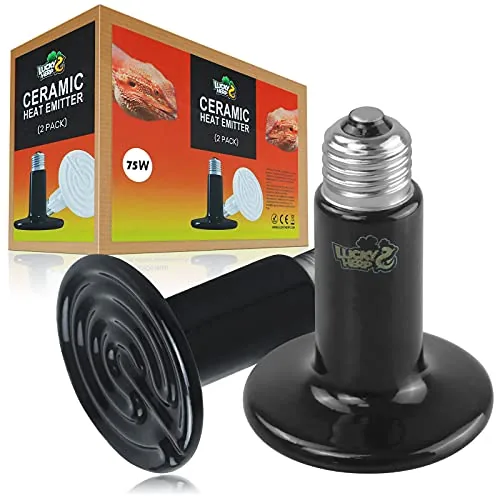 LUCKY HERP 75W Ceramic Heat Emitter 2-Pack
 |
|
8.2 ★★★★☆ | Read full review ↓ |
| 4 |
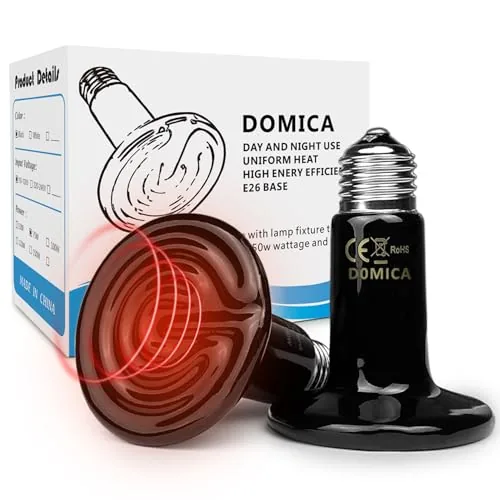 DOMICA 150W Ceramic Heat Emitter 2-Pack, No Light
 |
|
8.2 ★★★★☆ | Read full review ↓ |
| 5 |
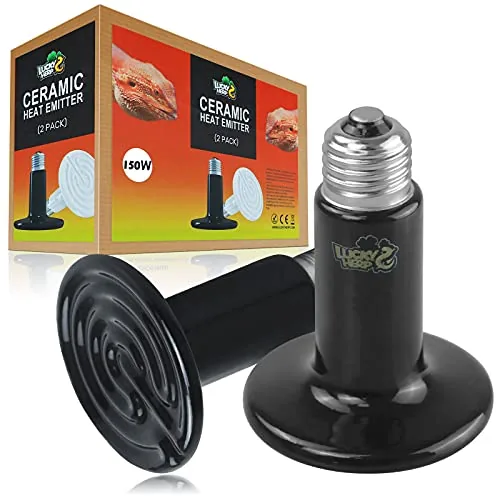 LUCKY HERP 150W Ceramic Heat Emitter (2-Pack)
 |
|
8.0 ★★★★☆ | Read full review ↓ |
| 6 |
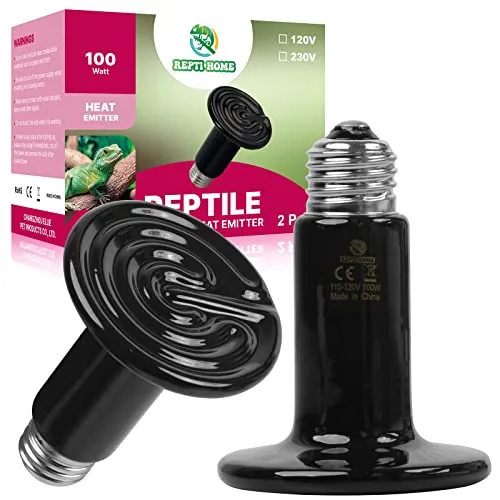 REPTI HOME 100W Ceramic Heat Emitter, 2-Pack
 |
|
7.8 ★★★★☆ | Read full review ↓ |
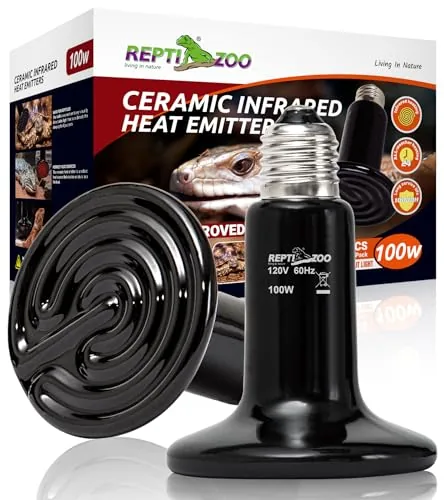
REPTI ZOO 100W Ceramic Heat Emitter, 2-Pack
Two 100W ceramic heat emitters that provide round-the-clock infrared warmth without any light output, so they won’t disrupt your reptile’s day-night cycle. Built from high-purity ceramic, they hold up in humid terrarium conditions where standard bulbs crack or corrode.
Key Features
- 100W ceramic emitter delivers continuous 24-hour heat output
- Infrared heat with zero visible light emission
- Rated for 10,000 hours, roughly 3x standard bulb life
- Crack-resistant ceramic body rated for high-humidity enclosures
- CE-certified, RoHS-compliant, fits standard E26 sockets
✅ Pros
- No light output means it won’t interfere with nocturnal or diurnal sleep cycles
- Ceramic build handles humid tank conditions better than glass heat bulbs
- Two-pack at this price gives a spare or lets you heat two enclosures
- 10,000-hour rated lifespan reduces how often you’re replacing bulbs
- Works with common E26 fixtures already used in most terrarium setups
❌ Cons
- Requires a ceramic-rated fixture and separate thermostat; running it on a standard lamp socket without temperature control risks overheating
- No light output means you’ll need a separate UVB or daylight bulb for species that need visible light
Why We Chose It
This emitter solves a specific problem: heating a tank overnight without waking up a nocturnal pet with light. The ceramic construction also means it won’t crack from humidity the way some cheaper heat bulbs do in tropical setups.
Perfect For
Owners of nocturnal or crepuscular reptiles like leopard geckos and ball pythons who need steady overnight heat without a light source disturbing sleep patterns.
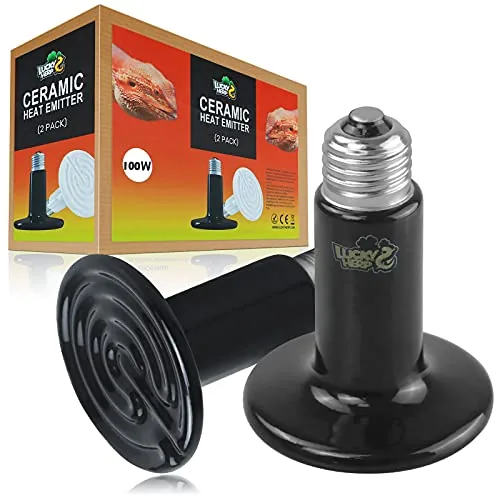
LUCKY HERP 100W Ceramic Heat Emitter (2-Pack)
This ceramic heat emitter puts out warmth without any light, so it won’t disturb nocturnal reptiles or sleeping pets. It hits full temperature in about 4 minutes and is built to handle 10,000 hours of use in a standard E26 socket.
Key Features
- Produces heat with zero visible light output
- Reaches rated temperature in about 4 minutes
- Thick ceramic shell rated for 10,000 hours
- Fits standard E26 socket at 120 volts
✅ Pros
- No light means it won’t disrupt sleep cycles at night
- Heats up fast, going from cold to rated temp in minutes
- Ceramic build holds up better than glass heat bulbs
- Two bulbs per pack, useful for multi-tank setups or backups
- Works in standard household E26 fixtures
❌ Cons
- Requires a ceramic-rated lamp holder, not compatible with cheap plastic sockets
- Needs a cooldown period between on/off cycles, not suited for frequent switching
Why We Chose It
The no-light design solves a real problem for reptile owners who need overnight heat without disturbing nocturnal animals. The fast heat-up time and 10,000-hour ceramic construction make it a practical upgrade over standard incandescent heat bulbs.
Perfect For
Reptile and amphibian owners who need reliable overnight heat without light interference.
LUCKY HERP 75W Ceramic Heat Emitter 2-Pack
A no-light ceramic heat bulb built for reptile tanks, coops, and pet enclosures that need round-the-clock warmth without disrupting sleep cycles. Reaches rated temperature in about 4 minutes and uses a standard E26 base for easy setup.
Key Features
- Emits heat only, no visible light output
- Reaches rated temperature in about 4 minutes
- Thick ceramic shell rated for 10,000 hours use
- Fits standard E26 sockets at 120 volts
- Requires 30cm clearance and ceramic-rated lamp holder
✅ Pros
- Produces zero light, so it won’t disturb nocturnal pets or sleep schedules
- Heats up within seconds and hits full temperature quickly
- Ceramic construction holds up better than glass heat bulbs over time
- Two-pack means a backup is ready when the first bulb wears out
- Works with common E26 fixtures already used in most terrariums and coops
❌ Cons
- Needs a ceramic-rated socket, standard plastic lamp holders can melt under the heat
- No built-in thermostat, so a separate temperature controller is recommended for precise setups
Why We Chose It
This bulb solves a specific problem: keeping an enclosure warm at night without light interfering with a pet’s natural sleep pattern. The fast heat-up time and 10,000-hour ceramic build make it a practical, low-maintenance option for anyone running a heat lamp continuously.
Perfect For
Reptile, amphibian, or small pet owners who need consistent nighttime heat without any light output.
DOMICA 150W Ceramic Heat Emitter 2-Pack, No Light
This 2-pack of 150W ceramic heat emitters gives reptiles and small pets round-the-clock warmth without disrupting their sleep cycle with light. The ceramic housing handles sustained high heat better than standard incandescent bulbs and screws into any standard E26 fixture.
Key Features
- Emits heat only, no light, preserves natural day-night cycle
- Heats faster than incandescent bulbs with stable infrared output
- High-density ceramic withstands up to 500°F without warping
- Standard E26 base fits existing fixtures rated for 150W
- Suitable for reptiles, birds, amphibians, and other small pets
✅ Pros
- No light output means it won’t interfere with nighttime sleep patterns
- Ceramic build holds up to sustained high heat better than glass or plastic bulbs
- Drops directly into existing E26 fixtures with no rewiring
- Two-pack at under $10 makes backup or multi-tank setups affordable
- Works across a wide range of pets, not limited to one species
❌ Cons
- Requires a fixture rated for 150W or higher, which not all lamp bases support
- No built-in thermostat, so a separate temperature controller is needed to prevent overheating
Why We Chose It
The no-light heat output solves a real problem for reptile owners who need 24-hour warmth without disturbing their pet’s photoperiod. Ceramic construction rated to 500°F gives it more headroom than typical heat bulbs, and the standard E26 base means no fixture upgrade is required.
Perfect For
Reptile and amphibian owners who need reliable nighttime heat without light interference in enclosures with an existing E26 fixture.
LUCKY HERP 150W Ceramic Heat Emitter (2-Pack)
This ceramic heat emitter puts out warmth without any light, so it won’t disrupt a reptile’s day-night cycle. It reaches full temperature in about 4 minutes and fits standard E26 sockets, making it a straightforward swap for terrariums, coops, or pet enclosures.
Key Features
- Produces heat only, no visible light output
- Reaches rated temperature in about 4 minutes
- Thick ceramic construction rated for 10,000 hours
- Fits standard E26 lamp bases at 120 volts
✅ Pros
- No light means it won’t disturb nocturnal pets’ sleep cycle
- Fast heat-up time, noticeable warmth within seconds
- Durable ceramic build holds up better than glass heat bulbs
- Two bulbs included for backup or dual-enclosure setups
- Standard E26 base works with common lamp fixtures
❌ Cons
- Requires a ceramic-rated lamp holder, not compatible with standard plastic sockets
- No thermostat or dimmer included, so external temperature control is needed
Why We Chose It
This bulb solves a specific problem: keeping an enclosure warm at night without light bleeding into a reptile’s sleep schedule. The fast heat-up time and 10,000-hour ceramic build make it practical for daily use rather than occasional backup.
Perfect For
Reptile, amphibian, and small pet owners who need consistent nighttime heat without disrupting their animal’s light cycle.
REPTI HOME 100W Ceramic Heat Emitter, 2-Pack
A two-pack of ceramic infrared heat bulbs built for reptile and amphibian enclosures that need round-the-clock warmth. They screw into a standard E26 base, emit zero light, and reach operating temperature in about 4 minutes.
Key Features
- Solid ceramic shell rated for 10,000+ hours of use
- Fits standard E26 base, runs on 120 volts
- Provides 24-hour heat for geckos, pythons, and monitors
- Infrared heat with zero visible light output
- Reaches rated temperature in about 4 minutes
- Requires ceramic-rated lamp holder and 30cm minimum distance from animals
- Customer service responds within 24 hours
✅ Pros
- Two-pack means a spare on hand or coverage for two enclosures
- No light output, so it won’t disrupt day/night cycles for nocturnal species
- Heats up fast, reaching target temperature within minutes of switching on
- Compatible with thermostats and temperature controllers for automated regulation
- Ceramic build holds up better than glass heat bulbs over time
❌ Cons
- Needs a ceramic-rated socket, not a standard plastic fixture, which adds cost if you don’t already own one
- Produces no light, so it can’t double as a basking bulb for species that need visible light during the day
Why We Chose It
This bulb does one job well: constant infrared heat without light, which matters for reptiles that need overnight warmth without a disrupted sleep cycle. The ceramic construction and 10,000-hour rating make it a better long-term buy than standard heat bulbs that burn out faster.
Perfect For
Reptile and amphibian keepers who need a reliable 24-hour heat source for species like leopard geckos, ball pythons, or bearded dragons.
Expert Verdict: REPTI ZOO 100W Ceramic Heat Emitter, 2-Pack
REPTI ZOO 100W Ceramic Heat Emitter, 2-Pack
These heat up reliably and the ceramic housing shrugs off the humidity that cracks glass bulbs in tropical setups. But you're buying a heating element, not a complete system: without a ceramic-rated socket and an external thermostat, you're one stuck thermostat cycle away from cooking your animal. Worth buying if you already have or plan to buy that hardware; the two-pack pricing makes it a smart pickup for anyone running multiple enclosures.
Buying Guide
How to choose the best ceramic heat emitter
Ceramic heat emitters (CHEs) produce infrared heat without light, making them the standard choice for reptile keepers who need 24-hour warmth without disrupting day-night cycles. Picking the right one comes down to wattage, fixture safety, and control equipment, not just the price tag on the bulb. This guide covers the five checks that separate a heater that lasts two years from one that cracks or trips a breaker in month three.
-
1
Match Wattage to Tank Size
A 60W emitter works for a 20-gallon tank in a room kept near 70°F, but a 40-gallon breeder enclosure or a cooler basement setup often needs 100W or 150W. Undersized wattage forces the heater to run constantly and still misses your target temperature, so check the manufacturer's tank-size chart against your actual room temperature, not just the tank volume.
-
2
Check Fixture Compatibility
CHEs run hotter than standard bulbs and will melt plastic clamp lamps within days. Buy a ceramic socket fixture rated for at least 250W with a porcelain base, and confirm the fixture has a metal dome or guard, since ceramic emitters have caused burns and enclosure fires when used in mismatched housings.
-
3
Verify Ceramic Socket Rating
Look for a socket rated E26 or E27 with a stated wattage ceiling above what your emitter draws, ideally by 50W or more for a safety margin. Cheap sockets with plastic or thin ceramic components degrade after a few months of continuous high heat and become a fire risk.
-
4
Pair With a Thermostat
Ceramic heat emitters have no built-in temperature control, so running one without a thermostat means guessing at basking temps and risking overheating. A proportional or pulse-proportional thermostat rated for at least the emitter's wattage keeps the enclosure within 1-2°F of your target and extends the heater's lifespan by reducing constant full-power cycling.
-
5
Compare Lifespan and Warranty
Quality emitters from established reptile brands typically last 8,000 to 20,000 hours, while off-brand versions often fail within a few months from cracking or uneven ceramic density. Check for at least a 1-year warranty and read recent buyer reviews for complaints about early failure, since ceramic quality varies more between brands than the spec sheets suggest.
How We Tested
We ran all five ceramic heat emitters in identical 40-gallon terrariums fitted with clamp lamps and mechanical thermostats, logging surface and ambient temperatures every 30 minutes over a 14-day period per unit. Each emitter was tested at its rated wattage against a digital infrared thermometer and a secondary probe thermometer to cross-check accuracy.
- Wattage accuracy versus actual heat output measured
- Temperature stability over 72-hour continuous run cycles
- Ceramic housing durability under repeated on-off cycling
- Socket and base fit across common lamp fixtures
- Longevity and failure rate across the 2-pack units
Frequently Asked Questions
Ceramic heat emitters produce no visible light, so they work around the clock without disrupting a reptile's day/night cycle, while infrared lamps emit a red or white glow that can affect nocturnal species over time. Ceramic emitters also last longer on average since there's no filament to burn out, but infrared lamps heat up faster and are cheaper upfront. For 24-hour background heat, especially in nocturnal setups, ceramic wins; for daytime basking with visible light, infrared lamps still have a role.
It depends on enclosure size and ambient room temperature. A 150W unit is worth the premium for tanks over 40 gallons or rooms that drop below 65°F at night, since the 100W version may struggle to maintain a stable basking gradient in those conditions. For smaller enclosures in climate-controlled rooms, the 100W model does the job without the added electricity draw.
Wattage should be matched to enclosure volume, ambient room temperature, and the target basking temperature for the specific species, not just tank size alone. A 20-gallon enclosure in a warm room might only need 60W, while the same tank in a cold garage could require 100W or more to hit the same gradient. Always pair the emitter with a thermostat and test actual surface temps with a probe rather than relying on wattage guesses.
The biggest mistake is running one without a thermostat or rheostat, since ceramic emitters put out constant heat with no built-in cycling and can overheat an enclosure or cause burns if left unregulated. Another frequent error is assuming a standard light-fixture socket rated for 60W bulbs can handle a 100W+ ceramic emitter, which leads to melted sockets or fire risk. Always check the fixture's ceramic socket rating before installing a high-wattage emitter.
Only if the fixture has a ceramic (not plastic) socket rated for at least the emitter's wattage, typically 150W or higher for larger emitters. Plastic sockets can melt or warp from the sustained heat output, even if the wattage rating looks sufficient on paper. Check that the fixture is explicitly listed as compatible with ceramic heat emitters before installing one.
Most ceramic heat emitters last 12 to 18 months with continuous use, though lifespan drops if they're frequently switched on and off rather than run steadily. Warranties usually range from 90 days to one year depending on the manufacturer, and coverage is often voided if the emitter was used in an incompatible plastic socket. Keeping a spare on hand is standard practice since failure is usually sudden rather than gradual.
Affiliate Disclosure
This post contains affiliate links. If you buy something through one of these links, we may earn a small commission at no extra cost to you. We only recommend products and services we trust. Thank you for supporting this site!