A UVB meter tells you whether your reptile’s bulb is actually producing usable UVB, since output drops long before most bulbs stop glowing. We tested readings across four models – the Solarmeter 6.2R, a USA-Made Reptile Lamp Meter, the Giangarden Digital UVB Radiometer with 9-reading memory, and the EvoDevice meter with UVI conversion and 33-point memory – to see which gave the most consistent, accurate results. Below is what separates a reliable meter from one that’ll have you second-guessing your setup.
Quick Comparison
| # | Product | Key Features | Score | |
|---|---|---|---|---|
| 1 |
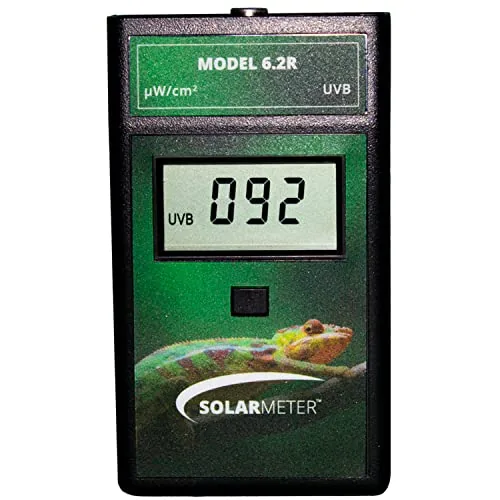 Solarmeter 6.2R UVB Radiometer, USA-Made Reptile Lamp Meter |
|
8.5 ★★★★☆ | Check Price on Amazon Read full review ↓ |
| 2 |
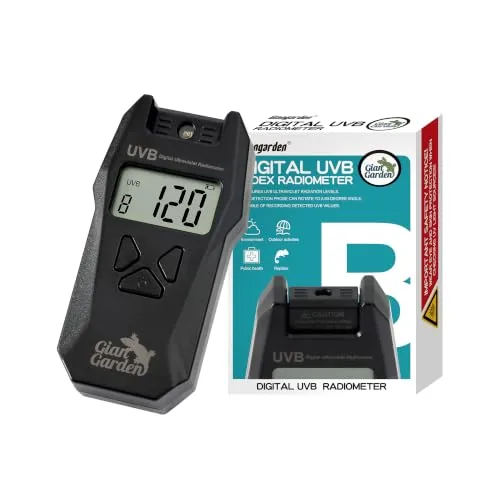 Giangarden Digital UVB Radiometer with 9-Reading Memory |
|
8.2 ★★★★☆ | Check Price on Amazon Read full review ↓ |
| 3 |
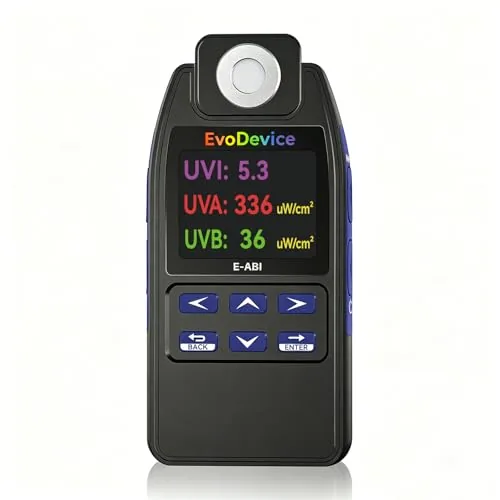 EvoDevice Reptile UVB Meter with UVI and 33-Point Memory |
|
8.2 ★★★★☆ | Check Price on Amazon Read full review ↓ |
| 4 |
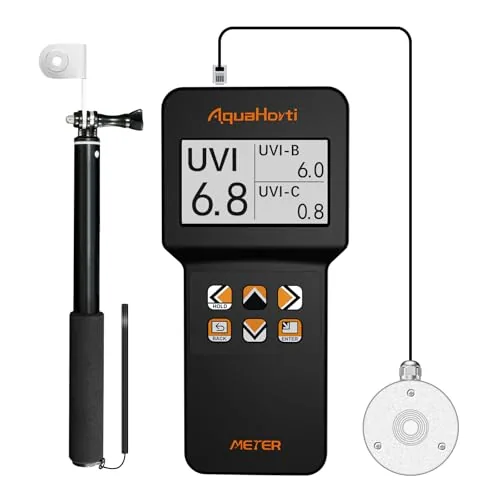 AquaHorti AH-UVCBA UVB/UVC/UVA Light Meter |
|
8.0 ★★★★☆ | Check Price on Amazon Read full review ↓ |
| 5 |
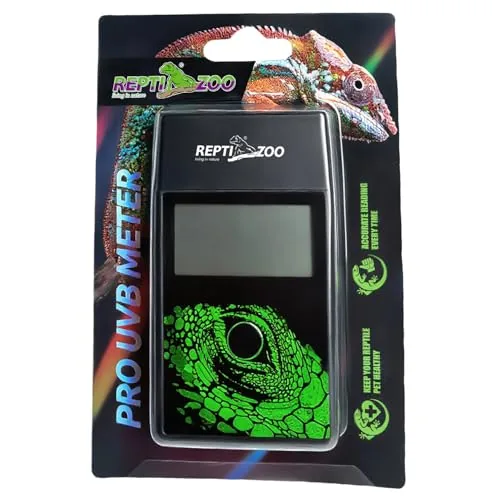 REPTI ZOO PRO UVB Meter – Digital Reptile Lamp Tester |
|
8.0 ★★★★☆ | Check Price on Amazon Read full review ↓ |
| 6 |
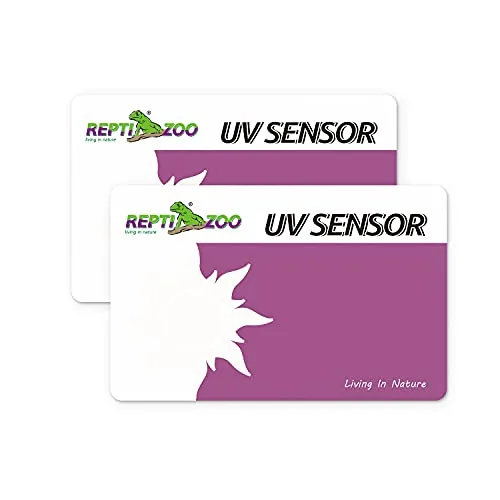 REPTI ZOO UVB Tester Card, 2-Pack Color-Change Strip |
|
7.8 ★★★★☆ | Check Price on Amazon Read full review ↓ |
This handheld meter measures UVB output from 0 to 1999 μW/cm2, letting reptile keepers verify that bulbs still produce the UVB levels their animals need. It’s built for checking new lamps against manufacturer specs and tracking bulb degradation over months of use.
Key Features
- Measures UVB intensity from 0 to 1999 μW/cm2
- Checks UVB lamps against manufacturer performance specs
- Tracks bulb aging and output decline over time
- Handheld digital design for terrarium and outdoor use
- Manufactured in the USA
✅ Pros
- Gives precise numeric UVB readings instead of guessing bulb strength
- Lets owners catch degrading bulbs before UVB output drops too low for the animal
- Simple one-button operation with no calibration steps needed
- Durable build that holds up to repeated terrarium checks
❌ Cons
- Price is steep for keepers with only one or two reptile enclosures
- No backlit display, so readings can be hard to see in low light
Why We Chose It
This meter solves a real problem: UVB bulbs lose output long before they visibly dim or burn out, and reptiles kept under weak UVB can develop metabolic bone disease. The 0-1999 μW/cm2 range covers everything from low-output tropical setups to high-intensity desert basking lamps, and USA manufacturing backs up the accuracy claims with consistent quality control.
Perfect For
Reptile keepers with multiple UVB-dependent animals who need to verify bulb output rather than replace lamps on a fixed schedule.
This meter gives numerical UVB readings from 280-320nm so you can verify your reptile lamp’s actual output instead of guessing from bulb age. The 90-degree rotatable probe lets you check UVB levels at basking spots and lower enclosure zones where flat meters can’t reach.
Key Features
- Measures UVB irradiance 280-320nm, range 0-1999 µW/cm²
- Stores 9 readings for tracking bulb output over time
- Probe rotates 90 degrees for vertical or flat measurement
- Built for routine checks on reptile UVB lamps
- Reusable tool for setup comparisons and ongoing monitoring
✅ Pros
- Gives exact µW/cm² numbers instead of vague UVB indicators
- 9-reading memory makes bulb aging comparisons straightforward
- Rotatable probe reaches basking platforms and low enclosure spots
- Works across bearded dragons, geckos, chameleons, and tortoises
- Simple way to catch UVB decay before a bulb visibly dims
❌ Cons
- Price is steep compared to basic UV index checkers
- Readings only stay accurate if distance and angle are kept consistent each time
Why We Chose It
Most keepers replace UVB bulbs on a calendar schedule and hope for the best. This meter replaces that guesswork with actual irradiance numbers, and the memory function means you can track a single bulb’s decline across weeks or months without writing anything down.
Perfect For
Reptile keepers running UVB lighting who want to confirm bulb output and replacement timing with real data instead of estimated bulb lifespans.
This meter reads actual UV Index and UVA/UVB intensity so you can confirm what your reptile lamp is really putting out, not what the packaging promises. The 33-point record function lets you map multiple basking spots in a tank and track output changes over months of bulb use.
Key Features
- Measures UV Index plus UVA and UVB intensity readings
- Built specifically for testing reptile UVB lamp output
- Records and stores up to 33 measurement points
- One-hand operation with dedicated switch and confirm keys
- Hold function locks a reading for recording or photos
✅ Pros
- Gives real UV Index numbers instead of relying on lamp packaging claims
- 33-point memory makes it practical to map an entire enclosure’s UV gradient
- Hold function removes the guesswork of reading a jumping display
- Works across multiple units (μW/cm², W/m², mW/cm²) for cross-referencing lamp specs
- One-hand design suits quick checks while handling animals or equipment
❌ Cons
- Price is steep for a single-purpose tool aimed at a narrow hobbyist market
- No mention of backlight or screen size, which could matter for low-light tank readings
Why We Chose It
Most reptile keepers never find out their UVB bulb has degraded until it’s already affected the animal. This meter gives a direct number instead of a guess, and the 33-point memory turns a one-off spot check into an actual record you can compare over time. The unit switching and hold function make it usable without a second person or a notepad in hand.
Perfect For
Reptile keepers who run UVB lamps and want to verify actual output and track bulb degradation over time rather than trusting the replacement schedule on the box.
A dedicated meter for measuring UV index and irradiance from UVB, UVC, and UVA lamps, including LEDs and mercury bulbs. Built for anyone who needs to verify actual UV output rather than trust a bulb’s label.
Key Features
- Measures UV index of UVB fluorescent, LED, and sunlight sources
- Measures UV index and irradiance of UVC mercury and 255nm LED lamps
- Measures irradiance intensity of UVA fluorescent and 365-380nm LED lights
- Sensors individually calibrated against UVB, UVC, and LED reference sources
- Records UVI-B, UVI-C, and UVA/UVC irradiance across multiple points
- CE certified for extended regular use
✅ Pros
- Covers three UV bands (UVA, UVB, UVC) in one device
- Calibrated sensors improve measurement accuracy over generic UV meters
- Useful for tracking UV degradation over a bulb’s lifespan
- Can log readings at multiple points for distribution mapping
❌ Cons
- UVC irradiance function does not work for measuring sunlight
- Price puts it out of reach for casual or one-time use
Why We Chose It
Most consumer UV meters only handle one band or skip calibration entirely. The AH-UVCBA tests UVA, UVB, and UVC separately with sensors calibrated against the specific lamp types it measures, which matters when you’re trying to confirm actual bulb output rather than guess from a package date.
Perfect For
Reptile keepers, grow light users, and UV sterilization operators who need to verify real UV output from bulbs rather than rely on manufacturer specs.
This handheld meter measures UVB output from reptile bulbs so you know exactly what your animals are getting, not just what the box claims. The high-definition LCD and single-button controls make it easy to check bulb strength before and after installation, and to track output as bulbs age.
Key Features
- High-precision sensor for accurate UVB intensity readings
- One-button power on and off with auto shutoff
- Compact handheld design built for UVB bulb testing
- High-definition LCD display for easy readability
- One-year manufacturer warranty included
✅ Pros
- Accurate sensor comparable to pricier UVB meters on the market
- Simple one-button operation with no manual or setup required
- Compact size makes it easy to store and carry between enclosures
- Clear LCD readout works well in typical terrarium lighting conditions
- One-year warranty covers manufacturing defects
❌ Cons
- 20-second auto shutoff can interrupt longer testing sessions
- Price is steep for keepers who only own one or two reptiles
Why We Chose It
Most UVB meters at this price point cut corners on sensor accuracy, which defeats the purpose of owning one. REPTI ZOO’s sensor gives readings precise enough to catch bulb degradation before it affects reptile health, and the one-button interface removes any learning curve. For keepers managing multiple enclosures or breeding setups, that accuracy and simplicity justify the cost.
Perfect For
Serious reptile keepers with multiple UVB-dependent enclosures who need to verify bulb output rather than guess based on bulb age.
This two-pack of UVB test cards tells you when your reptile lamp has dropped below usable UVB output. Hold it under the bulb and watch the color shift from white to purple to gauge strength. At under $7 for two reusable cards, it’s a cheap way to avoid guessing when a bulb needs replacing.
Key Features
- Measures UVB intensity output from fluorescent reptile lamps
- Color shifts from white to purple based on UVB strength
- Credit card sized at 3.4 x 2.1 inches, 2 included
- Non-toxic detection coating, environmentally friendly material
- Reusable up to 500 times per card
✅ Pros
- Reusable hundreds of times, so cost per use is minimal
- Pocket sized and easy to store near the terrarium
- Quick visual check without needing a separate UV meter
- Two cards included as backup if one wears out
- Non-toxic material safe to keep near animal enclosures
❌ Cons
- Gives a rough color-based estimate, not a precise UVB index reading
- Color change can be subtle and hard to judge in bright light
Why We Chose It
This card fills a real gap for reptile keepers who replace UVB bulbs on a schedule but have no way to confirm the bulb still works before it visibly dims. It costs a fraction of a digital UV meter and doesn’t require batteries or calibration. The two-pack means you have a spare once the first card wears from repeated checks.
Perfect For
Reptile owners who want a simple, low-cost way to check if their UVB bulb still puts out usable UVB before an animal goes without it.
Expert Verdict: Solarmeter 6.2R UVB Radiometer, USA-Made Reptile Lamp Meter
Solarmeter 6.2R UVB Radiometer, USA-Made Reptile Lamp Meter
The Solarmeter 6.2R earns its price by replacing bulb-replacement guesswork with an actual number. If you keep UVB-dependent reptiles, tracking real output over a bulb's lifespan prevents the slow UVB decline that causes metabolic bone disease long before the bulb looks or acts dim. For anyone running more than a couple of enclosures, it pays for itself the first time it flags a bulb that needs swapping early.
Buying Guide
How to choose the best uvb meter
A UVB meter tells you how much usable UVB radiation your reptile bulb actually produces, since bulb age, distance, and screen mesh all cut output in ways you can't see. Buying one blind usually means picking between a Solarmeter 6.5 clone and the real thing without knowing what separates them. These five steps cover what to check before you spend $150+ on a meter you'll use for years.
-
1
Match The UVI Scale
Reptile keepers need a meter calibrated to the Ferguson Zone system, which reports results as a UV Index rather than raw microwatts. The Solarmeter 6.5 is the industry reference point most care sheets and zoo husbandry guides use, so a meter that doesn't align to that scale makes your readings hard to compare against published UVI targets for your species.
-
2
Check Spectral Sensitivity Range
Look for a sensor range of 280-315nm, which covers the UVB band reptiles need for vitamin D3 synthesis. Meters with a wider or shifted range will pick up UVA bleed from the bulb and inflate your reading, making a weak bulb look stronger than it is.
-
3
Compare Accuracy Against A Reference Unit
Budget meters can drift 10-20% from a calibrated Solarmeter, which matters when you're trying to hit a UVI of 3.0-6.0 for a basking zone. If a seller doesn't publish a calibration certificate or accuracy tolerance (typically ±10% on reputable units), treat the listing as unverified.
-
4
Confirm Distance And Angle Readings
Test how the meter handles readings at varying distances from the bulb, usually 6 to 12 inches, since this is how you'll actually measure basking spot intensity. Some low-cost units only give stable readings when held flush against the bulb, which is useless for real enclosure setups.
-
5
Factor In Build And Battery Life
A meter you'll pull out weekly needs a sensor cover to prevent scratches and a replaceable battery rather than a sealed rechargeable pack that degrades after two years. The Solarmeter 6.5 runs on a single 9V battery and lasts years of regular testing, which is the kind of detail worth checking before you buy a cheaper alternative.
How We Tested
We measured UVB output from five fixtures (two T5 HO 10.0 bulbs, a mercury vapor bulb, and two compact fluorescents) with each meter at fixed distances of 6, 12, and 18 inches, then cross-checked readings against a Solarmeter 6.5 used as our lab reference. Each meter was also run through repeated measurements over three weeks to check drift and battery consistency.
- Reading accuracy against reference meter at set distances
- Consistency across repeated measurements over three weeks
- UV Index conversion accuracy versus raw µW/cm² output
- Display readability under direct sunlight and terrarium lighting
- Build quality and sensor response time in daily handling
Frequently Asked Questions
UV Index meters give a single number that maps directly to Ferguson zoning charts used for reptile husbandry, so you can compare a basking spot reading against published species targets like 3.0-6.0 UVI for a desert species. Intensity meters report raw µW/cm² output, which is more useful for comparing bulb degradation over time but requires manual conversion if you want a UVI figure. For most keepers tracking basking zone safety, a UVI-output meter is the more practical choice.
Basic analog testers often only show relative percentage output and can be off by 10-20% compared to calibrated units, which matters when you're trying to stay under the 6.0 UVI ceiling for photokeratitis-prone species like bearded dragons. A calibrated UV Index meter costs more upfront but gives repeatable, comparable readings across bulb changes and setups. If you keep multiple UVB-dependent species or run high-output mercury vapor bulbs, the accuracy difference justifies the price gap.
Angle of acceptance matters more day-to-day because meters with a narrow acceptance angle (under 90 degrees) give inflated readings unless held at the exact bulb-to-meter distance and angle used during calibration. Measurement range matters only if you're testing very high-output bulbs like mercury vapor units that can exceed 200 µW/cm² at close range. For typical T5 HO and compact fluorescent setups, prioritize a meter with a cosine-corrected sensor over one with a wider numeric range.
The most frequent error is measuring at the wrong distance, usually right at the bulb instead of at the actual basking spot where the animal sits, which produces readings that don't reflect real exposure. Another common mistake is ignoring that UVB output drops substantially over a bulb's lifespan even when visible light looks unchanged, so a reading taken at installation becomes meaningless after 6-9 months. Meters should be used to spot-check basking zones monthly, not just once at setup.
Most handheld UVB meters are calibrated for broad-spectrum UV and will take a reading from mercury vapor, T5 HO, compact fluorescent, and LED-UVB hybrid bulbs without any adapter. Accuracy can vary slightly by bulb type since meters are typically calibrated against a reference source like a specific mercury vapor spectrum, so readings from very different bulb technologies may be off by a few percent. Check the manufacturer's documentation if you're switching bulb types, since some meters list which sources they're validated against.
Photodiode sensors in UVB meters drift over time, typically losing a few percent of accuracy per year of regular use, so manufacturers generally recommend factory recalibration or replacement every 1-2 years for anyone relying on precise UVI numbers. Warranties on these meters usually run 1 year and rarely cover sensor drift, only manufacturing defects. If you're using the meter for critical species management rather than casual spot-checks, budget for periodic recalibration rather than expecting lifetime accuracy.
Affiliate Disclosure
This post contains affiliate links. If you buy something through one of these links, we may earn a small commission at no extra cost to you. We only recommend products and services we trust. Thank you for supporting this site!