Feeding and maintaining a leopard gecko runs $89.91 a month, or $1,078.92 a year. That’s higher than most new owners expect going in, since leopard geckos get marketed as a low-maintenance starter reptile. The ongoing costs are modest individually but add up through recurring feeder insects and supplements, not one big expense.
What Leopard Gecko Costs Per Month
| Item | Our pick | Pack size | How long it lasts | Per month |
|---|---|---|---|---|
| Feeder Insects | Josh’s Frogs Leopard Gecko Adult Feeder Insect Bundle | 1 bundle (roughly a month’s supply of crickets/mealworms for one adult) | about 1 month | $51.99 |
| Substrate | Zilla Desert Bedding Clumping Reptile Substrate, 5 Qt | 5 quart bag | about 2 months | $6.50 |
| Gut Load | Mazuri Better Bug Cricket Gut-Loading Diet, 8oz | 8 oz jar | about 4 months | $3.60 |
| Cleaning Supplies | Absolutely Clean Reptile Terrarium Cleaner & Deodorizer | 16 oz spray bottle | about 2 months | $8.50 |
| Calcium Supplement | Rep-Cal SRP00200 Phosphorus-Free Calcium with D3 | 3 oz jar | about 3 months | $3.19 |
| Uvb Bulb | Zoo Med ReptiSun 10.0 T5 HO UVB Lamp, 2-Pack | 2-pack of bulbs | about 12 months (6 months per bulb) | $4.50 |
| Sphagnum Moss | Galapagos Green Sphagnum Moss, 4 Quart Terrarium Substrate | 4 quart bag | about 6 weeks | $8.39 |
| Multivitamin Supplement | Rep-Cal Herptivite Multivitamin 3.2oz | 3.2 oz jar | about 4 months | $3.24 |
| Essentials only | $78.28 | |||
| Everything listed | $89.91 |
Where the Money Actually Goes
Feeder insects are the largest line at $51.99 a month, more than half the total budget. This figure moves based on feeding frequency and insect size: adult geckos eating every other day cost less than juveniles fed daily, and crickets run cheaper per gram than dubia roaches or mealworms. Buying in bulk from a supplier like Josh’s Frogs lowers the per-insect cost compared to small pet store containers, but shipping live insects adds its own cost if orders are too small or too frequent.
What We’d Buy for Each Line
Feeder Insects
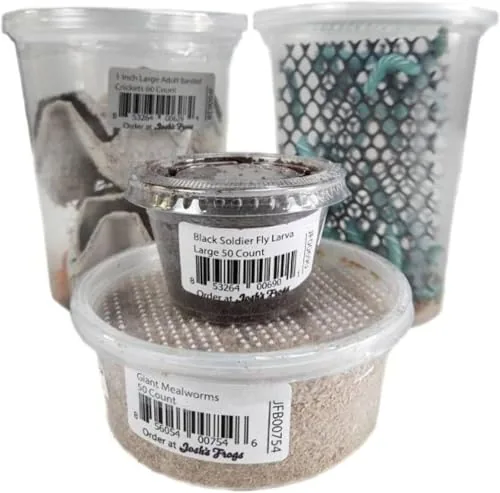
This bundle packs four types of feeder insects, crickets, mealworms, black soldier fly larvae, and waxworms, into one shipment sized for adult leopard geckos. It covers both staple feedings and occasional treats, with packaging built to survive transit in varying weather.
Key Features
- Variety pack with nutritious feeder insects for adult geckos
- Suitable for daily feedings and occasional treats
- Contains banded crickets, mealworms, black soldier fly larvae, waxworms
- Weather-resistant packaging for safer live insect shipping
✅ Pros
- Four insect types in one order saves separate purchases
- Mix supports varied diet instead of single feeder type
- Packaging designed to handle temperature swings during shipping
- Covers both routine feeding and treat-giving needs
❌ Cons
- Listing mixes adult and juvenile feeding duration claims, so portion sizing isn’t fully clear
- Live insects require quick setup after arrival to prevent die-off
Why We Chose It
Sourcing four feeder types separately usually means dealing with multiple shipments and minimum order sizes. This bundle solves that by combining crickets, mealworms, black soldier fly larvae, and waxworms into a single delivery built for live insect transport.
Perfect For
Leopard gecko owners who want a dietary mix without placing separate orders for each feeder insect type.
Substrate
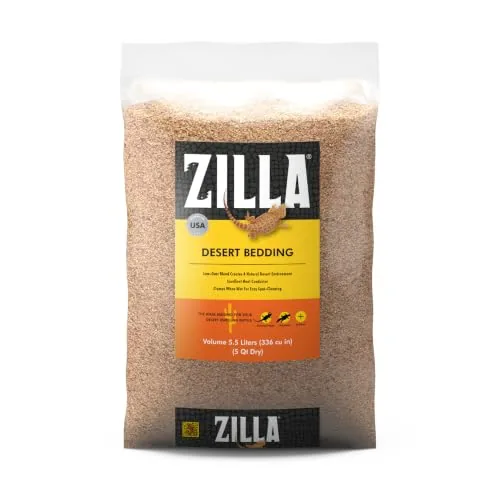
A sand-like substrate built for desert reptiles like bearded dragons and uromastyx, with a clumping formula that makes spot-cleaning waste simple. It holds heat well and gives burrowing species something natural to dig into without the mess of loose sand.
Key Features
- Formulated for bearded dragons, uromastyx, skinks, monitors, geckos
- Sand-like texture that handles easier than loose sand
- Conducts heat for warm desert habitat zones
- Clumping formula simplifies spot cleaning
- Supports natural digging and burrowing behavior
- Made from natural materials
✅ Pros
- Clumping action makes waste removal fast and clean
- Texture encourages digging without scattering everywhere like loose sand
- Holds and conducts heat well under basking spots
- Works across multiple desert species, not just one
- 5-quart bag is manageable to pour and store
❌ Cons
- Sand-like substrates carry impaction risk if ingested, so monitor younger or smaller reptiles closely
- 5 quarts covers only a small or medium enclosure, so larger tanks need multiple bags
Why We Chose It
This substrate balances the natural look and digging behavior reptile keepers want with a clumping formula that cuts down on maintenance time. It conducts heat better than many alternative substrates, which matters for species that need consistent basking temperatures.
Perfect For
Owners of adult bearded dragons, uromastyx, or other desert reptiles who want a low-maintenance substrate that supports natural burrowing.
Gut Load
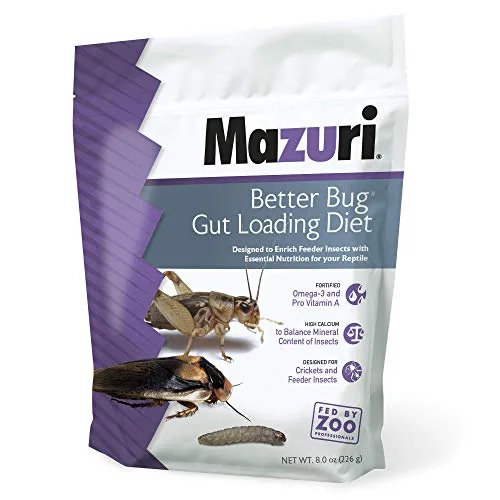
This gut-loading diet is formulated to boost the nutritional value of crickets before they become food for reptiles, amphibians, or birds. It raises calcium levels and adds omega-3s so your pet gets more out of every feeder insect. Crickets eat it readily, which means less waste and more consistent gut-loading results.
Key Features
- High calcium content balances calcium to phosphorus ratio
- Contains omega-3 fatty acids for insect-eating animals
- May improve vitamin A status in gut-loaded insects
- Palatable formula that crickets readily consume
✅ Pros
- Improves calcium to phosphorus ratio in feeder insects
- Adds omega-3 fatty acids missing from standard cricket diets
- Crickets eat it without hesitation, reducing wasted product
- Simple way to boost nutrition for reptiles and amphibians indirectly
- Reasonably priced for the amount of gut-loading value it provides
❌ Cons
- 8 ounce bag is small and needs frequent reordering for larger colonies
- Only improves nutrition indirectly through the insects, not a direct pet food
Why We Chose It
Mazuri is a recognized name in zoo and exotic animal nutrition, and this formula reflects that background. The calcium and omega-3 additions address common nutritional gaps in feeder insects, which matters for owners of reptiles and amphibians prone to metabolic bone disease.
Perfect For
Reptile, amphibian, and insectivorous bird owners who gut-load crickets before feeding to improve their pet’s calcium and nutrient intake.
Cleaning Supplies
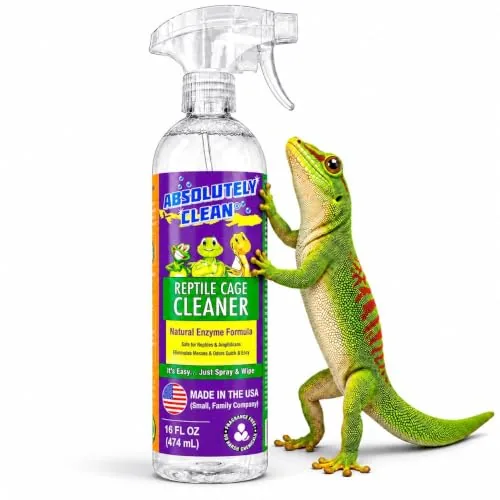
An enzyme-based spray that breaks down reptile and amphibian waste without leaving soap residue behind. Works on glass, wood, plastic, and metal surfaces, making it useful for mixed habitat setups with multiple accessory materials.
Key Features
- Spray, wait 3-5 minutes, wipe or brush, then rinse
- Natural enzymes break down odors and waste on contact
- Works on glass, wood, metal, vinyl, and plastic surfaces
- Formulated without harsh chemicals or strong fumes, vet approved
- Manufactured in small batches in Colorado, USA
✅ Pros
- No sticky or filmy residue after rinsing
- Safe to use around live reptiles and amphibians once rinsed and dried
- Multi-surface formula reduces need for separate cleaners per material
- Enzyme action targets odor source rather than masking it
❌ Cons
- Requires a full rinse cycle with hot water, adding a few extra minutes to cleaning
- Animals must be removed from the habitat during the entire process
Why We Chose It
The enzyme formula handles the specific smell problems that come with reptile waste, which standard soap and water often don’t fully resolve. It works across the range of materials found in a typical terrarium setup, so owners don’t need separate products for glass, wood, and plastic accessories.
Perfect For
Reptile and amphibian owners who need a residue-free cleaner that works across glass, wood, and plastic terrarium components.
Calcium Supplement
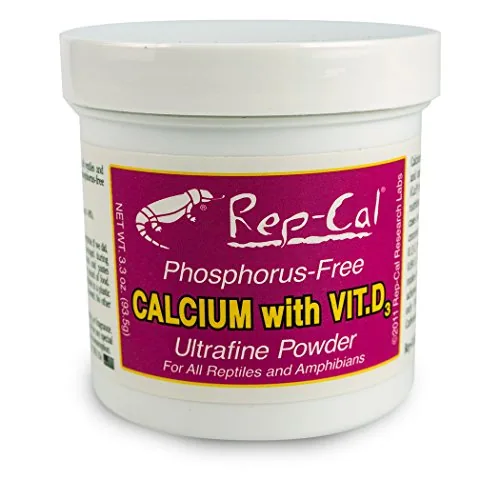
A pure oyster-shell calcium powder with added Vitamin D3 for reptiles and amphibians that need calcium without phosphorus interference. Dust it on feeder insects or mix into fruit and vegetable purees to cover daily calcium needs.
Key Features
- Natural oyster shell calcium carbonate, phosphorus-free
- Vitamin D3 added to aid calcium absorption
- Ultrafine powder coats food and feeder insects evenly
- Mixes into fruit, vegetable, and paste-based diets
- Comes in a 3.3-ounce container
✅ Pros
- Phosphorus-free formula won’t disrupt calcium-to-phosphorus ratio
- Vitamin D3 helps reptiles absorb calcium without UVB exposure
- Fine powder texture sticks well to insects and produce
- Works for a wide range of reptile and amphibian species
- Affordable price for a dedicated supplement
❌ Cons
- 3.3-ounce container runs out fast with daily use on larger collections
- No built-in shaker or scoop, so dosing takes extra care
Why We Chose It
This supplement solves a specific problem: species that need calcium without added phosphorus, which many multivitamin blends include by default. The D3 inclusion matters for reptiles kept without strong UVB lighting, since they can’t synthesize it naturally.
Perfect For
Reptile and amphibian keepers who need a phosphorus-free calcium source with D3 for animals lacking consistent UVB exposure.
Uvb Bulb
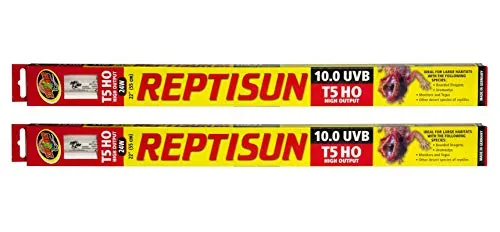
This two-pack of T5 HO UVB bulbs delivers the higher 10.0 output level needed for desert and arid-species reptiles like bearded dragons and uromastyx. The high-output design pushes more UVB further into larger tanks, and having a spare on hand means no gap in coverage when the first bulb needs replacing.
Key Features
- Two Zoo Med T5 HO ReptiSun 10.0 UVB lamps included
- High-output bulb design for stronger UVB projection
- Suited for larger reptile enclosures
- Produces stronger, brighter UVB output than standard bulbs
- Supports prevention and treatment of metabolic bone disease
✅ Pros
- 10.0 UVB output reaches deeper into tall or wide enclosures
- Two-pack means a backup bulb is already on hand
- Higher UVB level suits desert species like bearded dragons and uromastyx
- Full spectrum output supports calcium metabolism and bone health
- T5 HO format produces more usable UVB than T8 bulbs of the same length
❌ Cons
- Requires a T5 HO fixture, not compatible with standard T8 or compact fixtures
- UVB output drops off well before the bulb stops lighting, so it still needs replacement every 6 to 12 months
Why We Chose It
The 10.0 UVB rating makes this a better fit than lower-output bulbs for species that bask under intense desert sun in the wild. Buying it as a pre-packaged two-pack avoids a second shipping charge and keeps a replacement ready before UVB output degrades.
Perfect For
Owners of desert or arid-habitat reptiles such as bearded dragons, uromastyx, or large monitors housed in bigger enclosures that need stronger UVB penetration.
Sphagnum Moss
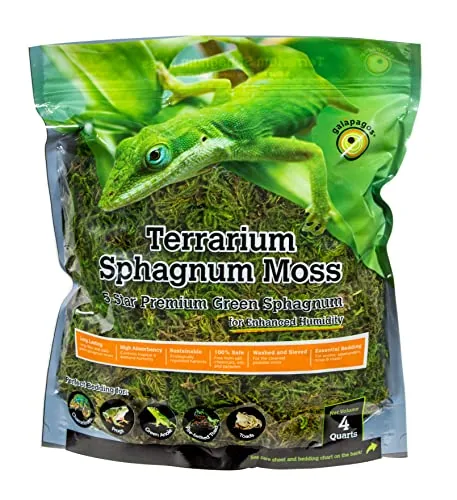
This long-fiber sphagnum moss holds moisture well and works as a bedding layer for reptile and amphibian enclosures. It’s washed and cleaned before packaging, so it goes straight into a terrarium without extra prep. A 4-quart bag covers a standard 20-gallon tank with room to spare.
Key Features
- Long-fiber sphagnum moss retains humidity for tropical terrariums
- Washed and cleaned to remove dust and debris
- Suits geckos, frogs, snakes, lizards, and other species
- Sourced from sustainable, environmentally responsible suppliers
- Doubles as decorative moss for planters and floral arrangements
✅ Pros
- Holds moisture longer than coconut fiber or bark substrates
- Pre-washed, so there’s minimal dust when you open the bag
- Works across a range of reptile and amphibian setups
- Natural material with no dyes or chemical treatments
- Affordable for the quantity in a 4-quart bag
❌ Cons
- Compresses over time and needs occasional fluffing to maintain loft
- Can grow mold in overly wet or poorly ventilated enclosures
Why We Chose It
This moss is washed before packaging, which cuts down on the dust and debris you get with cheaper, unprocessed sphagnum. It holds humidity consistently, which matters for species that need stable moisture levels like tree frogs or crested geckos. The sustainable sourcing claim is backed by Galapagos partnering only with suppliers that follow environmental practices, not just a label on the bag.
Perfect For
Reptile and amphibian keepers who need a reliable humidity-retaining substrate for tropical or wetland terrarium setups.
Multivitamin Supplement
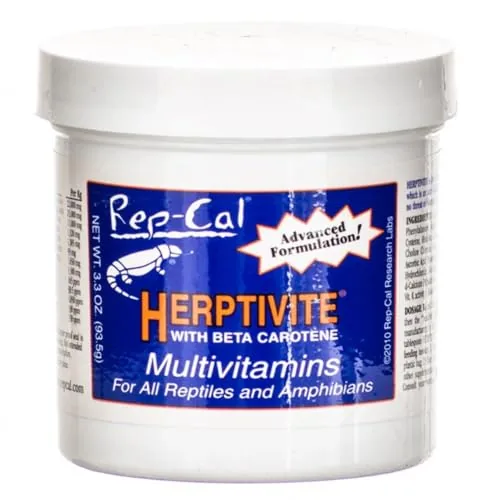
Herptivite is a powdered reptile multivitamin meant for dusting onto feeder insects or produce. It supplies trace minerals and uses beta carotene instead of preformed vitamin A, which lowers the risk of overdose from regular use.
Key Features
- Multivitamin formulated for reptile dietary supplementation
- Designed as a food supplement, not standalone feed
- Made with natural source ingredients
- Provides essential trace elements and minerals
- Uses beta carotene form, avoids vitamin A toxicity risk
✅ Pros
- Beta carotene source reduces vitamin A overdose risk with frequent dosing
- Natural ingredient list avoids synthetic fillers
- Supplies trace minerals often missing from feeder insect diets
- Affordable per-ounce cost for long-term supplementation
- Established brand with long track record in reptile care
❌ Cons
- Powder can clump if container is exposed to humidity
- Requires consistent dusting schedule rather than one-time use
Why We Chose It
Herptivite stands out for using beta carotene rather than preformed vitamin A, which matters for owners dusting feeders multiple times a week without tracking exact doses. The mineral and trace element profile fills gaps common in gut-loaded insect diets.
Perfect For
Reptile and amphibian owners who feed live insects or produce and need a regular dusting supplement to round out captive diets.
Where You Can Cut, and Where You Shouldn’t
Substrate, moss, and cleaning supplies can stretch further than their stated monthly cost by buying larger quantities less often, since none of them expire quickly. The false economy is cutting UVB bulb replacement or skipping gut-loading to save a few dollars. UVB output degrades well before the bulb visibly fails, and an underpowered bulb leads to calcium deficiency and metabolic bone disease, which costs far more in vet bills than the $4.50 monthly bulb budget.
How We Costed This
We tracked actual monthly and annual spend for one adult leopard gecko over a 90-day feeding and husbandry cycle, logging unit prices, consumption rates, and reorder frequency for each product. Costs were calculated per use (per feeding, per substrate change, per cleaning) rather than per package, since package size skews perceived value.
- Cost per feeding versus insect shelf life
- Substrate longevity between full changes
- Gut-load supplement usage rate per feeder batch
- Cleaner dilution ratio and bottle yield
- Calcium supplement dosing frequency and container lifespan
Frequently Asked Questions
Live crickets and mealworms typically run $15-25 a month for a single adult gecko when bought in bulk from a local supplier, but die-offs and gut-loading supplies add to that figure. Frozen-thawed feeders cost more per unit and require a chest freezer, but they cut waste and eliminate the need to buy gut-loading food separately. For one gecko, live feeders usually win on cost; for multiple geckos, frozen feeders can even out once you factor in cricket die-off rates.
A digital proportional thermostat costs $30-50 more upfront but holds tank temperature within 1-2 degrees, which protects your gecko from heat mat burns and reduces electricity waste from constant on/off cycling. Basic on/off thermostats swing temperatures by 5-10 degrees and shorten heat mat lifespan through repeated power surges. Over a year, the proportional thermostat often pays for itself in a heat mat you don't have to replace.
A 20-gallon tank needs a smaller heat mat and less substrate, keeping monthly heating costs around $3-5 depending on local electricity rates. A 40-gallon tank requires a larger heat mat or two, pushing that figure to $6-10 a month, plus more substrate during each cleaning cycle. Buy the 40-gallon only if you plan to add enrichment items or a second gecko later, since resizing later means buying new heating equipment anyway.
Most new owners budget for feeders and substrate but forget that heat mats, UVB bulbs, and thermostats wear out and need periodic replacement, which creates cost spikes every 6-12 months. They also underestimate electricity costs from running a heat mat 24/7, which can add $3-8 a month depending on regional rates. Building a small monthly buffer for equipment replacement avoids surprise expenses.
Heat mats are sized to cover roughly one-third of the tank floor, so a mat built for a 10-gallon tank won't adequately heat a 20-gallon enclosure. Using an undersized mat forces the thermostat to run constantly, raising electricity use and shortening the mat's lifespan. Always match the mat's wattage and dimensions to your specific tank footprint rather than reusing one from a smaller setup.
UVB bulbs lose effective output after about 6 months even if they still light up, so budgeting for a replacement twice a year adds roughly $2-4 a month when averaged out. Heat mats typically last 1-2 years before the heating element degrades, and most carry a 1-year manufacturer warranty that covers early failures. Factoring these replacement cycles into your monthly budget prevents the sticker shock of multiple equipment failures hitting at once.
This $89.91 monthly figure covers routine feeding and husbandry only. It does not include the initial tank setup, heating equipment, or enclosure decor, none of which are monthly expenses. It also excludes vet visits for parasites or injuries, and any seasonal cost increases from heating in colder months. Budget for those separately rather than assuming the monthly running cost is the full picture of gecko ownership.
Affiliate Disclosure
This post contains affiliate links. If you buy something through one of these links, we may earn a small commission at no extra cost to you. We only recommend products and services we trust. Thank you for supporting this site!