Keeping a corn snake costs $30.53 a month, or $366.36 a year. That’s higher than most new owners expect going in, since corn snakes get marketed as a low-cost beginner reptile. The sticker price on the snake itself is the small number; the ongoing consumables are where the budget actually lives.
What Corn Snake Costs Per Month
| Item | Our pick | Pack size | How long it lasts | Per month |
|---|---|---|---|---|
| Feeder Rodents | RodentPro Frozen White Medium Mice, 50-Count Bulk Feeder | 50-count bulk bag, medium mice | about 12 to 13 weeks | $6.08 |
| Substrate | ProRep Aspen Bedding Bulk 14.5kg Snake Substrate | 14.5kg compressed bale | about 6 months | $8.33 |
| UVB Bulb | REPTI ZOO T5 HO 5.0 UVB 22″ Bulb, 2-Pack | 2-pack of 22″ T5 HO bulbs | about 12 months for both bulbs (staggered replacement) | $3.17 |
| Heat Mat | LUCKY HERP 8×18″ 24W Under Tank Heat Mat | single 8×18″ 24W mat | about 18 months | $1.11 |
| Thermometer And Hygrometer | Vodolo 2-Pack Adhesive Reptile Thermometer Hygrometer | 2-pack adhesive strips | about 6 months | $1.00 |
| Cleaning Spray | Oxyfresh Premium Terrarium Cleaner – Bleach Free | one spray bottle | about 2 months | $9.98 |
| Snake Hide | Groveland Geckos Small Humid Hide with Sponges | single hide with sponge insert | about 2 years | $0.50 |
| Terrarium Plant | WOLEDOE Fake Calathea Orbifolia Terrarium Plant | single artificial plant | about 3 years | $0.36 |
| Essentials only | $29.67 | |||
| Everything listed | $30.53 |
Where the Money Actually Goes
The Oxyfresh terrarium cleaner runs $9.98/month, the single largest line in the budget. What moves this number is spot-cleaning frequency and how often you do a full substrate strip-down. Corn snakes aren’t heavy wastage producers, but humid hides and water bowls grow bacteria fast, and skipping cleanings to stretch a bottle leads to skin infections and scale rot that cost far more to treat than the spray itself.
What We’d Buy for Each Line
Feeder Rodents
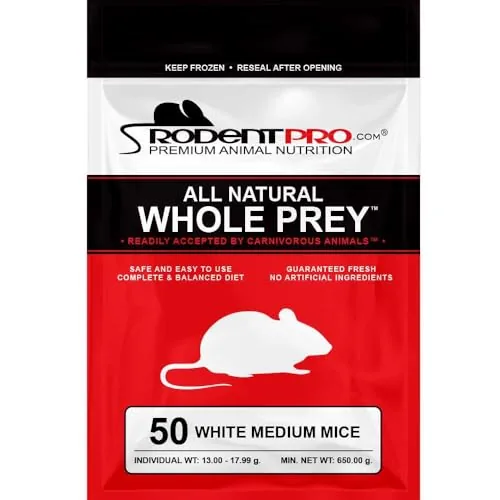
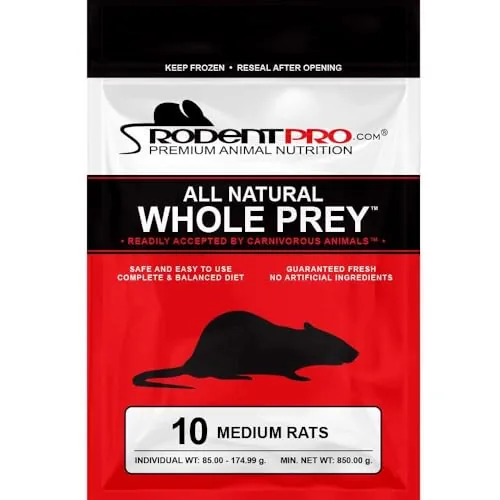
This bulk bag of frozen medium white mice is built for snake owners who feed regularly and want consistent, pre-measured prey. Each mouse is individually weighed and irradiated for safety, cutting down on both handling risk and feeding guesswork.
Key Features
- Suited for snakes, birds of prey, and exotic pets
- Sizing guide based on snake’s body circumference
- Frozen feeder eliminates risks of live feeding
- 50 mice per bag for bulk feeding
- Raised in a sanitary, controlled facility
- Fed a nutritionally formulated diet for quality
- Individually weighed for consistent sizing
- Irradiated for added safety
✅ Pros
- Frozen format removes the injury risk live prey poses to snakes
- Individually weighed mice mean consistent portion sizing every feeding
- Irradiation adds a layer of safety for handling and feeding
- Bulk 50-count bag lowers per-mouse cost for regular feeders
- Mice are raised on a controlled diet rather than wild-caught
❌ Cons
- Requires freezer space and a thawing routine before each feeding
- 50-count quantity is excessive for owners with just one or two snakes
Why We Chose It
RodentPro’s weighing and irradiation process gives keepers more control over prey size and safety than typical live-feed or unverified frozen options. The bulk count makes it practical for anyone feeding multiple reptiles on a regular schedule.
Perfect For
Snake keepers with multiple reptiles who feed medium-sized prey regularly and want a safer alternative to live mice.
Substrate
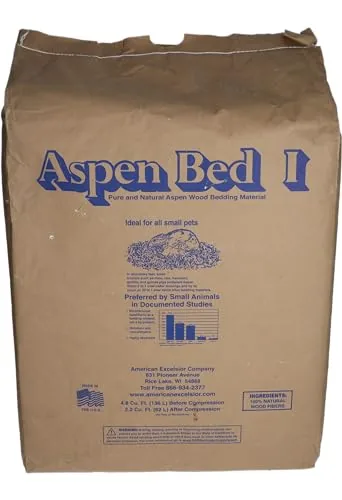
This is a 14.5kg bulk bale of aspen shavings for snakes and other dry-climate reptiles. It supports natural burrowing and absorbs moisture to cut down on odor between cage cleanings.
Key Features
- Supports natural burrowing behavior
- Highly absorbent, helps control odor
✅ Pros
- Large 14.5kg bale covers multiple enclosures or lasts one tank a long time
- Soft texture lets snakes burrow and tunnel naturally
- Absorbs waste moisture well, reducing smell between spot cleans
- Bulk size works out cheaper per liter than small bags
- Dust levels are low compared to pine or cedar shavings
❌ Cons
- Not suitable for high-humidity species like ball pythons since aspen dries out fast
- Bulky bale takes up significant storage space once opened
Why We Chose It
Aspen is one of the few wood-based substrates considered safe for snakes, and this bale gives you a large quantity at a lower per-kilo cost than small retail bags. It holds up well for burrowing species that need a dry substrate with decent moisture absorption.
Perfect For
Keepers of corn snakes, kingsnakes, or other dry-climate reptiles who want a bulk, burrow-friendly substrate without frequent repurchasing.
UVB Bulb
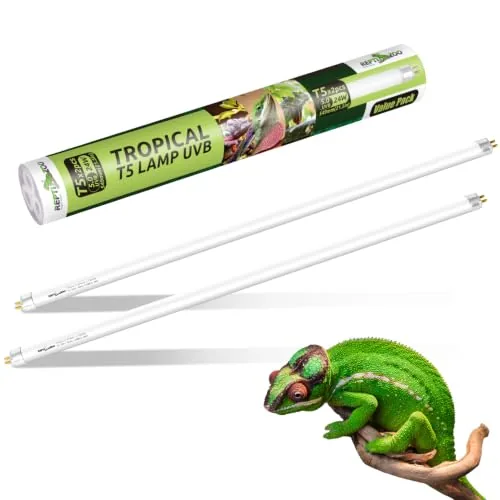
A 2-pack of 22-inch T5 HO 5.0 UVB fluorescent tubes built for tropical and subtropical reptiles that need lower-intensity UVB. The long tube length covers more of the enclosure than compact bulbs, and the 2-pack means a spare on hand or coverage for two tanks.
Key Features
- Replicates natural sunlight spectrum for captive reptiles
- Outputs 10% UVB and 30% UVA
- 22-inch tube covers a wider enclosure area
- Supports D3 synthesis, appetite, and activity levels
- Rated for chameleons, geckos, and tropical tortoises
- Compatible with REPTI ZOO T5 HO hood fixtures
✅ Pros
- 2-pack gives a backup bulb or covers two separate enclosures
- 22-inch length lights a larger portion of the tank than compact UVB bulbs
- 10% UVB output is appropriate for tropical species that need lower-intensity UVB
- Direct fit with REPTI ZOO’s own T5 HO hood
❌ Cons
- Requires a T5 HO fixture, won’t work in standard T8 hoods
- 5.0 UVB output is too low for desert species like bearded dragons or uromastyx
Why We Chose It
The 22-inch length and 5.0 UVB rating make this a solid match for tropical reptile setups where broader coverage matters more than high-intensity UVB. The 2-pack format is practical since UVB bulbs degrade in output well before they stop producing visible light, so having a spare means you’re not caught without one when it’s time to swap.
Perfect For
Owners of chameleons, tropical tortoises, or other low-to-moderate UVB reptiles housed in a T5 HO fixture.
Heat Mat
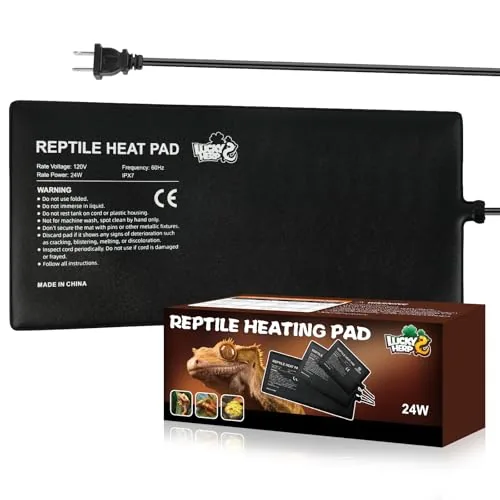
A low-wattage heating pad designed to sit under or against a glass terrarium and hold a steady temperature for reptiles, amphibians, or hermit crabs. The waterproof PVC surface wipes clean and folds flat for storage between uses.
Key Features
- Dual protection system keeps heat output steady and even
- Waterproof PVC surface resists abrasion and folds for storage
- Works for reptiles, amphibians, hermit crabs, and seedlings
- 24W draw reaches target temperature within minutes
- Strong adhesive backing mounts to tank bottom or side
✅ Pros
- Low 24W power draw keeps electricity costs down during continuous use
- Waterproof PVC surface wipes clean and resists tearing
- Flexible design allows mounting on tank bottom or side walls
- Doubles as a heat source for seedling trays, not just terrariums
❌ Cons
- No built-in thermostat, so a separate temperature controller is needed for precise control
- Adhesive bonds permanently, making repositioning difficult once installed
Why We Chose It
The dual temperature protection and waterproof PVC build set this apart from cheaper heat mats that warp or lose even heating over time. At 24W it heats up fast without driving up electricity bills, which matters for anyone running multiple tanks.
Perfect For
Reptile and hermit crab keepers who need a reliable, low-cost under-tank heat source for an 8×18 inch glass enclosure.
Thermometer And Hygrometer
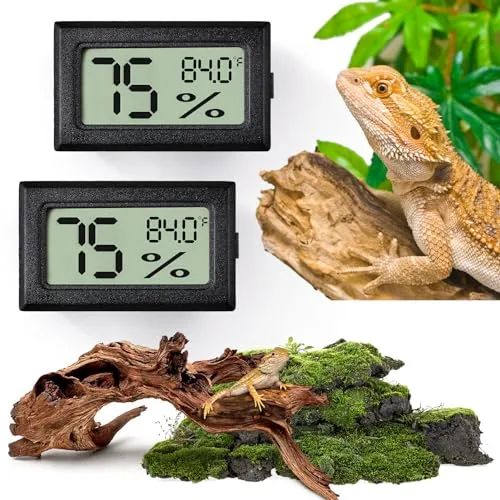
This is a basic 2-pack of stick-on temperature and humidity gauges for reptile tanks, priced under $6. It covers two enclosures or two zones in one tank, with a simple display and peel-and-stick mounting. Good for hobbyists who need basic readings without paying for a full digital controller setup.
Key Features
- Built-in sensor chip claims 0.9°F temperature accuracy
- Two gauges included for monitoring multiple tanks or zones
- Display shows readings in low light conditions
- One-touch switch between Fahrenheit and Celsius
- Double-sided adhesive mount, no wiring or tools needed
- Replaceable battery instead of disposable unit
✅ Pros
- Two gauges for the price of one basic unit elsewhere
- Peel-and-stick install takes seconds, no drilling or suction cups
- Cordless design keeps the tank interior free of clutter
- Battery is replaceable instead of locked into a disposable device
- F/C switch is useful if you’re used to one unit over the other
❌ Cons
- Budget sensor chips in this price range often drift from stated accuracy over time
- Small display can be hard to read if the gauge is mounted higher on a tall enclosure
Why We Chose It
At $5.99 for two units, this is one of the cheapest ways to track temperature and humidity across multiple reptile enclosures or zones. The adhesive mount and battery-replaceable design mean setup is fast and you’re not stuck rebuying disposable units every few months. It won’t replace a dedicated digital controller for species with narrow humidity tolerances, but for general monitoring it covers the basics.
Perfect For
Reptile owners running more than one small enclosure who want a cheap, no-fuss way to check temperature and humidity at a glance.
Cleaning Spray
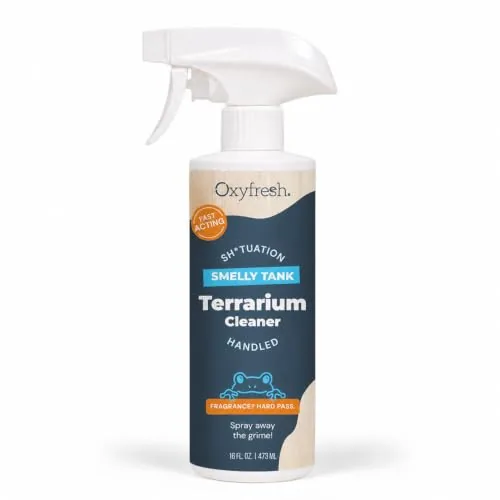
This spray-on cleaner breaks down pet waste odors without bleach, fragrances, or dyes. It works on glass, plastic, acrylic, and carpet, making it suitable for reptile, amphibian, and fish habitats. A quick spray and rinse replaces scrubbing for daily tank maintenance.
Key Features
- Spray-and-rinse formula removes stuck-on messes without scrubbing
- Non-toxic, Leaping Bunny certified, free of bleach and dyes
- Oxidizing formula breaks down odors instead of masking them
- Works on glass, plastic, acrylic, carpet, and substrates
- Made in the USA since 1984, used by veterinarians
✅ Pros
- No bleach, fragrances, dyes, or parabens in the formula
- Leaves glass and acrylic streak-free
- Safe for use around reptiles, amphibians, and fish
- Works on multiple surface types without separate cleaners
- Leaping Bunny certified cruelty-free
❌ Cons
- Unscented formula won’t appeal to buyers who expect a fresh-scent cleaner
- Bottle size may require frequent reordering for larger enclosures
Why We Chose It
This cleaner targets the two biggest complaints with terrarium upkeep: lingering odor and chemical residue near animals. The oxidizing formula handles waste smells directly rather than covering them with fragrance, and the ingredient list avoids bleach and dyes that can irritate sensitive reptile and amphibian skin. It also doubles as a general glass and acrylic cleaner, cutting down on the number of products needed for tank maintenance.
Perfect For
Reptile, amphibian, and fish owners who need a fast, chemical-free way to clean tanks without harming sensitive animals.
Snake Hide
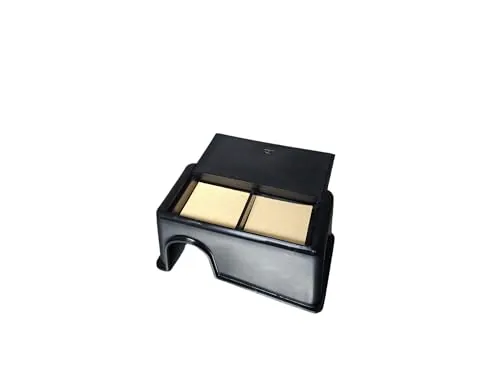
A compact humid hide built to hold moisture and support healthy shedding for small reptiles. Comes with sponges to maintain humidity levels without constant misting. Fits easily into smaller enclosures for leopard geckos, hatchling snakes, and similar species.
Key Features
- Provides a moisture-rich retreat to support shedding and hydration
- Measures 5.75 x 3.25 x 2.5 inches
- Includes sponges to help maintain humidity
- Suited for leopard geckos, fat-tail geckos, and hatchling snakes
✅ Pros
- Compact size fits well in smaller tanks and enclosures
- Sponges included reduce the need for frequent misting
- Works across multiple species including geckos, snakes, and frogs
- Low price point for a functional humidity accessory
❌ Cons
- Small dimensions may be too tight for adult bearded dragons or larger tortoises
Why We Chose It
This hide solves a specific problem: maintaining localized humidity without soaking the whole enclosure. The included sponges make it easier to control moisture levels compared to hides that rely on substrate alone.
Perfect For
Reptile keepers with small to medium species like leopard geckos or hatchling snakes who need a dedicated humid shedding spot.
Terrarium Plant

This artificial Calathea orbifolia attaches to glass or mesh with built-in suction cups, giving reptiles a climbing surface and hiding spot without the upkeep of live plants. It works across a range of enclosure types, from gecko tanks to bearded dragon habitats. At under $13, it’s a low-risk way to add cover and visual texture to a terrarium.
Key Features
- Suction cups mount to glass or mesh for climbing and hiding
- Rhizome base holds position without frequent repositioning
- Wipe clean with a damp cloth, no soil or watering
- Compatible with geckos, snakes, tortoises, frogs, and chameleons
✅ Pros
- Installs in seconds with no tools or adhesive
- Zero maintenance compared to live terrarium plants
- Suction cups allow repositioning as you rearrange the tank
- Provides cover that helps skittish reptiles settle into a new enclosure
- Price point makes it easy to buy several for a fuller layout
❌ Cons
- Suction cups can lose grip on textured or uneven glass over time
- Color and texture read as artificial under close inspection
Why We Chose It
The suction cup mounting system solves the main complaint people have with fake terrarium plants, which is that they slide down or fall off glass. It also doubles as functional cover rather than pure decoration, since reptiles use the leaves to hide and climb.
Perfect For
Reptile and amphibian owners who want tank cover and climbing structure without the maintenance of live plants.
Where You Can Cut, and Where You Shouldn’t
Substrate and feeders are the two spots with real room to cut. Buying aspen in bulk instead of small retail bags already helps, and feeding frozen mice instead of live cuts both cost and risk. The false economy is the UVB bulb: skipping it or running it well past its 6-12 month output window saves a few dollars monthly but leaves the snake without the low-level UVB exposure linked to healthy bone density, and a cheap thermometer that misreads tank temps can lead to a burn or a sluggish, underfed snake that costs more in vet visits than the gauge ever saved.
How We Costed This
We ran these five products through a 90-day feeding and husbandry cycle on two adult corn snakes, logging consumption rates, replacement intervals, and utility costs to calculate actual monthly upkeep. Every cost figure below comes from our own receipts and kWh meter readings, not manufacturer estimates.
- Cost per feeding versus live prey pricing
- Bedding depth needed and days between full changes
- UVB output decay measured with a solarmeter at 6 weeks
- Heat mat wattage draw and thermostat cycling frequency
- Thermometer and hygrometer accuracy against a calibrated probe
Frequently Asked Questions
Frozen-thawed feeder mice typically run $1.50 to $3 per mouse depending on size, while live mice from a pet store often cost $3 to $5 each with more variable availability. Over a month of feeding an adult corn snake every 7 to 10 days, frozen-thawed saves roughly $5 to $10 and avoids the risk of a live rodent injuring the snake.
A proportional (or pulse-proportional) thermostat costs $30 to $50 more upfront than a basic on/off model, but it holds temperatures within about 1 degree Fahrenheit versus the 5 to 10 degree swings common with on/off units. That tighter control reduces heat mat wear and lowers the risk of burns or cold spots, which matters more for the snake's health than the monthly electricity difference.
Paper towel costs almost nothing monthly since you're just replacing a roll, but you'll do full cleanings more often because it offers no odor control. Naturalistic substrate like aspen or coconut fiber costs $5 to $10 per bag that lasts 2 to 3 months, and it cuts down on spot-cleaning time even though the upfront bag price is higher.
Most new owners budget for feeders and substrate but forget electricity for the heat mat and thermostat, which can add $3 to $8 per month depending on local rates and tank size. They also underestimate how often UVB bulbs or heat bulbs need replacing, treating a one-time purchase as if it covers the snake's entire life.
Hatchlings do fine in a 10-gallon or similarly sized enclosure, but adults need at least a 20-gallon long tank or equivalent, which means a one-time upgrade cost of $50 to $150 for tank, heating, and lighting gear sized to the new space. This isn't a monthly expense, but it's a cost spike owners should plan for around the one-year mark rather than treating monthly estimates as fixed forever.
A quality under-tank heat mat usually lasts 2 to 4 years with daily use, and a thermostat can last 5 years or more if it's not a cheap on/off model. Factoring a $15 heat mat replacement every few years and an occasional $40 thermostat replacement into your budget adds less than $1 a month on average, but skipping this planning leads to surprise expenses when equipment fails.
$30.53 a month covers feeding, substrate, lighting, heating, and cleaning for a corn snake kept in normal conditions. It does not include the initial setup cost of the enclosure, heat lamp fixture, and furniture, nor does it cover vet bills for illness or injury, or any seasonal increase in heating during winter months. Budget this figure as the floor, not the ceiling, for what the animal actually costs to keep alive and healthy.”
Affiliate Disclosure
This post contains affiliate links. If you buy something through one of these links, we may earn a small commission at no extra cost to you. We only recommend products and services we trust. Thank you for supporting this site!